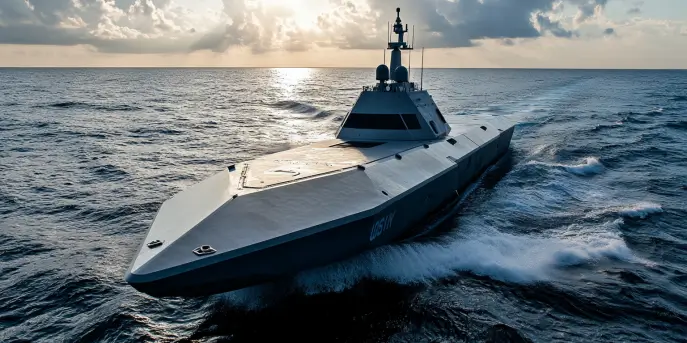


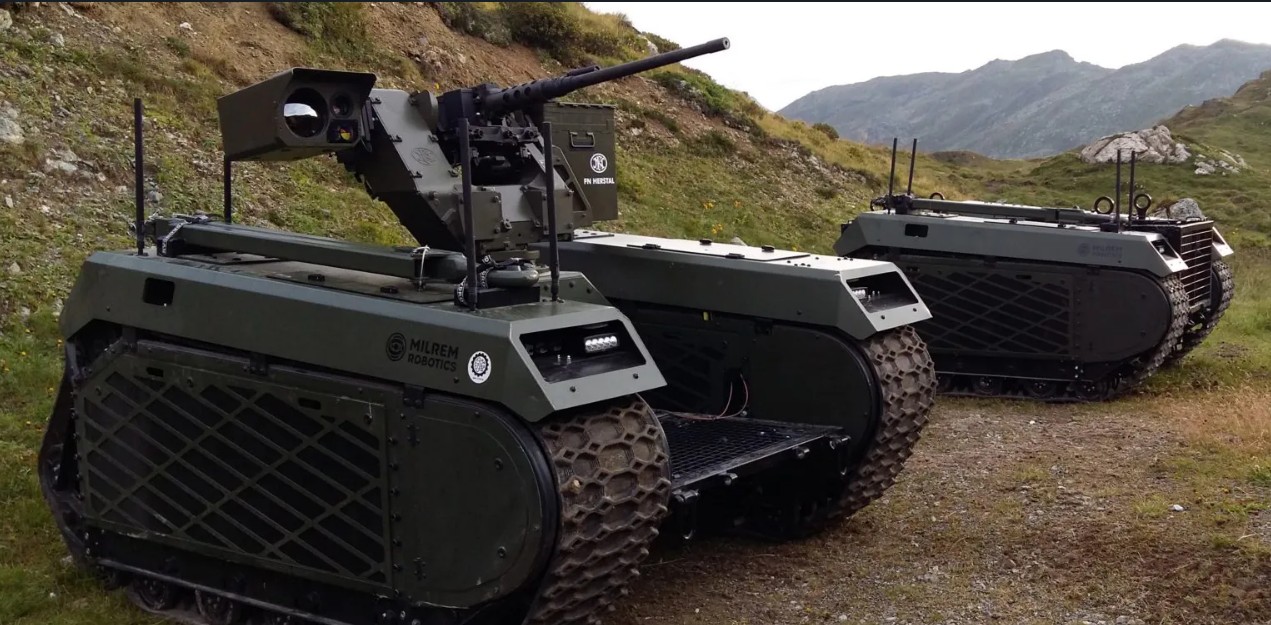
As technology rapidly advances, the field of unmanned ground vehicles (UGVs) is becoming increasingly pivotal in both military and civilian applications. By 2026, three standout UGVs take center stage: Milrem Robotics THeMIS, Textron Systems Ripsaw M5, and Rheinmetall’s Mission Master series. Each of these platforms offers unique capabilities that cater to different operational needs, redefining how we perceive unmanned technologies on the ground.

Milrem Robotics THeMIS
Milrem Robotics, a company known for its innovative approach to robotics, has developed the THeMIS (Tracked Hybrid Modular Infantry System), which continues to be a robust option in 2026. This UGV is designed to cater to various military applications ranging from logistics support to reconnaissance missions.
Design and Capabilities
- Multifunctional platform offering modularity to integrate various payloads.
- Equipped with hybrid diesel-electric propulsion for extended range and efficiency.
- Capable of remote operation and autonomous navigation, improving operational versatility.
- Supports modular mission systems, allowing quick adjustments between cargo transport, casualty evacuation, and combat support.
| Specification | Details |
|---|---|
| Weight | Around 1,630 kg |
| Payload Capacity | Up to 1,200 kg |
| Speed | Up to 20 km/h |
| Range | 100 km |
Textron Systems Ripsaw M5
Textron Systems’ Ripsaw M5 is hailed as the high-speed expert among UGVs in 2026, offering unmatched rapid response capabilities. Its design emphasizes speed and power, making it a formidable choice for frontline deployments.
Key Features
- High-speed capabilities allowing quick deployment and maneuverability.
- Supports a wide array of mission-specific payloads, including remote weapon stations and surveillance packages.
- Autonomous operation potential with a focus on rapid battlefield deployment.
- Robust chasis designed to withstand challenging environments and terrains.
| Specification | Details |
|---|---|
| Weight | Approx. 7,000 kg |
| Payload Capacity | 1,500 kg |
| Speed | Over 65 km/h |
| Range | 400 km |
Rheinmetall’s Mission Master Range
Germany’s Rheinmetall presents the Mission Master series, known for its flexibility and adaptability. The series offers different variants, each designed to accomplish distinct mission profiles tailored to clients’ diverse needs globally.
Unique Attributes
- Multiple variants include Cargo, Rescue, and Combat, each tailored for specific tasks.
- High payload capacity across models, supporting advanced tactical maneuvers.
- Sophisticated control systems facilitating semi- and fully autonomous operations.
- Emphasis on enhancing interoperability with existing military systems worldwide.
| Specification | Details |
|---|---|
| Weight | Varies by variant, typically 750-1,000 kg |
| Payload Capacity | 600 kg |
| Speed | Up to 40 km/h |
| Range | Over 200 km |
The Future of UGVs: Harmonizing Technology and Strategy
The progress in UGV technologies represents more than just a leap forward in robotic capabilities; it signifies a paradigm shift in strategic operations. With the integration of artificial intelligence, enhanced autonomy, and modular systems, UGVs are set to play pivotal roles in both combat and humanitarian missions.
The Growing Influence of UGVs
As defense strategies evolve, the reliance on unmanned systems such as THeMIS, Ripsaw M5, and the Mission Master series is likely to increase, reflecting a blend of cutting-edge technology with operational pragmatism. By 2026, these UGVs not only illustrate technological prowess but also emphasize adaptability to dynamic field requirements.
In conclusion, the UGV landscape in 2026 is marked by innovation and strategic utility. Whether for military operations or civilian applications, the Milrem Robotics THeMIS, Textron Systems Ripsaw M5, and Rheinmetall’s Mission Master stand out as leaders in redefining modern warfare and support logistics, ensuring that they remain at the forefront of technological progress in the decade to come.