

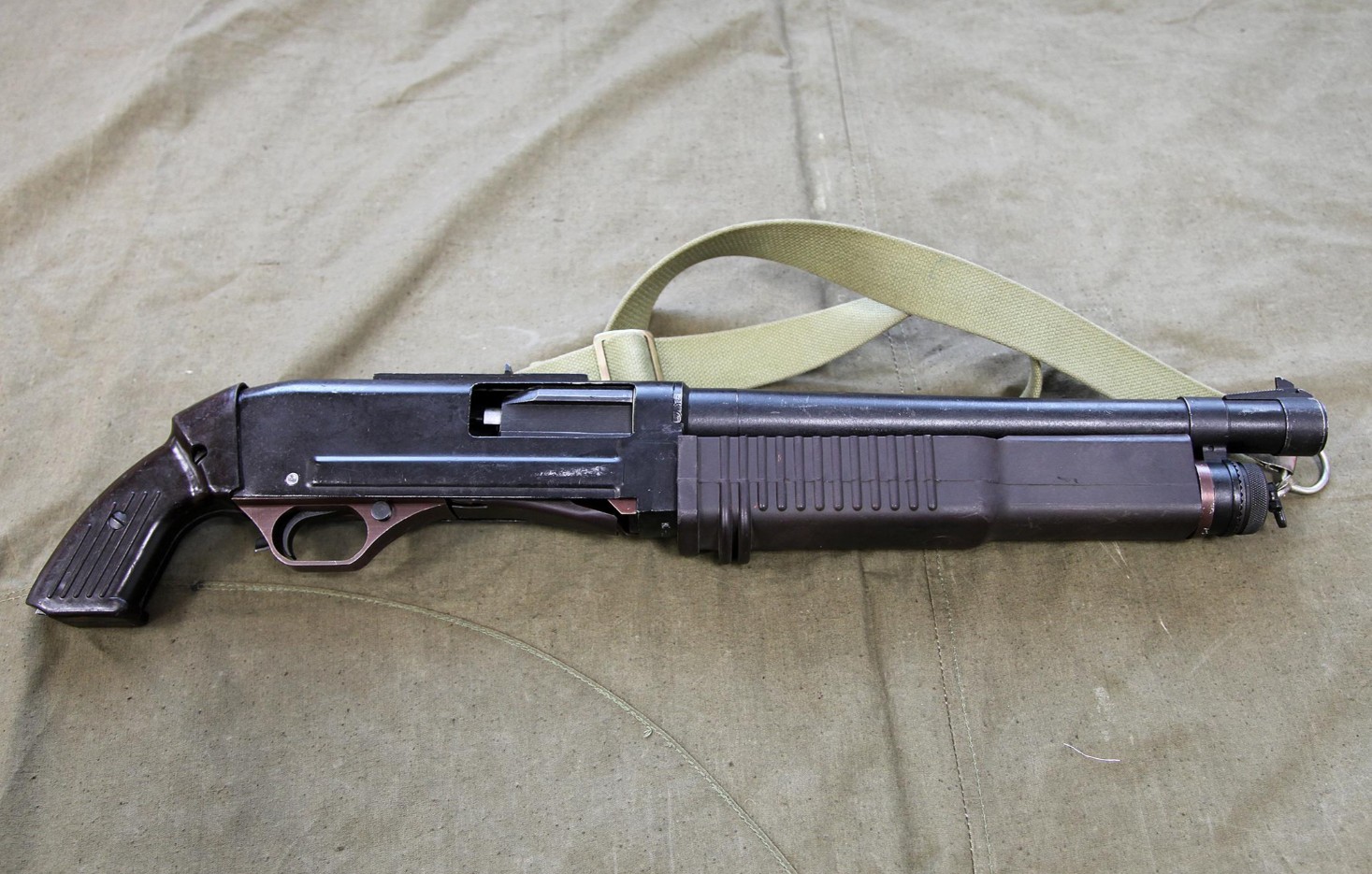
Among the heavyweights of the shotgun world, few can boast the formidable reputation of the KS-23. This Russian-made firearm is a giant among guns, notable not only for its sheer size but also for its unique applications and historical significance. Designed for military and law enforcement use, the KS-23 isn’t your ordinary shotgun.
Origin and Development
The KS-23 was developed during the late Cold War era, primarily in the 1970s and 1980s, by the Soviet Union. Originally, it was intended to serve as a riot control weapon for enforcement agencies. The ‘KS’ in KS-23 stands for ‘Karabin Spetsialniy’, which translates to ‘Special Carbine’. What sets it apart is its incredibly large 4-gauge barrel, an adaptation of anti-aircraft gun barrels deemed obsolete.
Specifications and Features
| Specification | Details |
|---|---|
| Caliber | 4 gauge |
| Barrel Length | 410 mm (16.14 inches) |
| Weight | 3.85 kg (8.5 lbs) with no shells |
| Overall Length | 1,040 mm (40.94 inches) |
| Magazine | 3-round internal tube magazine |
| Action | Pump-action |
Ammunition Versatility
The KS-23 holds a distinctive title due to its diverse array of ammunition. It is capable of firing various types of rounds, making it versatile for different operational needs:
- Barricade-Breaching: Shells can blast through doors and other obstructions.
- Non-lethal Rounds: Rubber bullets and tear gas for riot control.
- Standard Shot: Buckshot shells used in typical close-range operations.
- Sniping Capabilities: Specializer sniper cartridges extend its use beyond typical shotgun roles.
Historical Context and Usage
The KS-23 made its mark during tumultuous times in history, where crowd control and regulation enforcement were vital. Notably used in the Soviet-Afghan War, it also saw action in controlling civil unrest during the collapse of the Soviet Union. This firearm’s robust nature and intimidating presence made it a suitable choice for a multitude of situations.
Functionality and Mechanics
As a pump-action shotgun, the KS-23 requires the operator to manually cycle the action, which contributes to its reliability, especially in harsh conditions. The ease of use and minimal maintenance made it a favorite for rugged environments.
What truly sets the KS-23 apart is its barrel, originally repurposed from 23mm anti-aircraft guns. This unusual heritage contributed to its unique ballistic characteristics.
In Popular Culture
While not as mainstream as other firearms, the KS-23 has made its way into video games and movies, often portrayed as a weapon of immense destructive capability. It symbolizes power and intimidation, fitting comfortably within narratives of high-octane action and tense standoffs.
Comparative Analysis
When placed alongside other notable shotguns like the Remington 870 or the Mossberg 500, the KS-23 stands out due to its military-grade applications and its historical role. Unlike its Western counterparts, it’s less about sport or home defense and more about strategic deployment in emergencies.
Contemporary Relevance
Even after its initial design decades ago, the KS-23 still holds relevance. Its deployment today may be less frequent, but it has a cult following among firearm enthusiasts and historians. Its place in military history is secure, and it continues to intrigue due to its unorthodox ammunition and design.
The KS-23 remains a noteworthy example of Cold War ingenuity in arms design. Its imposing size and versatile capabilities represent an era where heavy-duty enforcement was as much about physical presence as it was about tactical application.