

The Schwerer Gustav remains one of the most legendary military weapons ever constructed, epitomizing human engineering capabilities and military ambition during World War II. With its unmatched size and firepower, it represented the pinnacle of artillery design, yet reflected the complexities and challenges associated with such massive military endeavors.
You Might Also Like
The Conception of a Colossus
In the late 1930s, the German military sought to develop weapons capable of overpowering the heavily fortified Maginot Line—a series of concrete fortifications along France’s eastern frontier. Realizing that conventional artillery lacked the necessary firepower, engineers at the Krupp arms manufacturing company were tasked with conceiving an artillery piece that could penetrate the Maginot Line’s formidable defenses.
Technical Marvels and Challenges
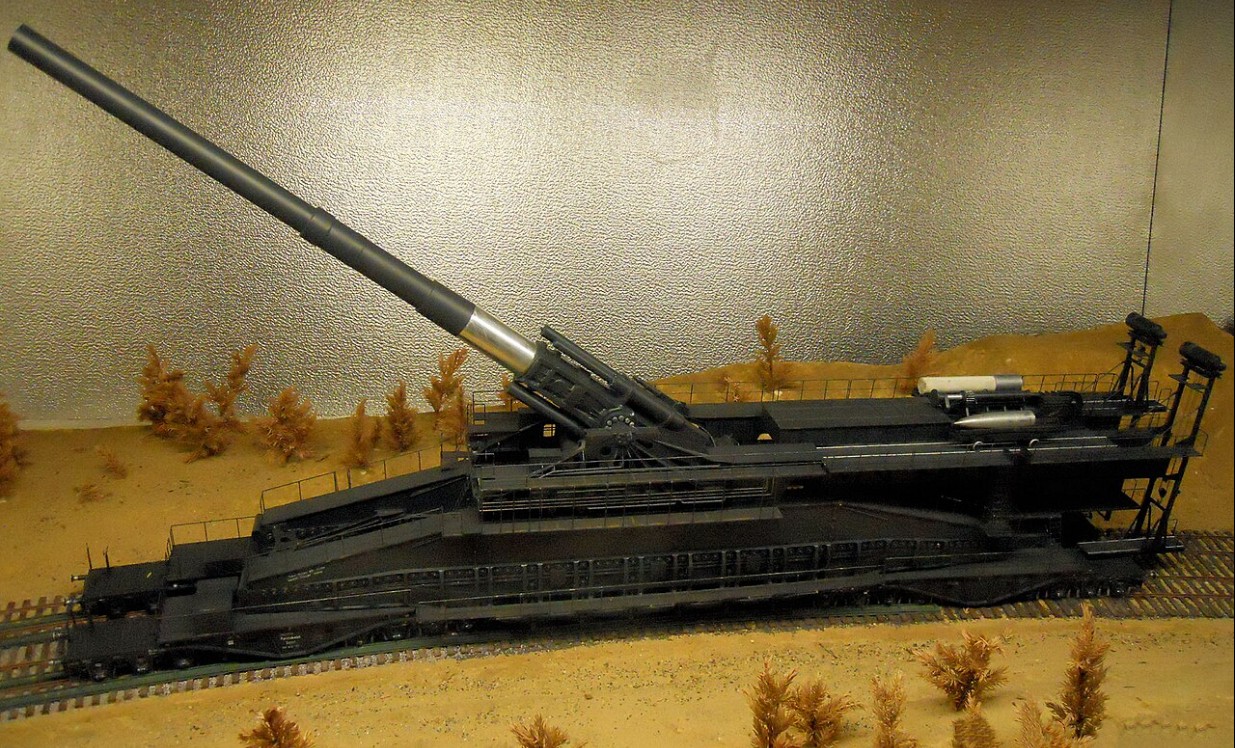
The Schwerer Gustav wasn’t just a larger gun; it was an engineering spectacle. It measured 47.3 meters long, stood 11.6 meters tall, and required a crew of 250 people to assemble and operate. The barrel alone was over 30 meters and could fire shells weighing up to 7 tons a distance of more than 39 kilometers. Here’s a breakdown of the specs of the Schwerer Gustav:
| Specification | Details |
|---|---|
| Caliber | 800 mm |
| Total Weight | 1,350 tons |
| Barrel Length | 32.5 meters |
| Shell Weight | 7,100 kg |
| Range | 47 km (with lighter shells) |
Such immense power wasn’t without its downsides. The transportation of the Schwerer Gustav required strategic planning; it traveled in pieces on 25 specialized railway wagons and had to be assembled on-site, a process that took upward of six weeks. The logistics were a significant factor in the weapon’s limited use.
Operational History
Schwerer Gustav saw action only a few times during its lifespan. First, during the siege of Sevastopol in 1942, it was used to bombard Soviet positions from afar, allegedly destroying ammunition depots and coastal fortifications. However, the ambitious gun couldn’t alter the war’s outcome. Its rather ponderous assembly and deployment meant it could not adapt swiftly to fast-moving combat scenarios, rendering it obsolete as frontline strategies evolved.
Legacy of the Schwerer Gustav
After its few operational uses, the Schwerer Gustav faded from prominence. As the focus shifted toward more mobile and strategic artillery, Schwerer Gustav’s massive obstruction was dismantled to prevent capture. Post-World War II, military strategy saw a paradigm shift towards mobility, speed, and practicality, areas where the sluggish Schwerer Gustav couldn’t compete.
Yet, the legacy of this mighty weapon endures. It stands as a monument to human ingenuity and ambition, while also highlighting the pitfalls of over-engineering in the face of changing warfare tactics. The Schwerer Gustav’s tale serves as a reminder that sheer power cannot substitute for adaptability and innovation in military strategy.
- The Schwerer Gustav reflects the pinnacle of World War II artillery technology and ambition.
- Its design requirements and operational challenges were immense, limiting its practical use in the field.
- The legacy of the weapon highlights a shift in military engineering towards speed and adaptability.
While the Schwerer Gustav never influenced the outcome of World War II significantly, its story remains a fascinating chapter in military history, exemplifying both the capabilities and limitations of human engineering in warfare.