

Unveiling the Futuristic Design of the H&K G11
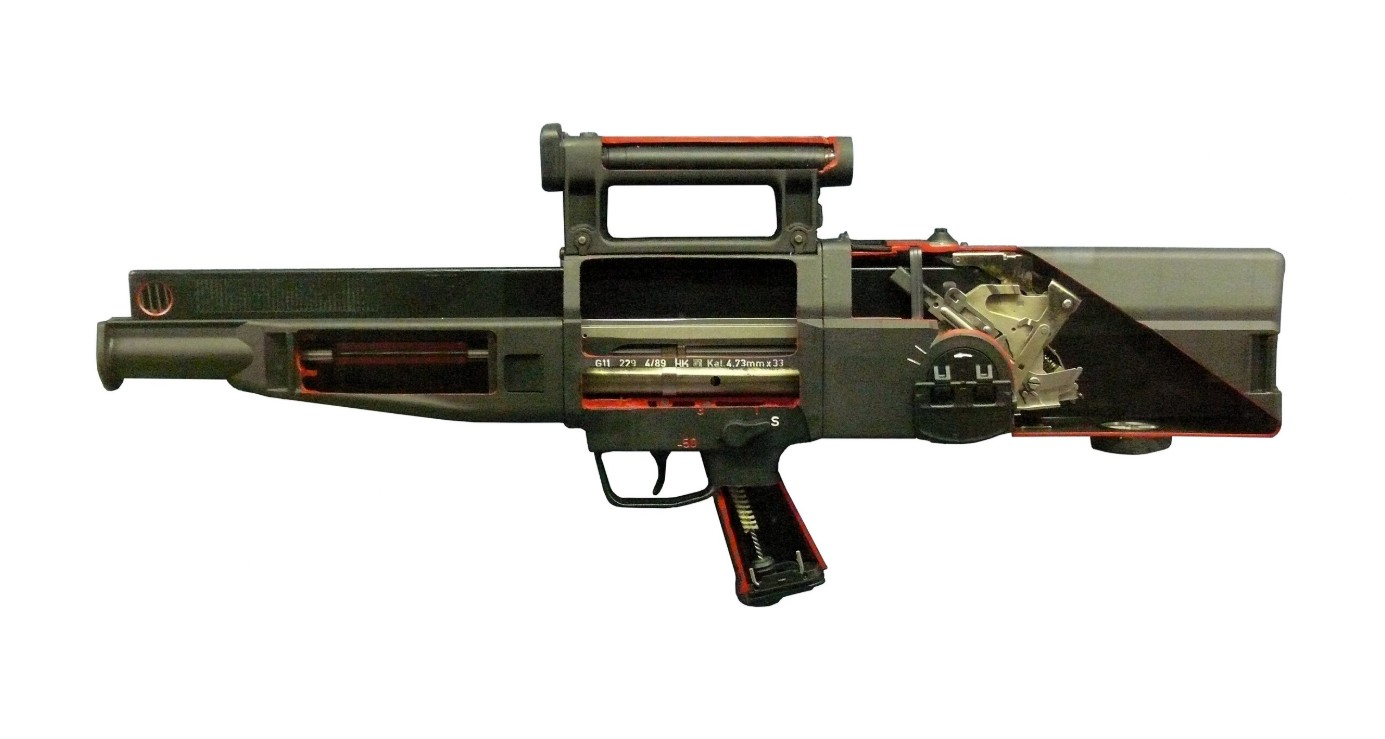
Throughout the decades, firearms have experienced significant evolution, yet few have captured the imagination like the Heckler & Koch G11. Often referred to as a ‘space gun’ due to its futuristic aesthetics and advanced technology, the G11 remains one of the most fascinating chapters in firearm history. Developed in the late 20th century, the H&K G11 was a groundbreaking endeavor aimed at redefining the infantry rifle.
Innovative Caseless Ammunition
At the core of the G11’s design was its revolutionary ammunition: the caseless cartridge. Unlike conventional ammunition that includes a metal casing, the G11’s 4.73mm rounds were designed to be entirely consumed during firing, leaving no case to eject. This innovation aimed to reduce weight, enhance rate of fire, and eliminate the need for ejection systems, making the rifle lighter and increasing its reliability.
However, the caseless nature presented challenges, particularly concerning heat management and the propensity for ammo cook-off under prolonged firing. The innovative concept required materials and engineering solutions ahead of its time, which proved to be both a remarkable leap and a significant hurdle.
The Burst-Fire Mechanism
Another standout feature of the G11 was its unique burst-fire mechanism. Capable of firing three-round bursts at an incredible 2,100 rounds per minute, it allowed for maximum projectile delivery before the shooter experienced recoil. This design was intended to maximize hit probability during active engagements.
This high rate was achieved by the rifle’s rotating chamber, which aligned itself with the barrel and quickly indexed to the next round after firing. The mechanism was complex and an engineering marvel, but the production complexity affected the rifle’s feasibility.
Ergonomics and Aesthetic Design
Visually, the G11’s design broke away from traditional firearm aesthetics. Its rectangular design and bullpup configuration (where the magazine and firing mechanisms are located behind the trigger) provided a compact form factor with a full-length barrel, enhancing maneuverability in tight spaces without sacrificing accuracy.
Ergonomic considerations were apparent in its ambidextrous controls and adjustable stock, aimed at comfortable use by soldiers of varying stature. Its sleek and minimalistic form contributed to its ‘space gun’ moniker, capturing the imagination of firearm enthusiasts and sci-fi fans alike.
Technical Specifications
| Specification | Details |
|---|---|
| Caliber | 4.73×33mm caseless |
| Effective Range | 300 meters |
| Rate of Fire | 2,100 rounds/min (in burst mode) |
| Magazine Capacity | 50 rounds |
| Weight | 3.6 kg (unloaded) |
The Trials and Tribulations
Despite its groundbreaking design, the G11 faced numerous challenges. Development costs soared as the team attempted to resolve issues related to the caseless ammunition and technical complexity. Additionally, geopolitical changes, particularly the end of the Cold War, shifted military priorities and budgets, ultimately affecting the project’s viability.
Logistical challenges in adopting the new ammunition type across military forces also contributed to its eventual shelving. These hurdles paved the way for more traditional designs to maintain their stronghold within military ranks, often favoring incremental improvements over radical redesigns.
A Legacy of Innovation
The Heckler & Koch G11 remains a testament to innovation within firearms development despite its limited deployment and eventual discontinuation. Its ambitious design continues to influence modern firearm engineering, and its story serves as a case study in balancing pioneering technology with practical application and economic realism.
Today, the G11 can be seen in museums and private collections, cherished not only for its technical prowess but also for its embodiment of a vision of what future weaponry could be. Its legacy, shrouded in the allure of ‘what might have been,’ endures, captivating future generations who study its remarkable, albeit forgotten, chapter in the evolution of military technology.