

The Early Beginnings
Hand grenades, a pivotal invention in military history, have evolved significantly from their rudimentary beginnings. The journey of their development mirrors the evolution of warfare technology and tactics. Initially, hand grenades appeared during the Byzantine Empire, around the 8th century, where the ‘Greek Fire’ was primarily used. This was a combustible compound deployed in hand-thrown, primitive models of incendiary devices.
From Pottery to Pulverization: The Middle Ages
By the Middle Ages, hand grenades took a more recognizable form. In the 15th century, the Ming dynasty in China utilized the ‘thunder crash bomb,’ which contained gunpowder sealed in a metal shell. This innovation spread to Europe, where grenades were made from pottery or metal containers filled with powder and ignited by a burning wick.
The Age of Gunpowder and Iron
By the 17th century, hand grenades were further refined with the advent of the iron casting technique. The introduction of the grenade as a military tool became more systematic during the English Civil War and other European conflicts. Soldiers known as grenadiers were specially trained to throw these explosive devices. Typically made of iron, these grenades were spherical and had to be ignited manually with a match or fuse, a precursor to modern timed mechanisms.
Industrial Revolution and the World Wars
The Industrial Revolution brought remarkable improvements in grenade manufacturing. The Mills Bomb, invented in 1915 by William Mills, marked the first modern fragmentation grenade. Used extensively during World War I and II, it featured a segmented outer shell designed to fragment upon explosion, maximizing its lethality. The advent of the lever and pin safety mechanism made these devices safer for soldiers to handle and deploy.
| Type | Period | Key Features |
|---|---|---|
| Greek Fire | 8th Century | Incendiary, thrown by hand |
| Thunder Crash Bomb | 15th Century | Gunpowder, metal shell |
| Grenades (Iron) | 17th Century | Iron cast, match-lit fuse |
| Mills Bomb | 1915 | Fragmentation, lever and pin mechanism |
Modern Era: From Fragmentation to Precision
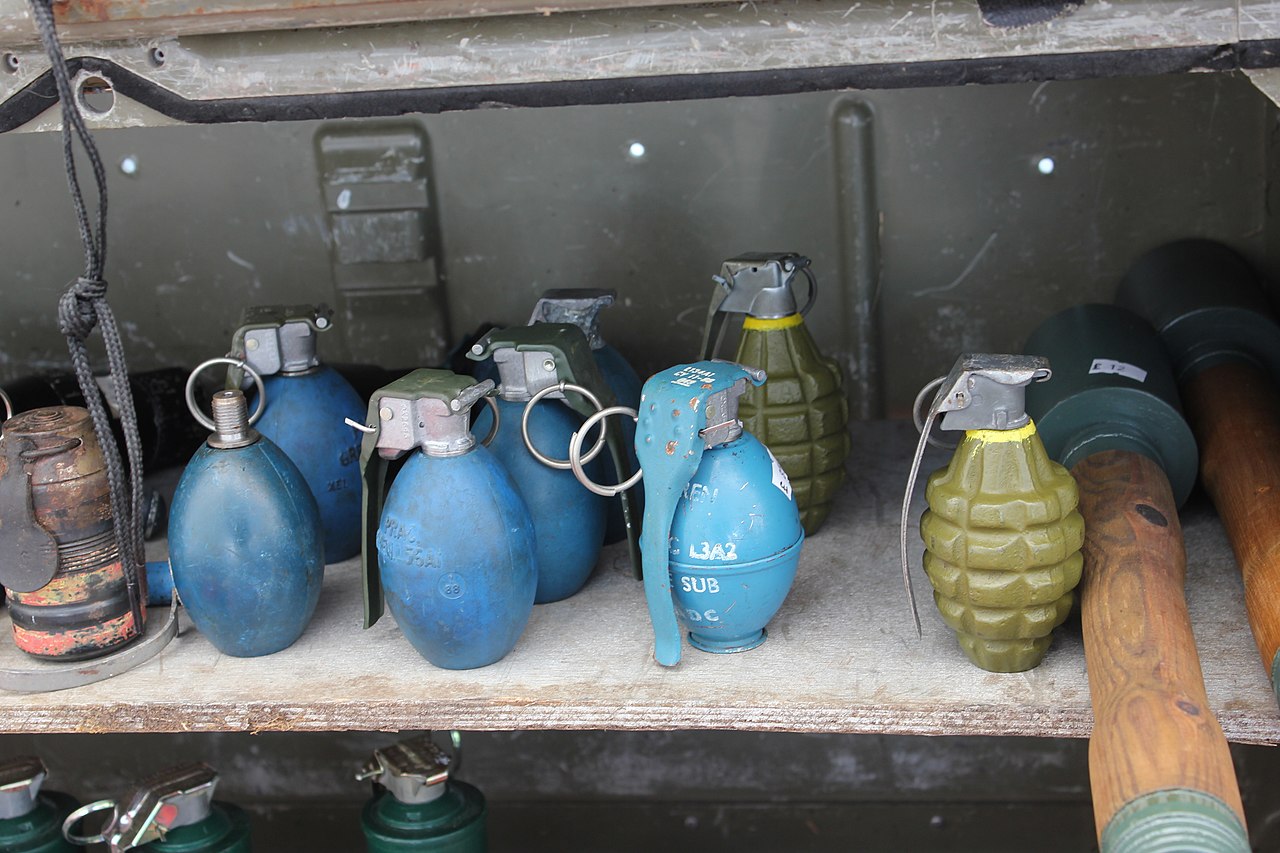
Post-World War advancements led to further diversification in grenade types. Fragmentation grenades, smoke grenades, stun grenades, incendiary grenades, and chemical grenades have expanded the tactical options available to modern military forces. Fragmentation grenades have remained a mainstay due to their effective lethality and simplicity of use. Modern designs incorporate safety clips and time-delay fuses to reduce the risk of accidental detonation.
Technological Innovations in the 21st Century
The 21st century has seen technological innovations that make grenades more precise and safer. The development of electronically fused grenades allows precise timing and reduced collateral damage. The XM25, for instance, is a smart grenade launcher that can program grenades to explode at a precise distance. Innovations in materials and miniaturization have further improved the effectiveness and convenience of these explosive devices.
Hand Grenades: A Revolution of the Battlefield
The journey from primitive incendiary devices to highly sophisticated tools of warfare highlights the relentless march of technological progress. Today’s hand grenades are a testament to military ingenuity and adaptability. As technology advances, the design and deployment of hand grenades will continue to evolve, adapting to new challenges and tactical demands on the battlefield.