

The Early Days of Gunpowder Weaponry
Long before the sleek, compact designs of modern-day firearms, there existed basic, yet revolutionary, gunpowder weapons known as hand cannons. Developed during the late 13th century in China, these primitive devices were essentially small canons capable of being carried by a single person. The explosive power of gunpowder had finally been harnessed into a portable form, paving the way for dramatic changes in warfare.
Design and Use of Early Hand Cannons
The earliest hand cannons were simple in construction. Generally, they consisted of a barrel attached to a wooden stock, with the barrel being loaded through the muzzle with gunpowder and a projectile. They were usually fired by applying a source of flame or heat to a small hole at the base of the barrel, known as the touch hole. This method was rudimentary but marked a monumental step in arms development. Although lacking accuracy and consistency, hand cannons were powerful and intimidating, supplementing the traditional bow and sword on the battlefield.
The Evolution of Firearms
As metallurgy and engineering advanced, so too did firearms design. The 15th and 16th centuries saw the emergence of the arquebus and musket, which improved upon the hand cannon’s reliability and ease of use. These weapons employed the matchlock mechanism, which used a smoldering wick to ignite the powder, allowing for greater firing precision.
Entrance of Revolvers
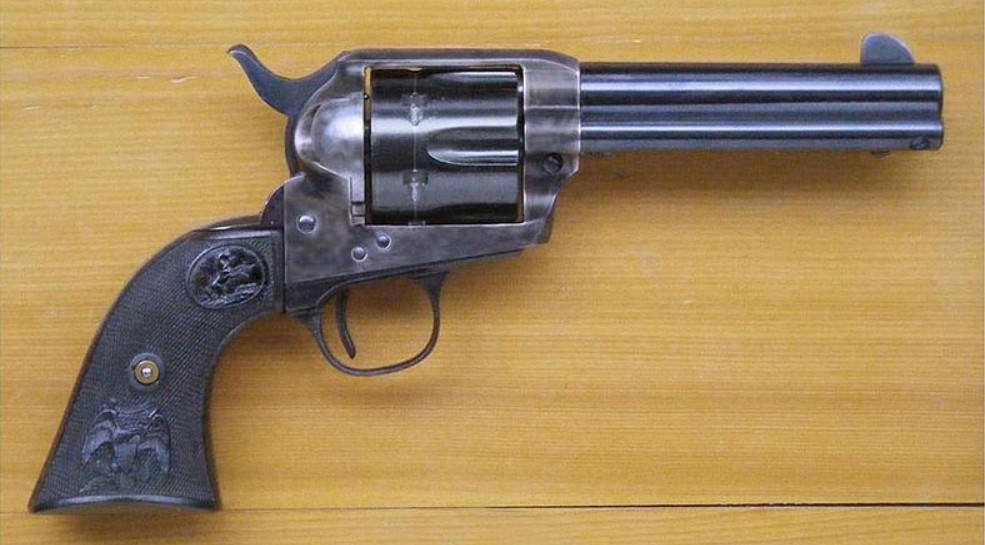
The next significant leap in firearms was the invention of the revolver in the 19th century by Samuel Colt. Revolvers introduced a revolving cylinder that held multiple rounds, allowing the user to fire several shots before needing to reload. Colt’s design, patented in 1836, transformed personal firearms use with models like the famous Colt .45, known for its reliability and simplicity. This innovation greatly affected both military and civilian firearms applications, making the firearm more adaptable and effective.
The Smith & Wesson Impact
Among Colt’s contemporaries were Smith & Wesson, who further developed the revolver with advances such as the introduction of rimfire cartridges. By the 1850s, the twin American firms were regarded as leading lights in firearm innovation, continually striving for weapons that were faster, more powerful, and easier to handle.
The Advent of Semi-Automatics
The transition from revolvers to semi-automatics became a game-changing evolution in weaponry. Semi-automatic pistols use the energy of one shot to load the next, allowing for faster firing rates. The first commercially successful design was the Borchardt C-93 in the late 19th century, refined shortly after by John Browning’s designs for Colt, including the spectacular Colt M1911, a standard-issue sidearm for the U.S. Armed Forces for many decades.
Comparison: Revolvers vs. Semi-Automatics
The debates on the superiority of revolvers versus semi-automatics continue to this day. Each type has its pros and cons:
- Revolvers: Known for their simplicity, reliability, and fewer moving parts. These are often easier for novices to use and maintain.
- Semi-Automatics: Offer higher ammo capacity and faster reload times, with a mechanism more conducive to rapid firing.
Firearm Specifications Table
| Feature | Revolvers | Semi-Automatics |
|---|---|---|
| Capacity | 5-6 Rounds | 7-20+ Rounds |
| Reload Speed | Slower | Faster |
| Complexity | Simpler Design | More Complex Mechanisms |
| Reliability | High | Varies with Design |
The Impact on Culture and Society
The development of hand cannons and their evolution into today’s modern firearms has had profound effects on both personal defense and military strategy. They have shaped history, influenced geopolitical outcomes, and continue to be a central aspect of discussions around public policy and safety.
As technology advances, firearms will evolve, but the journey from hand cannons to powerful semi-automatics highlights the blend of human ingenuity and a constant drive for improvement.