

The advent of Non-Explosive Reactive Armor (NERA) has revolutionized the defense capabilities of modern military tanks. Among the prominent armored vehicles utilizing this advanced technology are the Leclerc and Leopard 2 tanks. Known for their superior protection and combat efficiency, these tanks integrate NERA as a core component of their defense systems, showcasing innovation in armored warfare technology.
Understanding Non-Explosive Reactive Armor (NERA)
NERA is a type of composite armor that enhances the survivability of armored vehicles. Unlike its explosive counterparts, NERA does not rely on detonating materials to mitigate incoming threats. Instead, it is composed of multiple layers of rubber sandwiched between steel plates. Upon impact, these layers can effectively deform and absorb energy from projectiles, neutralizing or deflecting the force without causing additional external explosions.
NERA’s operational mechanism hinges on its flexible and resilient materials. When a projectile hits the tank’s surface, the rubber layers within the armor compress and rebound, dissipating the kinetic energy across a broader area. This action not only reduces the penetration capability of the incoming round but also ensures that the vehicle and its occupants remain untouched by potential spall or secondary explosions.
The Leclerc Tank
Named after General Philippe Leclerc, a French World War II hero, the Leclerc tank epitomizes cutting-edge military technology and craftsmanship. It is equipped with an impressive array of systems designed to enhance both offensive and defensive capabilities. NERA forms an integral part of its construction, providing robust protection without sacrificing speed or maneuverability.
The Leclerc’s use of NERA is particularly strategic in its modular armor system, which allows for the rapid replacement or upgrade of armor modules in response to evolving threats. This flexibility ensures that the tank remains relevant and capable in a variety of combat scenarios.
Specifications of the Leclerc Tank
| Feature | Detail |
|---|---|
| Weight | Approximately 57.4 tons |
| Engine | Packs a 1,500-hp V8X-1500 diesel engine |
| Top speed | 72 km/h (44.7 mph) |
| Crew | 3 (commander, gunner, driver) |
The Leclerc also features a sophisticated fire control system, and digital communications, making it a formidable adversary on the battlefield.
Introducing the Leopard 2
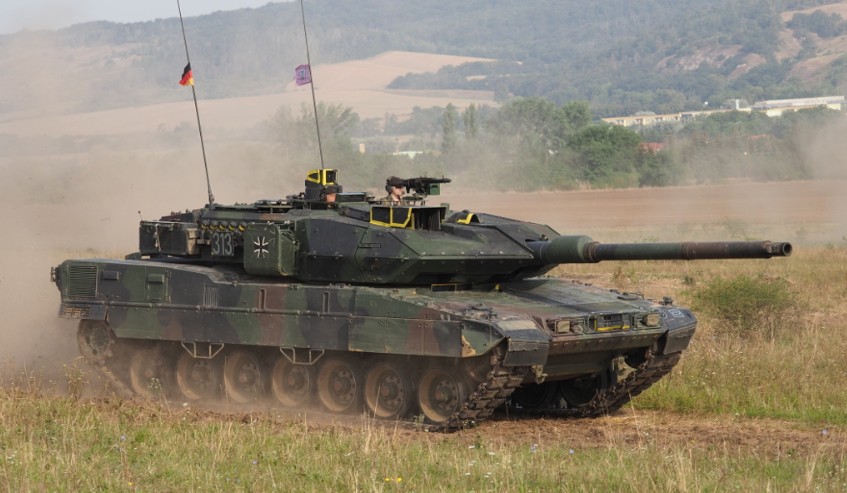
Germany’s Leopard 2 is another significant global player that employs NERA in its design. With a reputation for reliability and versatility, the Leopard 2 tank is a mainstay in various armies worldwide.
The Leopard 2’s incorporation of NERA enhances its legendary resilience. The armor’s capacity to deform upon impact significantly diminishes the threat posed by anti-tank weaponry. Coupled with its advanced optics and firepower, the Leopard 2 stands as a paragon of modern tank design, melding safety with lethality.
Specifications of the Leopard 2 Tank
| Feature | Detail |
|---|---|
| Weight | Approximately 62.3 tons |
| Engine | Features a 1,500-hp MTU MB 873 Ka-501 diesel engine |
| Top speed | 68 km/h (42 mph) |
| Crew | 4 (commander, gunner, loader, driver) |
Commanding remarkable speed and maneuverability for a vehicle of its size, the Leopard 2 can swiftly engage and disengage from combat, thanks in part to its NERA-enhanced protection.
The Overarching Benefits of NERA
The strategic deployment of NERA across modern tanks like the Leclerc and Leopard 2 brings numerous advantages. Unlike explosive reactive armor that can pose risks to nearby infantry and structures, NERA’s non-detonating nature contributes to safer operating conditions in mixed-combat environments. This aspect is particularly crucial in urban warfare where collateral damage must be minimized.
Moreover, NERA’s ability to be customized and scaled according to specific mission requirements means that tanks can receive targeted armor enhancements without overburdening the vehicle. The optimization of weight, protection, and resource utilization inherently boosts operational efficiency, making it a valuable asset in complex combat theaters.
Future Prospects and Innovations
The success of NERA in modern tanks has spurred ongoing research and development efforts aimed at further refining lightweight, high-performance armor solutions. Innovations in material science, such as the integration of advanced ceramics and polymers, are expected to augment the effectiveness of NERA, offering even more efficient energy absorption and resistance to cutting-edge weaponry.
The potential for NERA to evolve and adapt continues to hold promise, not only for tank armor but also for other military applications where armor and protection are paramount.
As global conflicts evolve, so too will the technology designed to withstand them. The Leclerc and Leopard 2 tanks, symbols of their respective nations’ defense capabilities, will undoubtedly benefit from these advancements, maintaining their status as elite forces on the modern battlefield.