

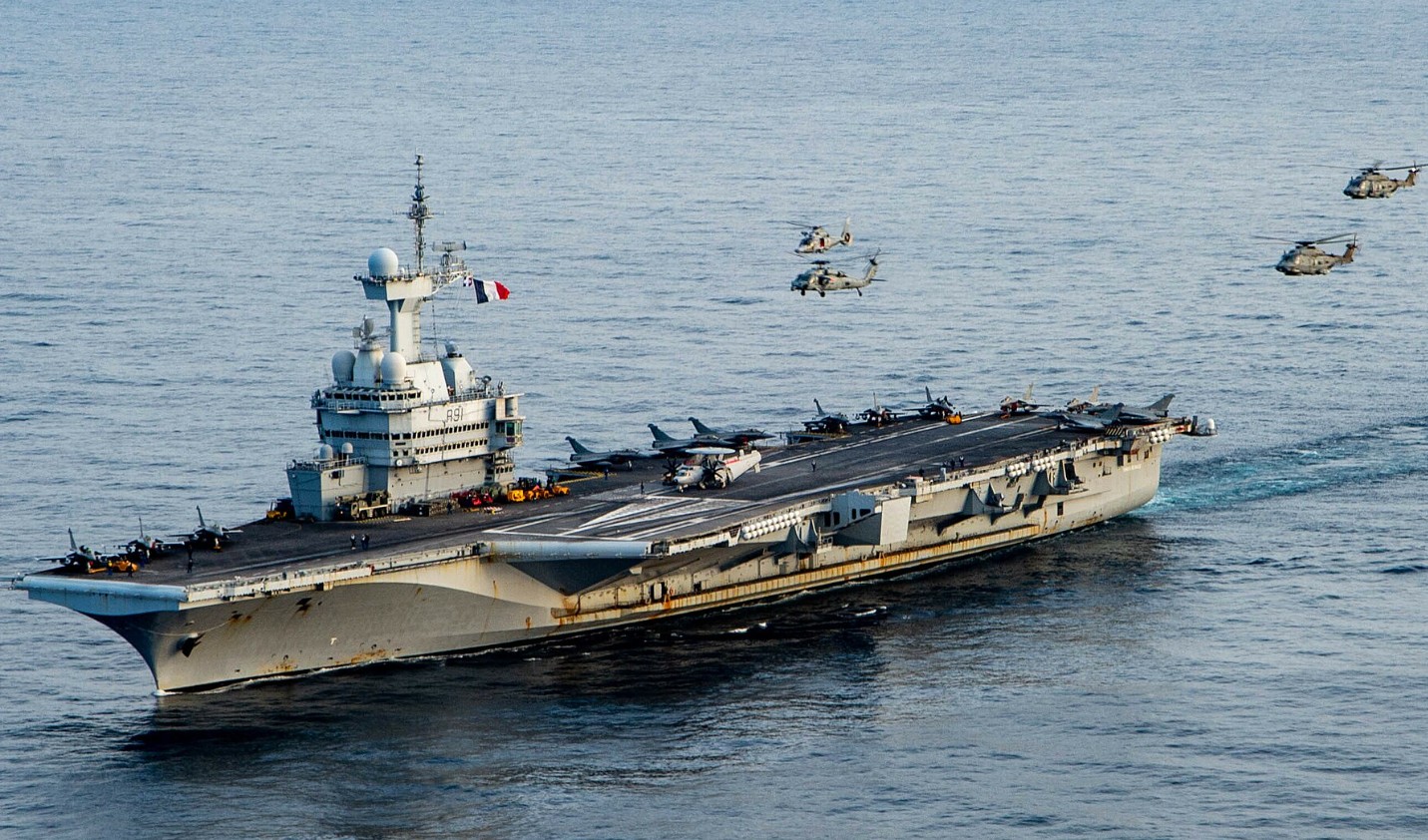
The Charles de Gaulle is one of the formidable exemplars of modern naval engineering, a testament to France’s commitment to maintaining a robust strategic military presence. As France’s first nuclear-powered surface vessel, the Charles de Gaulle has been at the center of numerous military operations and exercises. However, while its contributions to France’s naval capabilities are undeniable, the aircraft carrier has encountered several challenges since its commission.
Advanced Specifications and Tactical Capabilities
The Charles de Gaulle stands as a beacon of France’s naval strength, embodying several advanced technological features designed to enhance its operational capacity.
- Displacement: Approximately 42,000 tonnes
- Length: 261.5 meters (858 feet)
- Speed: Over 27 knots
- Aircraft Capacity: Carries about 40 aircraft including Rafale M, E-2C Hawkeye, and helicopters
- Powerplant: Two K15 pressurized water reactors
With its nuclear reactors, the Charles de Gaulle can operate independently for approximately seven years before needing refueling. This autonomy allows the carrier to deploy at a moment’s notice across vast distances, a strategic asset in crisis situations.
Operational Challenges and Maintenance Issues
Despite its impressive capabilities, the Charles de Gaulle has faced numerous operational challenges that have posed significant hurdles to its deployment schedule and effectiveness. Shortly after its commissioning in 2001, it became evident that propulsion issues were a major setback. Specifically, the ship faced recurring issues with its propellers, which had defects requiring expensive and extensive repairs.
Beyond its initial propulsion problems, the vessel has undergone multiple refits and maintenance cycles much longer than anticipated. For example, in 2007, the aircraft carrier underwent major refitting that lasted 15 months. This was followed by another extensive refit between 2017 and 2018, aimed at upgrading and enhancing the vessel’s systems to keep up with modern warfare demands.
Security and Environmental Concerns
With its nuclear power system, the Charles de Gaulle also has to address critical security and environmental concerns. The presence of nuclear reactors on board necessitates stringent safety protocols to prevent radioactive leaks or accidents. In 2011, during a routine exercise, a minor radiation leak was detected, causing considerable public scrutiny and demanding immediate rectification efforts by naval technicians.
Environmentalists have also raised concerns about the potential impact of its operations on marine ecosystems, especially considering the threats that naval maneuvers pose to marine life. Efforts to mitigate these impacts include updated protocols to ensure more environmentally-friendly operations.
Contribution to Naval Operations and Strategic Initiatives
Nonetheless, the Charles de Gaulle has played an indispensable role in France’s strategic military endeavors. It has been deployed in multiple critical missions, including Operation Enduring Freedom in 2001 targeting Taliban forces in Afghanistan, and more recent operations against ISIS in the Middle East. Its deck has been a launchpad for significant air sorties, highlighting its tactical significance.
The aircraft carrier’s presence in international waters not only extends France’s military reach but also bolsters NATO operations. Its ability to act as a mobile airbase allows for unparalleled versatility and response capabilities in conflict zones, providing critical air support when ground operations depend on unwavering aerial surveillance and attack capabilities.
The Future of French Naval Power
Looking ahead, the French Navy is intent on extending the operational life of the Charles de Gaulle through ongoing technological upgrades and refits until its planned service cessation in 2040. Plans for its replacement have already begun, with a new generation aircraft carrier expected to take its place, ensuring that the prowess displayed by the Charles de Gaulle remains part of France’s strategic arsenal.
The development of the new carrier project, known as the PANG (Porte-Avions de Nouvelle Génération), aims to continue where the Charles de Gaulle leaves off, incorporating advanced stealth features, sustainability solutions, and enhanced automation in response to the modern demands of naval warfare.
The journey of the Charles de Gaulle has been marked by both achievements and challenges. As France continues to invest in its navy, the lessons learned from its flagship aircraft carrier are sure to inform the design and operational methodologies of future vessels.