


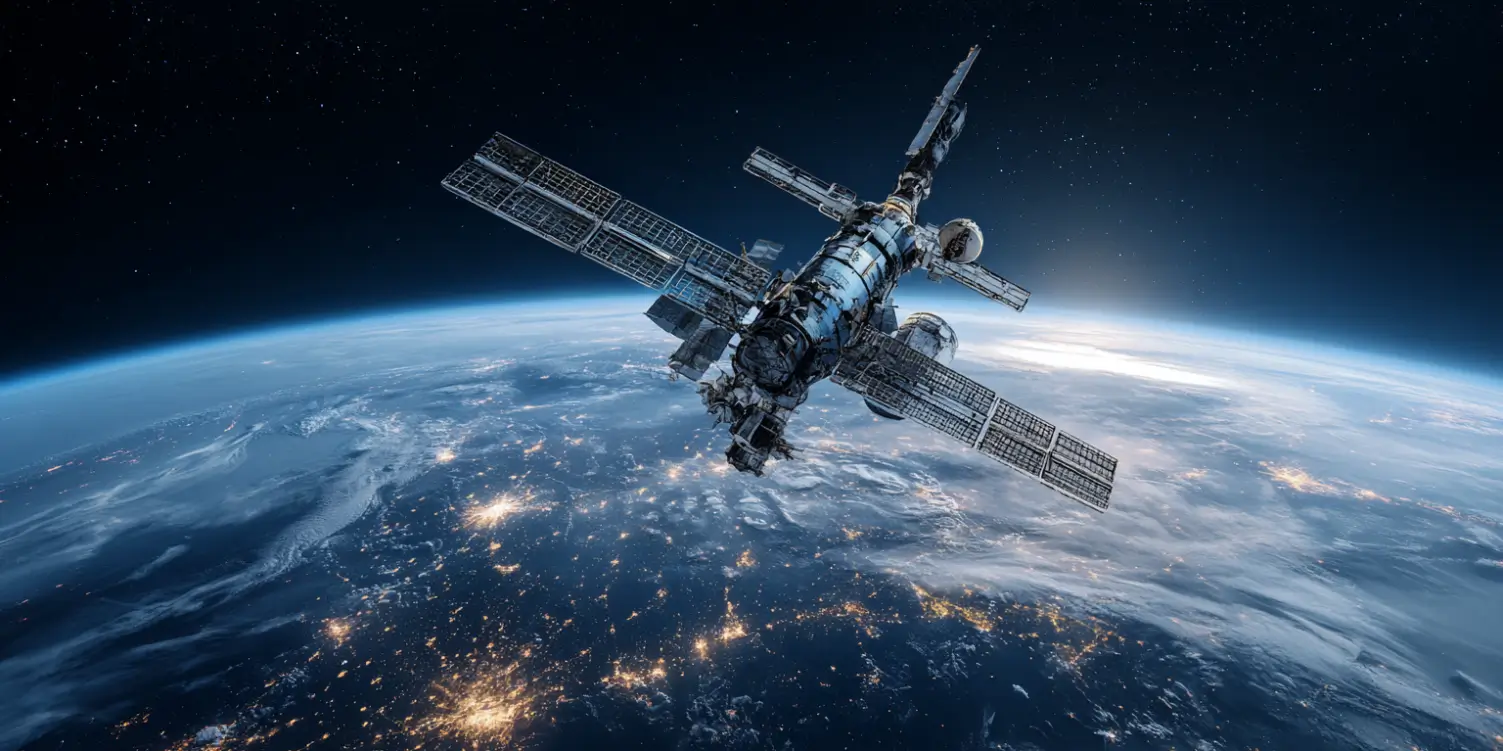
The journey of technology from terrestrial beginnings to astronomical heights is as expansive as the universe itself. We are witnessing an era where colossal technological advancements not only reshape our planet but also extend beyond the skies.


Achievements on Earth Fueling Space Exploration
Technological accomplishments on Earth have laid the groundwork for the breath-taking exploration of space. These developments encompass powerful computational capabilities, advanced materials, and sophisticated engineering techniques that enable space agencies and companies to venture further than ever before.
Computational Power and Big Data
The advent of big data and generative artificial intelligence is propelling space technology. Satellites equipped with high-resolution sensors generate terabytes of data every day. Processing such vast amounts of information requires sophisticated algorithms and immense computational power. Earth-based technologies, including cloud computing and machine learning, are utilized to analyze this data, providing insights that are critical for navigating and understanding space environments.
Material Science Innovations
Revolutionary advancements in material science have provided the foundation for durable and lightweight spacecraft. From carbon composites to advanced alloys, these materials resist extreme temperatures and the vacuum of space, ensuring missions can last for extended periods without degradation.
The Role of Innovative Propulsion Systems
Space has become more accessible due to innovative propulsion systems that are reducing the cost and increasing the reliability of launches. Reusable rocket technology, such as that pioneered by companies like SpaceX, has dramatically lowered the expenses associated with reaching orbit and beyond.
Additionally, emerging propulsion technologies, such as ion thrusters and solar sails, offer alternatives that could revolutionize deep-space exploration. These systems are more efficient and offer greater longevity than traditional chemical rockets.
Breakthroughs in Reusable Rockets
The concept of reusable rockets has shifted from fiction to reality. SpaceX’s Falcon 9 rocket exemplifies this technology. It can land vertically back on Earth’s surface after delivering its payload, drastically cutting costs and demonstrating the potential for sustainable space travel.
Satellite Technologies Enhancing Exploration
Satellite technology continues to evolve at a rapid pace, becoming smaller, more efficient, yet packing more power. This miniaturization allows for the deployment of entire swarms of satellites, known as satellite constellations, expanding our capability to monitor Earth, explore distant planets, and enhance global communications.
- CubeSats: Tiny satellites that pack a significant technological punch, often used for educational, surveillance, and communication purposes.
- Starlink: A satellite internet constellation constructed by SpaceX to provide satellite Internet access globally, showcasing the integration of communication networks with space technology.
The Impact on Global Communication
These advancements are not only scientific but also practical. Enhanced global communication systems directly connect humans across the world. Technologies like Starlink aim to provide high-speed internet to even the most remote areas, reducing the digital divide and fostering an interconnected global community.
Moreover, satellite imaging and data analytics help in disaster management, climate monitoring, and agricultural optimization, highlighting the vital role space technology plays in everyday life.