

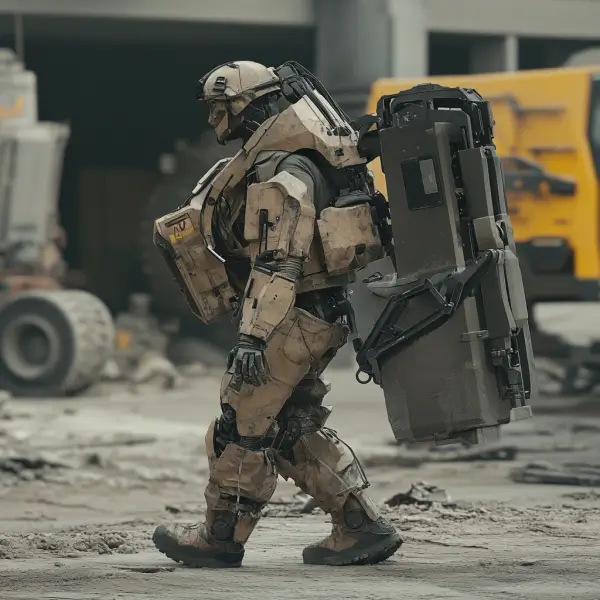
In the ever-evolving landscape of military technology, passive exoskeletons are emerging as a groundbreaking solution to augment physical capabilities without the complexity and power demands associated with active systems. These devices offer a range of physical benefits, enhancing the endurance and strength of military personnel while remaining lightweight and energy-efficient.
Understanding Passive Exoskeletons
Unlike active exoskeletons, which rely on motors and power sources to assist movement, passive exoskeletons utilize mechanical systems designed to distribute weight and reduce strain. By employing springs, dampers, and carefully structured frames, these devices assist muscular and skeletal movements by harnessing biomechanical techniques that require no external power source. This makes passive exoskeletons inherently more reliable and easier to maintain in the field.
Key Benefits
Passive exoskeletons confer several advantages that make them particularly suitable for military use:
- Weight Distribution: By redistributing the weight of heavy gear across the body, these exoskeletons reduce fatigue and the risk of injury.
- Enhanced Endurance: Soldiers can walk longer distances without tiring quickly, maintaining operational readiness.
- Low Maintenance: Without complex electronics and battery systems, passive exoskeletons are easier to maintain and repair in austere environments.
- Cost-Effective: Typically cheaper to produce than powered variants, making wide-scale deployment more feasible.
Specifications and Technologies
While specific designs vary, most passive exoskeletons incorporate similar components aimed at reducing load and enhancing mobility:
| Component | Description |
|---|---|
| Frame Material | Lightweight aluminum or carbon fiber to ensure durability and reduce fatigue. |
| Joint Systems | Spring-loaded or elastomeric elements that store and release energy with movement. |
| Load-Bearing Mechanisms | Designed to transfer the weight of the backpack or gear to the hips or other major load-bearing parts of the skeleton. |
| Adjustment Features | Customizable fit for individual body types and equipment loads. |
Applications in Military Operations
The battlefield applications of passive exoskeletons are multifaceted, enhancing the effectiveness of soldiers in diverse scenarios. In logistics units, for instance, they enable personnel to lift and carry heavy equipment over long distances without exhaustion. Infantry units wearing these devices can sustain long marches with full gear, maintaining a higher level of operational capability.
Training and Adaptation
Training with passive exoskeletons involves acclimatizing soldiers to the natural movement supported by the device. This includes understanding load distribution and gaining confidence in the exoskeleton’s support capabilities. Once familiarized, soldiers report increased comfort and a noticeable reduction in fatigue.
Case Studies and Research
Several military organizations have conducted field tests and trials that showcase the benefits and limitations of passive exoskeletons. A Comprehensive Study conducted by the U.S. Army Natick Soldier Research, Development, and Engineering Center found that soldiers wearing passive exoskeletons experienced a significant reduction in musculoskeletal strain and reported fewer injuries during training exercises.
Moreover, European forces are experimenting with exoskeletons to enhance operational endurance in rugged terrains, and early results suggest improvements in mobility and logistic task efficiency.
Despite their advantages, passive exoskeletons face challenges such as limited adaptability to different operational environments and ergonomics for diverse body types. Innovations continuously focus on improving the comfort and adaptability of these devices, ensuring they can be integrated seamlessly into existing military gear without impeding other functions or movements.
Advancements in materials science and biomechanics are guiding future developments, promising even more effective systems that can be quickly deployed on the modern battlefield.