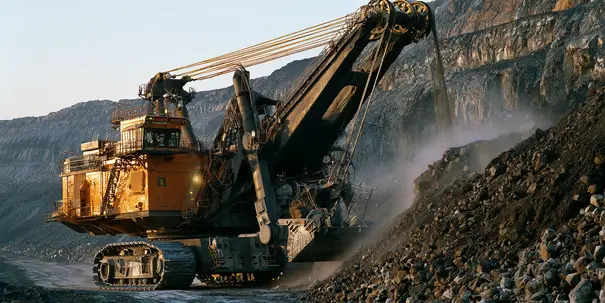
There is something gloriously absurd about mining machines at the very top of the size chart. These are not merely vehicles or tools; they are industrial apex predators, purpose-built to chew through rock, strip away overburden, and shift the crust of the Earth with a kind of mechanical confidence that feels almost unreal. In a world obsessed with speed and stealth, mining giants are the opposite: slow, vast, loud, and absolutely unstoppable.
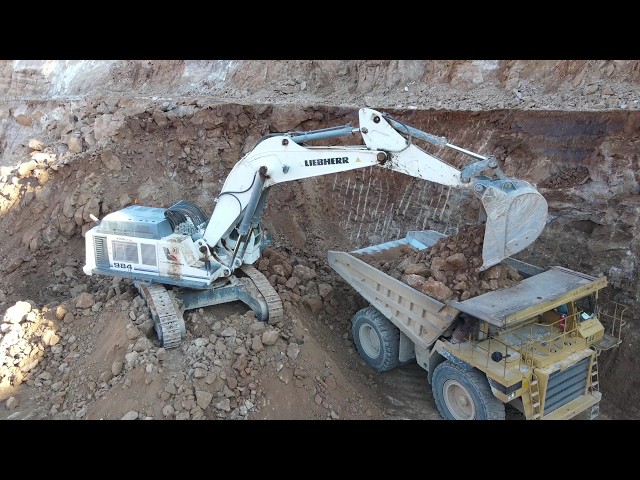
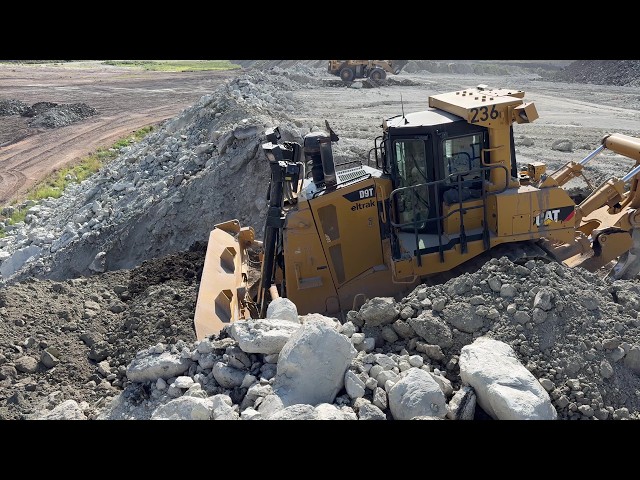
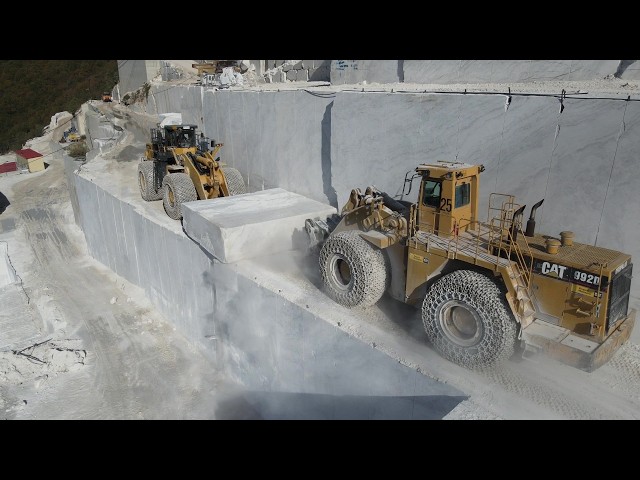
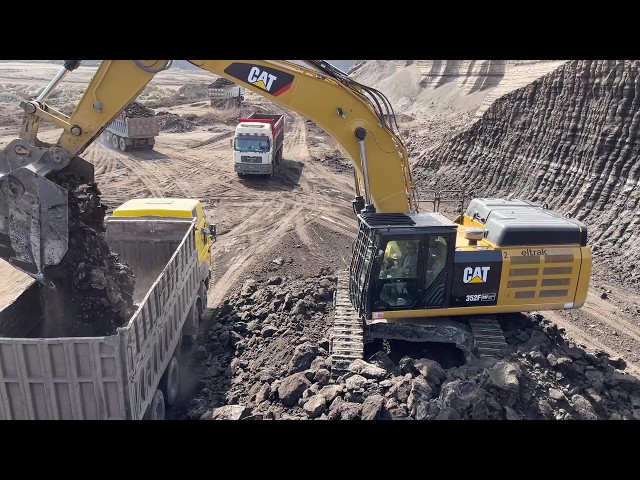
These machines are the heavy armor of the resource world. They are engineered to work for decades in brutal conditions, often in remote locations where temperatures swing wildly and dust gets into everything. Some are so large that they require their own roads, their own maintenance crews, and in some cases their own power plants. If you have ever looked at a dump truck and thought, that seems big, the biggest mining machines will recalibrate your sense of scale almost immediately.
Why Mining Machines Got So Large
Mining equipment scales up for one very simple reason: efficiency. A larger machine can move more material per hour, reduce the number of passes needed, and lower the cost per ton extracted. In open-pit mining especially, every extra cubic meter moved more efficiently can mean millions of dollars over the life of a mine.
But there is a catch: size creates its own engineering nightmare. Bigger machines need stronger frames, more robust drivetrains, better suspension systems, larger hydraulic circuits, and more sophisticated control systems. They also need components that can survive punishing shock loads, abrasive material, and nonstop operation. The result is a fascinating balancing act between brute force and precision engineering.
These machines are often built around a few core design priorities:
- Maximum payload for haul trucks
- Continuous material removal for excavators and bucket-wheel systems
- Durability in abrasive, high-load environments
- Maintainability in remote industrial sites
- Fuel or power efficiency at massive scale
The Heavyweights: Machines That Dominate the Category
When people talk about the largest mining machines, they usually mean a few iconic categories: ultra-class haul trucks, draglines, bucket-wheel excavators, and huge electric shovels. Each solves a different problem, and each does it with spectacular overkill.
1. Ultra-Class Haul Trucks
These are the off-road monsters that haul ore, waste rock, and overburden from the pit to processing areas or dump sites. They are the mining equivalent of a battleship rolling through a quarry. Some of the largest models can carry more than 400 metric tons in a single load.
The crown jewel of this class is the BELAZ 75710, widely regarded as one of the largest haul trucks ever built. It looks less like a truck and more like a mobile fortress with giant wheels. The machine uses dual diesel engines, massive tires, and an articulated design that lets it carry ridiculous payloads across rough terrain.
What makes these trucks so impressive is not only their load capacity, but the engineering behind their movement. Tires can be over 4 meters tall. Braking systems must absorb unimaginable kinetic energy. Suspension systems must keep the truck controllable when fully loaded on uneven surfaces. And because downtime is so expensive, every subsystem is designed with serviceability in mind.
2. Draglines
If haul trucks are the armored personnel carriers of surface mining, draglines are the siege engines. These enormous excavators use a bucket suspended from a boom by cables, allowing them to remove massive amounts of overburden without needing to sit directly on the cut face. Their range is immense, and their ability to strip away layers of earth is unmatched in certain operations.
The legendary Big Muskie remains one of the most famous draglines in history. Though retired, it became an icon because of its outrageous scale. Modern draglines, while not always as famous, still rank among the biggest machines on the planet. They are typically electrically powered and can weigh thousands of tons.
Draglines are particularly useful in coal and some large open-pit operations because they can move material efficiently over long reaches. Their buckets can hold dozens of cubic meters of material, and their booms can extend far enough to swing spoil away from the working area. The result is a machine that seems to operate on a completely different industrial logic than conventional excavators.
3. Bucket-Wheel Excavators
Now we enter the realm of the truly surreal. Bucket-wheel excavators are among the largest land vehicles ever built, and they look like something a science-fiction set designer would invent after too much espresso. A giant rotating wheel fitted with buckets continuously scoops material and transfers it onto conveyors. This is not stop-and-go digging; this is continuous extraction on a truly industrial scale.
These machines are often used in large-scale lignite mining in Europe and other regions where vast, relatively soft deposits can justify such enormous systems. The biggest examples can stretch more than 200 meters in length and weigh tens of thousands of tons. They are so large that their movement across a mine can be tracked like a small city shifting position.
The engineering marvel here is the integration. A bucket-wheel excavator is not just a digging machine; it is a moving factory of conveyors, structural trusses, power systems, and control stations. Its sheer complexity is part of its charm. Everything about it screams industrial ambition taken to the edge.
4. Electric Rope Shovels
These beasts are the backbone of many large surface mines, especially where massive loaders must fill ultra-class haul trucks with high-volume material. Electric rope shovels combine enormous digging power with impressive cycle times. Their buckets can move huge amounts of rock with each bite, and their electric systems provide consistent torque and reliability.
One of the defining characteristics of these machines is their ability to work in demanding cycles for long shifts. They are not built for elegance; they are built for relentless productivity. Their cabs perch high above the ground, giving operators command over a working envelope that feels like piloting a ship from the bridge rather than driving a machine.
Modern rope shovels are designed with advanced diagnostics, automated systems, and improved operator visibility. Even so, the core experience remains wonderfully old-school in a way: massive steel structure, cables, pulleys, buckets, and the raw sensation of moving geology one scoop at a time.
The Engineering Challenges Behind the Giants
Building a machine this large is not just about making everything bigger. In fact, scaling introduces new problems that do not exist at smaller sizes. Structural stresses increase dramatically. Component wear becomes more severe. Heat management becomes a major concern. Transporting the machine to site can be a project in itself.
Consider tires alone. A tire for an ultra-class haul truck is a feat of materials engineering, designed to support immense static and dynamic loads while resisting puncture and heat buildup. Or think about the drive systems: many of these machines use diesel-electric architecture because direct mechanical transmission becomes impractical at such scale. Electric motors offer better torque control and simplify the delivery of enormous power.
Maintenance is another battlefield. A broken part on a giant mining machine can halt production worth staggering amounts of money. That means condition monitoring, predictive maintenance, and modular replacement strategies are essential. These machines often include sensors that track vibration, temperature, pressure, and fatigue so engineers can catch failures before they become catastrophic.
Then there is the human factor. Operators need exceptional training, and mines often build extensive safety procedures around machine interactions. Visibility, communication, and automation all play a role in reducing risk. The bigger the machine, the more unforgiving the environment becomes.
Why They Still Matter in an Automated Age
As automation and remote operation spread through mining, these giants are becoming even more capable. Autonomous haulage fleets are already changing how material moves across mines, while advanced control systems help optimize digging cycles and maintenance intervals. The machines are not shrinking; they are getting smarter.
That is part of the magic. These monsters are not relics of a brute-force past. They are evolving platforms that blend enormous physical capability with software, sensors, and data analytics. In a modern mine, a giant truck or excavator may be operating with far more intelligence than its size suggests.
There is also a strategic dimension. Mining is foundational to modern industry, supplying the raw materials needed for steel, batteries, infrastructure, electronics, and energy systems. The world’s largest mining machines are therefore not just engineering curiosities. They are part of the hidden machinery of civilization.
What Makes Them So Fascinating
Part of the appeal is simple visual awe. A person standing beside an ultra-class haul truck is reminded, in the most humbling possible way, that human engineering can still create objects that feel mythic in scale. The machines are so large that they distort the relationship between body and landscape. A single bucketful can contain enough material to fill several ordinary construction vehicles. A single tire can tower over a person like a small house.
But the deeper fascination lies in the combination of extremes: brute force and precision, mass and motion, power and control. These machines are not just large; they are large and effective. That is what separates them from spectacle. They are not built to impress, even though they inevitably do. They are built to work.
And work they do—day after day, in dust, heat, mud, and darkness—moving entire mountains in the service of modern industry. If naval power has supercarriers and aerospace has launch towers, mining has these giant machines: steel, hydraulics, electricity, and ambition writ across the Earth itself.
In the end, the world’s largest mining machines are more than equipment. They are monuments to what happens when engineering is pushed to the edge of practicality and told to keep going anyway. They haul, dig, strip, and carve on a scale that feels almost geological. And that is exactly why they are so unforgettable.