

Urban warfare presents unique challenges that distinguish it from combat in open fields or rural areas. The dense environment, civilian presence, and architectural landscape require specialized tactics and equipment. In the ongoing conflicts within the Gaza Strip, these challenges are magnified, demanding innovative military strategies and a diverse combat arsenal.
You Might Also Like
Heavy Machinery: Tanks in Urban Combat
Tanks have long been a staple of land-based military operations. However, their utility in urban environments like Gaza is often debated. The main advantages of tanks include their heavy armor and firepower. In an area where threats can emerge from any direction, the fortified defense of a tank offers immense protection for soldiers.
The Merkava series of tanks, employed by the Israeli Defense Forces (IDF), are particularly notable in this region. The Merkava IV, for example, offers advanced features such as an active protection system designed to intercept incoming threats.
- Engine Power: 1,500 hp
- Main Armament: 120mm smoothbore gun
- Crew: 4
- Max Speed: 64 km/h (40 mph)
UAVs: Eyes in the Sky
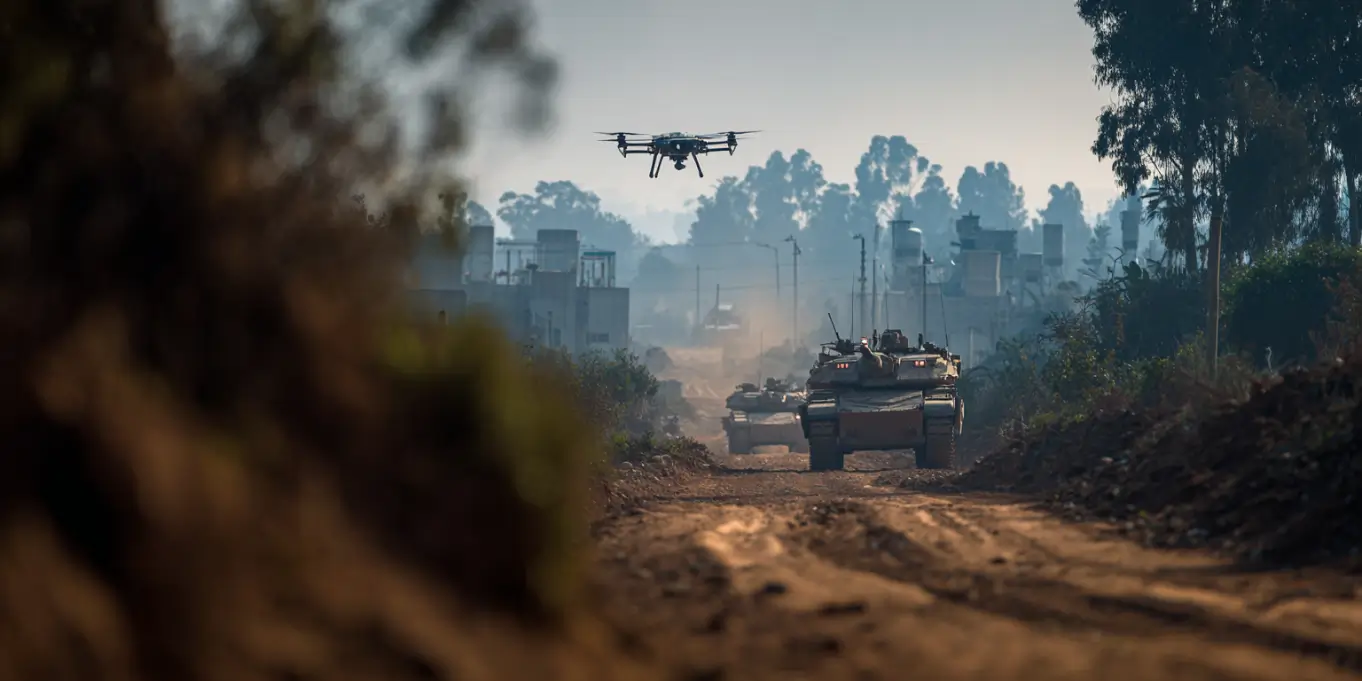
In urban warfare, intelligence and reconnaissance are critical. Unmanned Aerial Vehicles (UAVs) or drones have transformed how modern battles are fought, offering unparalleled surveillance capabilities. In Gaza, UAVs provide crucial real-time video feeds to command centers, enabling precise and informed decision-making.
The use of UAVs ranges from small quadcopters for close monitoring to larger systems like the Heron and Hermes 900, which can operate at higher altitudes.
Electronic Warfare and Cyber Operations
As conflicts evolve, electronic warfare and cyber operations have grown in importance. In the Gaza Strip, securing communication lines and disrupting enemy networks can give a significant tactical advantage. Methods such as signal jamming, interception, and cyber-attacks are employed to manipulate the information landscape.
Both the IDF and Hamas utilize these technologies to achieve their objectives. The complexity of these operations requires advanced equipment and highly trained personnel.
Infantry Tactics: The Human Factor
Despite technological advancements, infantry troops remain at the core of urban combat. The dynamic nature of such environments demands high adaptability from soldiers. Training focuses on building skills such as room-clearing, hostage rescue, and close-quarters combat. Maneuvering in a labyrinth of narrow alleys and partially destroyed buildings necessitates keen situational awareness and rapid decision-making.
Personal protective equipment (PPE) like bulletproof vests and helmets are crucial. Additionally, body-worn cameras and infrared sensors contribute to comprehensive situational awareness for both commanders and soldiers on the ground.
Logistics and Supply Chains
In any military operation, logistics serve as the backbone. Ensuring a steady supply of ammunition, food, and medical supplies is vital in urban warfare. The constricted and chaotic nature of urban environments in Gaza poses significant logistical challenges.
Logistical strategies have adapted to meet these demands, focusing on modular and mobile supply units which can quickly be repositioned. Autonomous transport vehicles and drones are increasingly used for resupply missions, reducing human risk.
Balance Between Military Operations and Humanitarian Concerns
The presence of civilians adds a layer of complexity. Rules of engagement are designed to minimize civilian casualties, yet striking a balance between military objectives and humanitarian concerns remains a perpetual challenge. Precision-guided munitions are often employed to target specific threats while mitigating collateral damage.
Organizations like the Red Cross and United Nations emphasize adherence to international laws to safeguard human rights during such conflicts.