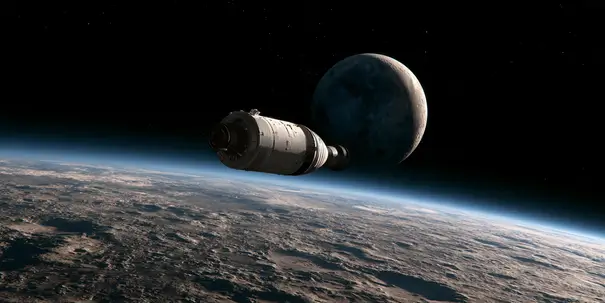
NASA’s Artemis program is more than a return trip to the Moon. It is a rebuilding effort for deep-space operations, a test of whether the United States can sustain human presence beyond low Earth orbit, and a rehearsal for the kind of missions that will eventually carry crews to Mars. From a practical standpoint, Artemis is a hard military-style logistics problem: move people, hardware, power, communications, and life support across 240,000 miles of vacuum and make it all work on the first try.

For those of us who have spent time around complex systems, the logic is familiar. The Moon is not just a destination; it is a proving ground. Every launch, docking, burn, and surface activity has to function inside tight margins. There is no rescue helicopter, no maintenance truck, and no room for sloppy engineering. That reality gives Artemis its significance. It is not about repeating Apollo. It is about building a more capable, more sustainable lunar architecture.
What Artemis Is Trying to Do
At its core, Artemis aims to land astronauts on the lunar surface, establish a long-term human presence near the Moon, and develop the infrastructure needed for repeated missions. The program is built around a series of phased objectives:
- Launch astronauts into deep space aboard NASA’s Space Launch System, or SLS
- Use the Orion spacecraft to carry the crew safely to lunar orbit and back
- Support lunar surface missions with commercial landers and future infrastructure
- Build toward the lunar Gateway, a small station in orbit around the Moon
- Develop the systems, procedures, and experience needed for Mars-class missions
The program is named for Artemis, the sister of Apollo in Greek mythology. That is fitting, but the real story is less symbolic and more operational. NASA is trying to create a sustainable campaign, not a one-off stunt. That means redundancy, international partners, commercial support, and a lot of engineering discipline.
The Flight Stack: SLS and Orion
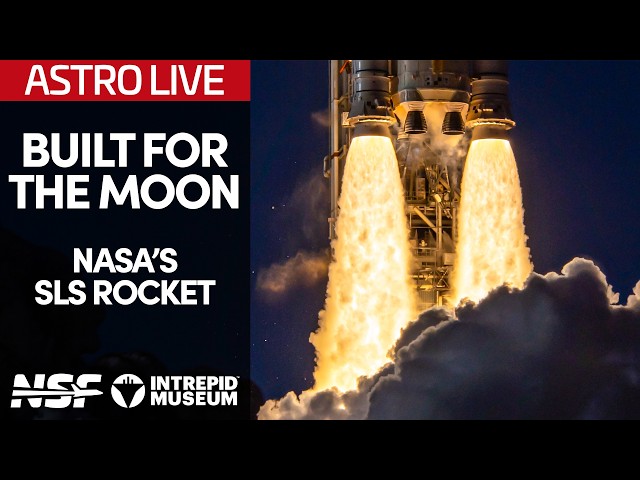
Artemis depends on two major government-built systems: the Space Launch System and Orion. The SLS is the heavy-lift rocket designed to send Orion and its crew toward the Moon. Orion is the crew capsule that carries astronauts through launch, deep-space transit, reentry, and splashdown. In field terms, SLS is the transport and Orion is the armored cab.
NASA’s design choice reflects a simple truth: deep space is unforgiving. The vehicle has to push a large payload out of Earth orbit and then do it reliably enough to justify risking crew. SLS is built for that mission, though it is expensive and has drawn criticism for slow production and high cost per launch. Still, when the goal is to send humans beyond Earth’s protective magnetosphere, payload mass and performance matter more than public relations.
Orion is equally important. It is designed for long-duration missions with life support, avionics, radiation protection, and a heat shield capable of surviving the brutal return from lunar velocities. That heat shield is not a minor detail. Reentry from the Moon is a serious energy problem, and the capsule must absorb it all while keeping the crew alive. Apollo proved the concept decades ago; Artemis is trying to do it with modern systems and higher reliability expectations.
Why the Moon Matters Again
The Moon is useful for several reasons. It is close enough for missions to be measured in days, not months, but far enough away to test deep-space procedures. It has a harsh environment that reveals weaknesses quickly. If a system can function there, it has a better chance of working on Mars.
There is also a strategic dimension. Nations that can transport crews, support them in space, and sustain operations on another world will shape the next era of space activity. Lunar exploration is not military in the conventional sense, but it has clear implications for national power, industrial capability, and technological leadership. Communications, navigation, robotics, power systems, and materials science all feed into that larger competition.
The lunar south pole is especially important. That region includes permanently shadowed craters where water ice may exist. Ice is not just a science curiosity. It can be broken down into oxygen and hydrogen, which could support life support systems, fuel production, and long-term operations. If that resource can be harvested economically, the Moon starts becoming an operating base rather than just a place to visit.
Artemis I: The Uncrewed Test That Set the Tone
Artemis I was the first major flight of the program and a critical proof of concept. It sent an uncrewed Orion capsule around the Moon and back, testing SLS, Orion, and mission control procedures under real flight conditions. That kind of test matters because ground simulations only tell part of the story. Space exposes vibration loads, thermal behavior, timing issues, and software interactions that can’t be fully replicated on Earth.
The mission returned valuable data on Orion’s systems, including its thermal protection performance and deep-space operations. For anyone used to evaluating field equipment, the lesson is obvious: a system is only as good as the conditions it survives. Artemis I gave NASA a chance to see where the design was solid and where the process needed refinement.
Artemis II and the Human Factor
Artemis II will be the first crewed mission of the program. It is expected to send astronauts around the Moon and bring them home without landing. That may sound like a simple repeat of Apollo-era lunar orbit missions, but it serves a critical purpose. Human beings are not passive cargo. They change the risk picture. Life support, crew health, manual procedures, decision-making, and contingency management all become part of the mission profile.
In practical terms, Artemis II will validate the human side of the system. Can the crew live inside Orion for the duration? Can ground teams manage real-time operations over deep-space communication delays? Can the spacecraft handle the added complexity of people aboard? These are not abstract questions. They are the difference between a spacecraft and a usable operational platform.
Landing on the Moon Again
The first crewed lunar landing under Artemis is planned for a later mission, which will use the Human Landing System program. Instead of NASA building every piece itself, the agency has chosen to work with commercial partners to deliver astronauts from lunar orbit to the surface and back. That is a significant shift in acquisition strategy. It spreads technical risk and encourages innovation, but it also requires disciplined integration.
Landing on the Moon is not easy. There is no atmosphere to slow descent, so spacecraft must rely entirely on propulsion. Terrain matters. Dust matters. Visibility matters. The landing zone has to be chosen carefully to balance safety, science value, and access to resources. At the south pole, lighting conditions are extreme, with some areas in near-permanent shadow and others in near-constant sunlight. That creates operational challenges for power generation, navigation, and thermal control.
For the crew, the landing mission will be the first real test of surface operations in the Artemis era. The objectives may include collecting samples, testing surface systems, and practicing the routines that will define future lunar campaigns. In a broader sense, it will show whether NASA has built a system that can move from exploration to repeatable presence.
The Lunar Gateway and the Logistics Chain
The Gateway is often misunderstood as just another space station. It is more than that. It is intended to be a staging point, communications node, and logistics hub in lunar orbit. Think of it as a forward operating base, but in orbit rather than on the ground. It allows mission planners to assemble, stage, and support lunar operations with more flexibility than a direct Earth-to-surface approach.
From a tactical viewpoint, the Gateway matters because it creates an intermediate layer between Earth and the lunar surface. That means more options for mission design, crew transfer, cargo handling, and emergency planning. It also gives international and commercial partners a place to plug into the mission architecture. Space programs succeed when the logistics chain is dependable, and Gateway is meant to strengthen that chain.
The Hard Problems Still Ahead
Artemis faces the same kind of friction that has slowed many ambitious programs: cost, schedule, technical complexity, and political pressure. Heavy-lift rockets are expensive. Deep-space life support is difficult. Surface landers must work in a hostile environment. Radiation remains a major concern for longer missions. Each layer adds risk.
There is also the question of cadence. One successful mission does not equal a sustainable program. The real measure of Artemis will be whether NASA can launch repeatedly, learn quickly, and improve the architecture over time. That is how operational capability is built in any domain. A single demonstration is impressive. A repeatable system is transformative.
Still, the case for Artemis is strong. The program is assembling the tools needed for human expansion beyond Earth orbit. It combines government leadership with commercial development and international cooperation. It is not cheap, and it is not simple, but then few worthwhile efforts are. If Artemis succeeds, it will do more than put boots back on the Moon. It will establish the procedures, hardware, and confidence needed for the next stage of human spaceflight.
That is the real mission: not nostalgia, but endurance. Not a flag-planting moment, but a sustained campaign. And if NASA can pull it off, the Moon will become less of a distant milestone and more of a working outpost in humanity’s expansion into deep space.