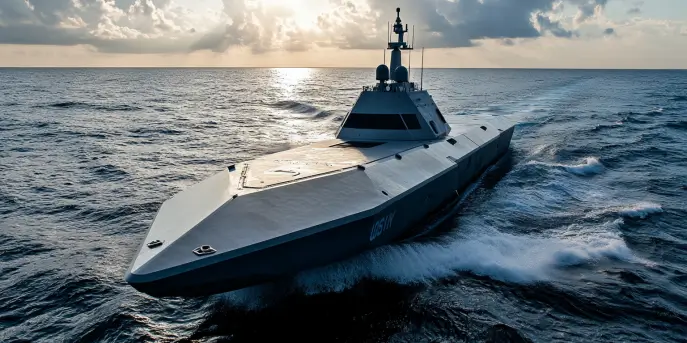


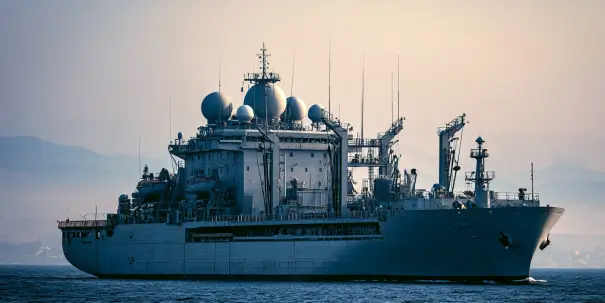
Out at sea, where radar horizons stretch, signals ricochet, and a nation’s military activity leaves a thousand tiny digital footprints, intelligence collection ships are some of the most fascinating platforms afloat. They look like ordinary auxiliary vessels to the casual eye, but inside the superstructure is a floating electronics laboratory packed with antennas, receivers, processing racks, and analysts’ stations. These ships are built to do one thing exceptionally well: find, capture, classify, and exploit information that other nations would prefer remain hidden.
You Might Also Like
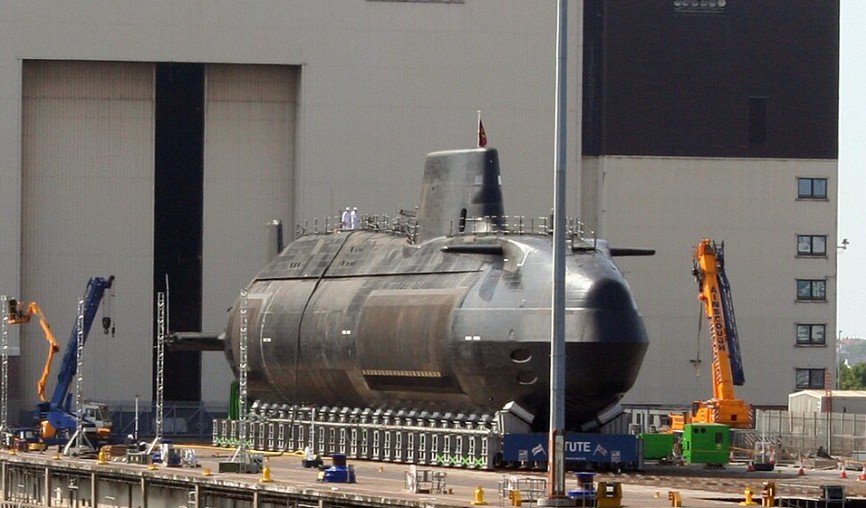
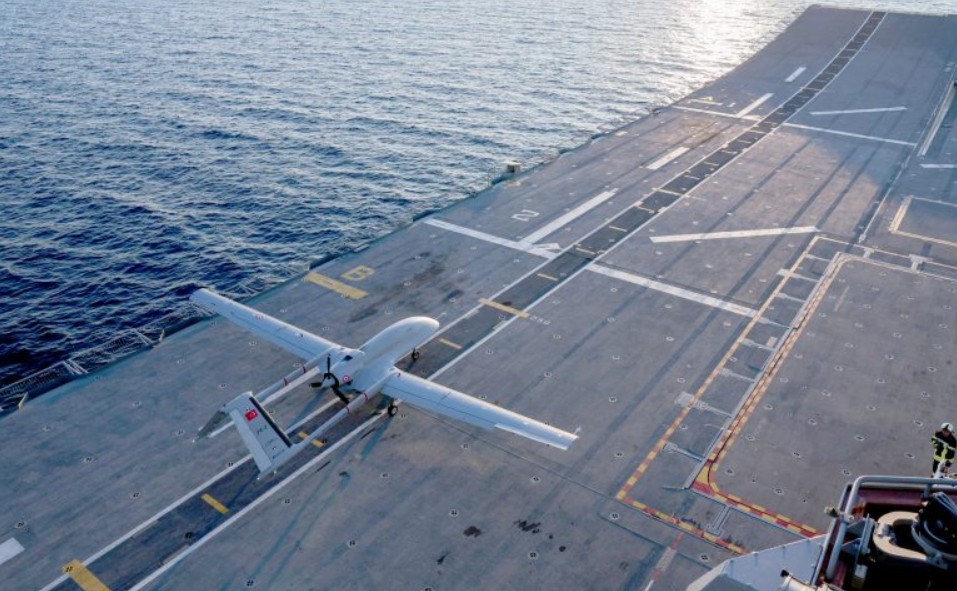
What makes them so valuable is not raw speed or firepower. It’s patience, persistence, and exquisite sensing. An intelligence collection ship can loiter near a contested region, monitor radio traffic, map radar emissions, record naval maneuvers, and build a detailed electronic picture of an opponent’s order of battle. In modern warfare, where emissions can reveal as much as a battlefield photograph, that kind of awareness is pure gold.
The mission set: listening to the sea and the spectrum
These ships are usually designed around signals intelligence and electronic intelligence collection. That means they search for anything that emits energy: voice communications, encrypted data bursts, navigation radars, fire-control radars, aircraft transponders, telemetry, and even subtle changes in electronic behavior that hint at a system’s operating mode. The ocean gives them a wide, unobstructed platform to do it from, and their sensors are tuned to exploit that advantage.
Unlike a combat ship that focuses on firing solutions and survivability in a fight, an intelligence ship is a detective. It wants to stay unnoticed, maintain a low profile, and collect long enough to build patterns. A single emission may be interesting; a week of emissions can reveal routines, readiness levels, and equipment capabilities. That is why these vessels often operate in international waters or near sensitive areas where they can legally observe and listen without crossing the line into direct confrontation.
How they collect: antennas, receivers, and geolocation magic
The visible forest of antennas is not just for show. Each mast-mounted array or deckhouse sensor can be dedicated to a different slice of the electromagnetic spectrum. Wideband receivers sweep across frequencies, while more specialized systems home in on particular waveforms. Direction-finding equipment determines the bearing of a signal, and when multiple sensors are used together, analysts can triangulate a transmitter’s location with impressive precision.
Modern intelligence ships often rely on digital signal processing to make sense of the flood. Instead of manually tuning radios one at a time, onboard software can detect, sort, and tag emitters in real time. It can identify pulse repetition patterns, modulation types, and other telltale fingerprints that distinguish one radar from another. That’s crucial because two systems may occupy similar frequencies but behave very differently. In the intelligence business, the waveform is often the clue.
Geolocation is where things get really clever. If a ship can measure the angle to an emitter from two or more positions, or combine direction finding with timing differences, it can estimate where the source is. Over time, repeated passes can map out coastal radars, command posts, air defense sites, and shipboard systems. For a military planner, that map is a treasure chest of data.
What they are listening for
Some of the most important targets are naval and air-defense radars. These systems often reveal their identity through operating frequency, pulse structure, scan rate, and side-lobe behavior. Intelligence collectors can learn when a radar is switched on, how it behaves in different modes, and whether it is likely connected to a surveillance, targeting, or fire-control mission. That helps determine how dangerous the system might be in wartime.
Communications traffic is equally valuable. Even when encrypted, metadata can tell a story: who is talking to whom, how often, at what times, and during what kinds of activity. A sudden increase in radio chatter might indicate exercises, mobilization, or an unfolding crisis. When combined with other sources, this can help analysts build a remarkably complete picture of operational tempo.
Some ships also collect telemetry from missile tests or training events, especially when those events occur over water. Telemetry can expose performance data, staging sequences, and system behavior during flight. That kind of information is deeply sensitive because it helps defenders understand the strengths and weaknesses of a missile program without needing access to the hardware itself.
A floating processing center
Inside, intelligence collection ships are typically far more complex than they appear from the outside. The ship may contain mission spaces filled with racks of servers, storage arrays, recording systems, workstations, and analysis consoles. Large quantities of data are captured continuously, so redundancy matters. Systems are often designed to record raw signals for later reprocessing, because a signal that seems unimportant today may become critical once analysts have a new reference or intelligence cue.
This is also where human expertise matters enormously. Automated tools can flag patterns, but trained operators and linguists are essential for understanding context. They can distinguish routine traffic from urgent traffic, recognize call signs, and note changes in tone, procedure, or format. The best intelligence collection is a blend of machine speed and human judgment.
Survivability through discretion
These ships are not usually built to trade blows with frontline warships. Their survivability comes from discretion, not armor. A low acoustic signature, careful emissions control, and a profile that blends into the background all help reduce attention. Some may carry only light defensive armament, if any, because their real protection is political ambiguity and the fact that they are often operating at a distance from hostile coastlines.
That said, they still need to survive the maritime environment itself. Reliable propulsion, stable power generation, and good seakeeping are vital because a sensor ship that can’t maintain station is an expensive float of antennas. The best platforms are those that can stay on scene for days or weeks with minimal downtime, keeping their sensors steady and their data streams clean.
Why intelligence ships matter in modern warfare
In an era of precision weapons, long-range sensors, and integrated air and maritime defense networks, knowing where the enemy can see and hear is almost as important as knowing where the enemy is. Intelligence collection ships help answer that question. They can reveal gaps in coverage, identify emitter locations, and expose changes in readiness. In a crisis, that information can shape targeting plans, inform electronic warfare, support submarine operations, and help commanders avoid walking into a trap.
They also play a strategic deterrence role. The mere presence of a collection ship near a sensitive region can signal that a nation is watching closely. That can influence behavior, slow deployments, or encourage more cautious communications. In the chess game of maritime power, these vessels are the quiet pieces that see far more than they say.
More automation, more bandwidth, more subtlety
The next generation of intelligence collection ships is likely to be even more capable. Expect better spectrum monitoring, more advanced machine learning for emitter identification, and tighter integration with satellites, drones, and shore-based intelligence networks. As adversaries shift to frequency agility, low probability of intercept communications, and complex electronic deception, collectors will need wider bandwidth, faster processing, and smarter correlation tools.
But the core idea will remain the same. Intelligence ships succeed because they turn the sea into a listening post. They don’t need to outrun a destroyer or outgun a frigate. They need to hear more, see more, and remember more. And in military intelligence, that can be every bit as decisive as a missile salvo.