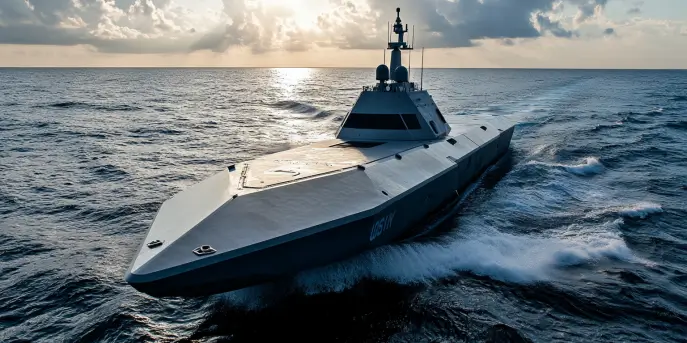


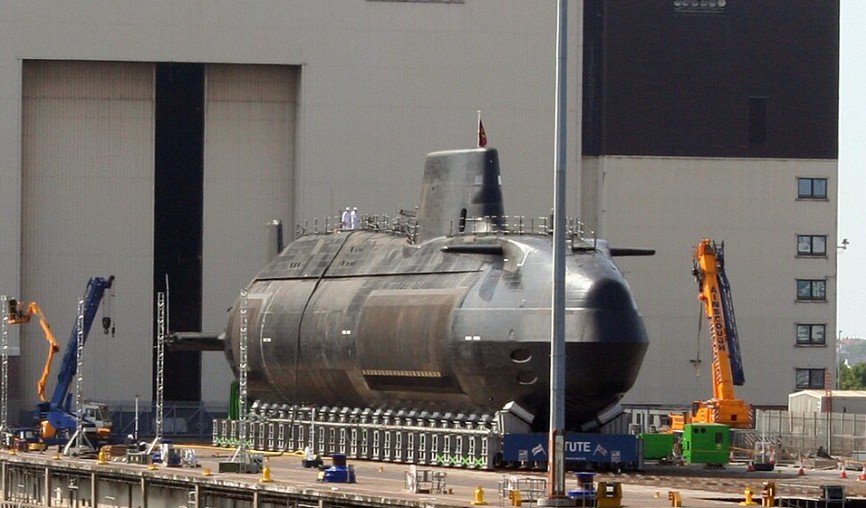
The Navy’s Next Silent Hunter
The U.S. Navy’s SSN(X) is shaping up to be the kind of submarine that makes adversaries rethink the entire undersea game. If Virginia-class boats were the polished, highly capable multi-tools of the deep, SSN(X) is being engineered as the purpose-built apex predator — faster, quieter, harder to detect, and loaded with the kind of payload flexibility that keeps planners awake at night.

What makes SSN(X) so compelling is that it is not simply a replacement for any one submarine in the current fleet. It is the answer to a harder question: how do you dominate an undersea battlespace that is becoming more crowded, more contested, and more sensor-rich by the year? The answer appears to be a submarine with more stealth margin, more speed, more weapons capacity, and more endurance — a platform designed from the keel up for the fight the Navy expects in the 2030s and beyond.
Why the Navy Wants a New Attack Submarine
The attack submarine force is carrying a heavy load. Today’s boats are expected to perform intelligence gathering, strike missions, anti-submarine warfare, anti-surface warfare, special operations support, and undersea surveillance — often all in the same deployment. That is already a brutal mission set. Now add peer competitors, advanced maritime patrol aircraft, distributed sensor networks, unmanned systems, and long-range anti-ship missiles, and the need for a leap-forward design becomes obvious.
SSN(X) is intended to be that leap. The Navy wants a submarine with a much larger margin in acoustic stealth, greater speed than the Virginia class, improved deep-ocean performance, and a payload volume that can accommodate future weapons and mission systems. In other words, this boat is not just about surviving in contested waters. It is about owning them.
What Makes SSN(X) Different
Submarine design is a balancing act between conflicting demands. You want size for weapons, sensors, and endurance, but size can mean more drag and potentially a larger acoustic signature. You want speed, but speed can create noise and consume power. You want cutting-edge sensors, but they must not betray the boat’s position. SSN(X) is all about finding a new equilibrium with more margin than current designs.
Although the program is still in development, the broad intent is clear: SSN(X) will likely be a larger and more capable attack submarine than the Virginia class, with a hull form optimized for stealth and hydrodynamics, a new propulsion architecture, and an advanced combat system built to exploit future weapons and sensors. That combination is what gives it its apex predator reputation.
Spec Sheet: What We Know So Far
| Feature | SSN(X) Expected Direction |
|---|---|
| Role | Next-generation nuclear-powered attack submarine |
| Propulsion | Advanced nuclear propulsion system |
| Stealth | Significantly improved acoustic signature reduction over Virginia class |
| Speed | Higher sustained speed and better sprint capability than current attack boats |
| Displacement | Expected to be larger than Virginia-class submarines |
| Weapons | Expanded payload capacity for torpedoes, cruise missiles, and future weapons |
| Sensors | Next-generation sonar and integrated combat systems |
| Mission flexibility | ASW, strike, ISR, special operations, seabed warfare, unmanned systems integration |
Note: Official detailed specifications have not been fully released, so many SSN(X) characteristics are based on Navy goals, program direction, and informed analysis rather than finalized public figures.
Stealth: The Real Superpower
In submarine warfare, stealth is not a feature — it is the whole game. A submarine that can hear first, shoot first, and remain unseen has a massive tactical advantage. SSN(X) is expected to push stealth to a new level through advanced hull shaping, rafted machinery, improved isolation of equipment, and a propulsion system designed to minimize acoustic leakage.
That matters because modern anti-submarine warfare is no longer just about a sonar operator listening for a noisy screw. It is a fusion fight. Passive sonar arrays, active sonars, airborne sensors, magnetic anomaly detectors, satellites, unmanned platforms, and networked processing all contribute to the search. The next American attack submarine has to be quieter not just in one band or at one speed, but across a much broader envelope of operations. That is a brutally difficult engineering challenge, and exactly the kind that makes SSN(X) fascinating.
Speed, Endurance, and the Undersea Geometry of War
Speed may not be as glamorous as stealth, but it is a serious combat multiplier. A faster submarine can reposition more quickly, respond to fleeting targeting opportunities, evade pursuit, and cover more ocean in a given amount of time. For the Navy, higher speed means more operational flexibility in a world where threats are spread across the Pacific’s vast distances.
That said, submarines are not race cars. The key is not raw top speed alone, but how much speed can be sustained without turning the boat into a noise source. SSN(X) is expected to improve on the Virginia class in this regard, giving commanders more options when timing matters. Combine that with greater endurance and a larger fuel, stores, and payload margin, and the result is a submarine that can stay forward longer and act with more independence.
Weapons Capacity: More Than Just Torpedoes
One of the most intriguing aspects of SSN(X) is the expectation of a larger payload capacity. That means more room for heavyweight torpedoes, land-attack cruise missiles, anti-ship missiles, and potentially entirely new classes of undersea weapons and sensors. The Navy is clearly thinking beyond today’s inventory and into a future where submarines may launch unmanned vehicles, deploy distributed sensors, or carry weapons that have not yet entered service.
This kind of flexibility is the real magic. A submarine with a generous weapons and mission module capacity can be reconfigured for the theater and threat. In one deployment it might be a hunter-killer stalking enemy submarines. In another it might be a stealth strike platform lurking close to shore. In yet another it could be a mother ship for undersea drones. That versatility makes SSN(X) more than a single-platform solution; it is a combat ecosystem.
How SSN(X) Compares to Virginia-Class Boats
The Virginia class is an extraordinary platform, and it would be a mistake to think of SSN(X) as replacing something obsolete. Instead, think of it as the next evolutionary leap. Virginia-class submarines are optimized for a broad mission set with strong stealth, modularity, and modern sensors. SSN(X) is expected to retain that flexibility while delivering greater stealth, more speed, and more growth margin.
In practical terms, that means a larger and more capable boat that can absorb future payloads and software upgrades without running out of space, power, or cooling capacity. That last part is huge. Modern combat systems and sensors are increasingly power-hungry, and a submarine’s electrical and thermal margins can become a hidden limiting factor. SSN(X) is being designed with the future in mind, and that future is digital, networked, and heavy on compute.
Design Challenges: Big Ambitions, Brutal Physics
There is no free lunch in submarine design. A larger hull can carry more, but it also needs to be shaped to preserve stealth and manage flow noise. More power can support advanced sensors and weapons, but it must be generated and cooled efficiently. Higher speed is great, but it can increase hydrodynamic noise and stress the propulsion plant. Every improvement comes with trade-offs.
That is why SSN(X) is such a serious engineering project. The Navy is not just asking for a better submarine; it is asking for a platform that improves across several dimensions at once. The result has to be quiet enough to win against the world’s best undersea hunters, but roomy and powerful enough to evolve over decades. That combination is tough, and it will likely drive some of the most sophisticated naval architecture decisions in the U.S. fleet.
The Nuclear Edge
Like every American fleet attack submarine, SSN(X) will be nuclear-powered — and that is a massive advantage. Nuclear propulsion gives a submarine effectively unlimited range and long endurance limited mainly by crew endurance and onboard supplies. It also frees the design from the need for frequent refueling, allowing the boat to deploy where it is needed and remain there for long periods.
For SSN(X), the nuclear plant is more than just a range extender. It is a power source for advanced sensors, high-capacity combat systems, future directed-energy concepts, and potentially energy-intensive payloads that are still in the science-fair-to-serious-weapon transition zone. The reactor and propulsion system are at the heart of the boat’s promise: more power, more quiet, more persistence.
Why the Pacific Demands This Boat
The geography of the Pacific is a submarine strategist’s playground and nightmare at the same time. Distances are enormous, chokepoints matter, and adversaries are investing heavily in sensors and anti-access capabilities. A submarine operating there needs the range to get forward, the stealth to remain hidden, and the speed to shift positions as the tactical picture changes.
SSN(X) seems tailored for exactly that environment. Its larger size and advanced propulsion should help it operate effectively across vast oceans, while its stealth and sensor suite should let it contest the undersea domain against increasingly capable opponents. If the undersea fight is becoming a chess match played at 30 knots in a soundscape full of traps, SSN(X) is meant to be the grandmaster’s board.
The Bottom Line on the Apex Predator Label
Calling SSN(X) an apex predator is not hype for hype’s sake. It reflects the Navy’s ambition to build a submarine that sits at the top of the undersea food chain: silent, lethal, adaptable, and hard to counter. The true measure of success will not be a single spec or headline-grabbing number. It will be whether the boat can combine stealth, speed, payload, and future growth in one hull without compromising the core advantage that makes submarines so formidable in the first place.
If SSN(X) delivers on its promise, it will not just be a new class of submarine. It will be a statement that the U.S. Navy intends to keep dominating the deep, even as undersea warfare becomes more transparent, more networked, and more dangerous. And that is exactly what a next-generation hunter should look like.