

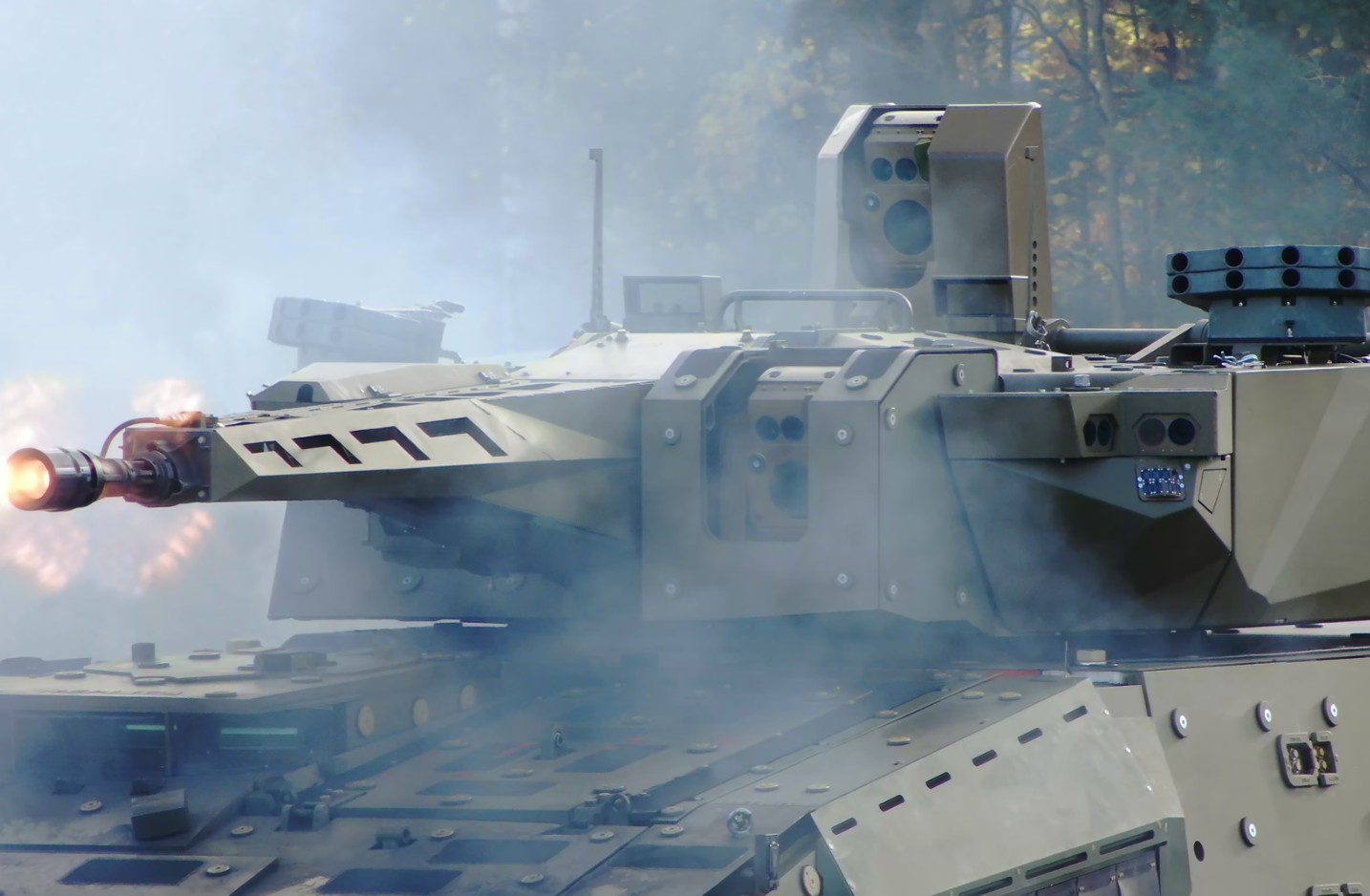
Rheinmetall’s Lance 2 remote weapon station represents more than an incremental upgrade to armored vehicle firepower. It is part of a broader shift in ground combat toward networked lethality, where sensors, stabilized weapons, digital fire control, and vehicle architecture are fused to compress the time between detection and engagement. In practical terms, Lance 2 is designed to help combat vehicles identify, track, and defeat targets faster than an adversary can react — the essence of the modern hunter-killer concept.
You Might Also Like

Why hunter-killer capability matters
On the contemporary battlefield, survivability increasingly depends on the ability to observe first, decide first, and strike first. That logic has been reinforced by lessons from Ukraine, Nagorno-Karabakh, and other recent conflicts, where reconnaissance-strike complexes, loitering munitions, and precision artillery have punished exposed or slow-reacting platforms. Armored vehicles can no longer assume that heavy armor alone will guarantee survival. They need integrated sensor and weapon systems that reduce exposure time and improve first-round effect.
Lance 2 is built to support that requirement by allowing a vehicle commander to search for threats while the weapon is ready to engage independently once a target is designated. This matters tactically because it separates the tasks of finding and fighting. A stabilized remote station can maintain situational awareness, track multiple contacts, and engage with minimal crew exposure, which is especially relevant in urban terrain, complex terrain, and during operations against dispersed infantry teams and light armored threats.
Design logic and operational role
Rheinmetall has positioned Lance 2 as a modular weapon station suitable for a wide range of tracked and wheeled combat vehicles. That flexibility is strategically important. European armies are moving toward mixed fleets of infantry fighting vehicles, armored personnel carriers, reconnaissance vehicles, and command platforms that must share common subsystems to simplify logistics, training, and upgrade cycles. A weapon station that can be integrated across multiple chassis reduces sustainment burden and creates a more unified combat ecosystem.
The core value proposition is not just the gun itself but the full firing chain around it: day/night optics, stabilization, target handoff, digital interfaces, and the ability to integrate with vehicle combat management systems. In a vehicle engagement, a commander may detect an anti-tank team or a light drone launch site, assign the target to the weapon station, and prosecute the engagement while the vehicle remains mobile or under partial cover. That is a qualitative shift from older manually operated mounts, where the crew had to expose themselves and rely on slower visual acquisition.
What the system brings to the battlefield
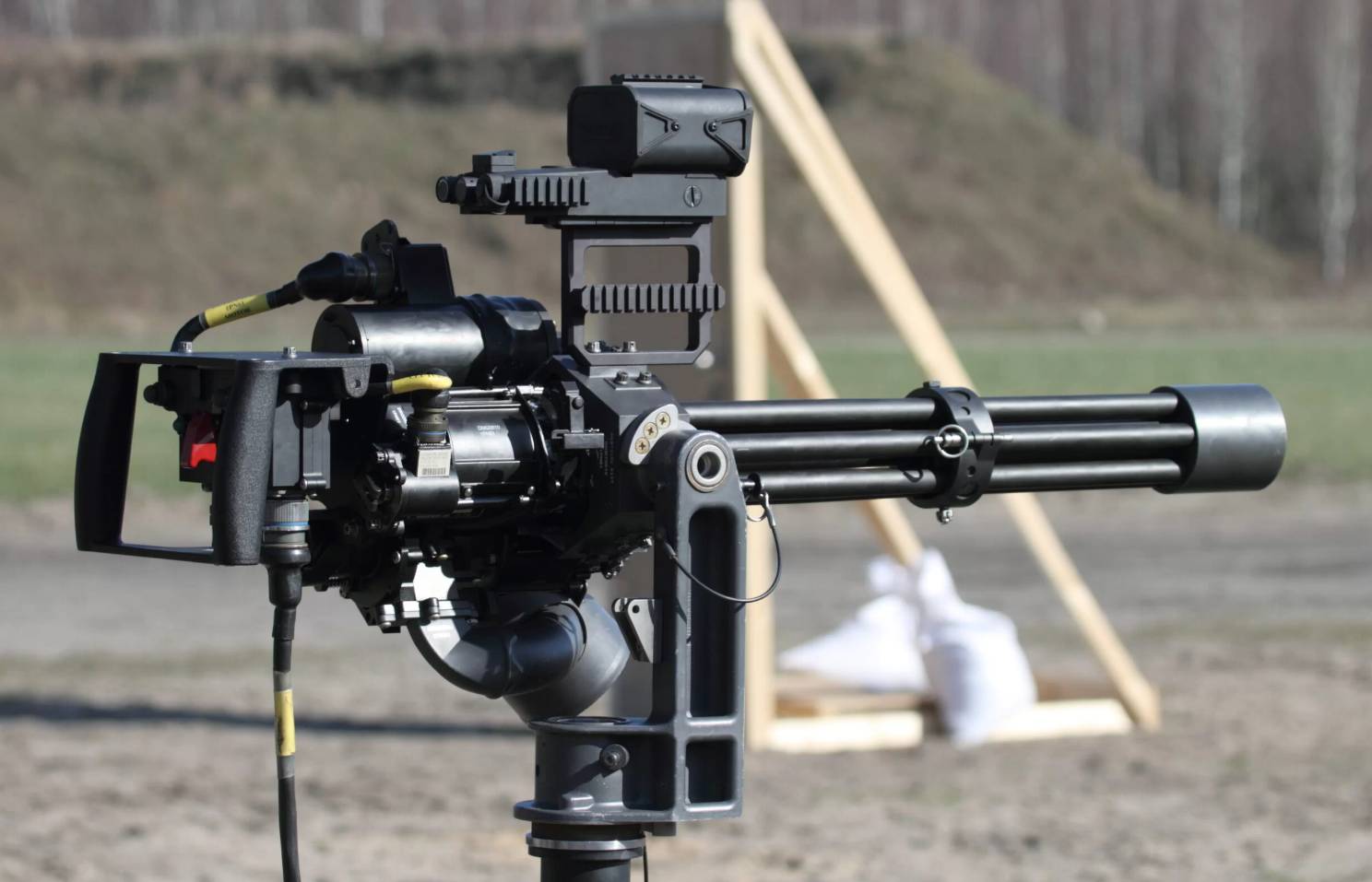
Lance 2 is intended to combine lethality, protection, and connectivity. The station is typically associated with medium-caliber armament options and can also be paired with coaxial machine guns and anti-armor effects depending on configuration. The remote nature of the system allows the crew to remain protected inside the hull, a major advantage against small arms, shell fragments, and top-attack observation threats.
From a doctrinal perspective, the real gain is target-to-shooter compression. If a vehicle can detect a target and engage it without halting or exposing a crew member, it becomes far more difficult to suppress. That creates an asymmetry in close combat: the vehicle can continue moving, scanning, and engaging, while the adversary must either withdraw or risk being fixed and destroyed.
Technical attributes that support combat relevance
Although exact configurations may vary by customer, remote weapon stations in this class generally emphasize stabilization, high-resolution optics, digital fire control, and growth potential for future sensors. Lance 2 follows that pattern. The system’s value lies in its ability to maintain accuracy on the move, integrate with command networks, and support rapid handover between commander and gunner functions. In modern mechanized warfare, that integration can be as decisive as raw caliber.
| Specification | Typical/Relevent Detail |
|---|---|
| System type | Remote weapon station |
| Primary role | Hunter-killer engagement support for combat vehicles |
| Integration | Tracked and wheeled armored platforms |
| Operating mode | Remote, crew-protected operation from inside vehicle |
| Sensors | Day/night optics, stabilized sighting, digital fire control |
| Fire control | Network-enabled target acquisition and engagement |
| Mission set | Infantry suppression, anti-ambush, reconnaissance, urban combat |
For procurement planners, the significance of such a system is its adaptability. A remote weapon station is not merely a defensive add-on; it can be a centerpiece of vehicle modernization programs. As armies reconstitute after high-intensity combat or expand inventories in response to regional threats, the demand is for systems that improve combat power without requiring a full new vehicle design. Lance 2 fits that requirement by offering a path to retrofit existing platforms while preserving room for future upgrades.
Implications for armored doctrine
The rise of hunter-killer systems on combat vehicles reflects a broader doctrinal evolution. Armored formations are being pushed toward distributed operations, faster tempo, and greater autonomy at lower echelons. Platoon and company commanders increasingly need vehicles that can independently detect and engage threats in environments where higher headquarters may not be able to micro-manage the fight. A weapon station such as Lance 2 supports that decentralization by giving crews a more self-contained combat capability.
This also changes how mechanized units may fight in contact. Instead of slowing down to establish a static firing position, vehicles can exploit their mobility to achieve fleeting windows of fire superiority. Combined with thermal sights and battle management integration, the system helps vehicles operate in a true search, detect, engage, move cycle. That is particularly relevant against anti-armor teams using terrain masking, because the first vehicle to spot the threat may be able to suppress it before a missile or rocket is launched.
Survivability and crew protection
One of the strongest arguments for remote weapon stations is the reduction in crew exposure. Traditional pintle mounts and open hatches force gunners into vulnerable positions at the exact moment when the vehicle may be under fire. Lance 2 removes that disadvantage by permitting weapons employment from within the armored envelope. In a world where drones can cue indirect fire within minutes, and where sniper teams or loitering munitions can punish exposed silhouettes, that protection is not cosmetic — it is operationally decisive.
At the same time, survivability is more than armor thickness. It is also about signature management, rapid target engagement, and the ability to avoid becoming fixed. A well-integrated remote station contributes to all three. It shortens exposure, supports faster reaction to ambushes, and helps preserve combat power during maneuver. In that sense, Lance 2 is best understood as a force-multiplying subsystem rather than a standalone weapon.
Geopolitical and industrial significance
Rheinmetall’s work on systems like Lance 2 also reflects the strategic priorities of the European defense industrial base. As NATO members accelerate rearmament and seek to replenish stocks after years of underinvestment, there is intense pressure to field equipment that is combat-proven, interoperable, and scalable. A weapon station with broad platform compatibility appeals to buyers who want rapid fielding without committing to a completely new armored fleet architecture.
For Germany and its partners, such systems also reinforce the case for industrial sovereignty. The ability to design, produce, and upgrade critical combat subsystems domestically reduces dependence on external suppliers and gives governments more control over export policy, sustainment, and long-term modernization. In an era of contested supply chains and urgent demand signals, that industrial resilience has become a strategic asset in its own right.
What to watch next
- Integration with active protection systems and counter-drone suites.
- Expanded use of AI-assisted target recognition and cueing.
- Deeper integration with vehicle battle management networks.
- Retrofit adoption on legacy armored fleets seeking rapid modernization.
- Customer demand for commonality across multiple vehicle classes.
As armored warfare becomes increasingly sensor-driven and time-compressed, systems like Lance 2 will matter less as isolated hardware and more as nodes in a larger combat network. Their value will be measured by how effectively they help crews detect threats first, engage them quickly, and survive the enemy’s response. That is the operational logic behind hunter-killer warfare — and it is where the next generation of combat vehicle design is headed.