


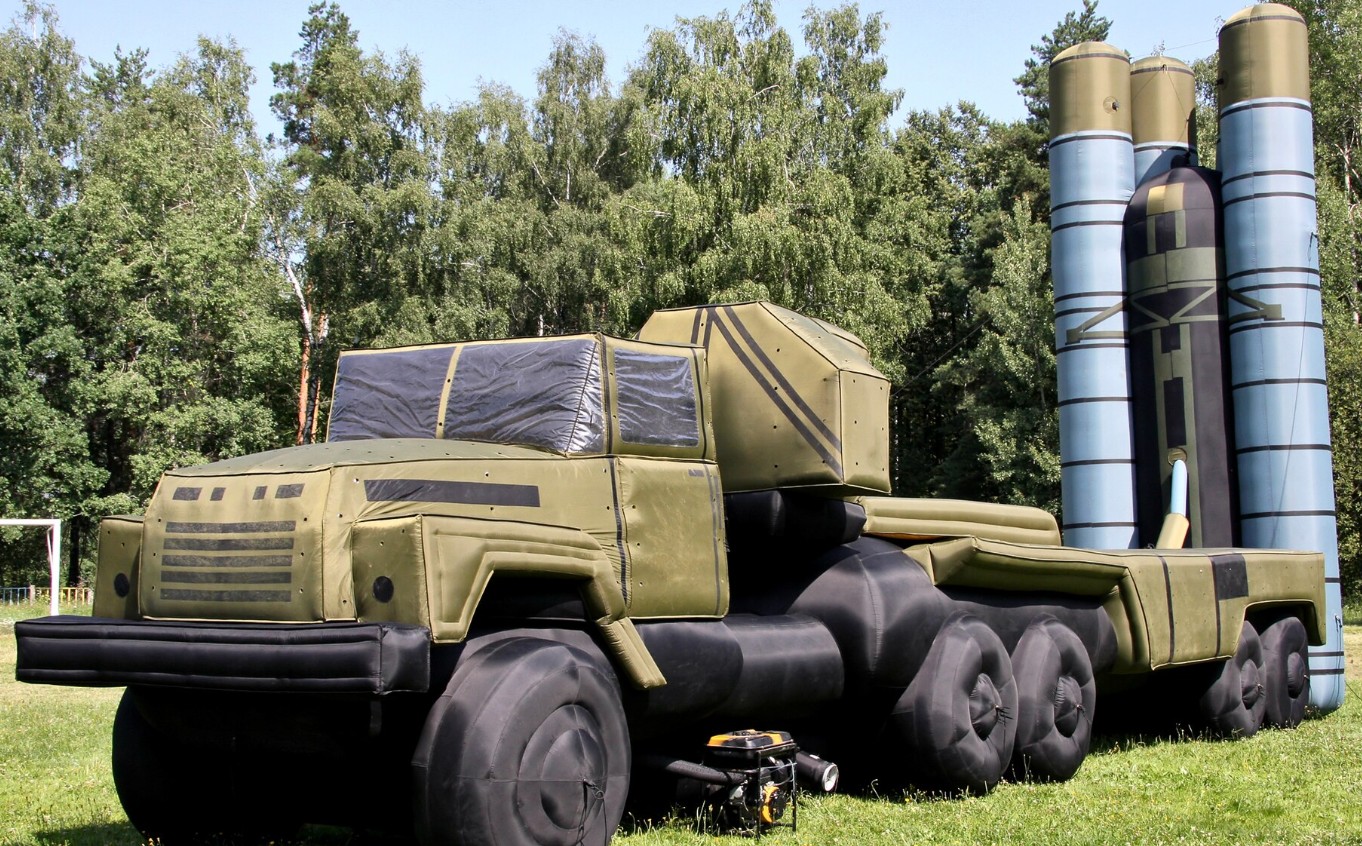
Modern military decoys have evolved far beyond inflatable tanks and crude radar reflectors. Today’s deception systems are engineered to manipulate multiple layers of an adversary’s kill chain, from electro-optical surveillance and infrared targeting to synthetic aperture radar and signal intelligence. In an era defined by persistent ISR, networked fires, and long-range precision strike, decoys are no longer auxiliary accessories; they are core elements of survivability, maneuver, and operational denial.


Deception as a combat multiplier
At the tactical level, a good decoy forces an enemy to waste time, expend munitions, and reveal sensor or shooter locations. At the operational level, it can distort an opponent’s understanding of force posture, logistics nodes, and the main effort. Strategically, decoys complicate escalation management by making it harder to distinguish real concentration from feints, reducing confidence in targeting and increasing the cost of reconnaissance.
This shift reflects a broader reality: modern strike systems are only as effective as the intelligence architecture that feeds them. If that architecture is polluted with false signatures, dummy emitters, and manipulated patterns of movement, the attacker’s decision cycle slows and accuracy degrades. In high-end conflict, that delay can be decisive.
From simple silhouettes to multi-spectral deception
Legacy decoys were often designed to fool a single sensor type. A canvas vehicle shape might deceive a pilot from altitude, while a corner reflector could create a radar return. Today’s decoys are increasingly multi-spectral, meaning they are tailored to imitate or distort several signatures at once:
- Visual signature — shape, color, shadows, and thermal masking to resemble real equipment under daylight or night vision conditions.
- Infrared signature — heat sources or controlled thermal profiles that mimic engines, generators, or recently operated systems.
- Radar signature — materials and geometry intended to produce believable returns on surveillance radar and targeting sensors.
- Electromagnetic signature — dummy emitters, spoofed communications, and simulated radar activity designed to trigger hostile electronic intelligence.
What makes modern decoys particularly dangerous to the attacker is the integration of these layers. A target that looks right in optical imagery but fails under infrared or radar analysis is easier to dismiss. A target that matches all three, and emits the right radio pattern, can force an enemy to treat it as real until the final moment of engagement.
Table: common modern decoy categories
| Decoy type | Primary sensor set targeted | Typical use | Operational effect |
|---|---|---|---|
| Inflatable vehicle decoys | Visual, infrared, some radar | Armor, artillery, air defense deception | Creates false force concentration and wastes precision munitions |
| Dummy radar emitters | Electronic support, radar warning receivers | Air defense and command post protection | Draws anti-radiation weapons and exposes enemy emitters |
| Heat signature generators | Infrared | Aircraft revetments, vehicle parks, logistics sites | Simulates active systems and confuses thermal targeting |
| Radar reflectors and signature enhancers | Radar | Maritime, ground, and amphibious deception | Magnifies apparent size or presence of targets |
| Networked spoofing decoys | Electromagnetic, cyber-enabled ISR | Integrated air defense and command nodes | Manipulates adversary fusion systems and target prioritization |
The rise of digital deception
The next generation of decoys is increasingly software-defined. Instead of merely imitating the external form of a tank or launcher, digital deception seeks to reproduce its behavioral signature. That includes intermittent communications, vehicle movement patterns, radar activation cycles, and even the timing of maintenance activities. In a battlespace saturated with machine learning-enabled target recognition, pattern fidelity matters as much as physical realism.
Some forces are now pairing physical decoys with emitted data that can be collected by hostile systems and later fused into an inaccurate picture. This is especially relevant against adversaries who rely on automated target recognition, where false positives can be propagated quickly through a targeting network. The more an enemy trusts its sensors and algorithms, the more valuable it becomes to contaminate those inputs.
Decoys also increasingly operate in coordination with cyber and electronic warfare. A fake command post may be accompanied by spoofed traffic, low-power emissions, and intermittent generator noise. A dummy air defense site may radiate briefly, then go silent, then reappear elsewhere. Such tactics do not merely conceal the real system; they create a moving problem set that taxes the enemy’s collection-management process.
Why decoys matter more in precision warfare
Precision strike has made fixed assets more vulnerable, but it has also made deception more valuable. Modern militaries are not trying to protect every piece of equipment equally; instead, they are trying to preserve combat power by distributing risk. Decoys allow commanders to present an adversary with multiple plausible targets, increasing uncertainty and forcing expenditure against low-value substitutes.
This is particularly important for high-value assets such as:
- Air defense batteries
- Long-range rocket launchers
- Headquarters and C2 nodes
- Fuel farms and ammunition depots
- Bridging equipment and engineering parks
In a contested theater, a decoyed site can absorb surveillance passes, induce missile launches, and trigger a second-order effect: exposure of the enemy’s own firing locations, or depletion of precious guided munitions. Thus, deception is not passive defense. It is an offensive economy-of-force measure.
Doctrine, training, and dispersion
Technology alone does not make decoys effective. Their value depends on doctrine and disciplined employment. Poorly placed decoys, or decoys that ignore terrain and unit patterns, can betray the very force they are intended to protect. The best forces integrate deception into routine fieldcraft: alternate positions, dummy logistic trails, false antenna arrays, and periodic relocation that mirrors real operational behavior.
Training is equally important. Units must learn how to build believable decoy networks, how to avoid predictable signatures, and how to coordinate deception with camouflage, concealment, and movement. In practice, the most credible deception is often boring realism: tracks in the mud, disturbed vegetation, plausible vehicle spacing, and the right electromagnetic discipline.
Decoys are also increasingly tied to dispersion doctrine. As formations spread out to survive long-range fires, they become harder to identify but also harder to mass. Decoys help reconcile that tension by allowing a dispersed force to appear more concentrated than it is, or a concentrated force to appear less valuable than it really is.
Counter-decoy challenges
As decoys improve, so do methods to defeat them. Adversaries are investing in multi-phenomenology fusion, comparing optical, infrared, radar, and emissions data to identify inconsistencies. Persistent drones, synthetic aperture radar, and AI-assisted targeting tools can reduce the effectiveness of simple dummy systems. Battlefield intelligence teams may also look for human patterns: logistics flows, maintenance rhythms, and the absence of expected support activity.
This creates an arms race between deception and detection. The most effective decoys will be those that can survive scrutiny across several sensor bands and remain tactically coherent over time. Static fake equipment without surrounding activity will increasingly be exposed. The future belongs to decoys that are part of a broader signature-management ecosystem.
Strategic implications for future conflict
In a major-power war, decoys may shape the opening phase more than many analysts expect. They can delay enemy target selection, protect mobilization areas, mask air defense coverage, and complicate maritime choke-point operations. For smaller states facing a larger adversary, decoys are a cost-imposing tool that offers asymmetric returns. For expeditionary forces, they are a way to stretch limited air defense and reduce dependency on hardened infrastructure.
There is also a geopolitical dimension. States that can credibly deceive an adversary signal sophistication, resilience, and operational depth. In peacetime, visible investment in decoys may itself act as deterrence by signaling that surveillance alone will not guarantee effective targeting in a crisis. That uncertainty has value.
Modern military decoys are therefore best understood not as props, but as contested nodes in the information battle. They protect real assets by making the enemy’s picture incomplete, ambiguous, and expensive to refine. In future wars, the side that manages signatures most effectively may gain an advantage long before the first precision weapon arrives.