


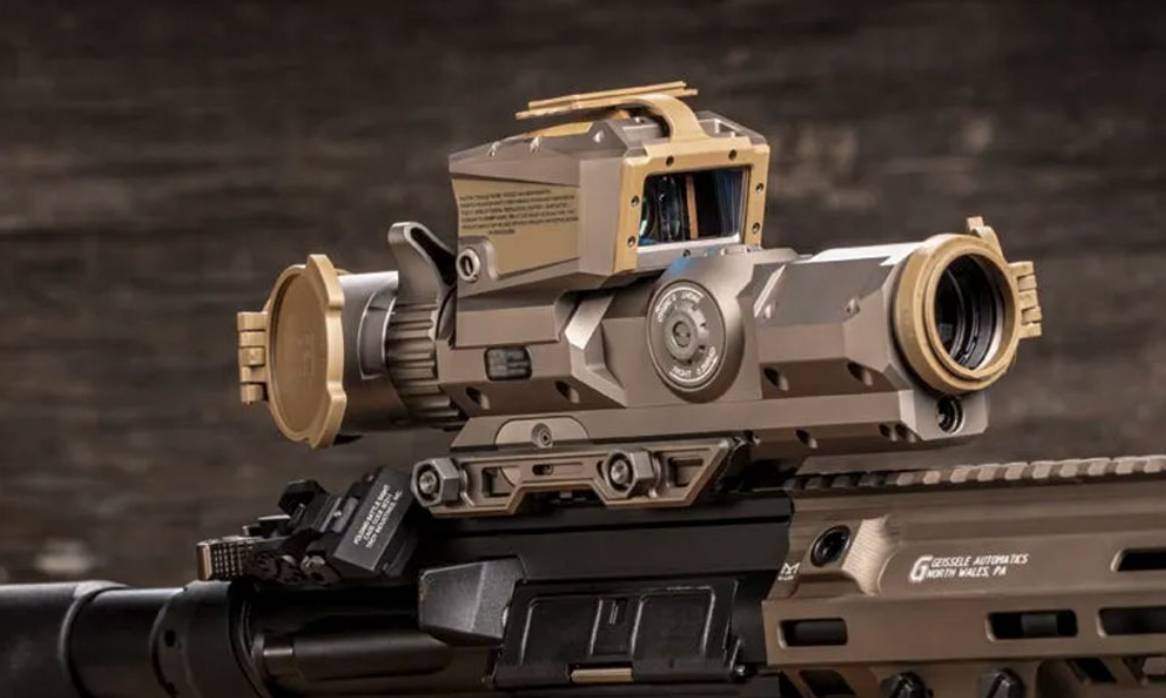
What the XM157 Actually Is
The Vortex Optics XM157 is the fire-control optic chosen for the U.S. Army’s Next Generation Squad Weapon program, where it serves as more than a simple scope. In practical terms, it is a traditional day optic wrapped around a digital layer that gives the rifleman rangefinding, ballistic calculation, environmental input, and aimpoint generation in one unit. That matters because on the modern battlefield, the hard part is rarely seeing the target. The hard part is getting a first-round hit quickly when the target is moving, partially hidden, at unknown range, and the shooter is tired, stressed, and carrying a heavy rifle.
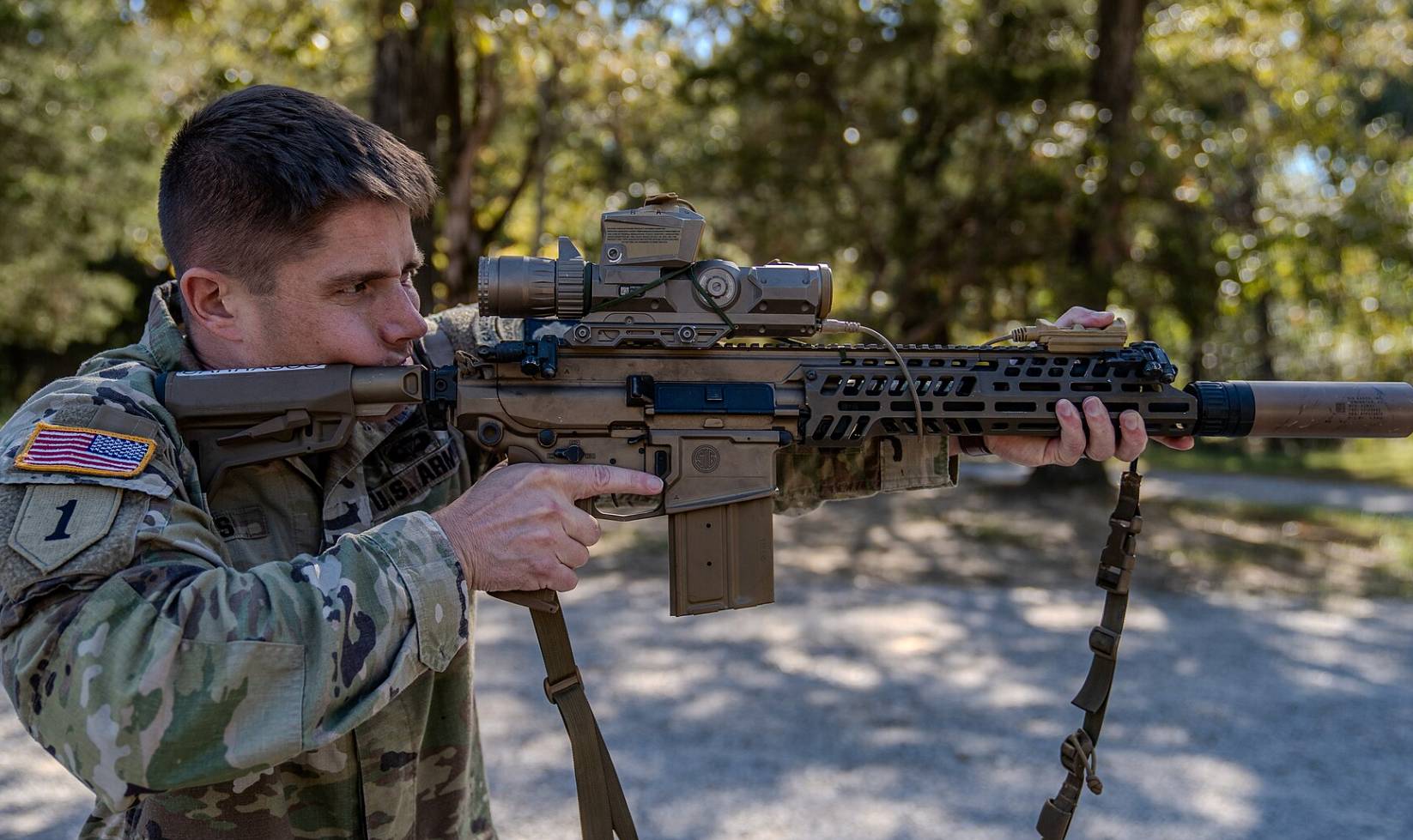


From a field perspective, the XM157 is trying to solve a problem every infantryman understands: the gap between what a plain optic can show you and what a fire-control system can do for you. A conventional scope gives magnification and a reticle. The XM157 gives magnification, a reticle, and a digital brain that helps the shooter range the target, account for holdover, and place the shot with far less guesswork.
How the Hybrid Design Works
At first glance, the XM157 looks like a compact variable-power optic. That is deliberate. The Army wanted something that could still be used like a rifle scope when the electronics are unavailable, the battery is low, or the shooter simply prefers a familiar sight picture. That is the real value of the hybrid approach: the glass stays useful even if the smart features go down.
The optic combines:
- Magnified optical sighting for target identification and aiming
- Digital display overlay for ballistic and engagement information
- Integrated laser rangefinding to measure distance to target
- Ballistic computation to generate an aiming solution
- Environmental sensors to account for conditions affecting trajectory
- Connectivity for external data, updates, or integration with other gear
That combination is where the XM157 earns its place in the NGSW system. The rifle alone is only part of the solution. The optic is what turns the rifle into a more complete engagement tool. In service, that means less dependence on mental math and fewer opportunities for error when the situation is moving fast.
Why the Army Wanted This Capability
The Army’s interest in a digital optic did not come out of nowhere. Infantry firefights have become more distributed, more sensor-driven, and more lethal at range. Adversaries are using cover better, exposing themselves for shorter periods, and exploiting terrain and urban clutter to make rapid engagements harder. In that environment, a rifleman who can identify, range, and engage faster has a real advantage.
The XM157 is intended to increase the probability of first-round hits, especially at intermediate ranges where a regular red dot or non-ranging scope leaves too much to the shooter’s judgment. It also helps standardize performance across a squad. A well-trained marksman can do a lot with a basic optic, but the Army is building for the average soldier under combat stress, not the ideal shooter on a flat range.
That is the larger point: the optic is not about making a soldier into a sniper. It is about giving every rifleman a better chance to do precise work under pressure.
Key Field Advantages
From an operator’s standpoint, the biggest gains are straightforward.
- Faster target engagement through automatic range-to-solution workflow
- Reduced cognitive load by offloading calculations to the optic
- Improved hit probability at longer distances and on moving targets
- Better performance in changing conditions when wind, temperature, and elevation matter
- Retention of a usable manual optic if digital functions are degraded
That last point is critical. Combat gear must fail gracefully. A system that becomes useless when the battery dies is a liability. The XM157’s value is that it aims to remain a viable sight even if the digital overlay is unavailable. That kind of redundancy is not a marketing feature. It is survival logic.
Known and Reported Specifications
Exact fielded specifications can vary by contract release and configuration, but the XM157 is generally understood as a compact variable-power optic with integrated electronics. The table below reflects the commonly reported characteristics associated with the system.
| Specification | Reported Detail |
|---|---|
| Program | U.S. Army Next Generation Squad Weapon |
| Manufacturer | Vortex Optics |
| Type | Hybrid optical sight with digital fire-control overlay |
| Magnification | Variable-power optic, commonly reported in the 1-8x class |
| Rangefinding | Integrated laser rangefinder |
| Ballistic Solution | Onboard computation with reticle/overlay aimpoint cues |
| Power | Battery powered |
| Sensors | Environmental inputs such as temperature and attitude, depending on configuration |
| Connectivity | Digital integration capability |
| Primary Role | Fire-control optic for squad-level engagements |
Some details remain sensitive or subject to change, which is normal for a system still being matured through fielding and user feedback. What matters operationally is less the brochure and more the behavior: does it survive recoil, stay zeroed, remain readable in bright light, and give a usable solution quickly enough to matter?
What It Means in the Hands of a Soldier
A rifle optic is only as good as the training behind it. The XM157 does not erase the need for marksmanship fundamentals. Soldiers still need stable positions, trigger discipline, target recognition, and the ability to read the fight. What it does is compress time. The optic can shorten the process from target acquisition to aimed fire, which is exactly where the Army wants to save seconds.
In the field, that matters in realistic ways:
- A squad leader spots a target at distance and can get a firing solution without stopping to estimate range by eye.
- A rifleman engaging from cover can make a better shot without exposing himself longer than necessary.
- A moving target that would normally require holdover guesswork becomes more manageable.
- In low visibility or fatigue, the optic reduces the chance that the shooter simply gets the math wrong.
That said, digital aids also change habits. Soldiers can become dependent on the system if training is not disciplined. Good units will train both ways: with the optic’s full capability and with the optic treated like a normal scope. That keeps the basics alive when the electronics are not available or when a simpler method is tactically smarter.
Strengths That Matter in Combat
The XM157’s strengths are not theoretical. They line up with problems that appear in actual combat:
1. Speed under stress
The best equipment is the gear that saves decision time when the shooter’s heart rate is up and the target window is short.
2. Better consistency across the formation
Not every soldier has the same experience level. A fire-control optic helps narrow the performance gap.
3. Greater reach for squad weapons
Modern infantry fights often happen at ranges where identification and accurate holds become difficult fast.
4. Built-in redundancy
The concept of keeping the optic usable as a conventional sight is one of its best features.
5. Data-driven engagement
The optic turns some of the shooter’s guesswork into measured input, which is a major advantage when conditions are changing.
Limits and Practical Concerns
No piece of kit is magic, and the XM157 has real-world challenges. Digital optics bring complexity, and complexity always creates maintenance burden. Batteries have to be managed. Displays can wash out. Electronics can fail. Software can need updates. In a dirty, wet, cold, or high-vibration environment, every added feature is another thing that can break.
There is also the issue of training depth. A smart optic can make average performance better, but it can also produce overconfidence if shooters think the device replaces skill. It does not. It augments skill. The best use case is a trained soldier who knows how to fight with or without the electronics.
Another concern is weight and bulk. Any integrated fire-control optic is going to be heavier and more complex than a simple LPVO or red dot. That tradeoff is acceptable if the capability gain is real, but soldiers will feel it after long movements. Every ounce matters when the rifle, ammunition, plate carrier, comms, water, and everything else are already on the body.
Finally, digital systems introduce signature and security considerations. Anything that talks to other devices, stores data, or relies on software has to be treated as part of the wider electronic battlefield. That does not make it bad. It makes it modern.
How It Fits the NGSW Concept
The XM157 is not a standalone product in the traditional sense. It is part of an ecosystem built around a new rifle and new ammunition performance expectations. The Army wanted a system that could reach farther and hit harder than legacy small arms, and the optic is the piece that makes that practical at the squad level.
That matters because range alone is not enough. A rifle with improved ballistics still needs a sighting system that can exploit those ballistics. The XM157 bridges the gap between the rifle’s capability and the soldier’s ability to use it effectively in combat.
In a sense, it reflects where infantry technology is going: less reliance on raw marksmanship intuition, more reliance on integrated systems that combine optics, sensors, and computation. That trend is not limited to elite units anymore. It is moving into the regular force.
What to Watch Going Forward
The key questions for the XM157 are not whether it is innovative. It clearly is. The questions are whether it can survive issue at scale and whether troops can use it well after the novelty wears off. The metrics that matter are simple:
- Does it hold zero after repeated recoil and field abuse?
- Does the battery life support a realistic operational cycle?
- Can soldiers learn it quickly and retain competence?
- Does it improve hit rates in training and live fire?
- Does it remain useful when parts of the system fail?
If the answers stay positive, the XM157 could become one of the more important infantry optics in recent service history. If not, it will still be remembered as an important step in the Army’s move toward digitally assisted small arms.
Either way, the XM157 represents a clear shift in how the service thinks about the rifleman. The old model was that the optic helped you see the target. The new model is that the optic should help you understand the shot. That is a meaningful difference, and in combat, meaningful differences are what keep soldiers alive.