


The idea of humanoid robots replacing infantry sounds like pure science fiction until you look at how fast military robotics, artificial intelligence, and battlefield networking are advancing. What once belonged to glossy concept art and lab demos is now creeping toward real procurement debates, prototype trials, and urgent questions about the future of ground combat. The big question is not whether robots will join the fight — they already are in limited roles — but whether a human-shaped machine could eventually shoulder the burden of the soldier on tomorrow’s battlefield.
That question gets especially spicy when you consider why humanoid form factors are even being discussed. Tanks, drones, and wheeled robots are fantastic at specific jobs, but infantry work is messy, improvisational, and built around environments made for human bodies: doors, ladders, vehicles, trench lines, stairwells, rubble, and dense urban terrain. A humanoid robot, at least in theory, can use the same infrastructure and tools as a soldier without requiring a complete redesign of the battlespace. That is the engineering seduction here: human-shaped machines for human-shaped war.
Why militaries are interested in humanoid robots
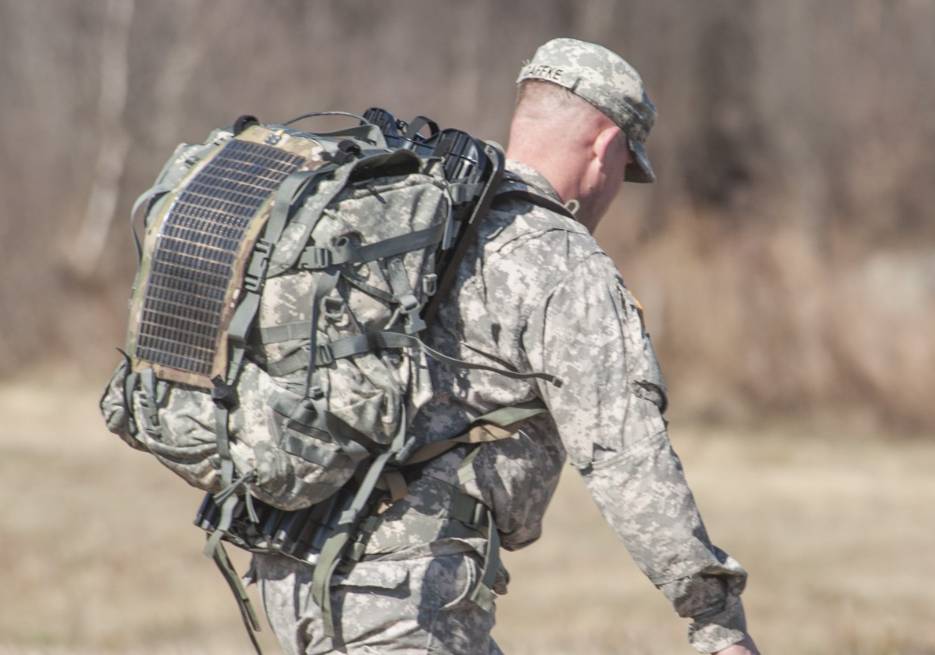
Infantry is expensive, physically punishing, and strategically irreplaceable. Soldiers are asked to patrol, breach, clear, carry, observe, repair, and endure conditions that destroy machines and exhaust humans alike. Humanoid robots promise a tempting combination of endurance, precision, and risk reduction. A robot can potentially carry heavy loads without fatigue, operate in contaminated zones, absorb sensor feeds continuously, and be sent into environments too dangerous for personnel.
There is also a logistics angle that defense planners love. If a robot can climb a stairwell, open a door, pick up a rifle, or manipulate a valve, it can theoretically function inside existing military infrastructure instead of demanding a dedicated support ecosystem. That makes the humanoid design concept attractive for operations in urban combat, shipboard security, base defense, disaster response, and hazardous materials missions.
Still, the military appeal is not just about replacing a rifleman with a metal stand-in. It is about reducing exposure, extending persistence, and creating a new kind of combat multiplier that can scout, carry, shield, and survive where humans should not have to.
The engineering challenge: being human-shaped is hard
Here is the brutal truth: humanoid robots are insanely difficult to build well. Two-legged locomotion is mechanically and computationally complex. Humans make walking look trivial because evolution spent millions of years tuning our balance systems, reflexes, and muscle control. A machine trying to replicate that has to manage power consumption, balance recovery, terrain adaptation, and whole-body coordination in real time.
And then there is the battlefield reality check. A robot infantryman must do more than walk. It must:
- Carry useful payloads over rough terrain
- Operate in mud, rain, dust, smoke, and debris
- Withstand impacts, blast overpressure, and electromagnetic clutter
- Navigate stairs, curbs, rubble, and narrow passages
- Use tools, weapons, radios, and sensors
- Communicate with humans and other systems reliably
That is a towering software-and-hardware stack. The robot must be sturdy enough to survive combat but agile enough to be useful. Too fragile, and it becomes a liability. Too heavy, and it loses the very mobility that makes a humanoid frame attractive. Every added actuator, sensor, battery, and armor plate creates a tradeoff between endurance, speed, and payload.
What a humanoid combat robot would need
For a humanoid robot to approach infantry-like utility, it would need a deeply integrated system architecture. The key components would likely include advanced vision systems, inertial navigation, force-sensitive manipulation, modular armor, and robust communications. In practical terms, this means sensor fusion is king: cameras, lidar or radar, thermal imaging, acoustic sensing, and software that can make sense of a chaotic battlespace with minimal lag.
Power is another monster challenge. Battery density remains a limiting factor for untethered humanoid robots. Infantry soldiers may get tired, but they do not need to recharge every few hours with a generator the size of a refrigerator. A robot designed for field use would need either extremely efficient electric drive, hybrid power, swappable battery packs, or some future energy source that is not yet ready for prime time.
Weapon integration is another thorny issue. A humanoid platform could, in theory, handle a rifle, machine gun, breaching tool, or nonlethal kit. But recoil management, target discrimination, rules of engagement, and fail-safe controls all become far more complicated when the shooter is software-driven. The machine must reliably distinguish friend from foe, civilian from combatant, and surrender from threat under conditions where humans are often barely confident themselves.
Spec snapshot: what a future infantry robot might look like
| Attribute | Likely target | Why it matters |
|---|---|---|
| Height | 1.5 to 1.9 meters | Matches human access spaces and military equipment |
| Weight | 80 to 200+ kg | Depends on armor, batteries, and payload |
| Endurance | 2 to 8 hours mission time | Battery life remains a major limiting factor |
| Payload | 20 to 80 kg or more | Allows weapons, sensors, ammo, or breach tools |
| Mobility | Walking, crouching, climbing, kneeling | Essential for urban and indoor operations |
| Sensors | EO/IR, lidar, radar, acoustic, inertial | Needed for navigation and target awareness |
| Control | Autonomous, supervised autonomous, teleoperated | Human oversight remains crucial |
| Armor | Modular lightweight protection | Survivability without crippling mobility |
Those numbers are not fantasy, but they are also not a guaranteed near-term reality. The closer you push a humanoid robot toward infantry equivalence, the more you run into physics, cost, and reliability walls. The battlefield is an ugly place to debug elegant machines.
Autonomy versus control: the real battlefield debate
The most important issue is not whether a robot can walk like a human. It is whether a robot can make decisions like a soldier — and whether it should. There is a spectrum here, from remotely operated systems to supervised autonomy to fully autonomous lethal action. For military use, most serious concepts today stay somewhere short of full independence, because accountability, ethics, and legal constraints are impossible to ignore.
Teleoperation offers the clearest control but suffers from latency, communication loss, and vulnerability to jamming or terrain masking. Supervised autonomy is more practical: the robot handles movement, obstacle avoidance, and basic mission behaviors while a human operator authorizes critical actions. Fully autonomous combat use, especially against human targets, remains highly controversial and technically unreliable in the edge cases that define real war.
This is where humanoid robots become more than engineering projects. They become a policy problem. If a machine looks like a soldier, moves like a soldier, and carries a weapon like a soldier, then commanders, lawmakers, and the public will ask a very uncomfortable question: who is responsible when it fires?
Where humanoid robots make the most sense first
Before anyone builds a robot battalion, the most plausible early roles are support-heavy and lower-risk. Think of:
- Base security and perimeter patrol
- Logistics and ammunition carrying
- Casualty extraction in dangerous areas
- Reconnaissance in contaminated zones
- Explosive ordnance disposal support
- Shipboard movement in cramped environments
- Urban breaching and building entry support
These roles exploit the strengths of humanoid design without demanding that the machine immediately replace a human rifle squad. In many cases, the robot does the dirty, dangerous, or repetitive work while humans retain tactical judgment and lethal authority. That is a far more realistic pathway than imagining a fully synthetic infantry company charging across open ground.
Comparisons with other battlefield robots
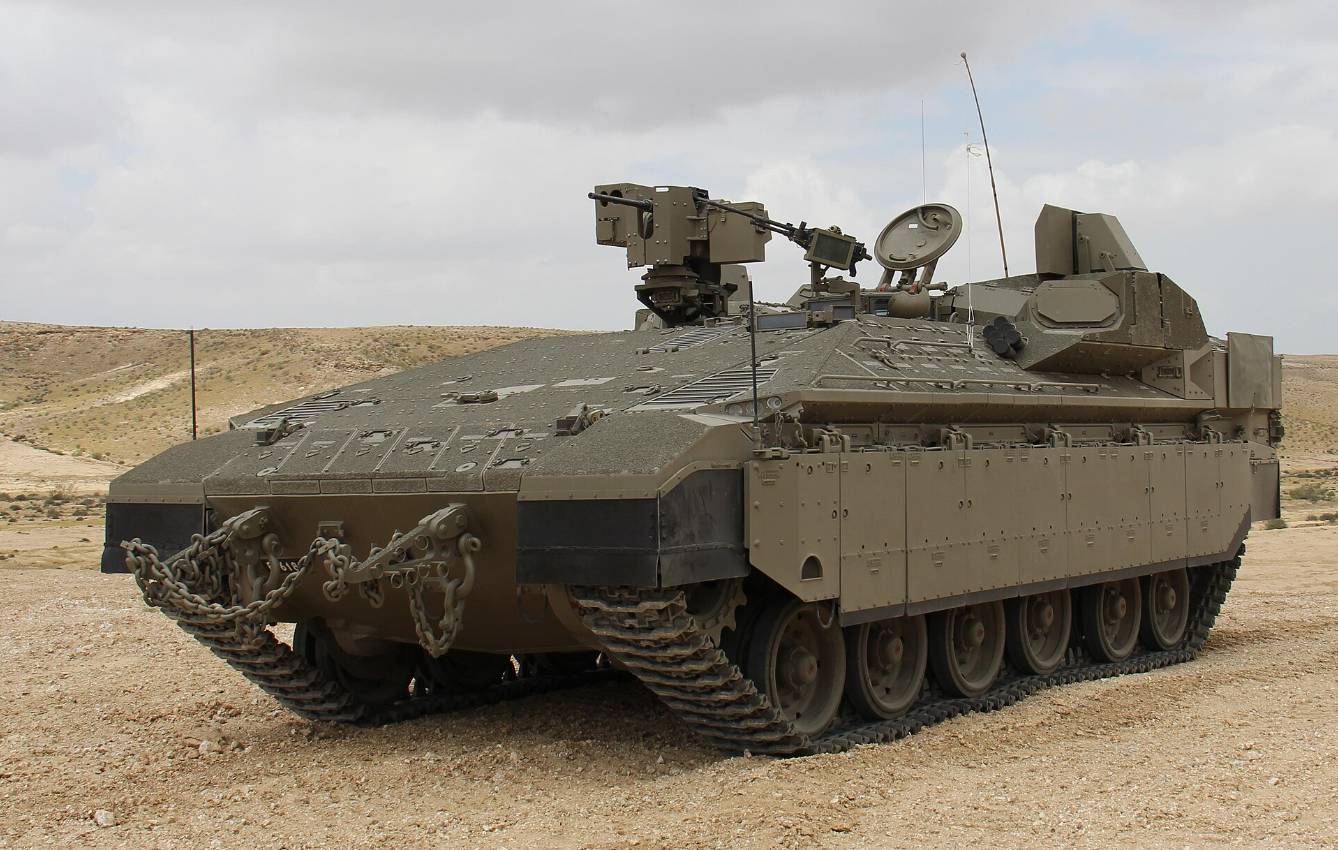
Humanoid robots are not starting from scratch; they are competing with platforms that already make more sense in many military scenarios. Unmanned ground vehicles with wheels or tracks are cheaper, simpler, and often more robust. Small quadcopters and loitering munitions deliver extraordinary reconnaissance and strike flexibility for the weight. Even legged robots that are not fully humanoid can outperform human-shaped designs in certain terrain types because they optimize for stability rather than imitation.
That is the central tension. A humanoid robot is not necessarily the best robot for every military problem. It is the best robot only when the environment demands a human-compatible form factor. If the mission is hauling supplies across a field, a robotic mule may be better. If the mission is peering through a window or climbing stairs, humanoid geometry becomes much more compelling.
In other words, the humanoid design wins when the battlefield is built for humans. That could make it especially useful in dense cities, ship interiors, factories, tunnels, and disaster zones where conventional vehicles are clumsy.
Will humanoid robots actually replace infantry?
Probably not in the clean, dramatic way people imagine. More likely, infantry will evolve into a mixed human-machine ecosystem. Soldiers will fight alongside robotic assistants, carry fewer burdens, receive better sensor coverage, and use remote or semi-autonomous platforms to extend their reach. Some tasks now done by humans will be handed over to machines, especially the most dangerous and tedious ones.
That said, the full replacement of infantry faces one enormous obstacle: humans are not just bodies with rifles. They are judgment engines, improvisers, moral agents, and social operators. Infantrymen communicate intent, sense deception, calm civilians, interpret intent, and adapt to the weirdness of war in ways that are hard to encode in software. A humanoid robot may replicate the physical silhouette of a soldier long before it replicates the human mind inside the uniform.
The more realistic future is a layered one. Human soldiers will remain central, but their effectiveness will be amplified by robot teammates that carry gear, scout ahead, absorb risk, and perhaps one day perform a much wider range of battlefield tasks. The infantry of tomorrow may not be replaced. It may be augmented, distributed, and partially mechanized into something far more formidable than today’s rifle squads.
And that is what makes this topic so fascinating. Humanoid combat robots are not just a cool hardware gimmick. They sit at the intersection of robotics, AI, combat doctrine, ethics, and industrial capability. If the technology matures, the battlefield could gain a new class of machine that is eerily adaptable, brutally useful, and impossible to ignore. Whether that means replacing infantry or simply transforming it, the era of the robot soldier is no longer a distant rumor. It is a systems engineering challenge now.