

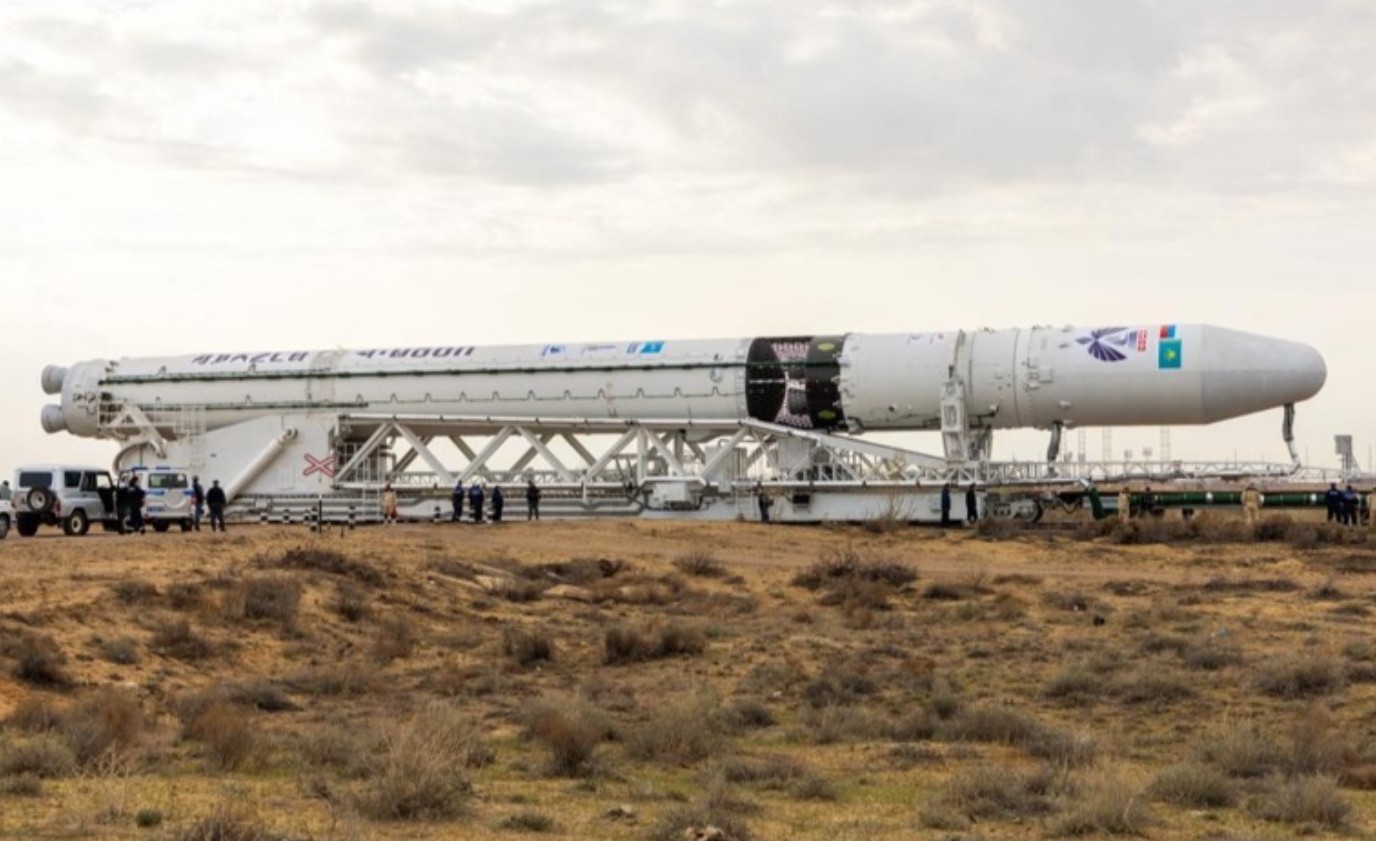
Soyuz-5 is Russia’s attempt to field a modern medium-lift launch vehicle with a cleaner industrial base, higher thrust class, and a path toward partial modernization of the domestic launch sector. Falcon 9, by contrast, is the benchmark reusable orbital launcher: flight-proven, high-cadence, and operationally optimized around booster recovery and rapid turnaround. A technical comparison between the two is not simply a contest of payload numbers; it is a comparison between two different engineering philosophies, two different manufacturing ecosystems, and two different economic models.
Core design philosophy
Soyuz-5, also known by the development designation Irtysh, is intended as a single-core expendable launcher built around a large kerosene/oxygen first stage using the RD-171MV engine family. The vehicle is meant to replace aging launch assets in the Russian portfolio and to serve as a stepping stone for a broader future architecture, including the proposed Yenisei super-heavy system. The design emphasis is on leveraging established propulsion chemistry, legacy manufacturing knowledge, and a conventional vertical integration model.
Falcon 9 is the opposite in many ways: it is a fully operational, reusable launch system that uses nine Merlin 1D engines on the first stage, propulsive landing for first-stage recovery, and a high-rate production pipeline designed around reuse, not just lift capability. The rocket’s real advantage is not only that it launches payloads, but that it reduces marginal cost through refurbishment and reuse. That makes Falcon 9 less of a one-time machine and more of a repeated transport asset.
Key specifications at a glance
| Parameter | Soyuz-5 | Falcon 9 Block 5 |
|---|---|---|
| Developer | RKTs Progress / Roscosmos industrial base | SpaceX |
| Launch status | In development | Operational |
| First stage engines | 1 × RD-171MV | 9 × Merlin 1D |
| Propellants | LOX / RP-1 | LOX / RP-1 |
| Approx. lift-off thrust | ~7.9 MN | ~7.6 MN |
| Payload to LEO | ~17 t class | 22.8 t expendable / 15.6 t reusable |
| Payload to GTO | ~5 t class | 8.3 t expendable / 5.5 t reusable |
| Reusability | None announced | First stage recovered and reused |
| Flight cadence | Not yet established | Very high, multiple launches per month |
| Primary launch role | Medium-lift national launcher | Medium-lift commercial and government launcher |
Propulsion: RD-171MV versus Merlin 1D cluster
The most striking technical difference is the first-stage propulsion architecture. Soyuz-5 uses a single RD-171MV, one of the most powerful kerosene-oxygen engines ever built. This engine is descended from the RD-170 lineage that powered Energia boosters and Zenit rockets. Its four combustion chambers and shared turbomachinery provide very high thrust density and excellent liftoff performance. The RD-171MV is rated in the vicinity of 7.5 to 7.9 MN of sea-level thrust, depending on the exact reference point used. That is an enormous amount of thrust concentrated in one engine module, which simplifies external engine count but increases the consequences of a single-engine failure mode.
Falcon 9’s first stage uses nine Merlin 1D engines, each producing roughly 845 kN at sea level. Total liftoff thrust is comparable to Soyuz-5, but the architecture is deliberately redundant. If one engine underperforms, the guidance and control system can often compensate to a degree, depending on mission profile. The clustering approach also aligns with SpaceX’s vertical manufacturing strategy: a common engine, produced at scale, with a high degree of process control and iterative refinements.
There is an engineering trade-off here. A single huge engine can be highly efficient in terms of packaging and thrust-to-mass ratio, but it creates a concentrated development risk and a more complex turbomachinery stress environment. A cluster of smaller engines increases part count and plumbing complexity, but improves fault tolerance and simplifies incremental performance upgrades. SpaceX’s choice has been validated by operational experience; Russia’s choice reflects lineage continuity and industrial inheritance.
Performance envelope and payload fraction
Soyuz-5 is generally expected to place about 17 metric tons to low Earth orbit in a nominal expendable configuration. That puts it in the same broad class as Falcon 9, though Falcon 9’s actual payload varies significantly with whether the first stage is recovered. In expendable mode, Falcon 9 can reportedly deliver up to 22.8 metric tons to LEO; in reusable mode, the practical figure is around 15.6 metric tons. To geostationary transfer orbit, Falcon 9 reaches approximately 8.3 metric tons expendable or 5.5 metric tons reusable, again depending on mission design margins.
The practical implication is that Soyuz-5, if it meets target performance, will compete most directly with Falcon 9’s reusable performance envelope rather than its maximum expendable capability. But payload mass alone does not define utility. Falcon 9 benefits from highly optimized trajectory shaping, mature upper-stage operations, and a launch record that allows customers to use tighter performance margins with confidence. Soyuz-5 would need to demonstrate not only theoretical payload capability, but also repeatable injection accuracy, upper-stage reliability, and integration flexibility.
Reusability as the decisive economic variable
Falcon 9’s first-stage reuse is the single biggest differentiator in the comparison. Even when recovery adds propellant penalties and constrains the payload window, the booster can be reflown, dramatically reducing marginal launch cost. SpaceX has operationalized this model across commercial, civil, and national security missions. The economic result is a launch system with lower effective cost per kilogram and much higher launch cadence than any expendable competitor in the same class.
Soyuz-5, as currently planned, is not reusable. That means every mission consumes a fresh first stage and associated hardware. In a world where Falcon 9 can routinely return boosters and reuse them many times, an expendable system must compete on one of three axes: lower manufacturing cost, superior performance, or mission-specific niche optimization. Russia’s challenge is that Falcon 9 is already very competitive on all three dimensions. If Soyuz-5 is to matter commercially, its supply chain, production cost, and launch processing must be exceptionally efficient.
Upper stage and mission flexibility
Falcon 9’s second stage uses a single Merlin Vacuum engine, with restart capability that supports a broad mission set including LEO, GTO, interplanetary injection support, and rideshare deployments. The upper stage is integrated with a flight computer, autonomous range safety functions, and a mature mission planning ecosystem. This gives Falcon 9 a level of flexibility that is difficult to match without similar avionics maturity and operational history.
Soyuz-5 is expected to use a conventional upper stage optimized for medium-lift orbital insertion and potentially future modular architectures. However, until the vehicle is flying routinely, its real-world upper-stage restart performance, orbital energy management, and payload interface robustness remain theoretical from a customer standpoint. For military and government payloads, those details matter as much as raw payload mass. A launcher is only as useful as its ability to place satellites into precise orbits on schedule, under a wide range of weather and range constraints.
Industrial base and geopolitical implications
Soyuz-5 is as much an industrial policy project as it is a rocket. Russia needs a launcher that can preserve domestic competence in large liquid propulsion, sustain engineering talent, and reduce dependence on aging Soviet-era systems. The vehicle also has symbolic value: it signals that Russia remains capable of developing a modern medium-lift booster without relying exclusively on legacy launchers like Soyuz-2 or Proton-class replacements.
Falcon 9, meanwhile, reflects a vertically integrated private aerospace model backed by large government demand. SpaceX has built an industrial rhythm that includes engine production, avionics, structures, launch operations, booster recovery, and refurbishment under one corporate umbrella. That integration is a major reason it can iterate quickly and absorb design changes rapidly. In effect, Falcon 9’s advantage is not just technical; it is organizational.
Comparative engineering trade-offs
- Thrust architecture: Soyuz-5’s single large engine module offers concentrated thrust and heritage performance; Falcon 9’s nine-engine cluster offers redundancy and flexible control authority.
- Lifecycle cost: Soyuz-5 is expendable and must rely on production economics; Falcon 9 amortizes hardware over multiple flights.
- Operational maturity: Falcon 9 has extensive flight heritage; Soyuz-5 remains unproven in operational service.
- Manufacturing model: Soyuz-5 depends on legacy industrial chains and state-backed programs; Falcon 9 uses mass production and rapid iteration.
- Market position: Soyuz-5 targets national capability restoration; Falcon 9 dominates commercial and a growing share of government launch demand.
What Soyuz-5 must prove
For Soyuz-5 to be more than a paper competitor, it must demonstrate several things in flight:
- Stable first-stage combustion and separation dynamics with the RD-171MV
- Reliable upper-stage ignition and orbital insertion accuracy
- Competitive production cost versus imported or legacy Russian systems
- Launch cadence high enough to keep the industrial base warm
- Integration reliability for government and security payloads
Even if it never matches Falcon 9’s reuse economics, Soyuz-5 could still have value as a sovereign launch option if it proves robust, maintainable, and affordable enough for domestic missions. But that is a narrower victory condition than the one Falcon 9 has already achieved globally.
Bottom line
Falcon 9 is the proven system: reusable, high-cadence, and economically disruptive. Soyuz-5 is the promising but unproven challenger: technically credible in propulsion terms, but still dependent on successful development, integration, and operational validation. On raw first-stage thrust and traditional launcher design, Soyuz-5 is respectable. On economics, cadence, and system maturity, Falcon 9 is in a different class entirely.
If Soyuz-5 enters service on schedule and performs to spec, it will strengthen Russia’s launch independence and provide a modern medium-lift option. It will not, however, dislodge Falcon 9’s central market position unless Russia also solves the harder problems of production scale, reliability growth, and reusability. In space launch, the rocket is only part of the system; the real competition is between industrial models.