

Military cyber power has moved beyond a supporting role and into the center of modern deterrence, disruption, and intelligence competition. Artificial intelligence is accelerating that transition. Across defense ministries and intelligence services, AI is being integrated into cyber operations to compress decision cycles, automate threat hunting, triage vast volumes of telemetry, and scale offensive and defensive effects at machine speed. The result is not a futuristic concept but an operational reality: cyber warfare is now persistent, adaptive, and deeply intertwined with broader military planning.


Why AI matters in cyber operations
Cyber warfare has always favored speed, scale, and ambiguity. AI amplifies all three. In defensive missions, machine learning systems can identify anomalies across networks, correlate indicators of compromise, and prioritize responses faster than human operators working alone. In offensive missions, AI can assist with target discovery, vulnerability analysis, phishing personalization, and the automation of low-level tasks that previously consumed specialist time.
From a strategic perspective, the advantage lies in decision superiority. A force that can detect intrusion attempts earlier, attribute activity more confidently, and respond before an adversary has fully established persistence gains time, resilience, and political leverage. That is especially relevant for militaries that must protect command-and-control networks, logistics systems, satellite links, and deployed expeditionary formations.
Operational roles of AI in military cyber
AI is being applied across the cyber mission space in several distinct ways:
- Threat detection: identifying unusual patterns in traffic, endpoint behavior, and user activity.
- Malware classification: rapidly grouping samples and detecting variants.
- Phishing defense and offense: spotting malicious campaigns while also enabling more convincing social engineering at scale.
- Vulnerability prioritization: ranking exposures by likely exploitability and mission impact.
- Autonomous response: isolating hosts, blocking sessions, or triggering containment playbooks with limited human intervention.
- Target development: mapping digital infrastructure, dependencies, and weak links across an adversary’s ecosystem.
These functions do not replace human operators. Instead, they reshape the work of cyber units. Analysts spend less time sorting noise and more time making judgments about intent, escalation, and campaign design. That matters because cyber conflict is rarely about a single breach; it is about sustained pressure, access maintenance, and synchronized effects across multiple domains.
Key military AI programs and ecosystems
Several national programs and defense-oriented initiatives illustrate where cyber AI is headed. While some details remain classified, the broad direction is visible through procurement, doctrine, and public partnerships.
United States: Joint all-domain integration and cyber automation
The United States has invested heavily in AI-enabled cyber defense through the Department of Defense, the intelligence community, and service-level innovation units. Programs focused on automated threat analysis, secure AI, and cyber mission force support are intended to reduce operator burden and improve resilience across large, heterogeneous networks. U.S. efforts also emphasize integration with broader joint command structures, so cyber effects can support air, maritime, space, and information operations in a coordinated campaign.
The strategic logic is straightforward: U.S. forces operate globally, with a massive digital footprint and a dependency on networked logistics. AI helps defend that footprint while also enabling rapid analysis of adversary behavior in contested environments. It is not only about protecting data; it is about preserving freedom of maneuver.
United Kingdom: Defence AI and cyber resilience
British defense institutions have pursued AI adoption in support of cyber defense, data exploitation, and decision support. The United Kingdom has been particularly focused on integrating AI into a broader modernization agenda that includes information advantage and resilient command systems. For a medium power with global commitments, AI-enabled cyber defense helps offset scale disadvantages by making limited personnel more effective.
London’s emphasis on trusted AI and governance is also significant. Military cyber operations are politically sensitive, and the UK has worked to balance speed with legal oversight, accountability, and alliance interoperability. That matters in coalition operations, where shared standards can determine whether AI tools are usable across national boundaries.
China: AI, cyber, and informational warfare convergence
China’s military modernization has long treated cyber, electronic warfare, and information operations as mutually reinforcing disciplines. AI supports that convergence by improving reconnaissance, automating pattern analysis, and enhancing influence operations. The People’s Liberation Army has strong incentives to use machine learning for large-scale data exploitation, network defense, and cognitive warfare concepts that blur the line between technical intrusion and perception management.
For Beijing, AI in cyber is not merely a defensive tool. It is part of a wider strategy to shape the battlespace before kinetic conflict begins, complicating adversary mobilization and degrading confidence in command systems. That creates strategic pressure well below the threshold of war.
Russia: asymmetric cyber persistence
Russia continues to rely on cyber operations as an asymmetric instrument of state power. AI can improve target selection, automate intrusion workflows, and strengthen disinformation efforts that accompany cyber campaigns. Even when Russia lacks the industrial depth of larger competitors, AI can help compensate by making operations more efficient and persistent.
The Russian approach highlights an important point: cyber AI does not require technological parity to be strategically disruptive. Smaller or resource-constrained actors can still generate outsized effects if they can exploit ambiguity, speed, and the political difficulty of attribution.
Israel and advanced defense-industrial integration
Israel remains one of the most sophisticated ecosystems for cyber defense and offensive cyber innovation, with close ties between military units, intelligence organizations, and the private sector. AI is central to that ecosystem, especially in threat intelligence, signal correlation, and rapid adaptation against highly capable adversaries. For Israel, the cyber domain is tightly linked to operational security, border defense, and strategic warning.
The Israeli model demonstrates how a compact defense establishment can leverage AI to create disproportionate capability. Talent pipelines, startup culture, and rapid feedback between operators and developers are as important as the algorithms themselves.
Representative military AI cyber programs and functions
| Program / Country | Primary Function | Operational Value | Strategic Implication |
|---|---|---|---|
| U.S. AI-enabled cyber defense initiatives | Threat detection, response automation | Reduces analyst burden and speeds containment | Improves resilience of global force posture |
| UK Defence AI initiatives | Decision support and cyber resilience | Enhances coalition interoperability | Strengthens allied information advantage |
| China PLA cyber AI integration | Reconnaissance, influence, network exploitation | Scales data analysis and campaign coordination | Supports pre-conflict shaping and coercion |
| Russia asymmetric cyber tooling | Intrusion automation and disinformation support | Improves persistence and operational tempo | Enables low-cost strategic disruption |
| Israel defense cyber ecosystem | Threat intelligence and rapid adaptation | Shortens response cycles against advanced threats | Preserves deterrence through resilience |
Doctrine: from network defense to campaign design
The most important doctrinal shift is that cyber defense is no longer just about perimeter security. Militaries now think in terms of campaign design, where AI supports a sequence of actions: detect, attribute, contain, recover, and, when authorized, counter. This mirrors broader military concepts of tempo and initiative. The side that can move first and learn fastest usually gains the advantage.
AI also changes how cyber units support combined arms operations. A brigade, air wing, or maritime task group may depend on AI-driven cyber tools to preserve communications, protect maintenance systems, and maintain situational awareness. In a high-end fight, the cyber mission becomes inseparable from logistics survivability and command continuity. That is especially true in contested Indo-Pacific or Eastern European scenarios, where long-range strikes, electronic warfare, and cyber intrusion would likely be synchronized.
There is a caveat, however. AI systems can be deceived, poisoned, or overloaded. Adversaries understand this and increasingly design operations to exploit model brittleness, adversarial examples, and data integrity failures. As a result, militaries must treat AI as a force multiplier, not a substitute for secure architecture, disciplined procedures, and trained operators.
Force projection and escalation management
Cyber AI has implications beyond the network itself. States can use cyber operations to signal capability, impose costs, and shape negotiations without crossing kinetic thresholds. Because AI can increase scale and reduce costs, it may lower the barrier to persistent coercion. That creates a dangerous gray zone in which states pressure each other continuously while remaining below the level that would trigger open war.
For forward-deployed forces, this means cyber defense is now part of force projection. Aircraft maintenance databases, shipboard supply chains, deployable headquarters, and tactical data links are all potential targets. If those systems are disrupted, the operational effect can resemble a physical attack even when no missile has been fired. AI helps defend against that threat, but it also gives adversaries more tools to probe and exploit the seams of a deployed force.
Industrial base and talent competition
The real contest is not only between algorithms. It is also between industrial ecosystems. The militaries that will benefit most from cyber AI are those that can recruit scarce talent, secure high-quality training data, and maintain trusted partnerships with industry. That includes cloud providers, cyber firms, semiconductor suppliers, and defense primes capable of integrating tools into classified environments.
In practice, this means procurement speed matters as much as research breakthroughs. A tool that arrives too late is strategically irrelevant. The defense organizations that can iterate quickly, validate models rigorously, and field secure updates at scale will have a lasting advantage. Talent retention is equally critical because cyber AI requires a blend of operators, data scientists, software engineers, and intelligence analysts who can speak a common language.
Risks, limits, and escalation hazards
Despite the enthusiasm surrounding AI, the risks are substantial. Models can hallucinate, overfit, or fail in novel environments. Overreliance on automation may cause commanders to accept flawed recommendations or miss subtle indicators of deception. On the offensive side, AI can create dangerous escalation dynamics if autonomous systems generate unintended effects or if false attribution leads to miscalculation.
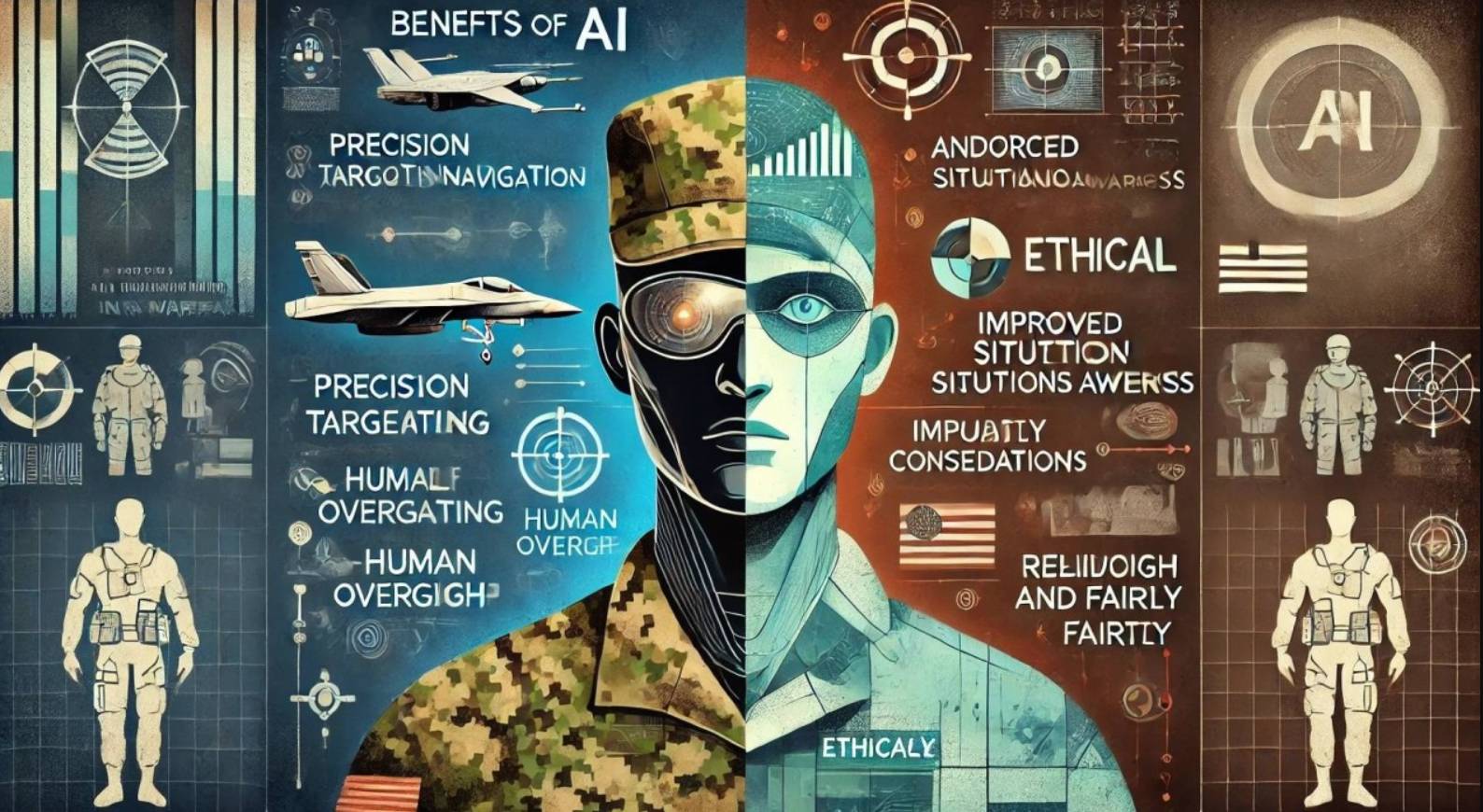
There is also the ethical and legal dimension. Military cyber operations sit close to questions of sovereignty, proportionality, and civilian infrastructure protection. AI may accelerate action, but it does not remove responsibility. In fact, the speed of AI-assisted operations makes robust governance more important, not less. Human authorization, auditability, and clear rules of engagement remain essential.
What to watch next
Several trends will define the next phase of military AI in cyber warfare:
- Agentic cyber defense: semi-autonomous systems that can investigate and contain incidents with minimal human prompting.
- AI versus AI conflict: adversaries using models to hunt, deceive, and harden networks in real time.
- Secure model deployment: greater emphasis on trustworthy AI, model provenance, and supply-chain security.
- Cross-domain integration: cyber AI linked to space, electronic warfare, and kinetic targeting.
- Coalition standardization: allied efforts to make AI tools interoperable across command structures.
These developments point to a future in which cyber operations are less episodic and more continuous, with AI acting as the engine of persistence. In that environment, military advantage will belong to the force that can learn fastest, defend its networks most reliably, and integrate cyber effects into broader strategy without losing control of escalation. Cyber warfare is here to stay, and AI will determine who shapes its terms.