

From Massed Formations to Sensor-Saturated Maneuver
Drone-enabled maneuver warfare is not simply a matter of adding quadcopters to legacy formations; it is a structural change in how force is generated, detected, fixed, maneuvered, and finished. The core operational effect is the collapse of the traditional separation between reconnaissance, targeting, and strike. Where mechanized formations once relied on intermittent aerial reconnaissance and relatively coarse battlefield awareness, unmanned systems now create a near-continuous sensing layer that extends from the tactical edge to the operational depth of the battlespace.
This matters because maneuver warfare has always depended on tempo, uncertainty exploitation, and local superiority. Drones sharpen all three. They compress the time required to find targets, enable rapid re-targeting, and punish any attempt to mass forces in the open. In practical terms, the side that can observe first, decide first, and strike first can force the enemy into dispersion, concealment, and slow movement, thereby degrading the very conditions that maneuver units need to achieve breakthrough and exploitation.
The result is a battlefield shaped by persistent overhead observation, automated cueing, cheap precision, and electronic warfare competition. In this environment, small unmanned systems are not auxiliaries; they are core maneuver enablers. They can screen advances, map minefields, identify gaps, relay targeting data, conduct battle damage assessment, and serve as expendable decoys that trigger air defenses or reveal firing positions. The implication is stark: the side that integrates drones into combined arms at scale can achieve disproportionate operational leverage even without numerical superiority.
What Drone-Enabled Maneuver Actually Changes
Traditional maneuver warfare seeks to dislocate an enemy through speed, surprise, and concentration at the decisive point. Drone-enabled maneuver warfare modifies each of these variables. Speed is no longer only physical speed; it is also decision speed. Surprise is harder to preserve because the sky above the battlefield is crowded with sensors, and concentration becomes dangerous because signatures are easier to detect and target. As a result, successful forces increasingly rely on distributed maneuver, short-duration mass, and rapid re-dispersion.
At the tactical level, drones create a new feedback loop. A small reconnaissance UAV can find an enemy vehicle, transmit coordinates within seconds, and cue artillery, loitering munitions, or attack drones. That target may then be engaged before it relocates. If the enemy moves, new drones reacquire. If the enemy emits electronically, passive sensors or electronic support measures can detect the source. This cycle creates an attritional pressure that is uniquely lethal to forces dependent on exposed movement and linear logistics.
At the operational level, drone-enabled maneuver favors forces that can combine concealment, deception, and short-range precision with resilient communications. It rewards smaller combat packets, modular command structures, and redundant kill chains. It also increases the value of terrain that breaks line of sight, urban masking, forests, ravines, and subterranean routes. Open desert, flat steppe, and road-bound columns become much more hazardous when every movement can be watched and handed off to a shooter.
Comparative Technical Roles of Battlefield Drone Classes
Different drone classes contribute different functions to maneuver warfare. The most effective forces treat these systems as a layered architecture rather than a single category of aerial asset.
| Drone Class | Typical Role | Range | Endurance | Key Trade-Off |
|---|---|---|---|---|
| Micro/quadcopters | Short-range reconnaissance, route clearing, building clearance | 1 to 5 km | 10 to 40 min | Low endurance but high tactical utility in cluttered terrain |
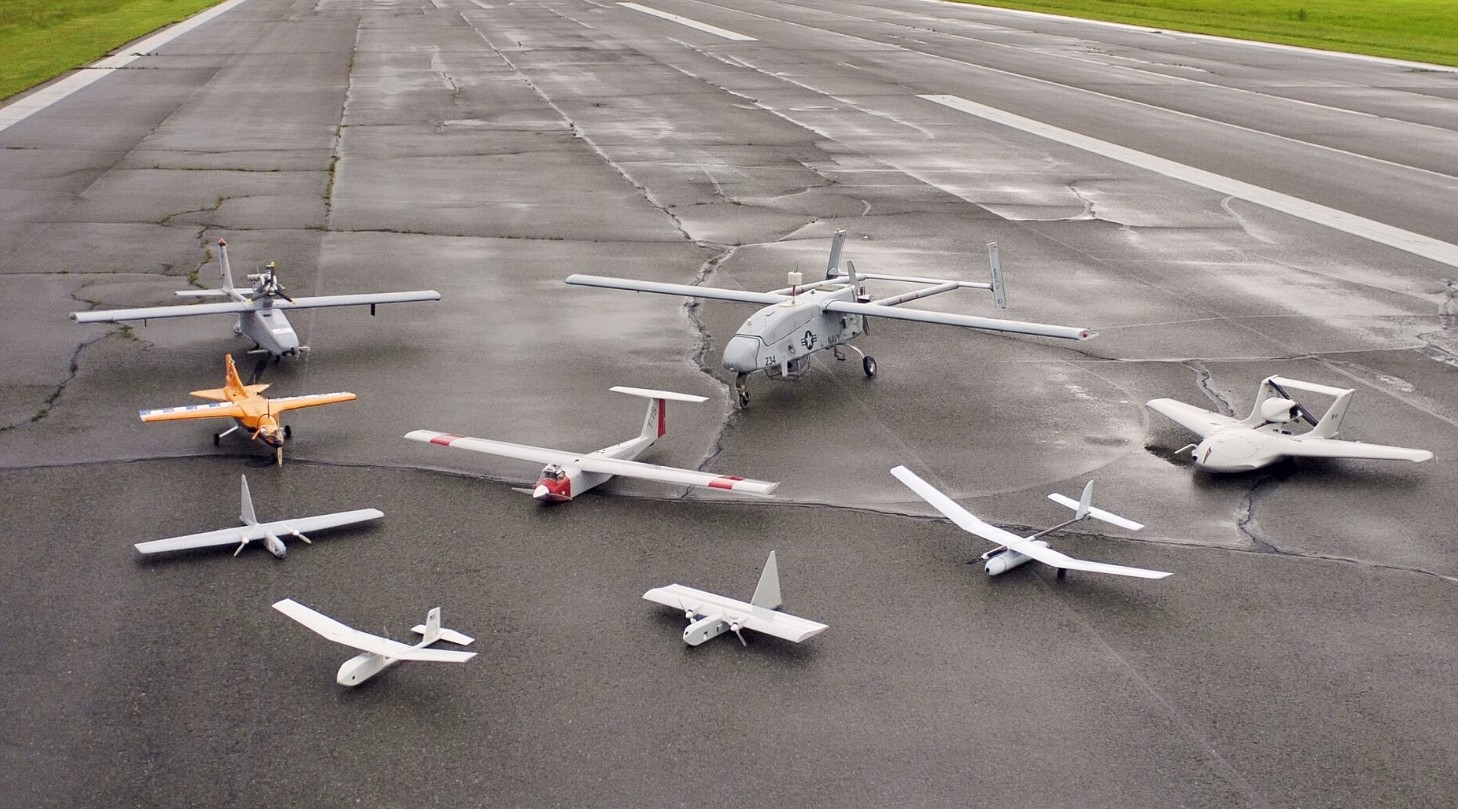
| Small fixed-wing UAVs | Platoon to battalion reconnaissance, artillery spotting | 20 to 120 km | 2 to 10 hr | Greater endurance, but more vulnerable to air defense and EW |
| Loitering munitions | Precision strike against radar, armor, artillery, logistics | 10 to 200+ km | 30 min to 6 hr | Combines sensing and strike, but costly if used against low-value targets |
| Medium-altitude UAVs | Theater-level ISR, target development, battle management | 100 to 1,000+ km | 10 to 30+ hr | High persistence, but dependent on air superiority and robust links |
The table hides an important operational truth: the most strategically significant drone is often not the largest one, but the one that is most difficult to suppress at the point of employment. A $1,000 quadcopter that reveals a tank platoon can enable a $50,000 loitering munition or a $1 million artillery strike. This asymmetry is the essence of drone-enabled maneuver warfare: inexpensive sensing creates expensive consequences for the enemy.
The Kill Chain Has Become a Contest of Seconds
In pre-drone warfare, the kill chain often tolerated delays measured in minutes or even hours. In the drone-dense battlespace, those delays can be fatal. The sequence of find, fix, track, target, engage, assess now occurs under constant contest from jamming, spoofing, kinetic interception, and camouflage. Forces that rely on slow approval processes or fragmented command relationships are at a disadvantage because the target may move, hide, or retaliate before the strike arrives.
Accordingly, the most effective formations build a compressed fire cycle with decentralized authority. Forward elements identify targets, organic or attached drone teams validate them, and artillery or strike drones engage with minimal delay. This demands preplanned authorities, encrypted communications, and standardized target handoff formats. It also demands disciplined emission control because any radio transmission can become a locator beacon for enemy electronic warfare or counter-fire.
The tactical lesson is that drone-enabled maneuver is not purely about more drones. It is about kill-chain compression. A unit with fewer drones but faster processing, better integration, and more resilient links can outperform a unit with larger quantities but poor coordination.
Engineering Trade-Offs That Decide Battlefield Survivability
Drone systems are constrained by physics, not marketing. Endurance competes with payload. Range competes with link resilience. Speed competes with acoustic and thermal signature. Autonomy competes with software complexity and cyber risk. On the battlefield, every design choice imposes a survivability trade-off.
- Battery-powered multirotors offer excellent hover and precision placement but suffer from short endurance and high acoustic detectability.
- Fixed-wing UAVs extend range and patrol time but require launch and recovery procedures that can expose operators and create a predictable pattern.
- Autonomous navigation reduces dependence on GPS and data links, yet increases software complexity and the risk of misidentification or navigation error.
- Encrypted high-bandwidth links improve data fidelity but increase electromagnetic emissions and can be easier to detect.
These trade-offs drive a clear design direction: battlefield drones must be cheap enough to lose, smart enough to be useful, and simple enough to be field-repaired. The optimal architecture is often a mixed fleet with deliberately different signatures, ranges, and payloads. High-endurance platforms cue disposable tactical drones; tactical drones cue loitering munitions; loitering munitions strike high-value emitters or armor; and decoy drones force enemy sensors and missiles to waste time and ammunition.
Electronic Warfare: The Great Equalizer and Great Disruptor
Electronic warfare is the main counterweight to drone dominance. Jamming can sever command links, disrupt navigation, and degrade video downlinks. Spoofing can mislead autonomous systems. Passive detection systems can locate operators and relay nodes. Counter-UAS weapons, including guns, lasers, interceptors, and fragmentation munitions, can destroy drones at scale if properly integrated.
But EW is not a simple off-switch. As drone networks become more resilient, they incorporate frequency hopping, mesh relays, inertial navigation, terrain referencing, onboard image matching, and one-way strike modes. This forces the defender into a resource allocation dilemma. Broad-spectrum jamming can suppress friendly communications and civilian infrastructure, while selective jamming may leave gaps exploitable by agile drone operators.
In maneuver terms, the side that best combines drones and EW can create a battlefield of asymmetric visibility. Friendly drones illuminate the enemy, while enemy drones are blinded, deceived, or forced into shorter-range, higher-risk profiles. That is why modern maneuver brigades increasingly need integrated EW platoons, counter-UAS sections, and electromagnetic discipline as core combat functions rather than specialist add-ons.
Logistics, Sustainment, and the Hidden Cost of Persistence
The visible drone is only the tip of the system. Sustained drone-enabled maneuver requires batteries, charging infrastructure, spare airframes, propellers, motors, sensors, datalinks, repair kits, software updates, and trained operators. The logistics burden scales rapidly as drone use intensifies. A force that flies dozens of reconnaissance sorties and attack missions per day must also maintain a continuous supply chain for spares and power.
This creates a second-order vulnerability: if the enemy targets logistics nodes, battery caches, repair points, and launch sites, drone density will fall quickly. Therefore, resilient forces distribute launch crews, decentralize maintenance, conceal charging assets, and stock multiple echelons of expendable drones. The best units treat drones like ammunition with a software layer, not like precious aircraft that must be preserved at all costs.
Persistence also depends on personnel. Operators require not just piloting skill but target discrimination, airspace deconfliction, electromagnetic awareness, and rapid pattern recognition. As drones become more autonomous, human roles shift toward mission design, network management, and strike authorization. Training must therefore combine technical proficiency with tactical judgment. A poorly trained operator can waste valuable sorties, trigger fratricide, or reveal a unit through careless emissions.
What Winning Formations Look Like
The formations most likely to win in this environment share several characteristics. They are modular, networked, and difficult to target. They use drones for reconnaissance, deception, and strike in a layered fashion. They move under cover of smoke, terrain, darkness, and electronic suppression. They accept temporary dispersion to preserve combat power, then rapidly re-concentrate for decisive action. They also integrate artillery, engineers, air defense, EW, and logistics into a single maneuver system.
At the tactical edge, drone teams are embedded down to company level or below. At higher levels, drone intelligence is fused with artillery and operational planning cells. Decoys and dummy emitters are used to attract enemy strikes. Unmanned ground systems may carry supplies, emplace mines, or clear routes under observation. The force that can combine these effects can shape the enemy’s movement while preserving its own freedom of action.
In short, drone-enabled maneuver warfare does not eliminate the need for armor, infantry, artillery, or airpower. It changes their employment logic. Heavy formations must now move as if they are always observed, because they usually are. Light formations must now strike as if precision is immediately available, because it often is. Commanders who understand this shift will use drones to create windows of opportunity. Commanders who do not will discover that the battlefield has become too transparent for old habits to survive.
Selected Performance Considerations
- Detection range versus signature: the larger and louder the drone, the easier it is to detect, especially in acoustic and RF bands.
- Data latency: even a highly accurate sensor loses value if the target moves before the strike is authorized and executed.
- Sortie cost: low-cost drones enable mass, but only if manufacturing and sustainment remain scalable.
- Operator survivability: remote launch sites and relay networks are essential because operators themselves are high-value targets.
- Battlefield density: the more drones and counter-drones in the air, the more important spectrum management and airspace control become.
Strategic winners in future wars will likely be those who treat drones as the connective tissue of maneuver rather than as niche gadgets. Their advantage will come not from one extraordinary platform but from the ability to create a persistent, adaptive, and lethal sensing-strike web. In that sense, drone-enabled maneuver warfare is less about replacing human judgment than about amplifying it at machine speed.