

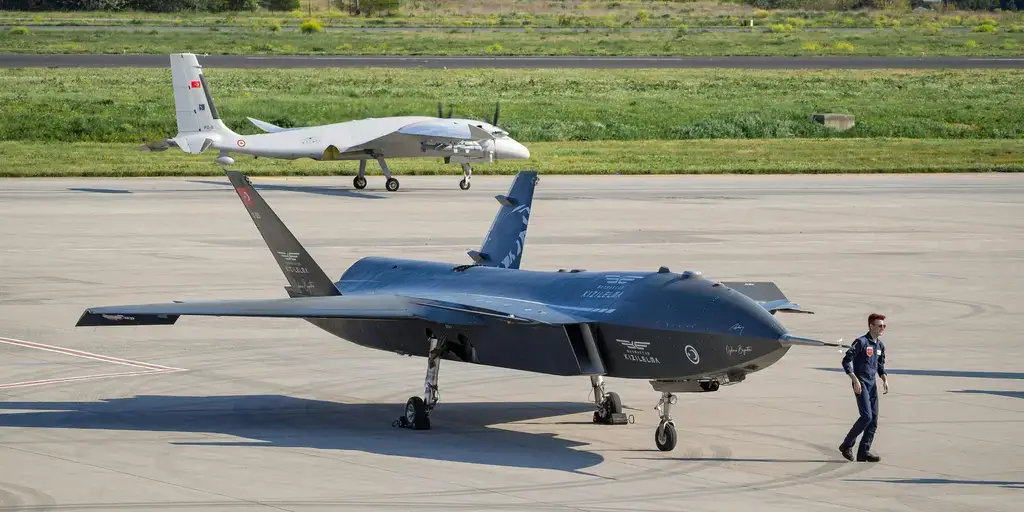
Iran’s drone program has become one of the most closely watched in the world, moving from a niche military capability to a centerpiece of regional strategy. When people ask about the most powerful Iranian drone, the answer depends on what “powerful” means: range, payload, endurance, stealth features, or combat effectiveness. Over the past decade, Iranian defense manufacturers have expanded their unmanned aerial vehicle, or UAV, portfolio to include reconnaissance platforms, loitering munitions, and long-range strike drones capable of deep penetration missions.
Among the most discussed systems are the Shahed-149 Gaza, the Mohajer-6, the Shahed-129, and the more recent family of one-way attack drones often associated with the Shahed line. Each serves a different purpose, but the aircraft that most often stands out when analysts talk about a high-end Iranian military drone is the Shahed-149 Gaza, a large turboprop UAV designed for long endurance, surveillance, and precision strike missions.
Why the Shahed-149 Gaza draws so much attention
The Shahed-149 Gaza is widely regarded as one of Iran’s most advanced indigenous drones because it combines several features that are not always found together in a single platform. It has a larger airframe than many of Iran’s earlier drones, a reported long flight endurance, and the ability to carry a meaningful weapons load. That makes it useful not only for intelligence, surveillance, and reconnaissance, but also for direct attack roles.
Analysts often compare it to other medium-altitude, long-endurance drones used by major militaries. While Iran’s publicly released specifications should always be treated cautiously, the Shahed-149 is typically presented as a serious step up from smaller tactical UAVs. It is built to stay airborne for extended periods and to provide real operational flexibility, whether the mission is border surveillance, target acquisition, or strike support.
What makes an Iranian drone “powerful”?
The term powerful can mean different things in the UAV world. A drone can be powerful because it carries heavy weapons, because it flies far from its launch point, or because it can remain in the air for many hours. In Iran’s case, power also includes strategic utility. A drone that can be produced in quantity, exported, or adapted for different missions may be more valuable than one with higher top-end performance on paper.
For Iranian systems, the most important indicators usually include:
- Endurance: how long the drone can remain airborne.
- Range: how far it can travel from launch and still communicate or operate effectively.
- Payload capacity: how much equipment or ordnance it can carry.
- Versatility: whether it can perform reconnaissance, strike, or both.
- Production scale: whether it can be manufactured in numbers large enough to matter operationally.
Seen through that lens, the most powerful Iranian drone is not always the smallest or the fastest. It is often the platform that offers the best balance of reach, persistence, and attack capability.
Key Iranian drones often mentioned in the same conversation
The Shahed-129 is one of the best-known Iranian MALE drones. It has been compared to the American MQ-1 Predator in concept, with a focus on surveillance and weaponized strike missions. The Shahed-129 helped establish Iran as a drone producer capable of fielding armed UAVs with significant endurance.
The Mohajer-6 is another important system. Smaller than the Shahed-149, it is often described as a tactical attack and reconnaissance drone. Its value lies in being more flexible and potentially easier to deploy in large numbers. While it may not match the Shahed-149 in overall size or endurance, it is still a major part of Iran’s drone arsenal.
Then there are the well-known Shahed one-way attack drones, which have gained global attention because of their use in swarm and long-range strike roles. These drones are not designed for recovery after mission completion. Instead, they function as low-cost precision munitions, often used to overwhelm defenses or reach distant targets with limited expense compared to larger missiles. Their strategic effect can be substantial even if their individual airframes are comparatively simple.
Estimated specifications of major Iranian drones
Publicly available information about Iranian UAVs is often inconsistent, and some figures are estimates rather than official data. The table below summarizes commonly cited characteristics of several prominent Iranian drones.
| Drone | Role | Approx. Endurance | Approx. Range | Payload |
|---|---|---|---|---|
| Shahed-149 Gaza | MALE ISR / strike | Reported around 24 hours or more | Long-range, often cited at several hundred kilometers or more depending on control links | Reported to carry multiple weapons or sensors |
| Shahed-129 | Armed reconnaissance / strike | Reported around 24 hours | Long-range tactical to operational use | Light to moderate weapons load |
| Mohajer-6 | Tactical ISR / strike | Several hours | Medium operational range | Small precision munitions |
| Shahed one-way attack drone | Loitering / attack | Single-use mission profile | Potentially very long, depending on variant | Warhead-focused payload |
These figures should be treated as approximate. In military UAV reporting, claimed performance can differ from battlefield reality, and the exact parameters may vary by model, export version, and mission configuration.
Operational strengths of the Shahed-149 Gaza
What makes the Shahed-149 Gaza stand out is not just one performance metric, but the overall package. A larger drone can typically accommodate more fuel, heavier sensors, and more weapon options. That means better situational awareness and more persistent coverage over a target area. For a country like Iran, which has prioritized asymmetric capabilities, that combination is highly attractive.
The drone’s endurance is particularly important. Long-endurance UAVs can orbit over an area, identify moving targets, and wait for a favorable strike opportunity. This is useful in border security, maritime monitoring, and support for regional partners. A drone that can stay aloft for many hours can also reduce the need for repeated sorties, lowering operational burden.
Another advantage is the psychological and strategic impact. A large armed drone signals a degree of technological maturity and creates uncertainty for adversaries who must plan air defenses around a wide range of possible threats. Even if the drone is not stealthy in the conventional sense, its ability to persist and strike still complicates defense planning.
Where Iranian drones differ from Western counterparts
Iranian drones are often built with a different design philosophy from Western high-end UAVs. Western platforms may focus on sophisticated sensor suites, advanced datalinks, and precision integration into joint command structures. Iranian systems tend to emphasize cost-effectiveness, simpler industrial production, and asymmetric utility. That does not mean they are inferior in every respect; rather, they are optimized for different strategic goals.
For Iran, the value of a drone is often tied to whether it can be deployed under sanctions, produced domestically, and used in a way that stretches an opponent’s defenses. Low cost and volume can be a form of power in themselves. This is especially true for one-way attack drones, where the goal is to generate operational pressure at relatively low expense.
The role of drones in Iran’s military strategy
Iran’s investment in UAVs reflects a broader doctrine built around deterrence, survivability, and regional influence. Drones are useful because they can extend surveillance coverage, threaten enemy assets, and support proxy or partner forces without requiring the same level of risk as manned aircraft. They are also adaptable. The same basic platform can be modified for reconnaissance, electronic warfare support, or attack missions.
Another reason drones matter to Iran is that they help offset limitations in conventional airpower. A modern fighter fleet is expensive, vulnerable to sanctions, and difficult to expand quickly. Drones provide a way to project force using domestically produced systems that can be iterated and scaled more rapidly. In this sense, Iran’s drone program is not just about individual aircraft. It is about building a flexible industrial and operational ecosystem.
So which Iranian drone is the most powerful?
If the question is asked in terms of an armed, reusable, long-endurance UAV, the Shahed-149 Gaza is often the strongest candidate. It combines size, endurance, and payload potential in a way that makes it one of the most capable Iranian platforms publicly discussed. If the question instead includes strategic effect and battlefield disruption, then the various Shahed one-way attack drones may be even more influential, because they can be produced in large numbers and used to saturate defenses or strike at long range.
In other words, the “most powerful” Iranian drone depends on the metric. The Shahed-149 Gaza is arguably the most capable reusable strike UAV in the Iranian inventory, while the one-way attack Shahed family may be the most strategically disruptive. Both show how far Iran’s unmanned aviation sector has come.
Looking ahead
Iran is likely to continue improving its UAV fleet with better sensors, longer ranges, improved autonomy, and more effective payload integration. Future systems may become more resilient to electronic warfare and more capable of operating in contested environments. The trend suggests that drones will remain one of Iran’s most important military tools, not just because of their technical features, but because they fit the country’s defense strategy so well.
Whether measured by endurance, payload, or strategic impact, Iranian drones have moved from being a regional curiosity to a major military factor. For now, the Shahed-149 Gaza remains the clearest answer when asking which platform is the most powerful Iranian drone, but the broader lesson is that power in modern warfare is often about flexibility, scale, and persistence as much as raw specifications.