

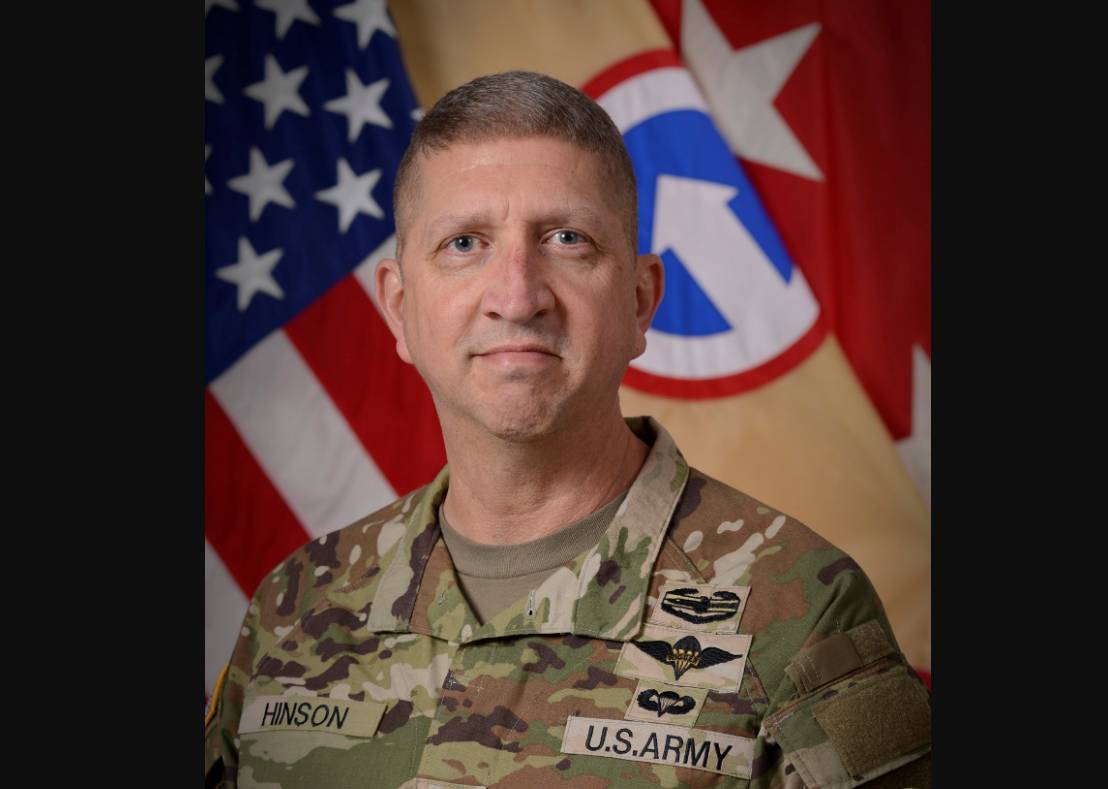
In modern war, the maneuver force may seize the headlines, but sustainment determines whether a campaign can be maintained, reinforced, and adapted over time. The U.S. Army’s 1st Theater Sustainment Command (1st TSC) sits at the center of that challenge in the Indo-Pacific, where distances are vast, basing is dispersed, and any future fight would test logistics on a scale reminiscent of the great Pacific campaigns of the Second World War.
The modern logistics problem in an old theater
The 1st TSC operates in a theater where geography is itself an adversary. The Pacific is not Europe — it is a maritime expanse of islands, air corridors, ports, and contested chokepoints. In practical terms, that means the command must prepare for the same enduring problem that challenged American logisticians from Guadalcanal to Okinawa: how to move fuel, ammunition, parts, food, and repair capacity across enormous distances while under threat from missiles, cyber attacks, and anti-access/area-denial systems.
What makes the current environment more demanding than earlier eras is the speed and precision of modern strike systems. In past wars, a port might be threatened by artillery or aircraft. Today, a logistics hub can be targeted by long-range missiles, drones, electronic warfare, and cyber disruption. The 1st TSC’s answer is not a single silver bullet but a web of resilience: distributed sustainment, redundancy in transportation routes, closer synchronization with allies and joint partners, and the ability to continue moving even when one node is damaged or denied.
How the command is adapting
The command is coping with war demands by shifting from a hub-and-spoke mindset toward a more distributed, expeditionary logistics posture. That means emphasizing smaller, more agile sustainment packages, forward staging, and the capacity to rapidly reconstitute supply chains if a primary port or airfield becomes unavailable. In the Pacific, the old assumption that a large rear-area base can safely do most of the work is no longer enough.
Several practical measures define this adaptation:
- Distributed logistics: spreading critical stocks and support capabilities across multiple locations to reduce vulnerability.
- Prepositioned equipment: ensuring that key platforms and supplies are already in theater, reducing the need for long transoceanic lift during crisis.
- Joint and multinational integration: coordinating with the Navy, Air Force, Marines, and allies such as Japan, Australia, and the Philippines.
- Transportation redundancy: using sea, air, and land routes in combination so that one failure does not halt the entire sustainment effort.
- Data-driven forecasting: employing modern logistics systems to anticipate demand and reduce waste, delay, and misallocation.
These measures echo the lessons of earlier campaigns. During World War II, the Allies learned that logistics success depended on flexibility and engineering as much as on tonnage. The Red Ball Express in Europe, the island-hopping campaigns in the Pacific, and the buildout of advanced bases all demonstrated that supply lines had to be not only long but survivable. The 1st TSC is facing a similar problem set, but with the added burden of modern precision warfare.
Table: 1st Theater Sustainment Command at a glance
| Category | Details |
|---|---|
| Designation | 1st Theater Sustainment Command (1st TSC) |
| Service | U.S. Army |
| Role | Theater-level sustainment, logistics, transportation, and distribution |
| Primary operating environment | Indo-Pacific / Pacific theater |
| Core mission | Enable and sustain joint and Army operations across wide-area, dispersed terrain and maritime distances |
| Key challenge | Maintaining resilient supply lines under long-range strike, cyber, and anti-access threats |
From Cold War logistics to contested sustainment
The 1st TSC’s current posture also reflects a broader evolution in U.S. Army doctrine. During the Cold War, large fixed supply depots and mature infrastructure could be assumed in many planning scenarios. Even in Iraq and Afghanistan, where logistics was difficult and dangerous, the U.S. often enjoyed air supremacy and relatively secure rear areas. The Pacific today offers no such comfort. Sustainment must be designed from the start for competition, interruption, and displacement.
That is why the command’s approach increasingly resembles expeditionary logistics rather than industrial-era massing. Instead of treating sustainment as a back-end function, planners now treat it as an operational weapon — one that shapes where forces can operate and how long they can remain effective. In a future Pacific conflict, a unit that cannot be refueled, repaired, and resupplied quickly becomes combat-ineffective regardless of its tactical skill.
The human and organizational dimension
Technology helps, but sustainment remains a human enterprise. The 1st TSC has to cultivate logisticians, transportation specialists, maintainers, and planners who can function in joint and multinational settings. That requires exercise repetition, familiarity with partner procedures, and the ability to operate under stress when communications are degraded or routes are disrupted. The command’s coping mechanism is therefore not only materiel but also institutional memory, training, and command culture.
Exercises across the Indo-Pacific are crucial because they reveal what peacetime planning hides. A route that works on a map may fail in monsoon weather. A port that appears adequate may lack throughput for heavy equipment. A host-nation system may be efficient in routine conditions but slow under wartime surge. By rehearsing these problems before a crisis, the 1st TSC reduces the likelihood that the first shot of a war will also be the first time a logistics plan is truly tested.
Why this matters strategically
The question of how the 1st TSC is coping with war demands is really a question about strategic endurance. In a long conflict, the side that can replace losses, sustain tempo, and repair damage fastest will possess a decisive advantage. That was true in the Atlantic convoy war, on the Burma Road, and across the Pacific islands. It is even more true now, when precision weapons can punish concentration and digital networks can be disrupted in moments.
The 1st TSC is coping by becoming more distributed, more joint, more multinational, and more adaptive. It is learning the same timeless military lesson in a very modern form: armies do not fight on ammunition alone, but neither do they fight without it. The command’s task is to make sure that, should war come in the Indo-Pacific, the sustainment architecture remains standing long enough for the rest of the force to do its work.
In that sense, the 1st TSC is not merely supporting the war demand — it is shaping whether the demand can be met at all.