Military gloves have evolved from simple abrasion barriers into highly engineered hand systems that balance protection, dexterity, thermal management, and electronic compatibility. The latest generation is being shaped by three converging demands: better weapon manipulation, greater survivability against environmental and mechanical hazards, and seamless use of touchscreen and sensor-based systems. Modern designs now integrate advanced synthetics, impact-absorbing structures, conductive textiles, flame-resistant materials, and ergonomic patterning tuned for prolonged wear under combat load.
What has changed in the newest designs
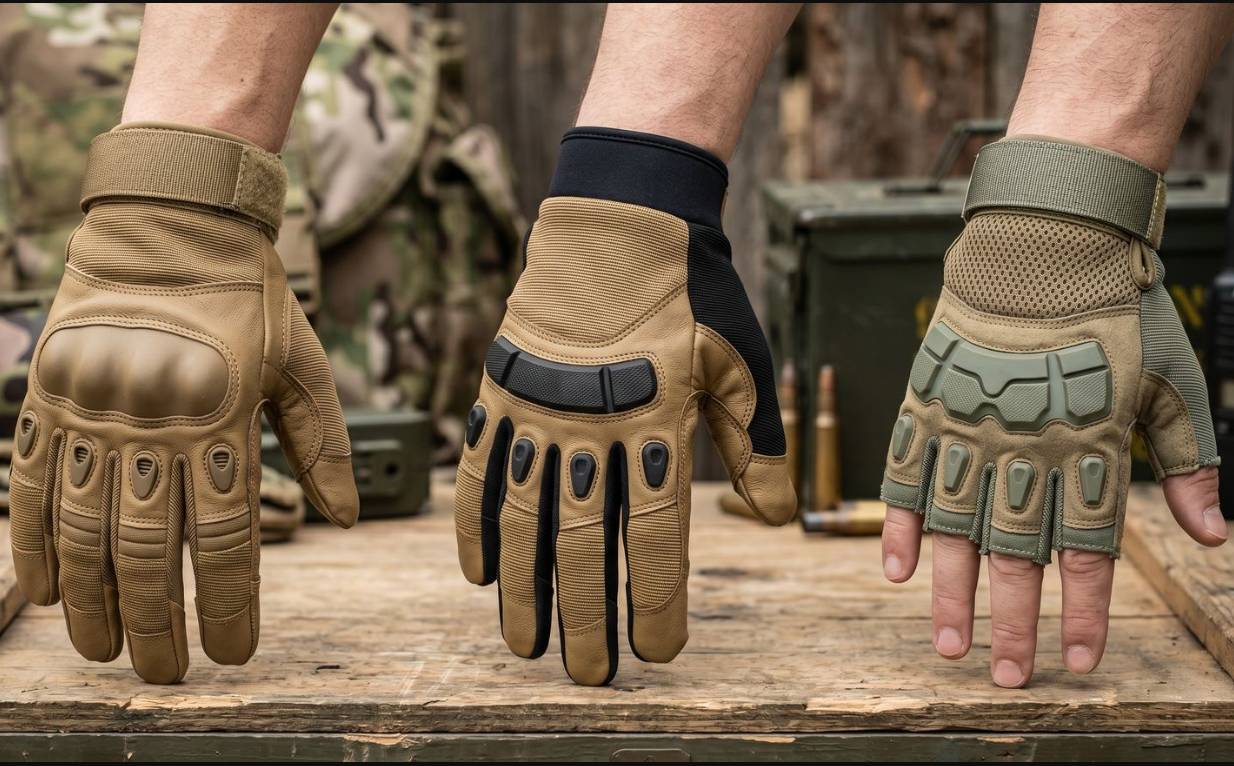
The most visible shift is the move away from bulky leather-and-foam constructions toward multi-material hybrid gloves. High-wear zones are increasingly reinforced with synthetic leather, aramid blends, or thermoplastic overlays, while the back-of-hand uses stretch-woven fabrics to preserve dexterity. This allows manufacturers to reduce seam count, lower friction hotspots, and improve trigger feel without sacrificing durability. Many current models also feature pre-curved finger geometry and three-dimensional patterning that reduce hand fatigue during long patrols or repeated manipulation of magazines, optics, and vehicle controls.
Another major advance is impact protection. Instead of relying on thick padding that compromises tactile sensitivity, newer gloves use segmented knuckle armor, low-profile elastomer pads, or viscoelastic inserts placed only where blunt-force risk is highest. These systems are designed to absorb energy from strikes, vehicle impacts, and falls while preserving finger articulation. In some designs, the protective elements are intentionally asymmetrical, with extra reinforcement on the dominant-hand side for personnel who are more likely to contact hard surfaces during close-quarters movement.
Materials driving the current generation
Advanced textile chemistry is the core of today’s glove improvements. Manufacturers commonly combine spandex or elastane for stretch, nylon and polyester microfibers for abrasion resistance and quick drying, and aramids such as Kevlar- or Nomex-class fibers for heat and cut resistance. Synthetic leathers remain popular because they can be engineered for consistent thickness, grip texture, and water resistance, unlike natural leather which varies batch to batch and can stiffen in wet conditions.
For thermal protection, flame-resistant yarns and lining systems are increasingly used in gloves intended for aviation, armored vehicle crews, artillery teams, and explosive ordnance disposal support. These materials do not make the glove invulnerable to heat, but they can improve resistance to brief flash exposure and reduce the risk of secondary burns from hot surfaces or fuels. For cold-weather operations, the latest insulation packages are designed to trap heat while minimizing bulk, often using thin lofted synthetic fills or moisture-managing liners that avoid the clammy feel associated with older insulated gloves.
Touchscreen compatibility without losing battlefield usability
One of the most practical developments is the maturation of touchscreen-capable fingertips. Earlier conductive gloves often worked only intermittently and lost sensitivity after wear or contamination. Newer models use conductive yarns woven into the fingertip and thumb surfaces, sometimes paired with larger contact zones to improve reliability on ruggedized tablets, GPS units, and smartphone-class devices used in logistics and command environments. The trade-off is that conductive treatments can slightly reduce abrasion life if not integrated carefully, so high-end gloves now reinforce these zones with layered construction or sacrificial outer skins.
This matters because modern soldiers, marines, aviators, and vehicle crews interact constantly with digital interfaces. A glove that must be removed every time a map is zoomed, a message is sent, or a sensor is checked creates both a tactical delay and a contamination issue in dusty, wet, or contaminated environments. The best current designs strive for what could be called functional continuity: the wearer should be able to move from rifle to radio to display without changing hand protection.
Fit, patterning, and human factors engineering
The best military gloves now reflect serious human factors work. Traditional flat-pattern gloves often created excess material at the fingertips or constrained the thumb saddle, reducing precision and increasing blister risk. Newer gloves use pre-curved finger construction, articulated finger joints, and carefully placed gussets that follow the natural resting posture of the hand. This reduces the force needed to close the hand and improves comfort under sustained load.
Fit is no longer treated as a generic sizing issue. Many premium gloves now come in expanded size ranges and sometimes multiple finger-length options. The reason is simple: poor fit degrades everything else. A glove that is too loose compromises trigger discipline and grip, while a glove that is too tight reduces circulation, accelerates perspiration, and can cause numbness in cold weather. The newest products increasingly emphasize anatomical shaping around the palm heel, thumb web, and index finger, because those are the highest-value zones for weapon control and tool use.
Comparative specification snapshot
| Feature | Legacy utility glove | Current high-end military glove |
|---|---|---|
| Primary materials | Leather, cotton, basic nylon | Synthetic leather, stretch woven textiles, aramid blends |
| Dexterity | Moderate to low | High, with pre-curved patterning |
| Impact protection | Minimal or none | Segmented knuckle and finger protection |
| Touchscreen use | Usually incompatible | Integrated conductive fingertips |
| Thermal management | Poor to moderate | Moisture-wicking, FR and insulated options |
| Water resistance | Limited | Improved, often with treated synthetic panels |
| Weight | Higher for equivalent protection | Lower through material optimization |
| Service life | Variable | Extended in reinforced wear zones |
Protection against cuts, abrasion, and puncture
Cut and puncture resistance has become increasingly important as gloves are used in urban operations, search tasks, vehicle recovery, and engineering support. Some military gloves now incorporate cut-resistant liners or high-tenacity yarns in the palm and finger areas. The engineering challenge is that true cut resistance often increases stiffness, which can reduce trigger feel and the ability to manipulate small fasteners or connectors. Designers therefore place cut-resistant elements selectively, preserving flexibility in the fingertip pads and thumb.
Abrasion resistance remains one of the most important specifications because it directly affects field life. Reinforced synthetic palms generally outperform untreated leather in wet, gritty conditions and dry faster after exposure. Double-layer construction in the index finger and palm heel is common because these areas see the highest wear from rifle stocks, steering wheels, rope, and hard-tool grips. Some gloves now use replacement patch concepts or heavier overlays in the wear zones, anticipating the reality that the outer surface will fail long before the entire glove becomes unusable.
Cold-weather and hot-weather specialization
There is no single glove that excels in every climate. Cold-weather gloves need insulation, wind resistance, and enough internal space to preserve circulation, but excessive bulk harms dexterity. The latest cold-weather military gloves use thin, efficient insulation and breathable membranes to manage moisture. They are often designed to layer with liner gloves or to allow the wearer to switch between a lighter dexterity glove and a heavier outer shell depending on mission phase.
Hot-weather gloves face a different problem: sweat saturation. If the glove absorbs and retains moisture, grip declines and skin irritation rises. The newest hot-weather models prioritize ventilation, quick-dry fabrics, and low-profile palm materials that maintain friction without becoming slick. Some use mesh back panels or laser-perforated zones, though these must be balanced against debris ingress and reduced protection. In desert or tropical use, a glove that dries quickly can be more valuable than one that offers marginally greater padding.
Emerging smart features
Some of the most forward-leaning military gloves are beginning to incorporate smart-textile elements. These include embedded sensors for hand movement tracking, temperature monitoring, or biometric data collection. While still niche, such systems could eventually support training analytics, fatigue detection, or injury prevention. The obstacle is not just cost but power management, washability, and durability under repeated flexing and environmental exposure.
Another promising area is improved compatibility with protective ensembles. Gloves are being designed to interface better with sleeve systems, wrist closures, and body armor cuffs, reducing gaps that can expose the wrist during movement. This is especially relevant for chemical protective configurations and cold-weather layering, where a small gap can create a disproportionate vulnerability.
Engineering trade-offs that still define the market
Every military glove is a compromise between competing priorities. More armor means more protection but less dexterity. More insulation means greater warmth but poorer tactile feedback. More waterproofing means less breathability. More conductive textile area improves touchscreen performance but can reduce durability in high-wear zones. The newest products succeed not by eliminating trade-offs, but by managing them more intelligently through zoning, laminates, targeted reinforcement, and better anatomical fit.
In practice, the best glove for a given unit depends on mission profile. Infantry in urban and mixed terrain may prioritize dexterity and impact protection. Vehicle crews may value flame resistance and abrasion durability. Arctic units need insulation and moisture control. Engineers and breachers may require cut resistance and grip under contamination. Procurement decisions are therefore increasingly moving toward task-specific glove families rather than one universal issue glove.
Where the technology is heading
The next step is likely to be even more aggressive material zoning, lighter protective structures, and improved integration with digital systems. Expect broader use of recycled high-performance fibers, better low-profile impact foams, and more reliable conductive coatings that survive laundering and repeated flexion. The most advanced concepts will likely focus on reducing the number of seams, improving comfort over long wear periods, and tailoring gloves for specialized roles without losing baseline battlefield utility.
What is clear is that military gloves are no longer an afterthought. They are a critical interface between the human body and the weapon, vehicle, tool, and digital system. The latest designs show how much performance can be gained when protection is engineered with the same seriousness as a rifle stock, helmet liner, or plate carrier strap.