
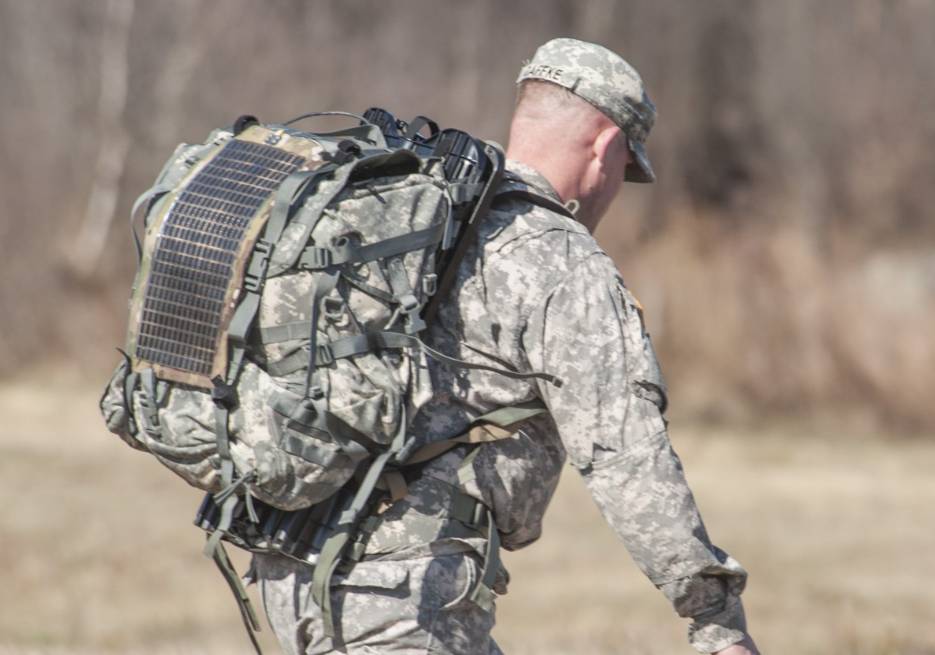
Wearable solar-powered gear is shifting from a niche power-assist concept into a plausible layer of the dismounted soldier’s energy architecture. The underlying idea is straightforward: convert sunlight into electrical energy at the edge of the body, store it locally, and use that energy to offset the burden of batteries, reduce resupply demand, and extend mission endurance. The engineering challenge is much harder. A soldier is a moving, shadowed, mechanically stressed platform that must fight, crawl, climb, and survive rain, dust, abrasion, and thermal extremes while wearing equipment that cannot compromise mobility or signature management.
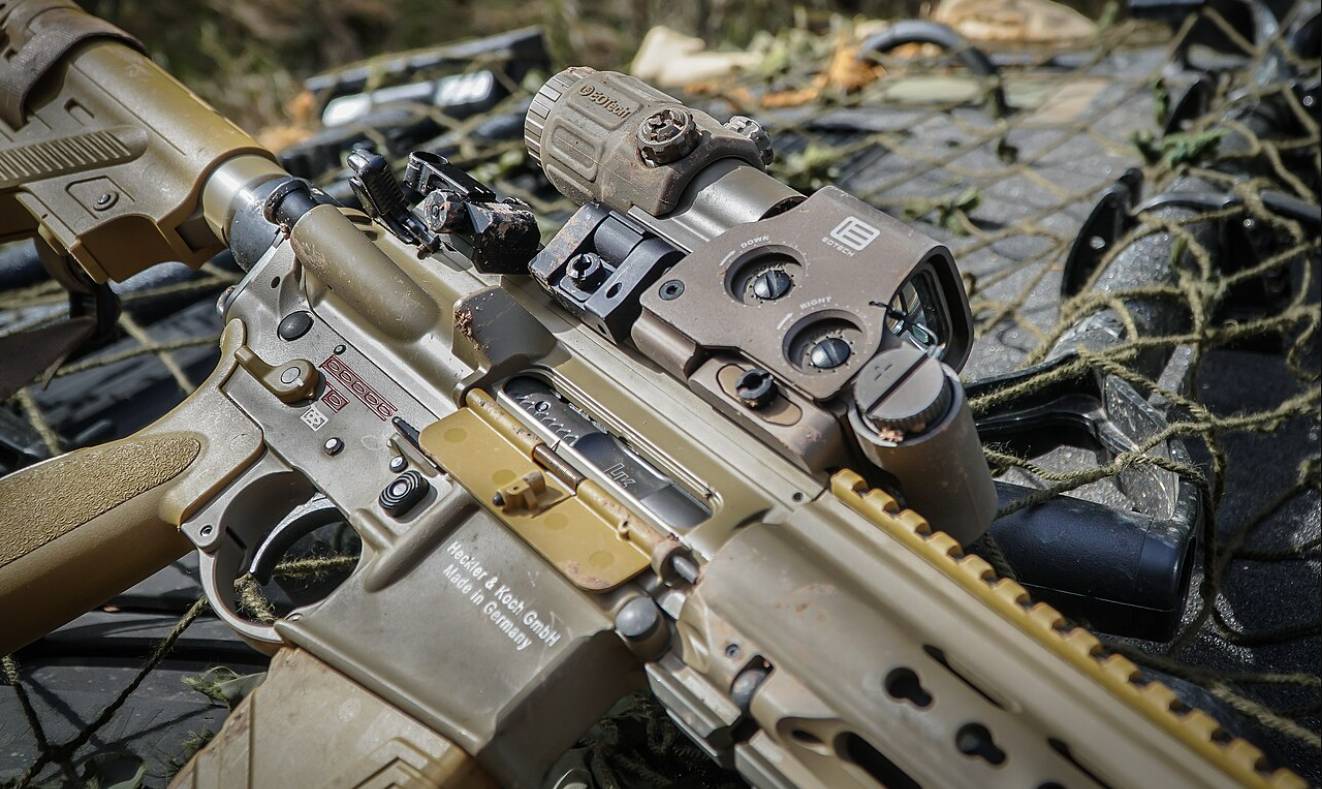

What makes this field compelling is not the fantasy of a suit that fully powers combat operations, but the practical prospect of shaving load from the logistics chain. Modern infantry already carry radios, GPS receivers, night-vision devices, biometric monitors, electronic hearing protection, weapon accessories, and sometimes counter-UAS or electronic warfare peripherals. Those systems consume far more energy than a decade ago, yet battery mass remains stubbornly heavy. Wearable photovoltaics aim to turn uniforms, rucks, plate carriers, helmets, and even pouches into distributed trickle chargers.
What wearable solar actually means
In military usage, wearable solar generally falls into three categories: integrated textile photovoltaics, flexible laminate panels, and modular harvesters attached to gear. Textile-integrated systems embed photovoltaic fibers or printed cells into fabric, preserving drape and comfort. Flexible laminates use thin-film cells bonded to cloth or polymer backers, delivering higher power density but less conformability. Modular harvesters are the most mature: foldable panels clipped to a pack, tent, or patrol base kit, often combined with a battery buffer and power-management electronics.
The key constraint is geometry. A standing human presents only a limited effective solar collection area, and much of it is frequently occluded by arms, kit, terrain, and posture. Even with ideal orientation, the body is a poor solar platform compared with a vehicle roof or fixed array. That means wearable solar is best understood as an offset system, not a primary generator. Its value lies in opportunistic energy capture during patrol pauses, static observation, vehicle transits, and rear-area movement.
Engineering trade-offs that matter in combat
Every watt harvested comes with a penalty. Flexible solar cells must trade efficiency against bend tolerance, ruggedness, and cost. Silicon cells can be efficient but are brittle. Thin-film materials such as CIGS, amorphous silicon, and emerging perovskite blends offer better flexibility, but durability, encapsulation, and environmental stability remain decisive concerns. For soldiers, the operational question is not just “how efficient?” but “how many watts survive after 200 flex cycles, mud exposure, salt fog, and repeated laundering?”
Thermal management is equally important. Solar modules absorb sunlight and can create localized heat. On-body heat loads matter because soldiers already operate near heat-stress thresholds under armor. Any wearable energy system must be evaluated alongside the uniform’s moisture-wicking performance, infrared suppression, and comfort in hot climates. A panel that boosts electrical endurance but worsens heat strain may reduce combat effectiveness.
Signature management adds another layer. Bright reflective surfaces are unacceptable, but so is a panel that creates an obvious glint under certain angles. Coatings must balance low reflectance, spectral response, and durability. In the near-infrared band, where many sensors operate, material choices can affect detectability. Designers increasingly use matte encapsulants and camouflage-compatible textures to suppress optical and thermal signatures.
Representative performance envelope
Field-relevant power output varies dramatically with placement, weather, and angle. A chest-mounted flexible panel might produce only a few watts in real-world movement, while a pack-mounted array in full sun can do substantially better. The following table summarizes typical performance ranges for current-generation wearable solar concepts rather than a single commercial product.
| Configuration | Approx. active area | Peak output in ideal sun | Typical field output | Strengths | Limitations |
|---|---|---|---|---|---|
| Textile-integrated photovoltaics | 0.2 to 0.5 m² | 10 to 60 W | 2 to 15 W | Best comfort, lowest profile | Lower efficiency, laundering durability concerns |
| Flexible chest or back panels | 0.1 to 0.4 m² | 15 to 80 W | 5 to 25 W | Higher output, adaptable form factor | Heat, abrasion, and bend-stress issues |
| Pack-mounted foldable arrays | 0.3 to 1.0 m² | 40 to 180 W | 10 to 70 W | Best power yield, easy replacement | Less “wearable”, vulnerable to snagging |
Those numbers sound modest, but they are operationally meaningful. A modern tactical radio or navigation device may only require a few watts on average, and a battery buffer can turn intermittent solar input into steady device power. Over a multi-day dismounted operation, even a 10 to 20 watt average harvest can materially reduce the quantity of spare batteries carried or cached.
Battery buffering is the real enabler
Solar panels alone are not enough because soldier movement is intermittent and solar irradiance is variable. The true architecture is a layered power stack: solar input, power conditioning, lithium-based storage, and regulated device outputs. Smart charge controllers maximize harvest under changing lighting conditions and prevent battery damage from irregular charging. This matters because tactical devices often prefer stable 5 V USB, 12 V regulated rails, or proprietary battery formats. The system must be able to negotiate all of these without adding fragility.
Battery chemistry is a major decision point. Lithium-ion offers high energy density but requires careful protection circuitry. Lithium iron phosphate is safer and more cycle-tolerant but heavier. Emerging solid-state concepts promise better abuse tolerance, yet are not yet mature for mass fielding. For wearable solar, the best near-term solution is often a compact, ruggedized buffer pack with modular swappable cells and a protective electronic management unit.
Comparative analysis: where solar helps, and where it does not
Wearable solar is strongest in roles where soldiers spend long periods exposed to daylight but do not require high continuous power. It is less useful in dense jungle, urban canyons, subterranean environments, night operations, or heavily armored assaults. The technology should therefore be compared against alternatives such as disposable batteries, fuel-cell chargers, and vehicle-based recharge systems.
| Power source | Mass burden | Logistics complexity | Noise/heat signature | Best use case |
|---|---|---|---|---|
| Disposable batteries | High over time | Moderate to high | Very low | Short missions, simple devices |
| Wearable solar + buffer | Low to moderate | Low once issued | Very low | Extended patrols in daylight |
| Fuel-cell charger | Moderate | Moderate | Low | Recharging in field base camps |
| Vehicle power tap | Low on-person | Dependent on vehicle access | Low to moderate | Mechanized units, convoy operations |
Solar also has an important strategic effect: it reduces the hidden mass of energy logistics. A lighter battery load does not just improve comfort; it can improve speed, reduce fatigue, and free capacity for ammunition, water, and mission-specific equipment. In a platoon context, those marginal gains accumulate across every soldier and every patrol day.
Material science is moving the field forward
Recent advances in flexible substrates, encapsulants, and printed conductors are pushing wearable solar closer to practical deployment. Perovskite-silicon tandems are attracting attention because they may deliver high efficiency at low thickness, while roll-to-roll manufacturing could eventually lower unit cost. Conductive yarns and printed busbars are being refined to reduce resistive losses and prevent hot spots. There is also growing interest in hybrid textiles that integrate energy harvesting with sensing, creating garments that can monitor body temperature, hydration stress, and movement while also producing power.
However, defense adoption depends on reliability more than headline efficiency. A cell that delivers 25 percent efficiency in a lab but degrades rapidly under UV exposure or moisture ingress is less valuable than a 15 percent system that survives repeated field abuse. Military procurement tends to reward systems that are repairable, modular, and tolerant of rough handling. That means replaceable panels, standardized connectors, and field-swappable battery modules are likely to matter as much as the photovoltaic chemistry itself.
Operational constraints on the modern soldier
Future soldiers using wearable solar gear will still confront the same tactical realities: cover and concealment, weather, posture, and the need to minimize encumbrance. Panels cannot interfere with plate carriers, harnesses, or sling geometry. They must not snag on vegetation or snag points in urban movement. They must remain functional when partially shaded by helmets, packs, or the soldier’s own body.
There is also the issue of doctrine. A system that encourages soldiers to remain stationary in direct sunlight just to charge batteries may be tactically unsound. The best designs therefore support opportunistic charging rather than forcing behavior. Some concepts use detachable panels that can be laid out during halts, while others prioritize continuous low-rate trickle charging during movement. The ideal solution may be a hybrid: a minimal on-body collector plus a larger fold-out array for static positions.
What the next generation may look like
The most credible near-future soldier power system is not a full solar exosuit, but a layered ecosystem. Uniforms may carry low-power textile cells for trickle charging, rucksacks may carry more efficient foldable panels, and wearable batteries may be distributed across the kit to balance weight. Power-hungry devices may increasingly share a common digital power bus, reducing the need for multiple proprietary chargers and maximizing the utility of each harvested watt.
In the longer term, the real breakthrough may come from integration rather than raw cell efficiency. If solar layers can be woven into a breathable, rugged, low-signature combat uniform that survives field abuse while quietly extending the endurance of radios, sensors, and personal electronics, the effect on infantry logistics could be substantial. The future soldier is unlikely to be “powered by the sun” in a dramatic sense. More realistically, the soldier will be powered by a distributed energy system in which sunlight is just one source among several, but one that reduces dependence on the supply chain and increases operational autonomy.
That is the promise of wearable solar-powered gear: not science fiction, but a gradual redesign of the soldier’s energy budget. In an era where every ounce matters and every electronic device demands power, even a few extra watts can be decisive.