

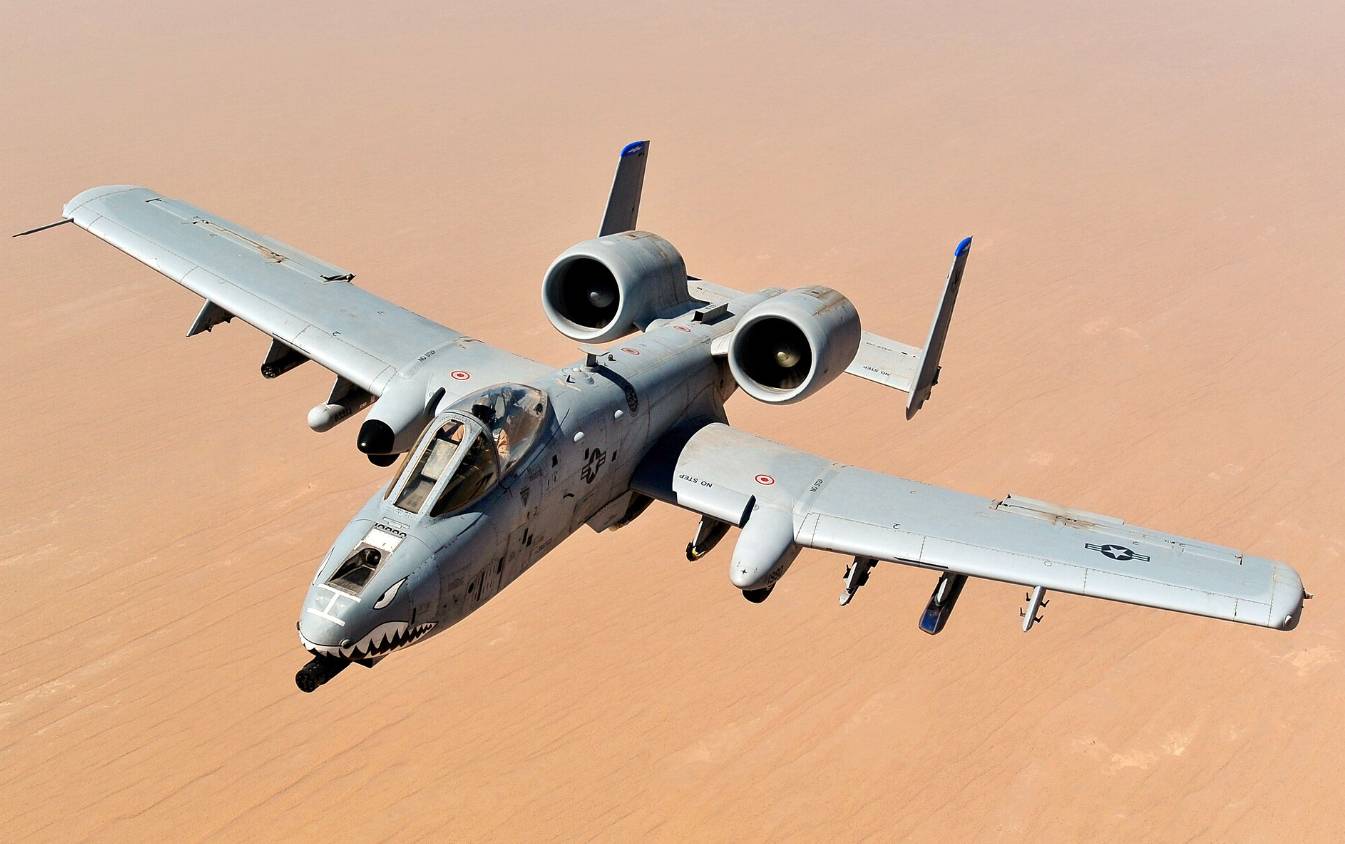
The A-10 has always been the aircraft people love to argue about and troops on the ground love to hear. When the first burst from its GAU-8/A hits a target, the argument usually ends. The proposed A-10X concept takes that same hard-nosed close air support idea and asks a simple question: what would it take to rebuild the Warthog for the fights that actually exist now, not the ones planners argued about decades ago?

From a field perspective, the answer is not glamour. It is survivability, persistence, sensor quality, weapon flexibility, and the ability to keep working after taking punishment. The A-10 earned its reputation because it was built around those realities. An A-10X would only deserve the name if it preserves the parts that matter and modernizes the parts that have become liabilities.
Why the A-10 earned the “flying tank” label
The original A-10 was built with one purpose: kill armor and support troops close to the fight. The airplane is rugged in ways that still impress maintainers and pilots. The cockpit is wrapped in a titanium armor bathtub. The engines are mounted high and far apart to reduce the chance that one hit takes out both. Control systems are redundant. The airframe tolerates damage that would send many other jets straight to the ground.
That toughness is not a marketing line. It is why the aircraft became famous for bringing pilots home after losing hydraulics, losing parts of a wing, or taking heavy battle damage. In a close air support mission, the airplane must sometimes stay in the threat area longer than anyone likes. A platform that can absorb damage and keep flying gives the ground force commander confidence to keep calling for it.
Just as important, the A-10’s loiter time and low-speed handling make it useful in the kind of fight where a pilot must see what is happening, talk to controllers, and place ordnance with precision. That slow, deliberate way of working is exactly what infantry and armor crews need when they are pinned down, taking contact, or trying to avoid friendly-fire mistakes in cluttered terrain.
What an A-10X would have to fix
The original aircraft is not obsolete because the idea was bad. It is aging because the battlefield changed. Modern air defenses are more lethal, digital sensors are better, and mission systems now matter as much as raw toughness. A rebuilt A-10X would need to address several weak points:
- Survivability against modern air defenses is no longer just about armor. It is about signatures, electronic warfare, and staying outside the envelope when possible.
- Sensor fusion has become essential. A pilot needs a cleaner picture of friend, foe, terrain, and weapons effects.
- Networking matters. The aircraft must receive and share targeting data quickly with ground units, drones, and other aircraft.
- Weapons integration must be broader. The platform cannot rely on one gun and a narrow set of munitions forever.
- Maintenance burden has to come down if the aircraft is to remain affordable and available.
That is why any serious A-10X would be more than a cosmetic refresh. It would be a rebuild of the aircraft’s combat system, not just its airframe.
Likely upgrades in an A-10X rebuild
If one were designing an A-10X with real-world utility in mind, the improvements would probably center on four areas: sensors, communications, survivability, and propulsion support.
1. Sensors and targeting
The old way of finding targets was largely visual, aided by targeting pods and the pilot’s own eyes. That still matters, but it is not enough. An A-10X would likely need an upgraded infrared and electro-optical targeting suite, a modernized mission computer, and better display architecture in the cockpit. The goal is to reduce pilot workload while increasing target confidence.
In practice, that means faster handoffs from ground observers and drones, better classification of vehicles and weapons positions, and improved ability to strike in bad weather or through battlefield haze. The pilot should spend less time interpreting separate systems and more time making decisions.
2. Communications and battle networking
Close air support is a team sport. A good CAS aircraft does not operate as a lone hunter; it works with joint terminal attack controllers, artillery, infantry, armored units, and unmanned systems. An A-10X would need secure, jam-resistant communications, better data links, and easier integration into a joint fires network.
That matters because the fight is too fast for voice alone. A ground team that can pass a precise grid, a drone cue, or a time-sensitive target update gives the aircraft a real advantage. If the airplane can receive that data cleanly and put ordnance on target without wasting fuel, it becomes much more dangerous.
3. Survivability and electronic warfare
The old A-10 survived by being hard to kill. The new one would have to be hard to detect, hard to lock, and hard to finish off. That means a modern radar warning receiver, missile approach warning, chaff and flare improvements, and likely an electronic warfare suite that can work in dense threat environments.
It would be unrealistic to pretend an A-10X can swagger into a high-end integrated air defense zone the way people imagine the original aircraft in permissive airspace. But with the right upgrades, it can remain useful at the edges of contested airspace, where troops still need direct support and the enemy still uses mobile SAMs, MANPADS, and battlefield jammers.
4. Engines and sustainment
The A-10’s engines are part of its identity, but they also drive maintenance and performance limitations. Any rebuild would need to consider improved efficiency, better reliability, and easier support in the field. Even if the engines themselves were not radically changed, the surrounding systems, modularity, and diagnostics should be modernized so maintainers can troubleshoot faster and keep jets flying more often.
In wartime, sortie generation matters as much as headline performance. The best airplane is useless if it is stuck on the ramp waiting for parts or hours of complex servicing. An A-10X has to be a machine that can be turned quickly and kept in the fight.
Why the gun still matters
No discussion of the Warthog is complete without the gun. The GAU-8/A is not a gimmick. It is a battlefield tool that remains devastating against light armor, fortified positions, vehicles, and troops in the open. The psychological effect alone is substantial, but the real value is accuracy, sustained fire, and immediate response.
That said, a rebuilt A-10X would not be wise to define itself only by the gun. The modern battlefield demands a mix of weapons: precision-guided bombs, small-diameter munitions, rockets, and perhaps stand-off options depending on the threat. The gun remains the signature weapon, but the aircraft’s lethality has to be broader than a single barrel cluster.
Here is a practical way to view it: the gun is what makes the A-10 famous, but smart ordnance is what keeps it relevant.
Not every battlefield wants a stealth jet
There is a tendency in defense circles to treat stealth and speed as the answer to everything. In reality, not every operation needs a high-cost multi-role fighter. Many ground fights happen under conditions where persistence, identification, and direct coordination matter more than supersonic performance.
The A-10X concept makes sense precisely because there remains a class of mission where a rugged, visible, heavily armed aircraft is the right tool. It can orbit longer, communicate more naturally with troops, and carry enough ordnance to matter without requiring an expensive tanker-and-fighter package for every pass.
That does not mean it can replace everything else. It means it fills a niche that remains stubbornly real: troops in contact, armor in the open, artillery positions that have to be suppressed, and enemy forces that need to be found and hit quickly once they reveal themselves.
What the battlefield says about the aircraft’s future
Having watched close air support from the ground, one thing becomes clear: what soldiers need is not a beautiful airplane, but a dependable one. They want an aircraft that shows up, stays in communication, understands the fight, and can put steel on target without drama. The A-10 has historically done that better than most aircraft ever built.
An A-10X rebuilt for the modern era would have to keep that reputation while shedding the weaknesses of age. It would need better electronics, better survivability, better integration, and a sustainment plan that makes sense. If it does those things, it remains a hard problem for anyone on the receiving end.
In the end, the phrase “flying tank” is not about invincibility. It is about a combat aircraft that was designed to keep moving, keep fighting, and keep the ground force alive long enough to win. A true A-10X would honor that legacy not by looking new, but by being useful where it counts most: over the battlefield, under fire, and still answering the call.
Likely A-10X fielded capability snapshot
| Category | Estimated A-10X Direction |
|---|---|
| Primary role | Close air support and armed overwatch |
| Weapons | GAU-8/A cannon, precision-guided bombs, rockets, and mixed loadouts |
| Survivability | Improved EW, warning receivers, countermeasures, and reduced signature management |
| Sensors | Modern targeting pod, upgraded mission computer, better ISR integration |
| Networking | Secure data links and joint fires connectivity |
| Operational focus | Contested and semi-permissive battlefield support |