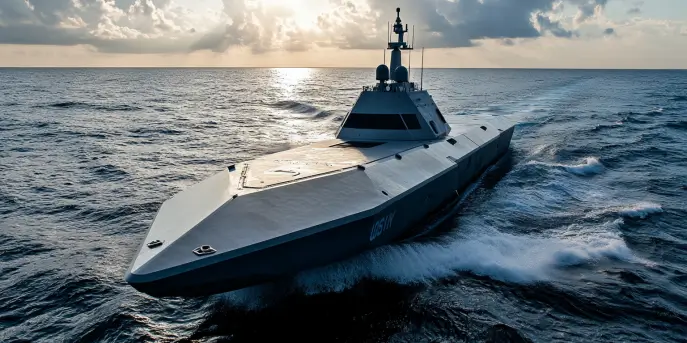


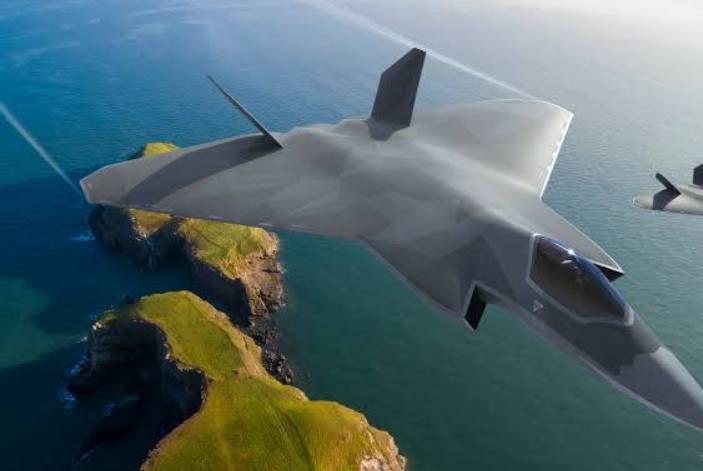
Sweden has never been a country that follows the crowd when it comes to airpower. From the sleek, road-base capable Viggen to the compact, networked Gripen, Swedish combat aviation has always been about doing more with less. So when talk turns to a secret 6th-generation fighter concept emerging from Sweden, the idea feels almost perfectly on-brand: quiet, pragmatic, and packed with engineering ambition.
Even without a public prototype rolling out of a hangar, Sweden’s aerospace ecosystem already hints at where this could go. Saab, FMV, the Swedish Armed Forces, and a broader web of European and international partners have been steadily pushing the boundaries of what a future air combat system should look like. If the 5th generation was about stealth and sensor fusion, the 6th generation game is about something bigger: survivability through networking, distributed lethality, human-machine teaming, and adaptability.
And that is exactly where Sweden gets interesting. Because Sweden does not need to copy the U.S. NGAD, the FCAS family, or the Tempest concept line-for-line. A Swedish 6th-gen design would likely be smaller, smarter, cheaper to operate, and optimized for the Baltic and Arctic realities of northern Europe. That means dispersed basing, harsh weather operations, electronic warfare resilience, and the ability to keep fighting even when the environment is actively hostile to the aircraft’s own electronics.
Why Sweden is uniquely positioned
Swedish fighter design has always been shaped by geography and doctrine. The country’s air force does not build around massive airbases that are easy to target. It builds around dispersal, road operations, rapid turnaround, and survivability under attack. That philosophy is not a relic of the Cold War; it is arguably more relevant now than ever.
In a future high-end conflict, runways, fuel depots, command posts, and radar sites will be prime targets from the opening minutes. Sweden’s long-standing emphasis on operating from short, austere locations gives it a doctrinal edge that many larger air arms are still trying to relearn. A Swedish 6th-gen fighter concept would almost certainly inherit that DNA.
That could mean a design optimized for:
- Short or semi-prepared runway use
- Fast rearming and refueling
- Low maintenance burden
- High sortie generation from dispersed locations
- Robust electronic warfare and passive sensing
In other words, the aircraft would not just be a jet. It would be a node in a larger warfighting system designed to survive first contact and keep contributing after the first missile exchange.
What a Swedish 6th-gen fighter would likely prioritize
If Sweden were to field a clean-sheet 6th-gen fighter concept, it would likely be less about raw size and more about networked lethality. The days of a single aircraft carrying every sensor, every weapon, and every mission are fading. The future belongs to coordinated systems: manned fighters, loyal wingman drones, offboard sensors, electronic warfare platforms, satellites, and ground-based nodes all feeding one another in real time.
A Swedish concept would probably emphasize a few key capabilities:
1. Low observability, but not obsession
Stealth would almost certainly be part of the package, but Sweden may approach it with a distinctly Nordic pragmatism. The goal would not necessarily be the deepest possible radar cross-section at any cost. Instead, it would be a balanced signature management approach: shaping, coatings, internal carriage where needed, and a strong emphasis on electronic warfare, emissions control, and passive detection.
That makes sense. In a dense sensor environment, stealth is not just about hiding from radar; it is about reducing the enemy’s ability to detect, classify, and cue weapons onto the aircraft in the first place. A Swedish design could pair modest physical signature reduction with extremely aggressive electronic countermeasures.
2. AI-assisted mission management
One of the defining traits of 6th-generation fighters will be software. Lots of it. A Swedish platform would likely rely on AI-assisted sensor fusion, threat prioritization, and mission management to reduce pilot workload and speed up decision-making in complex battlespace conditions.
That does not mean the pilot disappears. It means the pilot becomes more of a commander and tactician, with the machine handling the flood of data from radar, infrared search and track, electronic support measures, datalinks, and offboard assets. In a heavily jammed environment over the Baltic, that kind of cognitive offloading could be a genuine combat multiplier.
3. Loyal wingman integration
Sweden is a natural fit for collaborative combat aircraft. A future Swedish fighter would likely be designed from the outset to operate with unmanned teammates that can scout, jam, decoy, or strike. These drones could extend the fighter’s sensor reach, complicate enemy targeting, and let a relatively small number of manned aircraft punch far above their weight.
In practical terms, that means the fighter becomes the brains of a distributed kill chain. It may never need to expose itself directly if a loyal wingman can fly forward, find the target, and either transmit targeting data or take the shot itself.
4. Arctic and Baltic endurance
Cold weather is not a side note in Sweden. It is a design requirement. A Swedish 6th-gen fighter would need to operate reliably in snow, salt spray, freezing rain, and long winter nights. That means environmental hardening, simplified maintenance access, and systems that can be turned around quickly with limited ground support.
In the Baltic theater, where distances are short and threats are dense, endurance is not just about loiter time. It is about staying combat-effective under electronic attack, maintaining connectivity, and returning to fight again after a quick refuel and rearm cycle.
How it might compare with other 6th-gen programs
The global 6th-gen race is already shaping up into a fascinating engineering contest. The U.S. is pursuing a family of systems under NGAD. Europe is splitting its attention between FCAS and Tempest-like efforts. China is believed to be working on its own next-generation solutions. Against that backdrop, a Swedish concept would likely be smaller in scale but highly specialized.
Here is the key comparison: Sweden would not need a giant aircraft designed for continental-range penetration strikes. It would need a highly survivable regional air dominance platform that can operate inside a contested northern European battlespace. That distinction matters a lot.
A Swedish design may therefore lean toward:
- Lower procurement and operating costs than larger peer programs
- Modular systems for rapid upgrades
- Open architecture avionics
- Strong electronic warfare integration from day one
- Compatibility with dispersed, expeditionary basing
That would make it less of a one-aircraft wonder and more of a scalable combat ecosystem. And honestly, that feels very Swedish: elegant, efficient, and engineered to work in the real world rather than just in the brochure.
Speculative performance envelope
Because Sweden has not publicly unveiled a finalized 6th-generation fighter, any hard numbers remain speculative. But based on current aerospace trends and Sweden’s design philosophy, one can sketch a plausible performance profile.
| Category | Likely Direction |
|---|---|
| Role | Multirole air dominance and strike, optimized for networked warfare |
| Stealth | Low-observable shaping with strong electronic warfare support |
| Crew | Likely single-seat, with AI-enabled decision support |
| Engines | Likely twin-engine or highly optimized single-engine solution, depending on size and cost goals |
| Weapons carriage | Internal for stealth missions, external for lower-threat operations |
| Networking | Advanced multidomain datalinks and loyal wingman control |
| Base operations | Dispersed basing and short-turnaround support |
| Primary environment | Baltic, Arctic, and high-electronic-threat airspace |
That table is speculative, but it reflects a very believable direction. Sweden tends to design aircraft around operational flexibility, not just raw performance metrics. A future fighter that can survive in a jammed, missile-saturated, sensor-heavy battlespace while still being easy to disperse would be a serious force multiplier.
The stealth question: shaping versus systems
One of the most interesting debates surrounding any 6th-gen fighter is how much of its survivability comes from stealth versus everything else. For Sweden, that balance is especially important. A sleek, low-observable airframe is helpful, but in the real world, survivability is a layered stack.
Think of it as a pyramid:
- Top layer: passive detection and emissions control
- Middle layer: electronic warfare, jamming, deception, and decoys
- Lower layer: stealth shaping and signature reduction
- Foundation: training, tactics, dispersion, and mission planning
Sweden has always been good at the foundation part. The country’s fighter culture has emphasized realistic operations from the beginning. A 6th-gen concept would likely preserve that mindset while adding the digital tools to make it even more lethal.
Could it be a Gripen successor or something broader?
This is where things get especially fun. A Swedish 6th-gen concept could take one of two broad forms. The first is a direct Gripen successor: a next-step fighter optimized to replace or augment the current fleet with a more advanced but still affordable aircraft. The second is something broader: part of a larger combat air system in which the manned fighter is only one element among several.
The second option may be the more likely long-term path. Why? Because it lets Sweden preserve the strengths of the Gripen philosophy while expanding into collaborative combat aviation. Instead of betting everything on one exquisite aircraft, Sweden could field a system of systems that includes the fighter, unmanned adjuncts, and resilient command-and-control architecture.
That approach also aligns well with budget realities. A modular ecosystem can be scaled over time, allowing upgrades to sensors, software, weapons, and autonomy without waiting for a full generational reset.
What would make it truly “secret”?
The phrase secret 6th-gen fighter concept sounds dramatic, but in defense aviation, secrecy often means something less cinematic and more practical. It can mean classified studies, unpublished design work, wargaming, or quiet collaboration between industry and government on future requirements. It can also mean the kind of concept development that is not intended for public consumption until the strategic picture is clearer.
That makes sense for Sweden. A country with a relatively small defense-industrial base has every reason to keep future fighter thinking close to the vest. Revealing too much too early would only help competitors and potential adversaries understand the direction of travel. Keeping a lid on the concept allows engineers to explore options without being boxed in by public expectations.
The real story: Sweden’s next fighter mindset
Whether or not a fully formed secret 6th-gen fighter already exists on a drawing board, the real story is that Sweden is absolutely thinking in that direction. The future of air combat is moving toward distributed systems, resilient networking, and collaborative autonomy. Those are areas where Sweden has a chance to punch way above its weight.
If Saab and Sweden decide to build a next-generation fighter, expect something that is compact, clever, and ruthlessly mission-focused. Expect a jet designed to survive in a world of long-range missiles and pervasive sensors. Expect software to matter as much as aerodynamics. And expect the aircraft to be part of a much larger combat web rather than a lone hero machine.
That is the Swedish way: not the biggest, not the loudest, but often one of the most thoughtfully engineered solutions in the room. If the rumors of a secret 6th-gen concept are even partly true, the result could be one of the most fascinating fighters of the next generation — a northern warrior built for an age of electronic warfare, autonomous teammates, and battles fought across a web of sensors rather than just a patch of sky.