

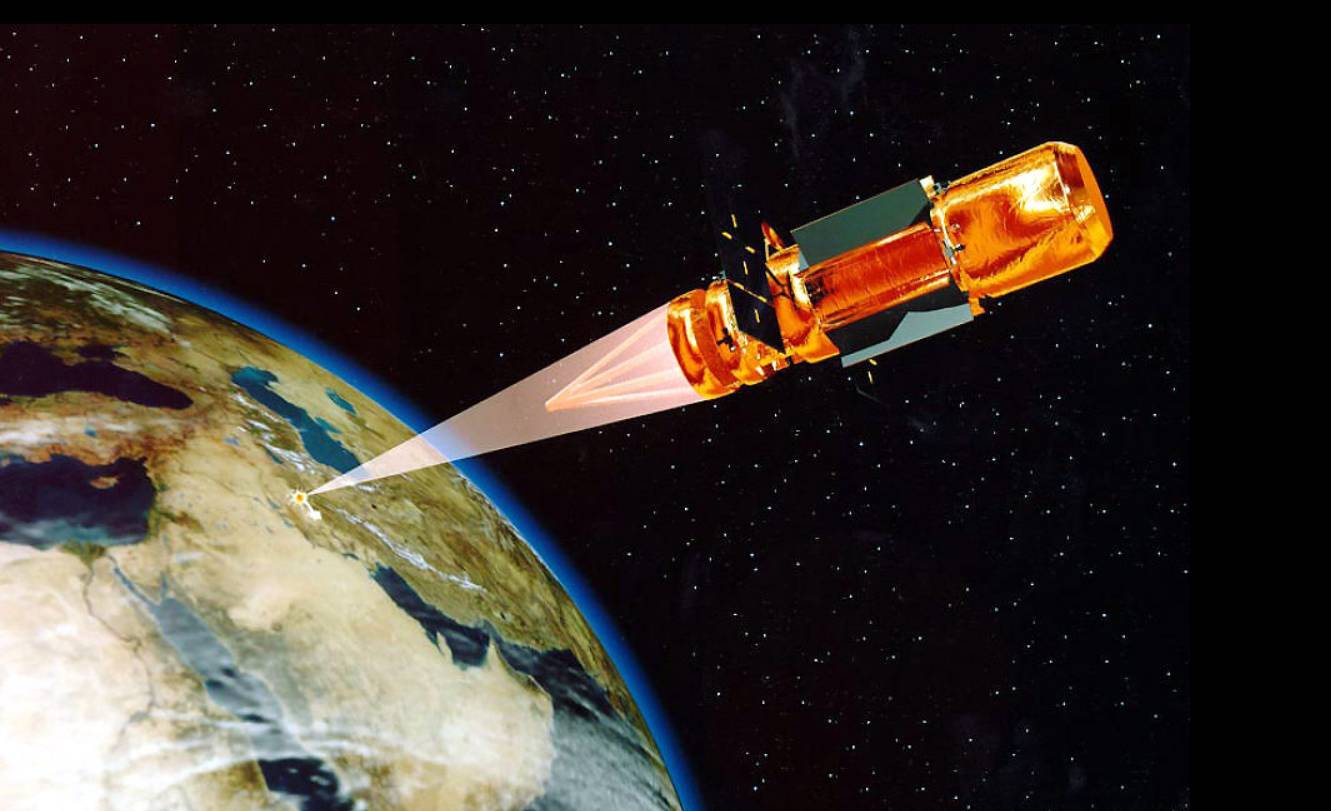
Space has quietly become the most unforgiving battlespace on Earth’s strategic chessboard, and the deployment of a formerly classified space weapon marks a major shift in how nations think about deterrence, resilience, and operational control beyond the atmosphere. Once hidden behind layers of secrecy, these systems are now entering the phase that matters most: integration into real-world military architectures, with all the engineering headaches, command-and-control complexity, and strategic consequences that come with it.
What makes this moment so fascinating is not just that a weapon exists in orbit or is designed for the space domain. It is that the system is being folded into the everyday machinery of military planning. That means satellite tasking, secure communications, launch logistics, orbital awareness, rules of engagement, cyber hardening, and the delicate art of making sure a highly sensitive capability actually works when a commander needs it most.
Why operational integration is the real milestone
In defense circles, there is a huge difference between fielding a capability and operationalizing it. A system can be technically impressive on paper, even spectacular in a controlled test environment, yet still fall short if it cannot survive the realities of deployment. Space weapons are especially unforgiving in this regard. Once a system is in orbit, or tied to orbital support infrastructure, there is no maintenance crew on the pad with a wrench and a spare part. Every interface has to be right the first time.
Operational integration means the weapon is no longer a science project or a black-budget demonstration. It is being woven into:
- command-and-control networks
- space domain awareness tracks
- strategic warning systems
- targeting and mission planning software
- secure communications architecture
- contingency and escalation planning
That is where the glamour of secrecy gives way to the grind of doctrine. A space weapon may be dazzlingly advanced, but if a combatant commander cannot quickly understand its status, employment options, and limitations, its actual utility drops fast.
The engineering challenge of putting a secret system into service
Formerly classified programs often arrive in the public eye wrapped in ambiguity, but the underlying engineering problems are easy to appreciate. Space systems must survive vibration, thermal cycling, radiation, vacuum, and long-duration autonomy. Add weaponization to that mix and the tolerance stack gets even tighter. You are not just launching a payload; you are integrating a capability that has to remain responsive, secure, and politically controlled under extreme conditions.
Some of the biggest technical hurdles usually include:
- Power management: high-performance systems need stable power budgets, often with aggressive constraints from solar arrays and batteries.
- Thermal control: heat rejection in orbit is brutally hard, especially for systems with active electronics or directed-energy components.
- Guidance and timing: precise synchronization matters when the system must interact with fast-moving satellites or time-sensitive command logic.
- Communications security: the more sensitive the capability, the more robust the encryption, authentication, and anti-jam measures must be.
- Autonomy and fail-safes: the system needs protection against unintended activation, spoofing, or loss of control.
And then there is the integration problem. A weapon in space is not useful in isolation. It has to talk to ground stations, connect with orbital catalogs, ingest situational awareness data, and fit into decision cycles that may already be crowded with missile warning, air defense, and cyber alerts. That is a lot of moving parts, and every one of them has to be reliable.
What deployment likely looks like in practice
When defense planners talk about deployment of a formerly classified space weapon, they are usually referring to a phased rollout rather than a dramatic one-shot reveal. Expect a sequence that resembles this:
- Limited operational testing: validating subsystem performance in a controlled mission set.
- Initial operational capability: the system is usable, but only in constrained scenarios with heightened oversight.
- Doctrine development: planners define when the capability is appropriate, who authorizes it, and how it fits into broader force packages.
- Full integration: the weapon becomes part of routine operational planning and strategic signaling.
This phased approach is especially important in space because the stakes are so high. A mistake can have implications that extend far beyond a single mission. Orbital debris, collateral interference, misinterpretation by adversaries, and escalation dynamics all matter. Even a capability designed for deterrence can alter the behavior of rivals simply by existing.
Specs and characteristics that matter most
Because the system was formerly classified, exact numbers are often unavailable or intentionally withheld. Still, the key performance characteristics that defense analysts watch are fairly consistent across space weapon programs.
| Category | What matters | Why it matters |
|---|---|---|
| Orbit / placement | LEO, MEO, GEO, or cislunar positioning | Determines reach, persistence, and responsiveness |
| Power system | Solar arrays, battery reserve, peak draw | Defines operational endurance and mission flexibility |
| Communications | Encrypted, low-probability-of-intercept, anti-jam links | Protects command authority and mission security |
| Autonomy | Onboard decision aids, health monitoring, fail-safe logic | Supports resilience if ground links are degraded |
| Sensors | Optical, infrared, electronic, or tracking payloads | Enables situational awareness and target discrimination |
| Response time | Seconds to minutes, depending on mission architecture | Critical for time-sensitive deterrent effect |
| Hardening | Radiation tolerance, cyber resilience, redundancy | Improves survivability in contested environments |
Those may sound like dry metrics, but in practice they are the heartbeat of the whole program. A weapon that cannot maintain secure communications is a liability. A system that lacks survivability is a sitting duck. A payload that cannot be coordinated with other space assets is just expensive hardware in orbit.
Operational control: the hidden battlefield
The most interesting part of integrating a formerly classified space weapon is often not the hardware itself but the control architecture around it. Militaries do not want a rogue payload making independent decisions, nor do they want a capability so tightly centralized that it becomes unusable during crisis. The sweet spot is a carefully layered command structure with delegated authority, auditability, and unmistakable safeguards.
That means planners must answer hard questions:
- Who can authorize employment?
- What level of command receives launch or activation authority?
- How is the system inhibited during peacetime?
- What happens if communications are degraded or spoofed?
- How are actions logged for oversight and post-mission review?
These questions matter because the strategic value of a space weapon is inseparable from its political usability. If employing it is too slow, it may be irrelevant. If it is too easy, it may be destabilizing. Operational integration is where those tensions get translated into real procedures.
Why adversaries pay close attention
Even without public technical details, adversaries can learn a lot from deployment patterns, launch cadence, orbital behavior, and support infrastructure. A formerly classified space weapon becoming operational sends a signal: the owning military believes the capability is mature enough to matter. That alone changes the strategic conversation.
Rivals will likely respond by accelerating their own counter-space measures, including:
- electronic warfare and jamming
- proliferated satellite constellations
- maneuverable spacecraft
- deception and camouflage techniques
- redundant command networks
- anti-satellite doctrine refinements
In other words, deployment does not end the competition; it often intensifies it. Space has a way of turning one capability into a cascade of counter-capabilities. That is part of what makes this domain so dynamic and so dangerous.
The logistics behind the curtain
People often imagine space weapons as pure high technology, but the support structure is just as important. Ground crews, mission planners, range safety teams, cyber defenders, launch providers, and intelligence analysts all play a role. The operational integration of a formerly classified system often requires new training pipelines, classified maintenance procedures, and dedicated simulation environments where crews can rehearse contingencies without exposing the real system.
There is also the industrial side. Supply chains for radiation-hardened components, secure flight software, and specialized propulsion or power hardware are not casual affairs. If the system is truly advanced, then the vendor ecosystem may be narrow, expensive, and highly regulated. That makes sustainment a strategic issue, not just a procurement line item.
What to watch next
The next phase will tell us a lot about how serious the deployment really is. Watch for signs such as:
- additional launches or replenishment missions
- new doctrine publications or budget language
- expanded exercise references to space control or orbital maneuver
- integration with missile warning and theater command systems
- new hardening and redundancy measures in allied space architectures
If those pieces start lining up, the formerly classified weapon is no longer a rumor with a launch history. It becomes a genuine operational instrument of state power, one that shapes deterrence simply by being available.
That is the real story here: not merely that a secret system was built, but that it is now being absorbed into the machinery of warfighting, signaling, and strategic competition. In the space domain, that transition from hidden prototype to integrated capability is where the future of military power starts to get very real, very fast.