

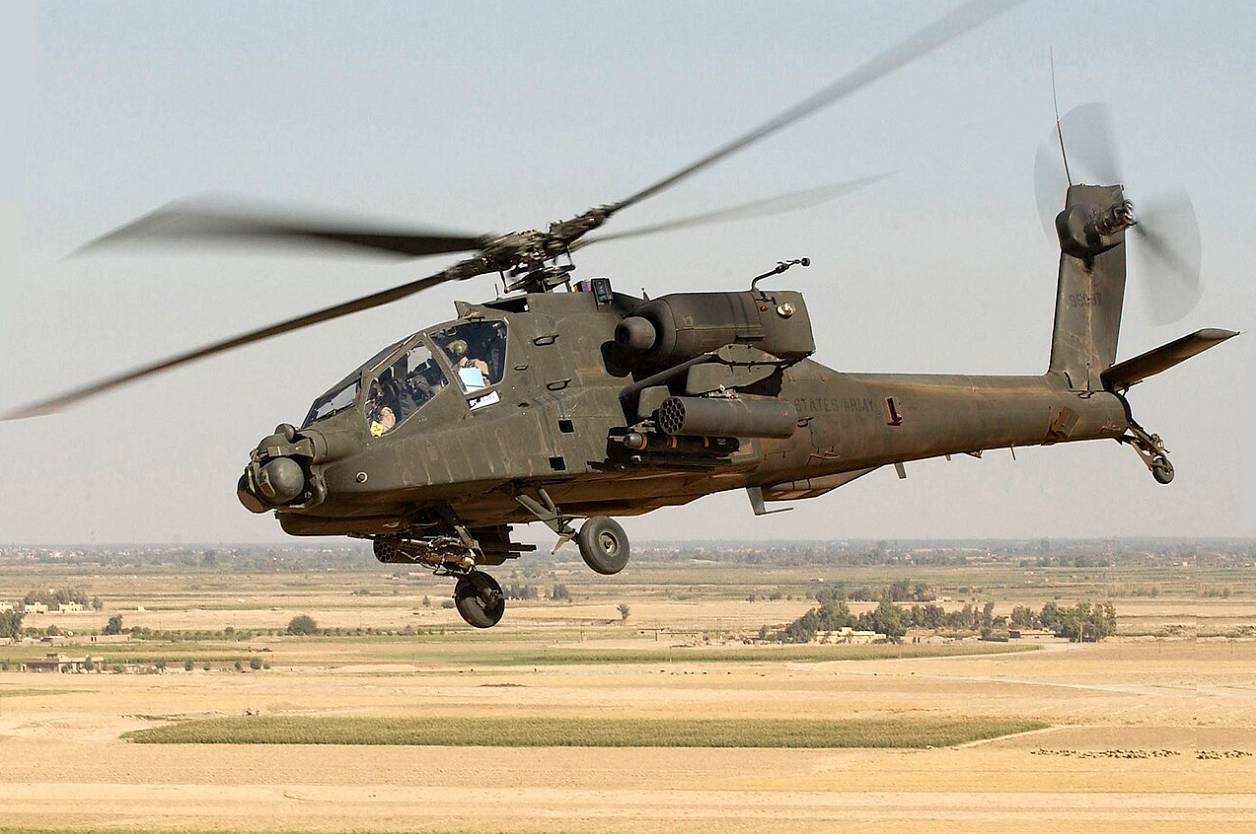
For all the talk about next-generation rotorcraft, the old attack helicopter still refuses to go quietly. The AH-1 Cobra family and the AH-64 Apache have been around for decades, and yet there is still no clean, one-for-one replacement that has fully displaced them across Western forces. That is not because defense ministries lack ambition. It is because the battlefield has become harder to read, more expensive to survive on, and more unforgiving of bad assumptions.
The hard truth: attack helicopters still do a job nothing else quite matches
On paper, it is tempting to say fixed-wing aircraft, loitering munitions, armed drones, and precision artillery should have made gunships obsolete. In practice, they have not. An attack helicopter brings a mix of persistence, direct line-of-sight fire, terrain masking, and rapid reaction that is still difficult to duplicate.
A forward observer calls for immediate fires on a moving target in broken terrain. A convoy is ambushed. Armor appears at the edge of a tree line. A drone may find it, artillery may reach it, and a fighter may destroy it, but the helicopter can often be there fast enough to see, identify, and strike with the kind of close-in flexibility commanders still want when the situation is fluid.
That flexibility is not magic. It comes with risk. But in war, commanders buy risk if the payoff is speed, precision, and control. The Cobra and Apache have survived because they deliver all three.
Why replacement programs keep stalling
The main reason there is no direct replacement is simple: the mission set has splintered. Modern armies no longer want only a tank-killer. They want a platform that can do anti-armor, armed reconnaissance, escort, close air support, urban overwatch, and sometimes even maritime strike. Trying to build one aircraft to do all of that becomes expensive very quickly.
Then there is the cost of survivability. A modern attack helicopter needs sensors, datalinks, defensive aids, secure communications, night fighting capability, and enough power margin to carry weapons and fuel in hot-and-high conditions. Add the need to survive against man-portable air-defense systems, radar-guided threats, electronic warfare, and increasingly dense drone activity, and the design grows heavier, costlier, and more complex.
By the time engineers have added armor, protection suites, and mission systems, the aircraft may no longer be significantly cheaper, lighter, or easier to support than the Apache it was meant to replace.
What the field actually taught armies
Anyone who has worked around rotary-wing aviation knows the brochure version is never the whole story. The operational issue is not simply whether a platform can kill tanks. It is whether it can do that after years of sanding, heat, dust, shipboard corrosion, salt spray, high sortie rates, and maintenance under pressure.
The Apache earned its reputation because it kept showing up in hard environments with a mature logistics tail behind it. The Cobra, especially in Marine service, proved the value of a lighter, simpler attack platform that could be integrated into expeditionary operations. Those lessons matter. Replacement is not just about airframe performance; it is about sustainment, training pipelines, weapons integration, and whether a unit can actually keep aircraft mission-capable on a bad week.
In the field, the question is not can it fly. It is can it fly enough, with enough weapons, often enough, and still be available tomorrow.
The Apache problem: if you replace it, you must replace the whole ecosystem
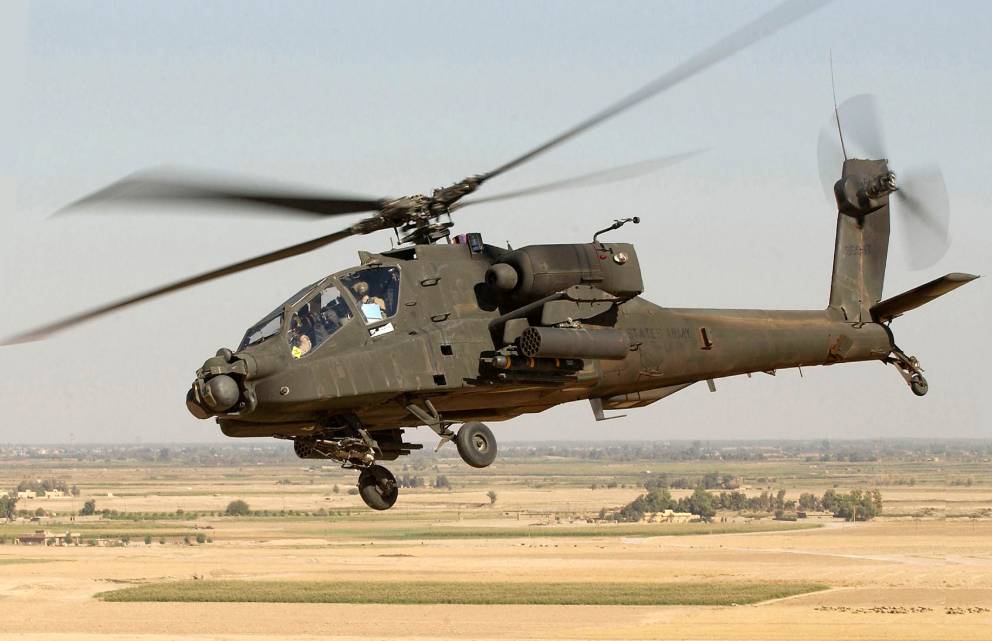
The AH-64 Apache is more than an aircraft. It is a system of systems. It has mature sensors, proven weapons integration, a global support base, trained crews, established tactics, and years of refinement in combat and training. A replacement has to beat that entire package, not just the airframe.
That is where many programs run into trouble. A new helicopter may be faster, or quieter, or have a more modern cockpit. But if it lacks the Apache’s sensor fusion, weapons flexibility, battle damage tolerance, and combat credibility, operators are not impressed. Soldiers and Marines do not buy slides. They buy effect.
The Apache also benefits from constant modernization. New radar, new missiles, upgraded networking, improved survivability gear, and better man-machine interfaces keep it relevant. When a platform keeps getting upgraded, the urgency to replace it drops. That is especially true when the replacement would cost billions and introduce years of risk.
The Cobra survives for a different reason
The Cobra line, especially in its Marine incarnation, was never trying to be a heavy armored battering ram like the Apache. Its appeal was speed, agility, and a smaller logistical footprint. For expeditionary forces, that matters. A lighter helicopter can be easier to ship, easier to support, and sometimes easier to live with in austere conditions.
That said, the Cobra also highlights why replacement is difficult. If you make the aircraft too large and too costly, you lose the simplicity that made it valuable. If you keep it light, you may not survive the modern threat environment. The design space narrows fast.
So instead of a true replacement, what often happens is a gradual shift in role. Legacy attack helicopters get pushed into niche tasks, paired with drones, or supplemented by armed tiltrotor and unmanned systems. The original platform remains because the force never found an aircraft that could cleanly take over every mission without tradeoffs that commanders were unwilling to accept.
Air defenses changed the game
The biggest factor against traditional attack helicopter design is the modern air-defense environment. Even a low-flying helicopter is not invisible. The battlefield is full of sensors, thermal imagers, radar, acoustic detection, and short-range missiles. A helicopter that once enjoyed relative freedom can now be tracked, engaged, and forced to operate from farther away.
That creates a painful paradox. The more survivability you add, the heavier the helicopter gets. The heavier it gets, the harder it is to maneuver close to the fight, and the more expensive it becomes to buy and operate. Meanwhile, the stand-off threat keeps growing. A missile does not care if your cockpit looks modern.
This is one reason militaries have invested heavily in unmanned systems and stand-off weapons. The logic is simple: if the air-defense risk is too high, send something cheaper first. But the problem is that drones still struggle with weather, electronic warfare, deconfliction, and the same real-time decision-making that a crewed aircraft can handle when the fight turns messy.
Why unmanned aircraft have not fully replaced them
Unmanned systems are a major part of the future, but they have not eliminated the need for crewed attack helicopters. A drone is excellent for surveillance and can be lethal with the right weapons, but it is not always ideal for close, dynamic combat where targets appear and disappear quickly, civilians are nearby, and the pilot needs to make decisions in seconds.
Attack helicopters carry human judgment to the edge of the fight. They can react to ambiguity, communicate with ground forces, and adjust when the situation changes. In many operations, that human-in-the-loop capability is still the difference between an effective strike and a dangerous mistake.
Also, drones have their own vulnerabilities. Data links can be jammed. Navigation can be degraded. Launch and recovery can be complicated. The idea that unmanned systems are a simple replacement for all crewed helicopters is attractive in a powerpoint briefing, but the field tends to punish simple answers.
What a true replacement would need
A genuine successor to the Cobra or Apache would need a very specific combination of traits:
- Lower operating cost than the Apache, with real improvements in sustainment.
- Better survivability against modern air defenses and electronic warfare.
- Comparable payload across missiles, rockets, and cannon options.
- Excellent sensors with day/night and adverse-weather performance.
- Open architecture for rapid software and weapons upgrades.
- High availability in dust, heat, salt, and heavy sortie conditions.
- Compatibility with unmanned teaming and networked targeting.
That is a tall order. If you meet all of it, the aircraft may end up being less a replacement and more a new category entirely.
Representative comparison
| Platform | Role | Strengths | Limitations |
|---|---|---|---|
| AH-1 Cobra family | Light attack / escort | Agile, smaller footprint, expeditionary friendly | Less payload and protection than heavier attack helicopters |
| AH-64 Apache | Heavy attack / armed reconnaissance | Powerful sensors, strong weapons load, mature combat system | Costly, maintenance-intensive, larger logistics burden |
| Armed drones | ISR / strike | Persistence, lower risk to crews, useful stand-off strike | Jamming vulnerability, slower reaction in complex close combat |
| Future rotorcraft concepts | Multi-role attack / scout | Potential speed, networking, new survivability features | High development risk, cost, and uncertain operational payoff |
The procurement trap
Defense acquisition tends to punish anything that is both ambitious and affordable. If a program is cheap, skeptics doubt its performance. If it is advanced, the cost and timeline balloon. Attack helicopter replacement sits right in the middle of that trap.
There is also institutional inertia, which is not always a bad thing. If a force has trained crews, established maintenance, and proven tactics built around the Apache or Cobra, replacing the platform means rewriting doctrine, retraining maintainers, reworking warehouses, and changing the relationship between aviation and ground units. That costs time and money, and those are always in short supply.
As a result, many armies prefer incremental upgrades over revolutionary replacement. That is why old airframes keep flying while the future keeps getting discussed in conferences and concept papers.
What likely happens next
The more realistic path is not a sudden replacement but a gradual ecosystem shift. Crewed attack helicopters will increasingly work with drones, targeting networks, loitering munitions, and longer-range fires. The crewed aircraft may become more of a command-and-control shooter at the edge, rather than a lone hunter-killer roaming the battlespace.
That means the next generation may not look like a pure Apache or a pure Cobra. It may be a lighter, faster, networked rotorcraft with a smaller signature, teamed with unmanned wingmen and armed sensors. Or it may be an upgraded legacy fleet kept alive because the battlefield still rewards a proven machine that crews understand and commanders trust.
The real answer to why there has been no replacement yet is not that nobody tried. It is that the operational problem keeps changing faster than the acquisition system can settle on a single solution. In combat, the best aircraft is the one that can survive long enough to deliver effect when the ground commander needs it most. The Cobra and Apache have done that for a long time, and until something clearly better proves itself in the mud, heat, and chaos of real operations, they will remain hard to dislodge.