

For most of the Cold War, space was treated as a high frontier for surveillance, communications, and early warning—a realm where satellites could observe the battlefield but not directly shape it. That distinction is eroding. The Apollo Insight commercial wargame series places that shift under a harsh light, examining a future in which space-based weapons, counterspace controls, and commercial resilience are no longer abstract policy topics but operational realities.
What makes the subject timely is not merely the emergence of new hardware. It is the convergence of several long-running military trends: the weaponization of the electromagnetic spectrum, the miniaturization of precision guidance, the rise of proliferated constellations, and the growing dependence of modern forces on orbital infrastructure. In earlier eras, armies fought to seize the high ground. Today, militaries are increasingly forced to consider who can deny the high ground in orbit.
From Sputnik to a contested orbital battlespace
The modern debate over space weapons has deep roots. When Sputnik startled the world in 1957, it did more than launch the Space Age; it confirmed that rockets could reach strategic altitude and that sensors in orbit could profoundly alter intelligence collection. By the 1960s and 1970s, both the United States and the Soviet Union were experimenting with antisatellite concepts, including co-orbital interceptors, ground-based lasers, and electronic interference. The logic was familiar from earlier airpower history: once a domain becomes decisive for reconnaissance and command, adversaries will seek to blind, jam, or destroy the systems that illuminate it.
That logic matured after the Gulf War. Coalition forces in 1991 demonstrated how space-enabled navigation, communications, and weather data could multiply combat effectiveness. Since then, the battlefield has become more dependent on satellites while simultaneously becoming more accessible to disruptors. Jammers, dazzling lasers, cyber intrusion, and direct-ascent missiles now form a layered counterspace toolkit. The result is a strategic paradox: space is more useful than ever, yet also more fragile.
Apollo Insight frames this fragility as a commercial and military planning problem rather than a purely doctrinal one. The central question is not whether space can be contested; it already is. The question is how states and firms can operate when orbital infrastructure is under persistent threat.
What the wargame series appears designed to test
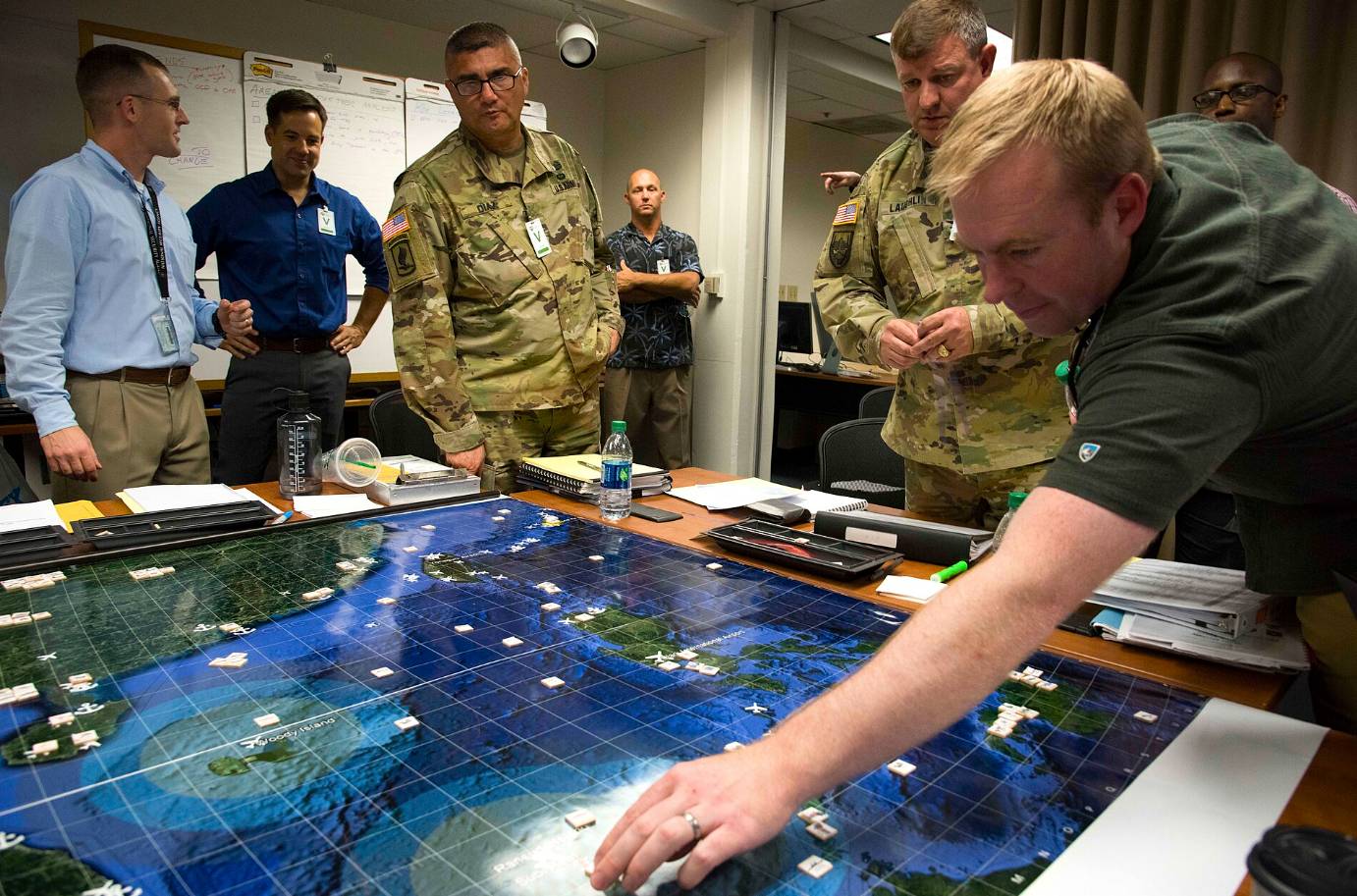
Commercial wargames have become increasingly valuable because they allow participants to stress assumptions before crises do it for them. In the space domain, that means exploring how policy choices, force design, industrial capacity, and market behavior interact under pressure. Apollo Insight’s focus on space-based weapons and counterspace controls suggests a scenario set in which players must weigh deterrence against escalation, resilience against cost, and transparency against strategic ambiguity.
In practical terms, such a wargame series would likely examine questions such as:
- How much offensive capability in orbit is enough to deter hostile action without triggering an arms race?
- What forms of counterspace defense are stabilizing, and which are inherently escalatory?
- How can commercial operators maintain service under attack while supporting military users?
- Which technologies should be protected by export controls, licensing regimes, or international norms?
- How should attribution be handled when a satellite is degraded by cyber means, reversible jamming, or a physical strike?
These are not hypothetical curiosities. They resemble the dilemmas faced by naval planners in the age of submarines and airpower theorists in the age of the bomber. When a new domain becomes militarily important, the first instinct is often to build more of it. The harder task is deciding how much offense, defense, and regulation the system can absorb before it becomes unstable.
The lineage of space-based weapons
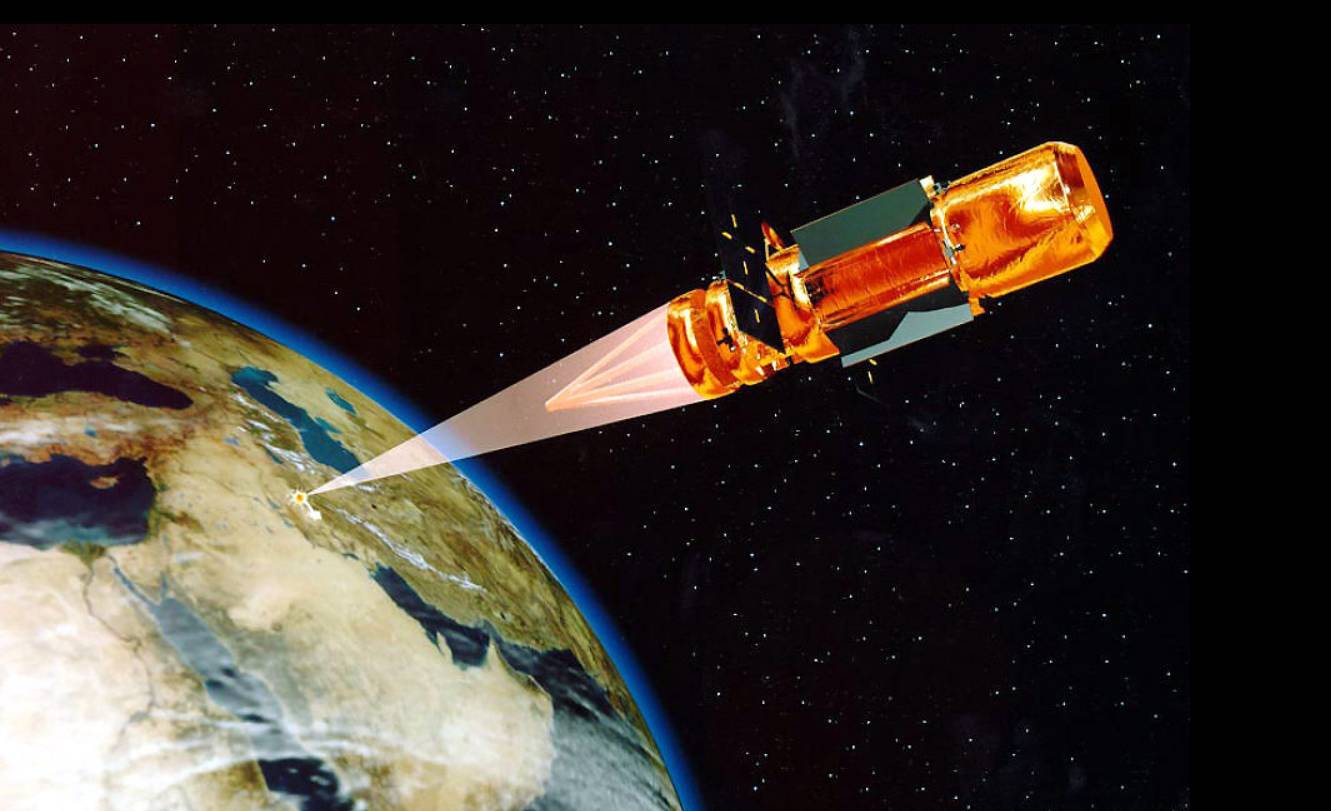
Space-based weapons are often discussed as if they were a sudden twenty-first-century novelty, but their conceptual lineage stretches back decades. The Cold War saw proposals for orbital bombardment, kinetic kill vehicles, and directed-energy systems. The Strategic Defense Initiative of the 1980s popularized visions of interceptors in space, even if many of its most ambitious concepts never left the drawing board. More recently, advances in miniaturized sensors, electric propulsion, and onboard computing have made certain orbital applications more plausible than their predecessors.
Still, the practical challenge remains formidable. Any weapon placed in orbit must survive radiation, thermal cycles, debris risk, launch costs, and orbital mechanics. Unlike a missile silo or aircraft runway, a satellite weapon cannot be hidden in terrain; it exists in a predictable path, often visible to adversary sensors. That predictability cuts both ways. It makes orbital systems easier to monitor, but also easier to target in a preemptive campaign.
This is why many defense analysts believe the most realistic near-term space weapons are not cinematic orbital death rays, but systems designed for denial and degradation: jammers, co-orbital inspectors with ambiguous intent, reversible dazzlers, cyber tools that corrupt command links, and kill vehicles launched from Earth. The old language of strategic bombing may not fit perfectly in space; the more apt historical comparison may be commerce raiding at sea, where the objective is often to interrupt movement and confidence rather than occupy territory.
Counterspace controls as the new arms control frontier
If the military utility of space is growing, so too is the pressure to regulate it. Counterspace controls can take several forms: export restrictions on enabling technologies, limits on specific payloads, rules governing close approach operations, transparency measures for rendezvous and proximity maneuvers, and norms against debris-generating attacks. These are not merely bureaucratic mechanisms. They are the orbital equivalent of the treaties, inspection regimes, and confidence-building measures that once sought to reduce the danger of surprise strike in the nuclear age.
History suggests that arms control works best when it narrows the most destabilizing classes of weapons while preserving some room for competition. The Washington Naval Treaty, for example, did not eliminate sea power, but it did impose ratios and constraints that shaped interwar strategy. In space, the equivalent challenge is more complex because dual-use technologies blur the line between peaceful and military applications. A servicing vehicle can be a repair asset, a debris-removal tool, or a co-orbital intruder. A high-resolution imaging satellite can support agriculture, intelligence, or target tracking. This ambiguity makes enforcement difficult but not impossible.
The commercial sector complicates the picture further. Unlike the closed defense-industrial base of the mid-twentieth century, today’s space ecosystem is increasingly private, globally funded, and rapidly iterating. That means counterspace controls must account for venture capital, launch providers, satellite bus suppliers, ground software firms, and data-processing companies. In many cases, the most sensitive chokepoints may not be the satellite hardware itself but the software stack, the telemetry pipeline, or the launch integration process.
Commercial constellations and the resilience dividend
One of the most significant changes in modern space warfare is the rise of proliferated commercial constellations. Large numbers of smaller satellites are inherently more difficult to suppress than a handful of exquisite platforms. This is a lesson with historical echoes. In the Atlantic and Pacific campaigns of World War II, distributed logistics and convoy systems proved more resilient than individually valuable but isolated assets. The same logic applies in orbit: quantity can become a form of survivability.
Yet proliferation is not a panacea. Dense constellations may reduce vulnerability to single-point failure, but they can also create larger attack surfaces. More satellites mean more links, more vendors, more software updates, and more opportunities for intrusion. Moreover, commercial operators may not share the same risk tolerance as military planners. A company can absorb outages only so long before insurance rates, investor confidence, and customer demand begin to erode.
This is where a wargame like Apollo Insight can be especially useful. It can test whether resilience is merely a slogan or a measurable property of a space architecture. Can a commercial network reroute traffic after a satellite loss? Can it accept partial degradation and still support military communications? How quickly can replacement spacecraft be launched and integrated? These questions echo older debates about industrial mobilization, where the decisive issue was not simply battlefield performance but the ability to absorb losses and regenerate capability.
Likely operational themes in the wargame environment
Although the exact scenario design of Apollo Insight is not publicly detailed here, a serious space wargame centered on weapons and controls would likely feature several operational themes:
- Escalation management: distinguishing reversible interference from destructive attack, and deciding when retaliation is warranted.
- Attribution uncertainty: identifying the source of a satellite anomaly when cyber, electronic, and physical threats can produce similar symptoms.
- Debris economics: weighing the strategic cost of kinetic strikes that may contaminate orbital regimes for years.
- Launch surge capacity: determining whether replacement satellites can be fielded fast enough to matter.
- Commercial-military integration: assigning roles to private operators without exposing them to unacceptable risk.
- International signaling: using test events, inspections, and disclosures to reassure allies while deterring rivals.
These themes are familiar from other domains, but space intensifies them. The distances are immense, the timelines can be compressed by orbital mechanics, and the consequences of debris can outlast the conflict that created it. A single engagement in low Earth orbit may echo for decades, much as mine warfare once transformed seas long after the guns fell silent.
Table: representative space warfare and counterspace considerations
| Category | Representative capability | Operational effect | Historical analogue |
|---|---|---|---|
| Jamming | Electronic interference with satellite links | Reversible denial of communications or navigation | Radio warfare in World War II and beyond |
| Cyber intrusion | Malware or network compromise of ground and space systems | Corruption, delay, or false data injection | Signals intelligence and communications sabotage |
| Direct-ascent ASAT | Ground-launched interceptor | Physical destruction of satellite | Surface-to-air and anti-ship missile development |
| Co-orbital system | Inspector or proximity vehicle | Ambiguous access, inspection, or attack potential | Submarine shadowing and close naval maneuver |
| Directed energy | Laser dazzling or sensor degradation | Temporary or permanent impairment of payloads | Searchlight and optical countermeasure evolution |
| Proliferated constellation | Many small satellites in distributed architecture | Improved resilience and replacement flexibility | Massed aircraft production and convoy dispersion |
The strategic stakes for policymakers and industry
The greatest value of a commercial wargame is that it can expose mismatches between policy ambition and operational reality. Leaders may want space to remain stable, accessible, and commercialized, but they also want deterrence, denial, and wartime advantage. Those goals can coexist only if the boundaries are carefully managed. Too little defense invites coercion. Too much offensive posturing can make every satellite maneuver look like the opening move in a crisis.
For policymakers, Apollo Insight’s subject matter underscores the need for clear norms on proximity operations, debris creation, and the military use of commercial services. For industry, it highlights a more uncomfortable truth: resilience is now a market differentiator, not merely an insurance premium. Companies that can authenticate data, harden networks, diversify launch options, and restore service quickly will be more valuable in a contested environment.
There is also a broader historical lesson. New military domains rarely remain unweaponized. The air, the sea, the electromagnetic spectrum, and cyberspace all followed the same pattern: first as enablers, then as targets, then as battlefields in their own right. Space is now moving along that same arc. The question is no longer whether the arc exists, but whether states and firms can shape it before the next crisis does.
In that sense, Apollo Insight is not simply a game about satellites. It is a rehearsal for a world in which orbital infrastructure must be defended with the same seriousness once reserved for fleets, airfields, and undersea cables. The old frontier myth imagined space as a realm above politics. Modern defense planning knows better. Space is not above history; it is one more arena where technology, strategy, and power collide.