

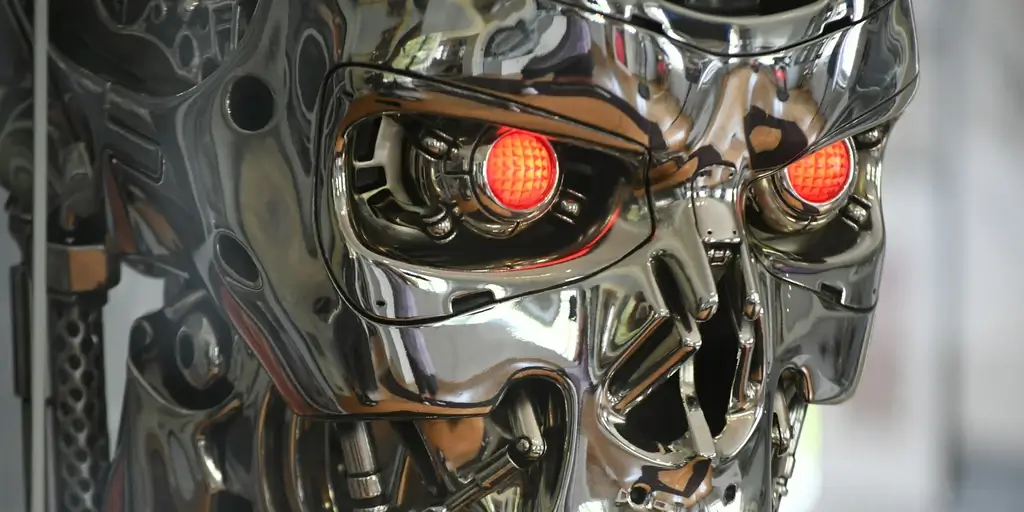
What happens when futuristic robotics meets one of the most brutally persuasive test tools in the defense world: a 20 mm round? According to the report, a humanoid robot was subjected to direct hits from a 20 mm weapon and kept functioning. If that sounds like something ripped from a defense expo fever dream, that’s because it basically is — and it is exactly the kind of story that makes engineers, operators, and weapons nerds sit up a little straighter.
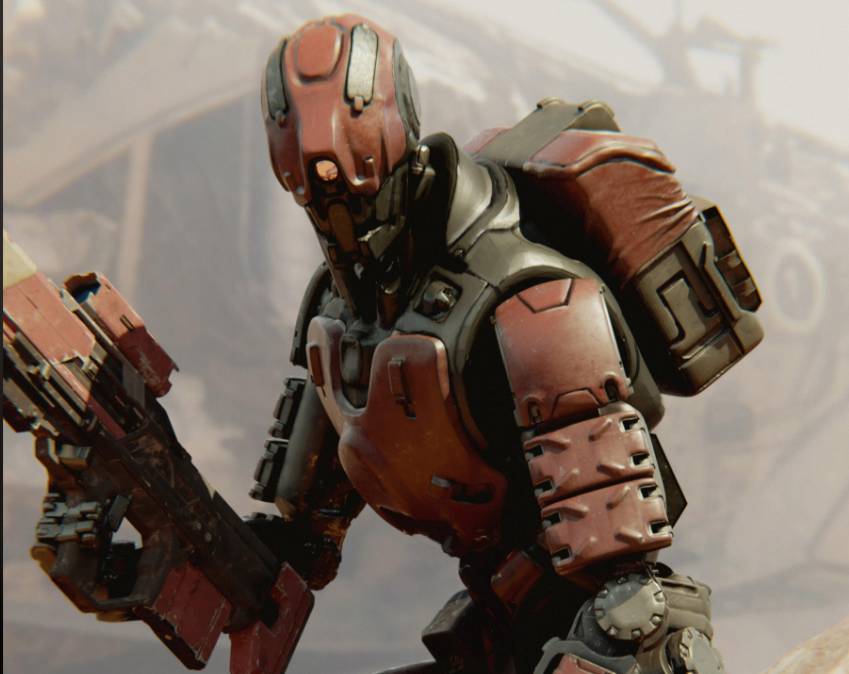

Humanoid robots are still the flashy newcomers in the larger autonomy race, but the underlying challenge is anything but simple. Building a machine that can walk, balance, manipulate objects, and survive harsh real-world conditions requires a ridiculous amount of mechanical finesse. Now add ballistic stress to the equation, and the design problem becomes far more unforgiving. Surviving a 20 mm impact is not just about being “tough”; it’s about architecture, materials, redundancy, and whether the robot can keep its critical systems alive after suffering a violent shock event.
Why 20 mm matters
The phrase “20 mm” carries a lot of weight in military circles. It refers to a family of autocannon-caliber munitions used on aircraft, naval mounts, and vehicle systems. A 20 mm projectile is dramatically more energetic than small arms fire, and even near misses or fragmenting impacts can shred exposed components. If a humanoid robot can endure direct hits in that class, it suggests a level of ruggedization that goes well beyond the usual lab demo.
That does not automatically mean the robot is “bulletproof” in the Hollywood sense. In defense engineering, surviving an impact can mean many different things: the frame stays intact, the electronics remain partially operational, the robot can limp away, or the system maintains mission-capable status after damage to noncritical areas. The nuance matters. A robot that keeps standing after a 20 mm strike is impressive; a robot that remains fully autonomous and tactically useful after repeated hits is on an entirely different tier.
What kind of engineering makes that possible?
A humanoid robot built for military-adjacent environments would likely rely on a blend of tough mechanical design and damage isolation. The most obvious ingredient is a reinforced chassis. Instead of a purely lightweight consumer-style frame, the robot would need load-bearing structures designed to absorb shock and localize damage. Think armored shells, internal spars, modular limb assemblies, and sacrificial outer panels that can be replaced in the field.
Another major factor is system partitioning. In a conventional robot, a single hit to the torso might disable the power bus, computer stack, and actuator control lines all at once. A more survivable design would separate critical subsystems so that damage to one zone does not instantly cascade through the whole machine. That means distributed processing, segmented power routing, and perhaps multiple redundant sensor paths.
Likely survivability features include:
- Reinforced torso and limb structures
- Distributed compute and power architecture
- Redundant inertial and vision sensors
- Armored or recessed cabling and connectors
- Modular joints and quick-swap external panels
- Graceful degradation modes after damage
Then there is the issue of actuators. Humanoid robots live and die by their joints. If a hip, knee, shoulder, or ankle actuator is damaged, the entire mobility model can collapse. To survive ballistic trauma, engineers may place critical motors deeper inside the body, use protected transmission paths, or design the robot to continue operating with partial limb failure. That kind of resilience is often more valuable than simply being hard to puncture.
Specs snapshot
| Category | What matters |
|---|---|
| Threat level | 20 mm autocannon-class impact |
| Survivability goal | Maintain structure and partial function after damage |
| Key design elements | Reinforced frame, subsystem redundancy, protected actuators |
| Operational value | Greater chance of mission continuation under fire |
| Limitations | Damage to sensors, mobility, or power systems may still degrade performance |
Humanoid form factor: advantage or liability?
The humanoid shape is a double-edged sword. On one hand, it is mechanically elegant for environments built around human bodies: doors, ladders, tools, vehicles, and structures. On the other hand, a humanoid robot has more moving parts, more exposed joints, and more opportunities for failure than a simple tracked platform. When you start talking about surviving direct ballistic hits, the humanoid form becomes even trickier because arms, legs, and articulation points are natural weak spots.
That makes any claim of 20 mm survivability especially interesting. If the robot truly absorbed direct impacts and stayed in the fight, it suggests the platform may be optimized around a very deliberate trade-off: not maximum speed or dexterity, but resilience. In other words, it may be designed less like a sleek service robot and more like a rugged battlefield appliance — a machine expected to get knocked around and still function.
This is where robotics and defense engineering become wildly fascinating. A machine that can negotiate stairs, carry gear, and maintain balance after taking damage could open up new concepts for logistics, reconnaissance, engineering support, and casualty evacuation. Even if it is not meant to replace soldiers, a highly survivable humanoid system could handle jobs that are too dangerous for people and too complex for traditional unmanned vehicles.
Ballistic survivability is not just about armor
People often assume the answer is simple: make it thicker, make it armored, done. But that approach quickly runs into weight penalties. A humanoid robot already spends a lot of its mass budget on motors, batteries, sensors, and structural support. Add heavy armor everywhere and you can end up with a machine that is too sluggish, too power-hungry, or too unstable to be useful.
That is why smart survivability design is usually selective. Instead of full coverage, engineers protect the most critical zones and allow less important areas to absorb damage. A robot might be able to lose an outer panel, an arm cover, or even a secondary sensor cluster and still complete a mission. The goal is not invincibility. The goal is mission endurance.
There is also the possibility of advanced materials playing a role. High-strength alloys, composite laminates, energy-dissipating layers, and specialized mounting systems can all help reduce the effects of a ballistic strike. Even if a projectile penetrates an outer layer, the internal layout may prevent catastrophic failure. In defense engineering, that kind of “damage containment” is often the real secret sauce.
What this could mean for the future
If a humanoid robot can survive direct 20 mm hits, the implications are huge. It suggests a future where robots are not just laboratory curiosities but hardened assets capable of operating in contested environments. Imagine a system that can move through damaged buildings, recover supplies under fire, inspect hazardous areas, or support troops in places where the human body simply should not be exposed.
That said, survivability claims always deserve scrutiny. The details matter enormously: how many rounds, from what range, at what angle, and to what part of the robot? Was the machine still fully operational, or did it merely remain standing? Was the event a live-fire demonstration, a controlled test, or a one-off stunt? These questions define whether the result is a genuine engineering milestone or a dramatic proof-of-concept.
Still, even the possibility is thrilling. The defense robotics field has long been split between soft, fragile commercial-style humanoids and rugged military systems that often sacrifice dexterity for toughness. A platform that can bridge that gap would be a serious game changer. It would point toward robots that can actually survive the environments they are sent into, not just look impressive on a polished demo floor.
The bigger engineering story
The real story here is not just “robot takes a hit.” It is the convergence of robotics, materials science, fault-tolerant computing, and battlefield realism. A humanoid robot surviving a 20 mm impact implies designers were thinking about catastrophic failure modes from the start. It hints at layered protection, modular repairability, and a philosophy that accepts damage as part of the mission profile.
That is a very defense-minded way to build a robot. Soldiers do not get to avoid danger, and neither would the machines expected to work alongside them. The platforms that matter most will not necessarily be the prettiest or the most agile in a showroom. They will be the ones that can keep moving after the world tries very hard to stop them.
And that is why this report hits so hard. A humanoid robot surviving a 20 mm strike is more than a viral headline — it is a glimpse at a future where robotic systems may be built with the same grim logic as armored vehicles: protect the essentials, compartmentalize failure, and stay in the fight long enough to finish the job.
If the report holds up under scrutiny, this could be one of those moments where the public suddenly realizes that humanoid robots are not just about convenience, service work, or sci-fi aesthetics. They are also becoming engineered survivability platforms, shaped by the harsh realities of modern conflict.
And honestly? That is an incredibly cool and slightly terrifying milestone.