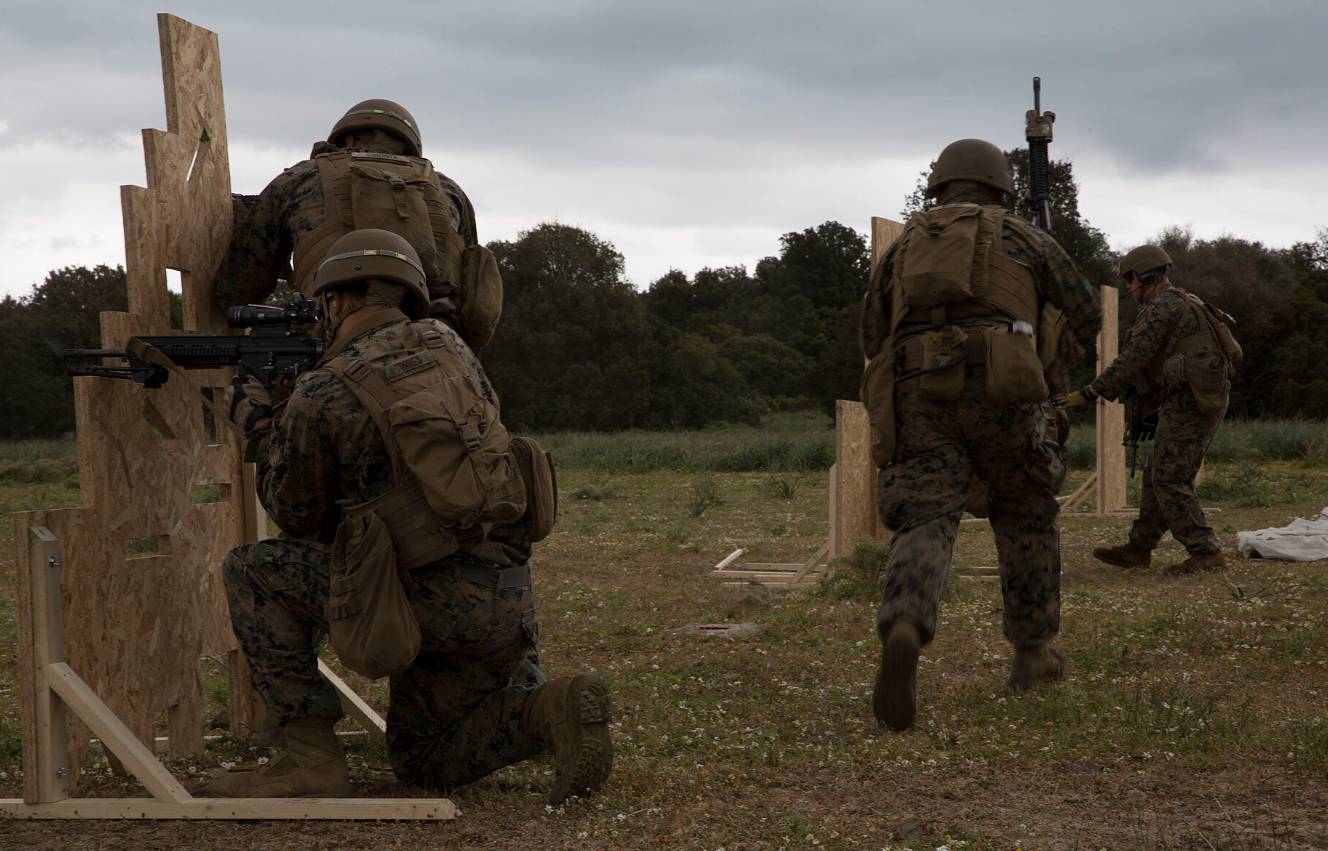
The U.S. Army treats Battle Drill 2: React to Contact as a foundational infantry reaction rather than a niche training event. In practical terms, it is the set of immediate actions a squad or platoon executes when it receives effective enemy fire and must regain the initiative before the engagement becomes a controlled ambush, a fixation, or a rout. The drill exists because contact rarely occurs on favorable terms. In modern combat, especially in dispersed, sensor-rich, and drone-observed environments, the unit that can absorb the shock of first contact and transition into a disciplined counteraction often determines the outcome of the fight.
Preparation for this drill is not limited to memorizing a checklist. It is built through repetitive training, squad leader judgment, fire discipline, communication under stress, and a shared understanding of roles inside the formation. The U.S. Army prepares soldiers to react automatically at the small-unit level, because the first seconds of contact are often too chaotic for deliberation. The tactical logic is simple: gain fire superiority, preserve maneuver space, protect casualties, and restore command and control.
What the Drill Is Designed to Solve
Battle Drill 2 addresses a recurring battlefield problem: a patrol, movement element, or assault force suddenly receives direct fire from an enemy it has not yet fixed or fully identified. In that moment, the unit must avoid becoming static and vulnerable. The drill is meant to prevent panic, reduce friendly casualties, and create the conditions for maneuver.
At the doctrinal level, reacting to contact is about more than returning fire. It is about determining whether the unit can:
- Identify the source and likely strength of enemy fire
- Suppress the enemy long enough to break the enemy’s initiative
- Execute a battle drill that is already rehearsed
- Communicate location, direction, and casualty information
- Transition to assault, break contact, or call for supporting fires
The Army trains this because contact in the real world is frequently ambiguous. The enemy may be concealed, elevated, in dead ground, or positioned to interdict movement. In irregular warfare, the ambush might be brief and shallow. In conventional combat, the contact may be the opening phase of a larger engagement. In either case, the first response must be disciplined and immediate.
How Soldiers Are Prepared
Preparation begins long before field exercises. Soldiers are taught the drill in classrooms, rehearsed in lanes, and then tested under stress in increasingly complex conditions. Leaders ensure every member understands the sequence, but more importantly, understands the purpose behind it. The Army does not want robotic movement; it wants coherent action under pressure.
Typical preparation includes:
- Leader-led instruction on the elements of contact, fire and movement, and control measures
- Dry rehearsals with hand-and-arm signals, verbal commands, and position-based responsibilities
- Live-fire training that introduces noise, confusion, and time pressure
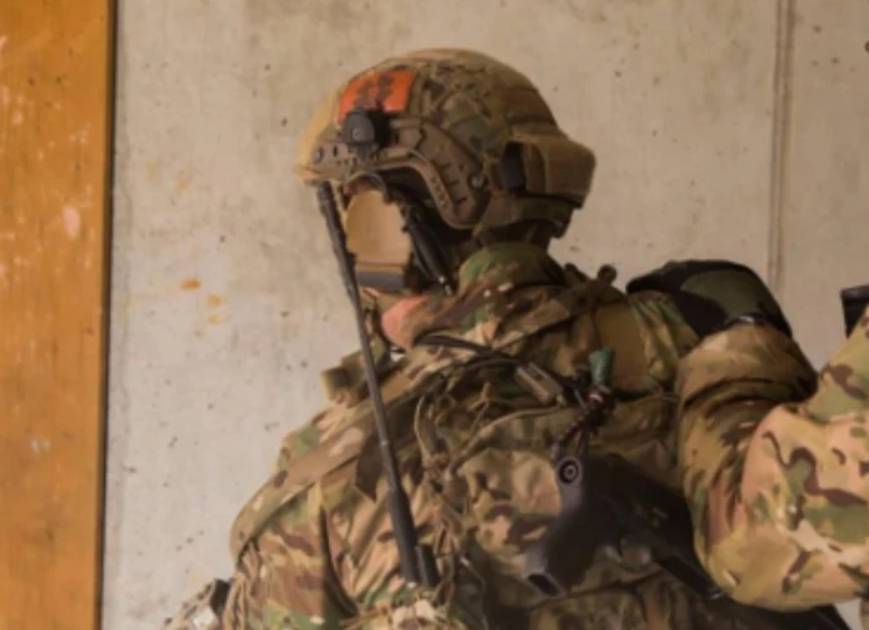
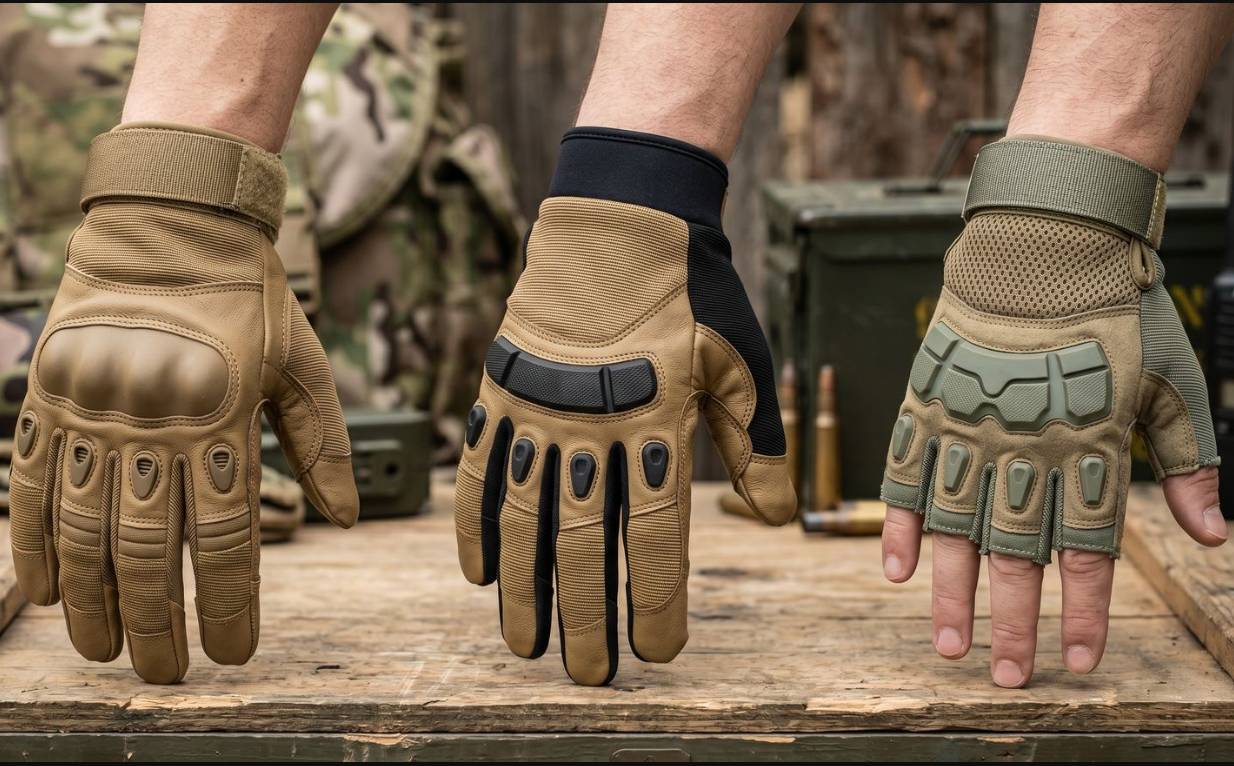
- Battle drills in full kit so soldiers can act while wearing body armor, helmets, optics, radios, and load-bearing equipment
- After-action reviews that identify delays in reporting, poor dispersion, or failures of suppression
The drill is usually taught as a sequence, but commanders emphasize flexibility. Every terrain feature, visibility condition, and enemy disposition changes the geometry of contact. A squad in open terrain may respond differently than one in dense urban cover or wooded terrain. Preparation, therefore, is not simply a memorized answer. It is the ability to apply a common framework in an unpredictable environment.
The Core Actions of React to Contact
While unit SOPs vary, the general logic of the drill remains consistent across the force. When the enemy initiates contact, the unit typically:
- Returns effective fire to suppress the enemy and protect the force.
- Seeks cover and concealment while maintaining control of the formation.
- Reports the contact using concise, standardized communications.
- Identifies the enemy’s location and orientation to avoid firing blindly.
- Assesses the need to maneuver, break contact, or request supporting fires.
In practice, the drill depends on the quality of leadership at the point of contact. The squad leader must rapidly determine whether the enemy can be suppressed, whether the unit has enough combat power to maneuver, and whether supporting weapons or higher headquarters should be engaged. The rifleman’s job is not to think through the entire tactical problem, but to execute the immediate actions that keep the team alive and the formation functional.
Fire superiority is the critical threshold. Without it, maneuver is impossible or reckless. Once suppression is achieved, the leader can reposition elements, bound forward or rearward, redistribute ammunition, and restore a coherent front. This is why marksmanship alone is insufficient; soldiers must understand observation, target discrimination, communication, and mutual support.
Training the First Seconds of Chaos
The Army places special emphasis on the first moments after contact because this is where poor habits become fatal. Soldiers often freeze, talk too much, or fire without understanding where the enemy is actually positioned. Good training aims to make the correct response instinctive.
To build that instinct, instructors often use:
- Immediate-action drills repeated until they become reflexive
- Scenario-based training that forces quick decisions under incomplete information
- Stress inoculation through noise, movement, sleep deprivation, or timed events
- Communication drills that emphasize brevity and clarity
- Role specialization so each soldier knows what the team expects during contact
A well-trained squad does not wait for perfect clarity. It reacts to the enemy’s fire, then uses observation and leadership to shape the fight. That distinction matters in modern war, where the side that hesitates often gives the enemy time to reposition, call for additional fires, or disengage on favorable terms.
The Leader’s Burden During Contact
Battle Drill 2 is as much a leadership test as a fire-and-movement problem. The squad leader or platoon leader must process multiple inputs at once: direction of fire, casualty status, ammunition expenditure, terrain options, adjacent unit location, and whether the unit is in a position to continue the mission. Leaders are expected to issue simple, direct commands that reduce uncertainty rather than add to it.
Common leadership priorities include:
- Establishing who is in contact and from what direction
- Ensuring suppressive fires are effective and not wasteful
- Preventing fratricide by controlling sectors and angles
- Maintaining spacing and dispersion
- Calling higher headquarters if the tactical situation exceeds organic capability
In doctrinal terms, contact is a command-and-control problem before it is a marksmanship problem. If leaders lose control of the formation, the unit can rapidly become fragmented. If they maintain control, even a small element can survive contact, fix the enemy, and either destroy or disengage from the opposing force.
How It Fits Into Larger Doctrine
React to Contact is one piece of the Army’s broader small-unit doctrine. It connects directly to movement techniques, battle drills, ambush response, and offensive action. The underlying theory is that combat is a sequence of transitions. A unit moves, is detected, reacts, suppresses, maneuvers, and either seizes the objective or disengages to preserve combat power.
This is especially relevant in large-scale combat operations, where units may operate with limited visibility, degraded communications, and contested support. In such conditions, junior leaders must make decisions faster and with less supervision. The drill gives them a common tactical language. It also reinforces a cultural expectation: soldiers do not wait passively to be destroyed; they respond with disciplined violence and coordinated movement.
There is also a force-design implication. As the Army modernizes with better sensors, networked communications, unmanned systems, and long-range fires, the tactical environment becomes faster and more transparent. That does not make Battle Drill 2 obsolete. If anything, it makes it more important. The enemy may detect a formation earlier, strike from greater range, or use drones to adjust fires. A unit that cannot react instantly will struggle to survive in a battlespace where being seen is increasingly dangerous.
Key Training Focus Areas
Commanders often focus training on a few recurring deficiencies:
- Slow recognition of contact – soldiers do not immediately understand they are under fire
- Overconcentration – troops bunch together and become vulnerable to area effects
- Poor reporting – leaders receive unclear or delayed information
- Weak suppression – fire is ineffective or not directed at the actual threat
- Loss of orientation – the unit cannot determine friend, enemy, or terrain relationships
Fixing these problems requires repetition. Instructors often use lane training with role players, blank-fire or live-fire evolutions, and night drills because contact in combat may occur under degraded vision and extreme stress. Soldiers must learn to move, shoot, communicate, and observe simultaneously. That is a demanding skill set, which is why it is revisited continually throughout a unit’s training cycle.
Representative Equipment and Training Elements
Battle Drill 2 is not defined by a special weapon system, but the equipment in use affects execution. Radios, optics, night vision, body armor, and laser/IR aiming devices all shape how quickly a unit can react. The table below summarizes common items associated with training and execution.
| Category | Typical Items | Operational Role |
|---|---|---|
| Individual weapon | M4/M4A1 carbine, M249 SAW, M240 machine gun | Deliver suppressive and precision fire |
| Protection | Helmet, plate carrier, eye and ear protection | Reduce vulnerability during contact |
| Communications | Handheld radio, vehicle intercom, headset | Report contact and coordinate movement |
| Observation | Binoculars, thermal sights, night vision devices | Detect enemy positions and movement |
| Training aids | Simunitions, blanks, smoke, laser systems | Create realistic stress and feedback |
Why the Drill Remains Relevant
Battle Drill 2 remains relevant because battlefield uncertainty has not disappeared; it has intensified. Even with precision weapons and advanced ISR, the smallest unit still has to absorb surprise, locate the threat, and regain control. The first response to contact often determines whether the unit can continue its mission or must be extracted under fire.
For the U.S. Army, the drill is therefore more than a procedural exercise. It is a statement about how infantry should behave under stress: disciplined, decentralized, aggressive, and adaptable. Units that train thoroughly on react to contact build confidence not only in the drill itself, but in the broader competence of the formation. They learn that surprise is survivable if reaction is immediate, leadership is clear, and fires are synchronized.
In a conflict against a peer or near-peer adversary, those qualities matter at every echelon. A squad that reacts well can preserve momentum for the platoon. A platoon that reacts well can prevent a company from being fixed. A company that reacts well can maintain freedom of maneuver across a larger sector. That is why the Army continues to rehearse the drill relentlessly: because the first contact is rarely the last decision, and the unit that handles it best gains the initiative that all later operations depend on.