

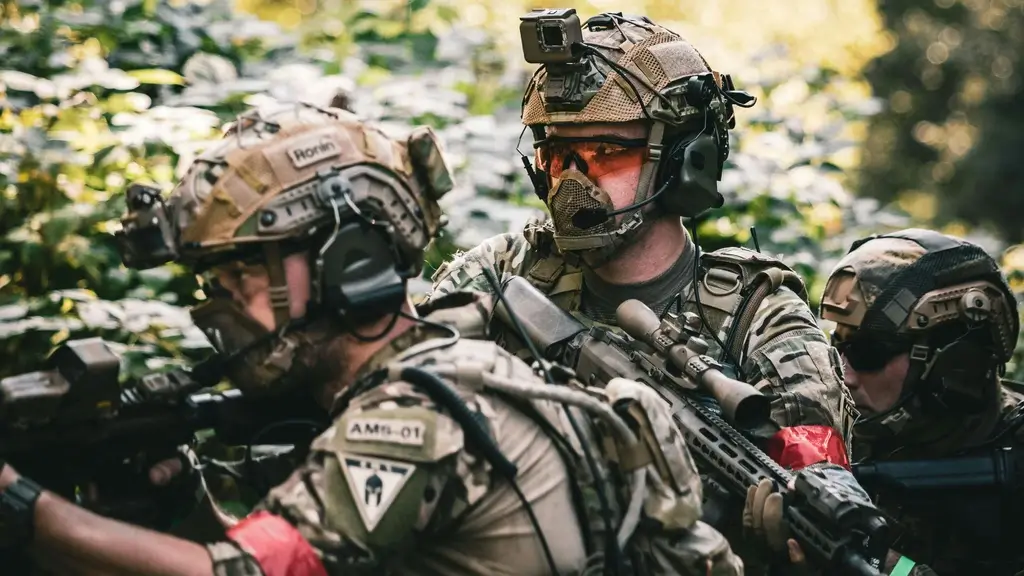
U.S. Army Special Forces, better known as the Green Berets, do not become elite by accident. Their training pipeline is a brutal, carefully engineered system designed to build operators who can think, move, shoot, communicate, and survive in almost any environment on Earth. What makes it fascinating is that the Army is not just training commandos to be tougher; it is training adaptable problem-solvers who can work with partner forces, operate in small teams, and execute missions where there is no room for hesitation.
The pipeline that shapes Green Berets
Special Forces training is not a single course. It is a sequence of demanding phases that tests physical endurance, mental resilience, tactical skill, and leadership under pressure. Candidates typically begin with the Special Forces Assessment and Selection process, often shortened to SFAS. This is where the Army identifies who has the raw potential to continue. The emphasis is not only on fitness, but on judgment, teamwork, humility, and the ability to keep functioning when fatigue and stress start chewing away at performance.
Once selected, soldiers enter the Special Forces Qualification Course, or Q Course. This is where the real transformation happens. The course includes small-unit tactics, unconventional warfare, survival skills, weapons training, communications, medical training, language instruction, and mission planning. Depending on the soldier’s specialty, the path can stretch over many months, and sometimes well beyond a year. The result is a force designed for versatility rather than narrow specialization.
What SFAS is really testing
SFAS is famous because it is less about raw strength and more about consistency under uncertainty. Candidates may ruck long distances, complete land navigation tasks, and solve physically draining team events while instructors observe how they manage stress and interact with others. The Army is looking for the kind of person who can stay calm, adapt quickly, and support the team without needing constant direction.
That is important because Special Forces teams operate in tiny numbers. A single bad decision can wreck an entire mission. So during selection, the Army is trying to answer a simple but unforgiving question: can this person be trusted when the plan starts falling apart?
The Q Course: where elite becomes operational
The Q Course is where candidates begin learning the actual craft of Special Forces operations. One of the most important parts is small-unit tactics. Operators need to be able to move as a team, communicate silently when required, and integrate fire, maneuver, and cover in tight environments. They also train to operate with minimal support, which means logistics, medical care, and communications all become part of the operator’s toolkit.
Medical training is especially intense. Special Forces medics, known as 18Ds, are among the most capable battlefield medical specialists in the U.S. military. Their training covers trauma care, prolonged field care, pharmacology, minor surgery, and procedures that help keep a team alive when evacuation is delayed. In the kind of missions Special Forces can face, a medic may be the difference between completing the objective and losing the team.
Communications training is another huge piece. Special Forces teams often operate far from conventional units, so they need to establish secure and reliable links across long distances, difficult terrain, and contested electromagnetic environments. That means mastering radios, encryption procedures, antenna setup, troubleshooting, and signal discipline. In the modern battlespace, being able to talk securely is not a luxury. It is survival.
Language and cultural training matter more than people think
Special Forces is not just about kicking down doors or winning firefights. A large part of the mission is training, advising, and partnering with foreign forces. That is why language instruction and cultural immersion are built into the pipeline. Operators are expected to work closely with allied troops, local security forces, and communities in ways that require more than tactical competence. They need credibility, patience, and the ability to build trust.
This is one of the things that separates Green Berets from many other elite formations. Their training is built around influence as much as force. A soldier who can speak the language, understand local dynamics, and operate respectfully can often achieve more than a larger conventional unit with more firepower.
Specialized skills across the team
Special Forces teams are made up of experts in different fields, and each role has its own training demands. Weapons sergeants master a broad array of small arms and crew-served weapons, as well as foreign weapons systems they may encounter in the field. Engineers learn demolition, fortifications, breaching, construction, and field expedient problem-solving. Signal specialists become experts in communications architecture. Medics build deep medical competence. Each specialty is meant to reinforce the team so it can operate independently for extended periods.
That team structure is part of the genius of the force. Green Berets are not trained to do one thing well. They are trained to do many things well enough, and then combine those skills in a way that multiplies effectiveness. Think of it less as a conventional squad and more as a modular mission system.
Table: core elements of Special Forces training
| Training element | Purpose | What it develops |
|---|---|---|
| SFAS | Selects candidates with the right potential | Endurance, judgment, teamwork, resilience |
| Q Course | Builds operational capability | Tactics, planning, medical, communications, language |
| Small-unit tactics | Teaches team movement and combat action | Coordination, discipline, fire and maneuver |
| Medical training | Prepares battlefield medics | Trauma care, prolonged field care, emergency procedures |
| Communications | Ensures reliable command and control | Radio operations, encryption, troubleshooting |
| Language and culture | Supports partner-force missions | Trust-building, advising, negotiation |
Training in realistic conditions
Modern Special Forces training is increasingly focused on realism. That means live-fire ranges, field exercises, night operations, navigation under stress, and scenarios that force candidates to make decisions with incomplete information. The Army knows that polished classroom knowledge is not enough. Operators need muscle memory and mental agility when the weather turns bad, communications fail, or the mission changes midstream.
There is also an emphasis on training with the latest gear: advanced optics, encrypted radios, night-vision systems, lightweight armor, precision weapons, and digital planning tools. But technology does not replace skill. If anything, it raises the standard. The operator has to be able to use sophisticated equipment while still functioning in austere conditions where batteries die, electronics fail, and improvisation becomes essential.
How training keeps evolving
Special Forces training is not frozen in time. It evolves with the battlefield. Lessons from Afghanistan, Iraq, Africa, Eastern Europe, and other theaters shape what operators learn and how they train. The Army has had to account for drone threats, electronic warfare, dispersed operations, and the need to operate in contested environments where signature management matters more than ever.
That means training now has to prepare soldiers for a world where being seen, heard, or detected can be as dangerous as direct enemy contact. Camouflage, emissions control, route planning, and battlefield awareness have all become even more important. The modern Green Beret needs to be part infantryman, part diplomat, part technician, and part strategist.
Why the training model works
The genius of Special Forces training is that it does not try to create a one-dimensional super soldier. It creates a highly adaptable professional who can solve complex problems in hostile conditions. The selection process weeds out those who cannot handle pressure. The Q Course then layers on the skills needed for unconventional warfare, foreign internal defense, direct action, special reconnaissance, and other mission sets.
That combination is what makes Green Berets so valuable. They are not just trained to fight. They are trained to enable outcomes. Whether that means advising partner units, conducting reconnaissance, delivering precision raids, or helping stabilize a region, their training is designed to produce operators who can thrive where conventional methods fall short.
And that is the real answer to how U.S. Army Special Forces are getting their training done: through a relentless, mission-driven system that blends physical punishment, intellectual challenge, technical mastery, and real-world adaptability into one of the most demanding pipelines in the military.