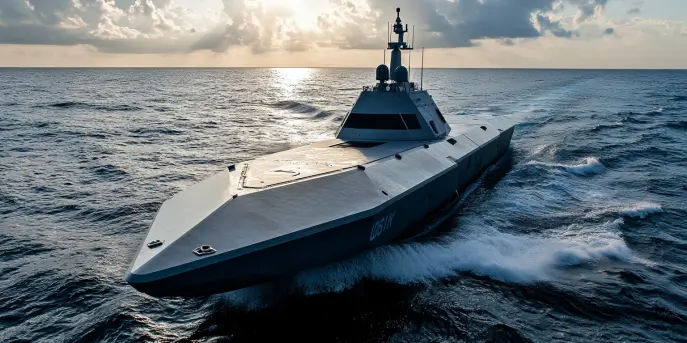
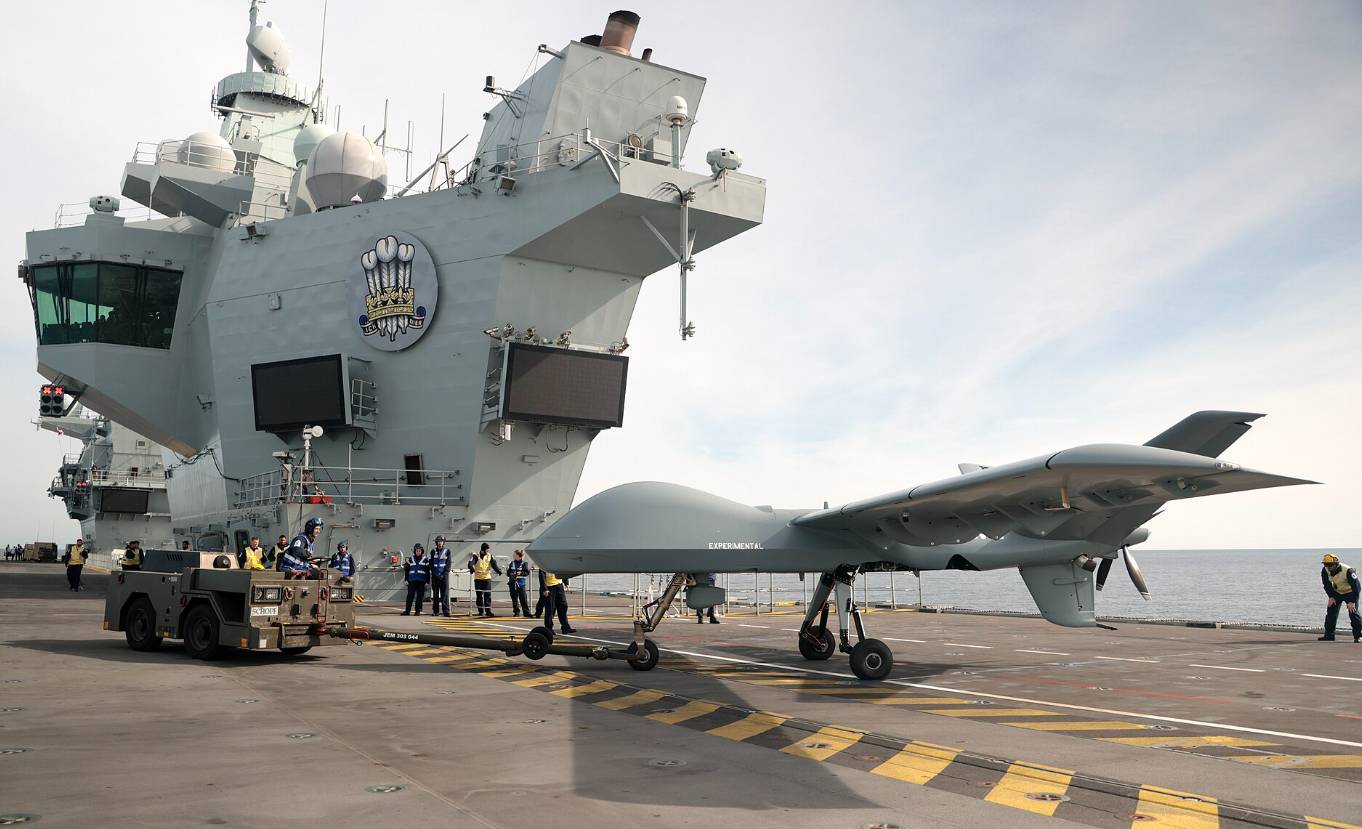
Naval aviation has always been a story of adaptation. From the first fragile biplanes launched off improvised platforms to the jet age and the rise of the nuclear carrier, each generation of sea power has tried to extend its reach beyond the horizon. Today, that lineage is entering a new phase: carrier-based drones are moving from experimental adjuncts to core elements of maritime warfare. What began as a series of demonstrations, landings, and shipboard trials is now becoming a global contest among navies seeking to combine persistence, survivability, and mass without multiplying the cost of crewed aviation.

From reconnaissance kites to autonomous wings
Unmanned naval aviation did not appear overnight. The idea of flying machines serving the fleet predates the modern drone by more than a century. During the First World War, seaplanes and tethered observation platforms gave navies a glimpse of aerial scouting at sea. By the Second World War, aircraft carriers had become decisive instruments of fleet combat, and the logic of aviation at sea was established: whoever sees first, strikes first.
After the Cold War, navies gradually rediscovered the value of unmanned systems. Early maritime drones were typically small surveillance platforms launched from shore, not from the deck of a carrier. But the operational pressures of the 21st century changed the equation. Long-range anti-ship missiles, dense air defenses, and the growing cost of modern combat aircraft pushed naval planners toward systems that could extend reach, absorb risk, and operate in larger numbers. Carrier-based drones are the latest answer to a problem as old as naval warfare itself: how to project power across a vast and contested sea while preserving scarce human capital.
Why carriers are embracing unmanned aircraft
For decades, the aircraft carrier was the most visible symbol of maritime dominance. Yet modern carriers face a harsher environment than their predecessors did in the Pacific War or the early Cold War. Anti-ship missiles, over-the-horizon targeting, submarines, electronic warfare, and space-enabled surveillance have made large deck aviation more vulnerable. At the same time, the demand for persistent sensing, electronic attack, strike coordination, and battle damage assessment has grown.
Carrier-based drones offer several advantages that directly answer these pressures:
- Longer endurance: unmanned aircraft can remain on station longer than crewed jets, especially in reconnaissance and electronic support roles.
- Reduced risk: they can penetrate defended airspace or loiter in high-threat areas without placing pilots in immediate danger.
- Lower operating cost per sortie: while not cheap, drones can be more economical than fifth-generation crewed aircraft for many missions.
- Mass and flexibility: navies can field more aircraft to saturate sensors, complicate enemy defenses, or distribute effects across a wider battlespace.
- Integration with crewed aviation: drones can act as scouts, decoys, tankers, or electronic warfare nodes that multiply the effectiveness of manned fighters.
The underlying logic is not new. In the 1940s, carrier air groups relied on scouts, torpedo bombers, fighters, and dive bombers operating in coordinated packages. The modern analogue is a mixed air wing in which unmanned systems assume some of the most dangerous or tedious tasks, freeing crewed aircraft for missions that demand human judgment or maximum payload.
The American model: autonomous strike and the carrier air wing of the future
The United States Navy remains the most influential architect of carrier aviation, and it has treated unmanned systems as an evolutionary rather than revolutionary step. The most visible milestone was the MQ-25 Stingray, a carrier-capable unmanned aerial refueling aircraft designed to extend the range of the F/A-18E/F Super Hornet and the F-35C. That mission is strategically significant: aerial refueling is the hidden enabler of naval strike power, and turning it over to a drone releases crewed fighters from tanker duty.
Beyond refueling, the U.S. Navy has explored carrier-based unmanned aircraft for intelligence, surveillance, reconnaissance, electronic warfare, and potential strike roles. Programs such as the X-47B demonstrator proved that autonomous carrier launch, recovery, and deck handling were no longer theoretical. Although the X-47B itself did not become a fleet aircraft, it demonstrated that a drone could operate from a carrier with the same operational discipline expected of crewed platforms.
In strategic terms, the American approach reflects a familiar pattern in naval history. Just as the interwar Navy experimented with catapults, radar, and deck handling methods before the Second World War, today it is testing how autonomy, networking, and human-machine teaming can be folded into carrier operations without disrupting sortie generation. The goal is not to replace the carrier air wing, but to expand its reach and resilience.
China, Europe, and the widening competitive field
China has rapidly expanded its naval aviation ambitions, and its interest in unmanned systems should be viewed in the context of a broader effort to challenge U.S. maritime power in the Western Pacific. Chinese naval planners understand the value of reconnaissance, targeting, and distributed sensing in an anti-access environment. Carrier-based drones, whether for surveillance or strike, could support China’s goal of building a more capable blue-water fleet and complicate adversary planning around the first and second island chains.
Beijing’s broader aerospace ecosystem has already produced a wide range of unmanned aircraft, and some have been showcased in maritime configurations. The key challenge is not merely building the drone, but integrating it into carrier operations, deck cycles, secure datalinks, and doctrine. That challenge is similar to the one faced by early carrier pioneers in Britain, Japan, and the United States, who had to develop arrestor gear, training pipelines, and shipboard procedures before naval aviation could become truly effective.
European navies, though operating smaller carriers or amphibious aviation ships, are also watching closely. The Royal Navy’s carrier strike concept, for example, depends on interoperability, sensor fusion, and distributed aviation assets. For states with more limited budgets, drones may offer an attractive way to sustain maritime air power without procuring large fleets of expensive crewed aircraft. This is particularly important for navies that must patrol extended economic zones, secure sea lines of communication, and contribute to coalition operations.
Key carrier drone roles
Carrier-based drones are not a single category of weapon. They are a family of systems with different missions and design philosophies. The most important roles include:
- Aerial refueling: extending fighter range and time on station.
- ISR and targeting: persistent surveillance, maritime domain awareness, and cueing for strikes.
- Electronic warfare: jamming, deception, and support to suppress enemy sensors.
- Decoy and penetration support: drawing fire or saturating air defenses.
- Light strike: delivering precision weapons in permissive or semi-contested environments.
- Communications relay: acting as an airborne node for distributed naval task groups.
These tasks mirror the division of labor found in classic carrier air groups, but with a crucial difference: drones can be designed from the outset to accept higher mission risk. That opens the door to concepts such as attritable airframes, distributed swarms, and semi-autonomous collaborative combat aircraft operating in support of manned fighters.
Technical and operational challenges
Despite the promise, carrier drones face serious obstacles. Launch and recovery at sea remain unforgiving. A carrier deck is not a runway but a moving, crowded, high-tempo worksite where weather, sea state, and aircraft handling create constant friction. Any unmanned system must function reliably in this environment and integrate with deck crews, catapults or short takeoff systems, arresting gear, and shipboard maintenance processes.
There is also the problem of autonomy under combat conditions. A drone can follow a preplanned route, but naval warfare is dynamic. It must contend with jamming, spoofing, emissions control, and rapidly changing tactical pictures. That requires robust sensor fusion, resilient datalinks, and enough onboard decision-making to continue the mission when communications are degraded. The history of naval aviation suggests that the most successful systems are those that can operate under friction rather than assuming ideal conditions.
Cybersecurity is another concern. A carrier drone is not just an airframe; it is a node in a digital ecosystem. If its software, update pathways, or command links are compromised, the consequences could be strategic rather than merely technical. Navies therefore need to think in terms of airworthiness, network security, and electronic survivability as a single problem.
Finally, there is the human factor. Carrier aviation has always been a culture as much as a technology. The transition from propeller aircraft to jets required new deck procedures, new training, and new ideas about tempo and risk. The shift to drones will demand a similar cultural adjustment. Sailors and aviators must learn how to trust autonomous systems without ceding tactical judgment to them.
Representative carrier-based drone specifications
| System | Primary role | Launch/recovery | Notable features |
|---|---|---|---|
| MQ-25 Stingray | Aerial refueling | Carrier catapult and arrested recovery | Designed to extend fighter range and free crewed aircraft for combat missions |
| X-47B demonstrator | Autonomous carrier operations | Carrier catapult and arrested recovery | Proved autonomous deck operations, trap, and launch at sea |
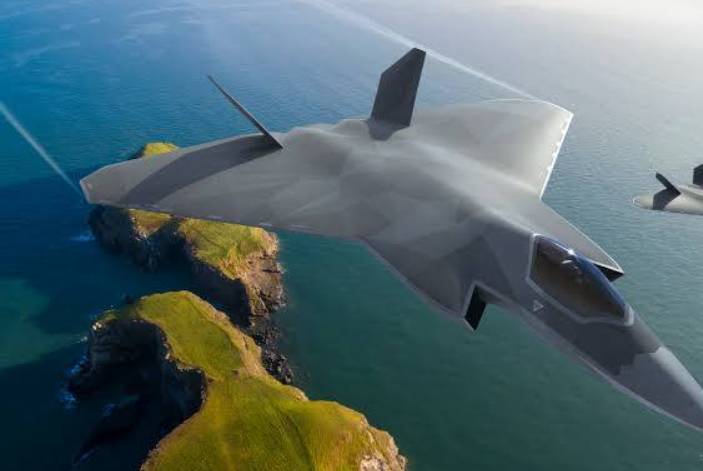
| Future collaborative combat aircraft | Escort, strike, electronic warfare | Carrier-compatible concepts under development | Expected to emphasize modular payloads, attritability, and manned-unmanned teaming |
These systems differ in maturity, but they point to the same trajectory. The carrier air wing is becoming more distributed, more networked, and less dependent on the heroic endurance of individual pilots. That does not diminish the importance of naval aviation; it expands its toolkit.
The historical pattern behind the trend
Every major transformation in naval warfare has followed a similar arc. An initial experiment proves a concept. A period of skepticism follows. Then operational need, wartime pressure, or strategic competition turns the experiment into doctrine. The transition from sail to steam, from battleship to carrier, and from analog to digital combat systems all followed this pattern. Carrier-based drones are now somewhere between the experiment and the doctrine stage.
The most revealing historical comparison may be with the emergence of radar. At first, radar was a technical curiosity. Then it became a fleet-wide enabler that changed air defense, search, and battle management. Drones may occupy a similar place in future carrier warfare: not as a single decisive weapon, but as a force multiplier that reshapes how the fleet sees, moves, and fights.
In that sense, the rise of carrier drones is less a break from history than a continuation of it. Navies have always sought to extend the carrier’s eyes, lengthen its striking arm, and reduce the vulnerability of its air wing. What is changing now is the means, not the ambition. The next generation of naval power will likely be defined not by whether drones replace pilots, but by how effectively carriers combine both into a more adaptable and survivable combat system.