Operational Maturity, Not Science Project Status
High-energy laser systems are no longer confined to demonstrator ranges and controlled trials. They are beginning to move into the practical layer of air defense planning, where commanders must weigh cost-per-shot, magazine depth, and engagement speed against the growing threat posed by small unmanned aircraft systems. The shift matters because counter-UAS defense is no longer defined only by missiles, guns, and electronic warfare. It now includes directed energy as a credible option for defeating low-cost drones that can saturate defenses, conduct reconnaissance, or deliver precision effects at the tactical edge.
You Might Also Like
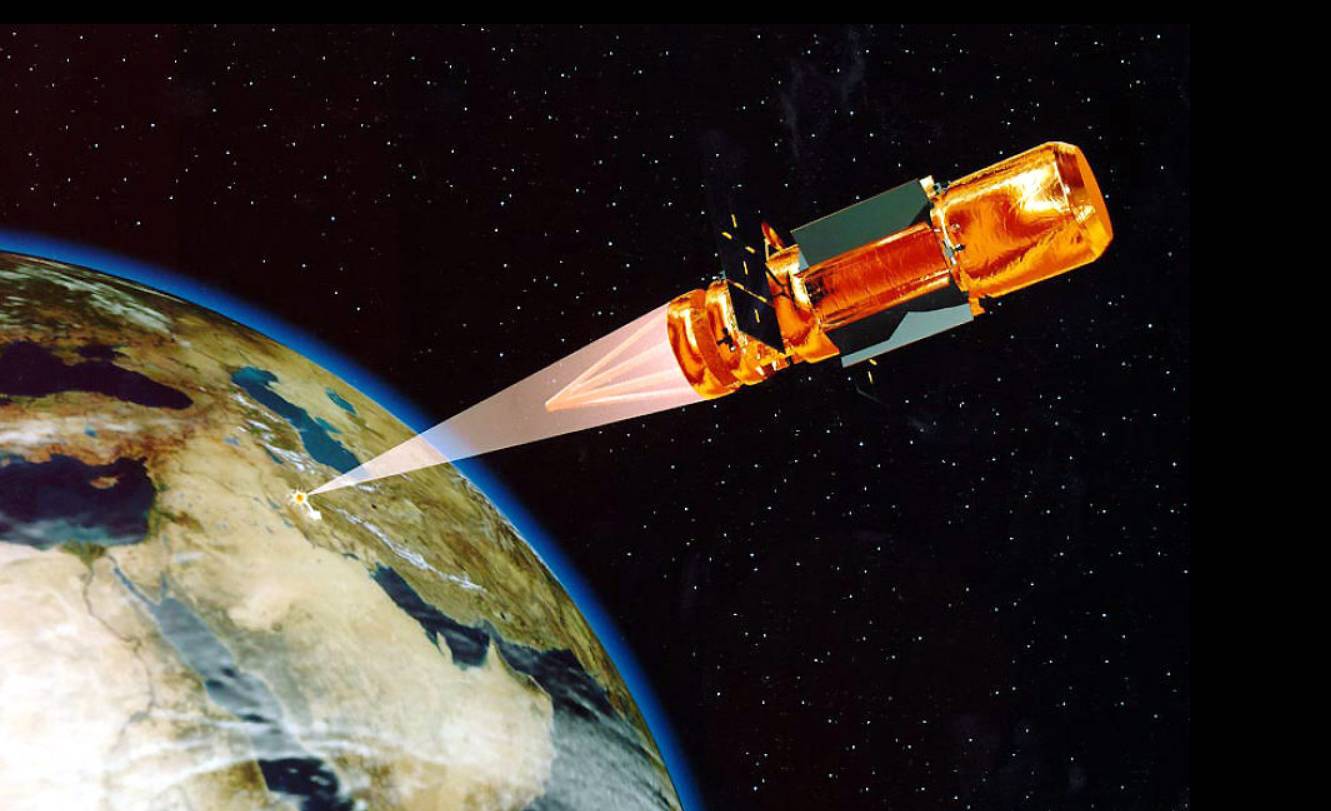
The strategic appeal is straightforward. A laser engagement is not constrained by the same inventory logic as interceptor missiles. A battery can, in theory, keep firing as long as it has power and thermal capacity. That changes the economics of defense. When adversaries field attritable drones in large numbers, the side that can destroy them at the lowest marginal cost gains an important operational advantage. In that sense, lasers are not merely a new weapon; they are a response to the industrial logic of drone warfare.
Why the Threat Environment Favours Directed Energy
Small UAS have become ubiquitous because they are inexpensive, modular, and difficult to defend against at scale. They can be launched from concealed positions, flown at low altitude, and used to overwhelm sensor coverage or force defenders to reveal themselves. In current conflicts, drones have been used for artillery spotting, battle damage assessment, route reconnaissance, and direct attack. Even when they are not highly lethal, they impose delay, caution, and expenditure on the defender.
Traditional point defense systems remain essential, but they are often ill-suited to repeated engagements against swarms or persistent raids. Missiles are effective, yet expensive. Guns are cheaper, but their effectiveness can be limited by range, weather, and ammunition expenditure. Electronic warfare can suppress links and navigation, but it does not guarantee a kill and is vulnerable to autonomous flight modes or hardened guidance. Lasers fit into this layered problem by providing a precise, rapid, and relatively low-cost defeat mechanism for suitable targets.
That does not mean lasers replace other systems. They are best understood as one layer in a broader counter-UAS architecture, especially against Group 1 and Group 2 drones and some larger platforms under favorable conditions. Their value increases when integrated with radar, electro-optical sensors, passive detection, and command-and-control networks that can cue the beam quickly and accurately.
How High-Energy Lasers Work in the Field
Military lasers defeat targets by concentrating energy on a small area for long enough to damage critical components. Depending on dwell time and power level, the beam can burn through an airframe, destroy sensors, impair control surfaces, or ignite onboard batteries and fuel. Against a quadcopter or small fixed-wing drone, the effect can be abrupt and decisive. The practical challenge is not only generating enough power, but also keeping the beam on the target despite motion, turbulence, platform vibration, and countermeasures such as reflective surfaces or rapid maneuvers.
Operationally, laser air defense relies on a chain of functions that must work together:
- Detection: finding the drone early enough to engage it at useful range.
- Tracking: maintaining a stable fire-control solution on a moving target.
- Beam control: compensating for atmospheric distortion, vehicle motion, and line-of-sight disruption.
- Thermal management: handling the heat generated by repeated firings.
- Power supply: providing sustained electrical output without degrading mobility or endurance.
This is why the transition from test range to operational use is significant. Fielding a laser is not just about installing a beam director on a vehicle. It requires integration with sensors, command networks, generators, batteries, cooling systems, and tactical doctrine. A system that looks impressive in a demonstration can still struggle in dust, rain, smoke, haze, or cluttered terrain unless those conditions were specifically addressed in development.
Representative System Characteristics
Published specifications vary by program and many details remain classified, but current counter-UAS laser systems generally share a common set of attributes. The table below summarizes representative capabilities seen across publicly disclosed military systems.
| Characteristic | Representative Range | Operational Relevance |
|---|---|---|
| Laser power | 10 kW to 300+ kW | Determines engagement range and target set |
| Target class | Small drones to some larger UAS | Best suited to low-signature, low-altitude threats |
| Engagement range | Short to medium range | Dependent on atmosphere, beam quality, and tracking |
| Magazine depth | Limited mainly by power and cooling | Supports repeated engagements without missile depletion |
| Reaction time | Very fast once cued | Useful against sudden pop-up threats and swarms |
| Mobility | Vehicle-mounted or fixed-site | Trade-off between power availability and tactical maneuverability |
Power level alone does not determine battlefield usefulness. A well-integrated lower-power system may outperform a higher-power platform that lacks stable tracking or efficient thermal management. Likewise, a fixed-site installation can support much higher continuous energy output than a lighter tactical vehicle, but at the cost of mobility and survivability. The choice depends on the mission: base defense, convoy protection, maritime protection, or rear-area security each imposes different constraints.
Doctrine: From Point Defense to Layered Counter-Swarm
The doctrinal value of lasers becomes clearest when they are used to absorb the middle part of the threat spectrum. Cheap drones do not always justify missile expenditure, but they are too dangerous to ignore. A layered defense can assign sensors and non-kinetic effects to early detection and disruption, lasers to precision defeat of exposed targets, and missiles or guns to harder, faster, or weather-degraded targets. That allows commanders to preserve higher-end interceptors for cruise missiles, aircraft, or larger UAS.
In practical terms, lasers may be most useful in three operational roles:
- Base defense: defeating drones approaching fixed sites, logistics hubs, command posts, and airfields.
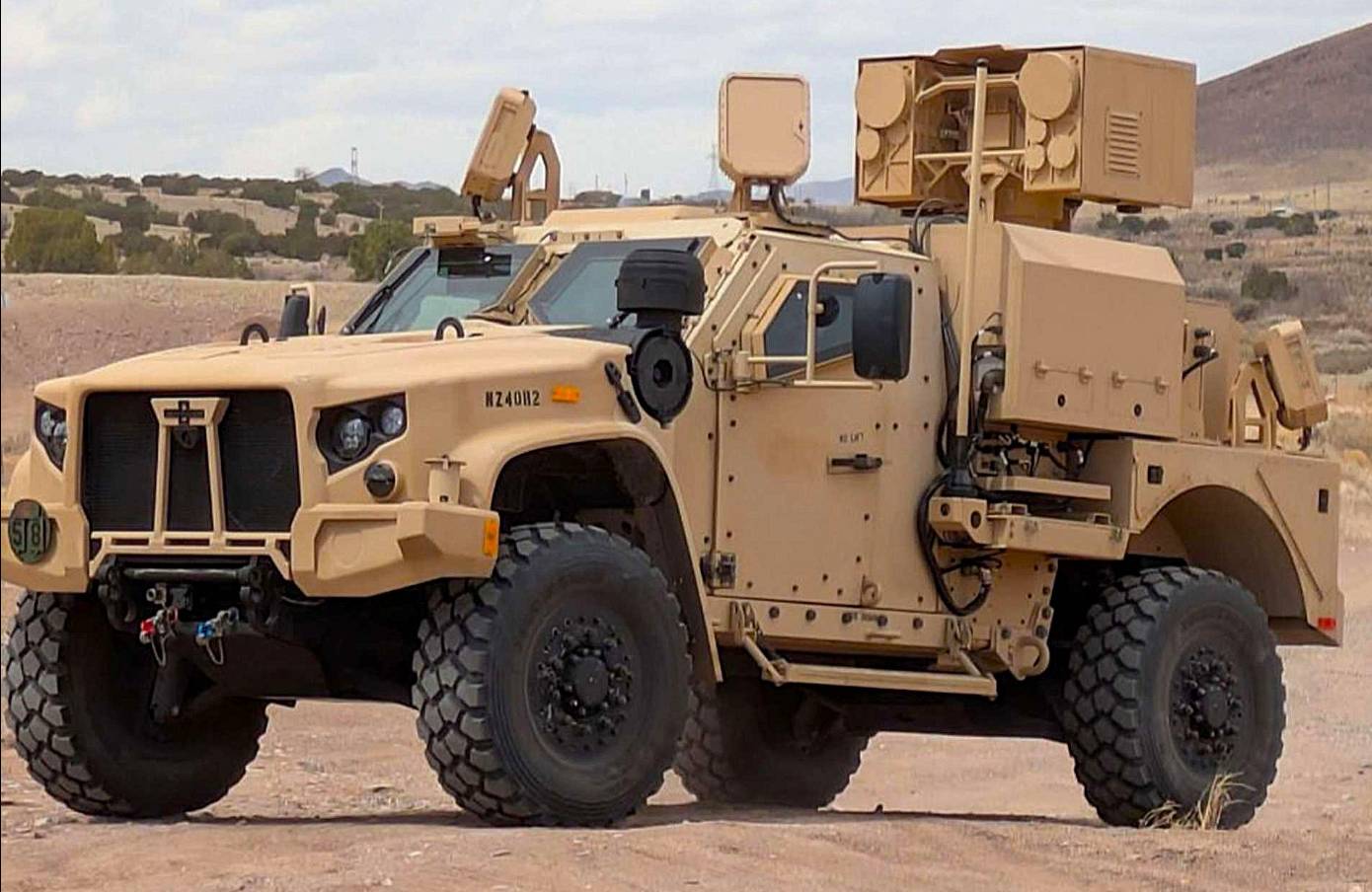
- Convoy and maneuver support: protecting units moving through contested airspace when mounted on tactical vehicles.
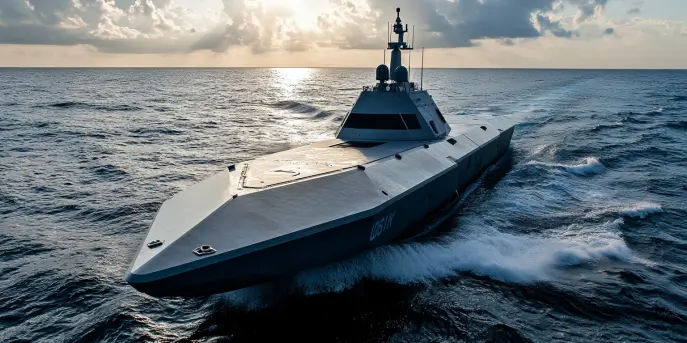
- Maritime defense: countering small drones used for surveillance or harassment around ships and ports.
These roles highlight an important doctrinal shift. Directed energy is not simply a technical substitute for a missile; it changes how defenders allocate attention and ammunition. If drones can be defeated silently and inexpensively, the defender gains room to maneuver tactically and economically. That is especially important in prolonged campaigns where resupply is uncertain and the adversary deliberately seeks to impose exhaustion.
Limitations Still Shape Real-World Employment
Despite progress, lasers are not a universal solution. Atmospheric conditions remain a major constraint. Dust, smoke, fog, rain, and battlefield obscurants can degrade beam performance or reduce effective range. Line-of-sight is mandatory, which limits use in cluttered urban terrain, dense vegetation, and complex topography. Highly reflective surfaces, spinning rotors, and distributed drone attacks can complicate engagement timing. A small drone can also be cheap enough that the attacker accepts losses and simply launches more.
There are also practical sustainment issues. High-energy systems require power generation, cooling, maintenance, and trained operators. Thermal loads can reduce duty cycle, especially on compact platforms. Mobile systems must balance survivability with the weight and volume of power equipment. These constraints do not negate the utility of lasers, but they do mean that military planners should treat them as specialized tools rather than broad-spectrum replacements.
Another important limitation is target discrimination. A crowded battlespace can contain friendly, civilian, and hostile aerial objects moving in close proximity. The system must be able to identify the target accurately and engage with confidence. In peacetime base defense or homeland protection, rules of engagement and collateral risk may be just as important as raw technical performance.
Geopolitical Implications and Industrial Competition
The deployment of counter-UAS lasers is also a marker of industrial and strategic competition. States that can field reliable directed-energy systems demonstrate not only engineering depth, but also the ability to integrate advanced optics, power electronics, thermal systems, and battle management software. That matters because these capabilities are transferable across domains, including missile defense, air defense, and even future space-related applications.
For the United States and its allies, directed energy offers a way to hedge against the growing saturation threat posed by inexpensive drones and loitering munitions. For peer and near-peer competitors, the emergence of operational lasers creates incentives to harden drones against beam effects, improve swarm tactics, and field decoys or mixed payloads. In other words, the diffusion of laser defense will almost certainly produce adaptation on the offensive side. The contest is iterative.
There is also an alliance dimension. If lasers become a standard component of base defense and expeditionary protection, interoperability questions will arise: power standards, sensor integration, rules of engagement, and shared logistics. States that adopt common architectures may be able to deploy joint layered defenses more efficiently. Those that do not may find themselves dependent on isolated national systems that are difficult to sustain in coalition operations.
What to Watch as Systems Mature
Several indicators will show whether counter-UAS lasers are truly moving into mainstream service rather than remaining niche equipment:
- Fielding at scale: multiple operational units equipped, not just a few prototype batteries.
- Improved weather tolerance: better performance in haze, dust, and precipitation.
- Mobility gains: compact power and cooling for tactical vehicles and expeditionary use.
- Fire-control automation: faster cueing and tracking against small, fast, low-signature drones.
- Cost-effectiveness data: evidence that lasers reduce missile expenditure and sustain higher engagement rates.
If these trends continue, high-energy lasers will likely become a standard part of layered counter-UAS networks rather than a specialty capability. Their most important contribution may not be dramatic single-shot kills, but the ability to impose a new defensive calculus on adversaries who rely on mass-produced drones to saturate the battlespace.
That is the real significance of the current transition. High-energy laser systems are no longer asking whether they can work in principle. The question now is where, under what conditions, and at what scale they can be fielded as dependable tools of air defense. As that answer becomes clearer, commanders will gain a more flexible way to preserve high-value interceptors, protect critical assets, and blunt the economics of drone warfare.