

Overview
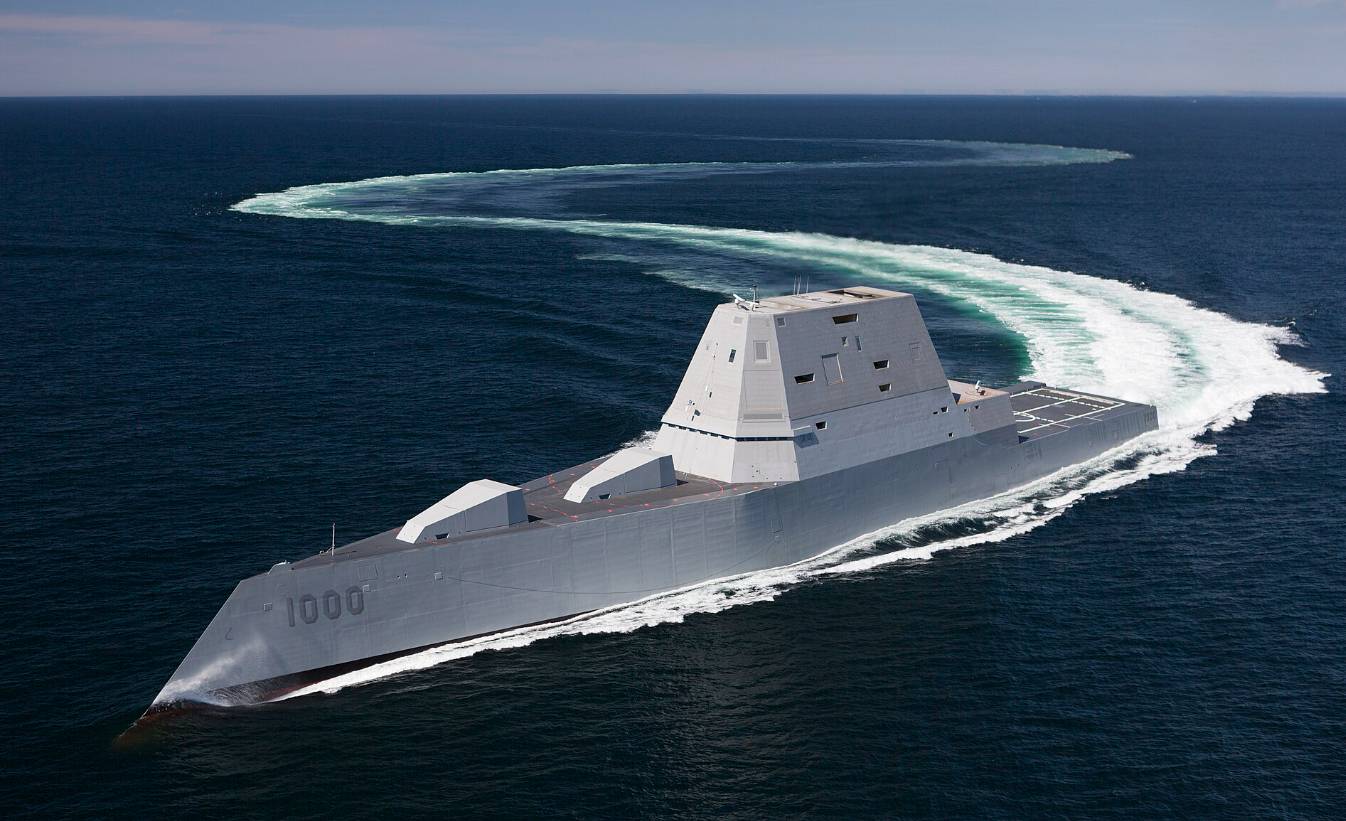
The DDG-51 Arleigh Burke-class guided missile destroyer program is one of the U.S. Navy’s most consequential surface combatant efforts, representing a decades-long investment of approximately $87.3 billion across multiple procurement lots, modernization phases, and shipyard industrial-base decisions. More than a destroyer class, DDG-51 became the Navy’s de facto multi-mission surface warfare backbone: air defense, ballistic missile defense, anti-surface warfare, anti-submarine warfare, and strike support all folded into a hull form that has been repeatedly enlarged, electrified, and digitized without abandoning the core Aegis combat system architecture.

The program’s significance is twofold. First, it delivered a large fleet of proven, continuously upgraded combatants at relatively low technical risk compared with wholly new designs. Second, it created the constraints that now drive the successor concept, DDG(X): growth margins in electrical power, cooling, internal volume, and survivability are becoming harder to find in the DDG-51 hull. The result is a transition problem as much as a ship-design problem.
Program scale and industrial reality
At roughly $87.3 billion in cumulative investment, DDG-51 is best understood as a production ecosystem rather than a single procurement line. The class spans multiple flights and insertions, with the Navy using serial production to preserve shipyard capacity while integrating radar, combat system, propulsion, and survivability improvements. This approach reduced unit-level developmental risk, but it also locked the fleet into a hull whose margins were designed for an earlier era of sensors and weapons.
Industrial base continuity matters here. Destroyers are built primarily at two U.S. yards, and the Navy has used the program to sustain skilled labor, supplier networks, and heavy-module integration capacity. That makes the class strategically valuable even before combat power is considered. The trade-off is that the fleet’s modernization path is shaped by what those yards can build at scale, not just by what engineers would ideally design from a blank sheet.
Baseline specifications: DDG-51 Flight IIA / Flight III
| Specification | DDG-51 Class |
|---|---|
| Displacement | Approximately 9,200 to 9,800 tons full load, depending on flight |
| Length | 509 ft 6 in (155.3 m) |
| Beam | 59 ft (18.0 m) |
| Draft | About 31 ft (9.4 m) |
| Propulsion | 4 x General Electric LM2500 gas turbines, 2 shafts |
| Power | Approximately 100,000 shp combined |
| Top speed | 30+ knots |
| Range | About 4,400 nautical miles at 20 knots |
| Crew | Roughly 280 to 320, varying by flight and manning model |
| Main radar | AN/SPY-1D(V) on earlier flights; AN/SPY-6(V)1 on Flight III |
| Vertical launch cells | 90 on Flight I/II; 96 on Flight IIA/III |
| Main gun | 1 x 5-inch/62 Mk 45 Mod 4 |
Combat system: why DDG-51 endured
The class’s endurance stems from the Aegis Combat System, a sensor-shooter network that matured into the Navy’s most trusted surface warfare command-and-control architecture. Aegis offered a rare combination of high update rate radar tracking, fire-control flexibility, and software-defined growth potential. Even as threat sets evolved from cold-war saturation raids to ballistic missiles, hypersonic glide vehicles, and low-observable cruise missiles, the Aegis baseline remained relevant because it could be incrementally modernized.
Flight III is particularly important because it replaces the legacy radar with the AN/SPY-6 Air and Missile Defense Radar. This is not a simple swap. SPY-6 provides substantially higher sensitivity, better discrimination, and greater capacity to manage complex raid environments. In practical terms, the radar upgrade improves the ship’s ability to detect smaller, faster, and more numerous targets at longer effective ranges while maintaining performance under electronic attack. The trade-off is power and cooling demand: SPY-6 pushes ship service generation and thermal management to the edge of what the Burke hull can support.
Weapons loadout and mission flexibility
DDG-51’s strike package is defined by the Mark 41 Vertical Launch System, whose modular cells can host a wide range of weapons. Typical loadouts vary by mission, but the ship can embark combinations of:
- SM-2 / SM-6 for area air defense and terminal defense against aircraft and cruise missiles
- SM-3 for ballistic missile defense intercepts
- Tomahawk Land Attack Missile for long-range strike
- ASROC for anti-submarine warfare
- Evolved Sea Sparrow Missile for point and local area defense
The destroyer’s gun and close-in defenses are intentionally layered. A 5-inch gun remains valuable for naval surface fire support, warning shots, and limited anti-surface engagements, while the CIWS and/or SeaRAM provide last-ditch terminal defense against leakers. This layered approach is efficient but not free: each layer consumes weight, power, magazines, maintenance attention, and top-side real estate.
Engineering trade-offs: the Burke design ceiling
The Burke class has repeatedly demonstrated an ability to absorb change, but every modernization pushes on the same physical constraints. The original design did not anticipate the present-day demand for:
- Higher electrical generation for advanced radar and future directed-energy weapons
- Greater chilled-water and HVAC capacity for sensor and combat-system electronics
- Improved shock hardening and survivability margins
- More VLS capacity or larger missile canisters
- Additional growth space for power conversion and cooling modules
Flight III solves only part of this problem. The new radar and associated upgrades are accommodated through careful redesign of the aft ship, electrical distribution, and topside integration, but the result is still a derivative of a hull first optimized in the 1980s. That is why the Navy views DDG(X) not as a luxury but as a necessary reset.
Comparative analysis: DDG-51 versus DDG(X)
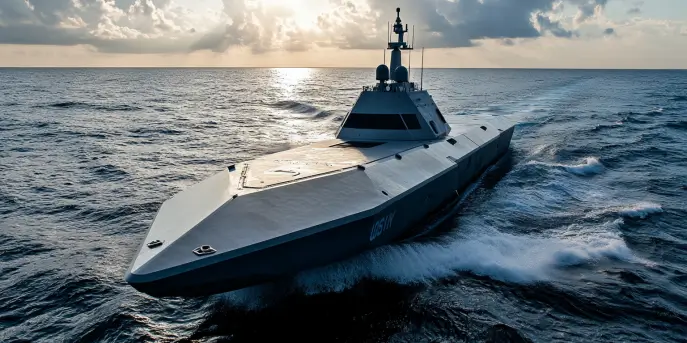
The planned successor, DDG(X), is intended to correct the structural limitations of the Burke design while preserving the Aegis ecosystem and mission relevance. Although the final configuration remains in development, the Navy has outlined key design goals: more electrical power, greater cooling capacity, increased growth margins, a larger hull, and improved support for future sensors and weapons such as high-energy lasers, electromagnetic systems, and potentially more capable missile architectures.
| Attribute | DDG-51 Flight III | DDG(X) Target Direction |
|---|---|---|
| Primary radar | AN/SPY-6(V)1 | Future integrated sensor suite with greater growth margin |
| Hull size | ~9,800 tons full load | Larger hull, exact displacement not finalized |
| Electrical margin | Constrained by Burke architecture | Expanded generation and distribution architecture |
| Cooling margin | Limited by legacy hull volume | Designed for advanced electronics and future directed energy |
| Missile capacity | 96 VLS cells | Potentially increased capacity and larger weapon options |
| Survivability growth | Incremental | Enhanced from the keel up |
| Lifecycle focus | Proven, optimized production | Technology insertion and long-term adaptability |
DDG(X) is thus less about chasing the biggest possible ship than about building a power-and-cooling-rich combat platform capable of fielding systems that the Burke class can no longer comfortably host. That includes not just radar, but also future command-and-control suites, electronic warfare payloads, and weapons with demanding thermal and electrical profiles.
Cost, risk, and force-structure implications
The DDG-51 program’s economic success came from repetition: mature design, repeatable production, and manageable modernization increments. DDG(X) will likely reverse that equation. A larger, more capable hull with stronger growth margins will cost more per ship, but it may offer lower integration risk for future capabilities and a longer relevant service life. In fleet-planning terms, the Navy is betting that a more expensive ship today will be cheaper than buying another generation of underpowered stopgap upgrades tomorrow.
Force structure also matters. Destroyers are the surface fleet’s most versatile nodes for distributed maritime operations. They escort carriers, defend amphibious groups, conduct independent strike, and support presence missions in contested regions. A successor class must preserve that versatility while also acting as a launch point for future capability packages that could include advanced missiles, laser weapons, and more autonomous sensor fusion.
Why the transition matters operationally
The DDG-51 fleet is not obsolete; far from it. Flight III ships are among the most capable air-defense destroyers afloat. But the Navy’s challenge is not to preserve yesterday’s capability indefinitely. It is to ensure that the next generation can keep pace with the acceleration of threat complexity. Hypersonic weapons, dense electronic warfare, and proliferated cruise missile salvos punish ships that lack power margin, sensing depth, and thermal headroom.
In that context, DDG(X) is best seen as the logical extension of lessons learned from the Burke class. DDG-51 proved that iterative excellence can sustain a class for decades. DDG(X) must prove that the Navy can translate that success into a ship designed from the outset for the next half-century of sensor and weapon growth.
Bottom line
The DDG-51 program’s $87.3 billion investment bought the Navy a deeply capable, continuously modernized destroyer family that remains central to U.S. sea control and missile defense. Its success is also its limitation: the class has been pushed so far through incremental upgrades that the hull itself now constrains future growth. DDG(X) exists to break that ceiling, delivering a larger, more power-rich, more survivable successor built for the combat systems and weapons of the 2030s and beyond.