

When people talk about Europe’s maritime defense, they often picture national fleets working in parallel: French frigates in the Atlantic, Italian patrol assets in the Mediterranean, German minehunters in the Baltic, Spanish ships near the Strait of Gibraltar, and the Royal Navy still carrying much of the burden in the North Atlantic and beyond. That is the surface view. The reality is more complicated. Europe’s sea lanes, ports, undersea cables, energy infrastructure, and chokepoints are tied together operationally, and the response has had to evolve in kind. EUROMAFOR sits in that space — not as a single “European navy” in the classic sense, but as a practical framework for coordinating maritime defense where national fleets, allied commitments, and civilian shipping interests intersect.
You Might Also Like
From a sailor’s perspective, the first rule is simple: the sea does not care about political slogans. It cares about weather, distance, endurance, maintenance, and who can get on station first. That is why Europe’s maritime posture is increasingly built around interoperability and shared awareness rather than the old idea that each nation can fully defend its own waters alone. EUROMAFOR matters because it gives structure to that reality.
What EUROMAFOR is really for
EUROMAFOR is best understood as a cooperative maritime defense and readiness concept designed to improve coordination among European navies and maritime security organizations. In practical terms, it helps align patrol patterns, information sharing, logistics, exercises, and crisis response. That matters because the threats are no longer limited to blue-water combat. Today’s maritime challenge set includes hybrid pressure, gray-zone coercion, sabotage, mine warfare, drone activity, cyber interference, illegal trafficking, and the persistent need to keep commercial sea routes open under stress.
The strongest feature of this kind of framework is not glamour. It is speed of response. If a merchant corridor is disrupted, if a pipeline is damaged, if a suspicious vessel appears near critical infrastructure, or if an undersea asset is threatened, the ability to coordinate quickly across national lines is worth more than a single headline-grabbing ship class. A navy is only as useful as its ability to arrive with the right tools, the right rules of engagement, and the right picture of what is happening.
Why Europe cannot afford a fragmented sea picture
Europe’s maritime environment is dense and vulnerable. Container traffic, LNG shipments, naval deployments, fishing fleets, offshore wind farms, telecom cables, and energy terminals all share the same operating space. That creates two problems. First, there are many more targets than there were a generation ago. Second, the adversary does not need to sink a fleet to cause strategic damage. A few days of uncertainty around a port, cable landing site, or shipping lane can raise insurance rates, delay cargo, and force navies into a reactive posture.
Fragmentation is the enemy of maritime defense. If one country sees a contact and another country owns the nearby infrastructure, delays in classification can cost hours. If one navy has the sonar, another has the helicopter, and a third has the legal authority to act, the gap between detection and response becomes a risk in itself. EUROMAFOR addresses that by encouraging common procedures and a better shared operating picture.
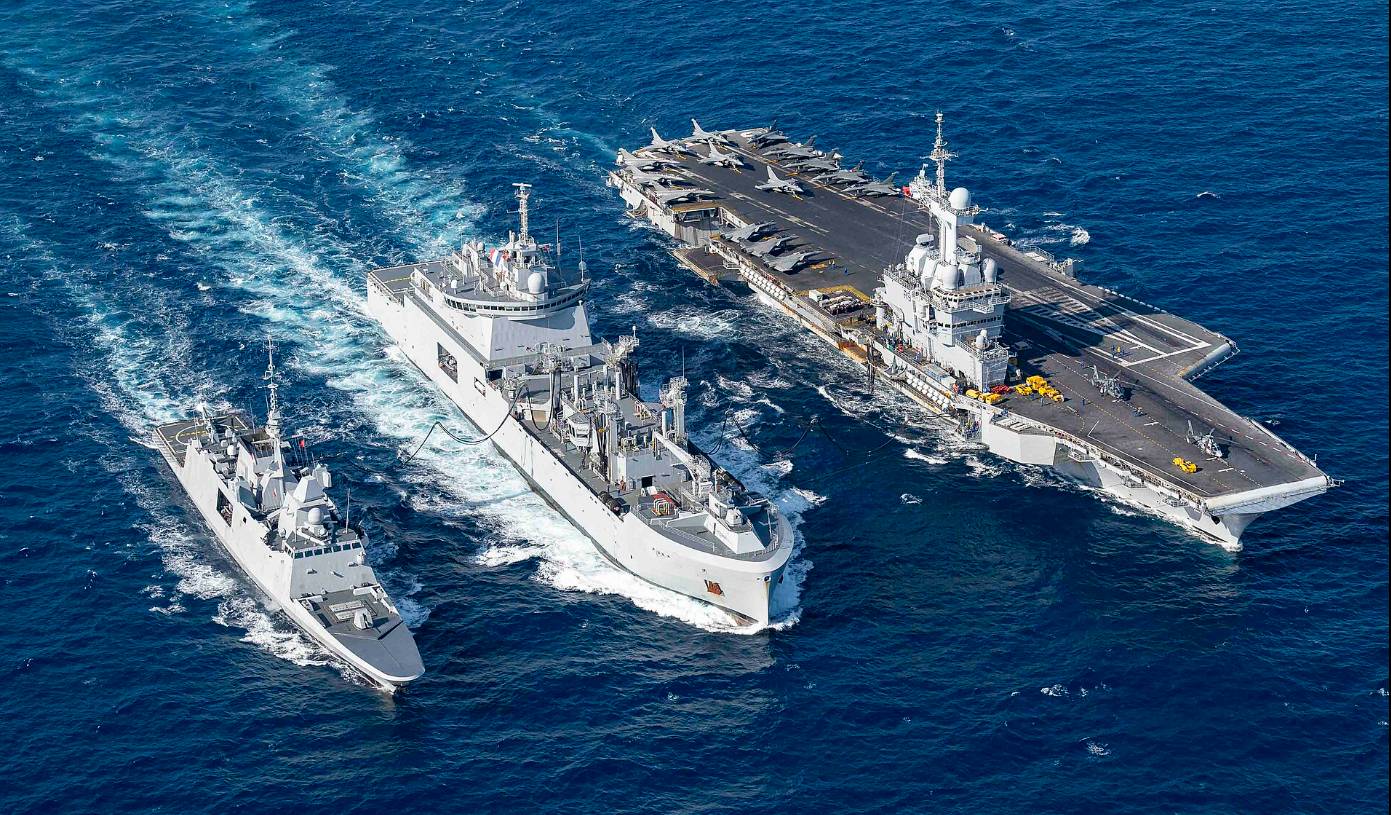
In the field, this means more than meetings and memoranda. It means shared maritime domain awareness, compatible communications, standardized reporting, and exercises that force crews to work through friction before a crisis does it for them. Any professional who has stood watch knows that interoperability is never abstract. It shows up in whether a track can be handed off cleanly, whether a refuel can happen without drama, and whether a task group can shift from peacetime posture to a security response without spending half the day translating each other’s procedures.
The operational value: patrols, deterrence, and the undersea fight
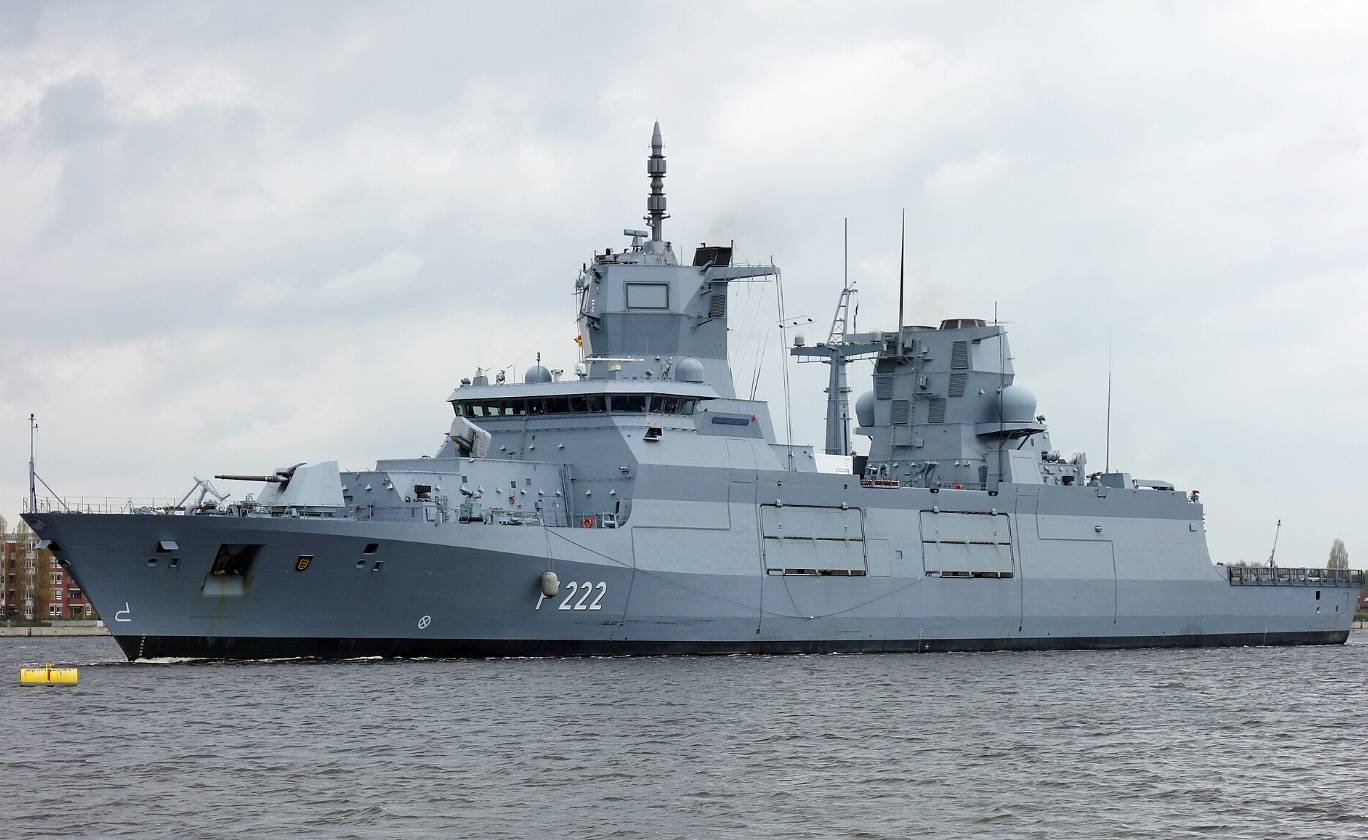
Europe’s navies are not designed around one theater or one threat. The Mediterranean, Baltic, North Sea, Norwegian Sea, and Atlantic approaches each demand different force mixes. EUROMAFOR is valuable because it helps distribute capabilities where they are needed most. A mine countermeasure unit that is built to operate in the Baltic may be essential after a sabotage incident in a port. A frigate with a strong air-defense suite may be best used to escort valuable shipping or support a larger NATO effort. Patrol vessels may be ideal for presence missions, boarding operations, or surveillance of suspicious activity near critical infrastructure.
The undersea domain has become one of the most important and least forgiving arenas in European defense planning. Cables, pipelines, seabed sensors, and offshore energy installations are difficult to protect continuously, expensive to repair, and politically sensitive when attacked or tampered with. A coordinated maritime defense framework is important here because no single navy can watch every section of seabed all the time. What matters is a layered system: persistent surveillance where possible, rapid investigation when anomalies appear, and enough maritime and air assets to deter opportunistic actors.
This is where real-world naval power differs from the brochure version. A destroyer looks impressive in port. A minehunter does not. A maritime patrol aircraft does not have the visual appeal of a high-end fighter. But when a cable fault turns suspicious, or a mine threat appears, or a hostile intelligence effort requires immediate maritime attention, these are the tools that actually solve the problem. EUROMAFOR’s logic is to ensure those tools can be coordinated, not merely possessed.
How EUROMAFOR fits alongside NATO and national command
It would be a mistake to view EUROMAFOR as replacing NATO or national command structures. Europe’s defense still rests on sovereign governments, national rules, and alliance commitments. The real value lies in the seams between them. NATO provides collective defense architecture and operational muscle. National navies provide ships, crews, authorities, and political accountability. EUROMAFOR-style cooperation fills the space where day-to-day maritime security, peacetime deterrence, and crisis preparation need to be synchronized across borders.
That seam management matters. In maritime operations, the tempo can change quickly. A routine patrol can become an escort mission. A surveillance track can become a boarding operation. A suspicious vessel can become a strategic incident. If allied and European partners have already trained together, shared data standards, and practiced escalation procedures, they will handle the transition more cleanly. If they have not, friction will slow the response.
There is also a political advantage. Shared maritime frameworks make it easier for governments to justify deployments because they can point to a collective purpose. That helps with burden-sharing, especially when national fleets are stretched by maintenance cycles, recruiting challenges, and competing commitments ashore and abroad.
Key capabilities Europe leans on
European maritime defense depends on a mix of ship types and enablers rather than a single “super fleet.” The most relevant capabilities include:
- Frigates and destroyers for escort, air defense, anti-submarine warfare, and presence missions.
- Offshore patrol vessels for EEZ patrol, interdiction support, and visible deterrence.
- Mine countermeasure vessels for port access, route clearance, and seabed threats.
- Maritime patrol aircraft for wide-area surveillance and submarine hunting.
- Helicopters and unmanned systems for over-the-horizon search, inspection, and rapid classification.
- Intelligence, surveillance, and reconnaissance networks tied to satellites, coastal radars, and fusion centers.
- Logistics and replenishment ships that keep task groups moving instead of returning to port every few days.
Each of these pieces has limits. Ships need maintenance. Aircraft need basing. Crews need rest. Sensors have blind spots. That is why operational coordination matters as much as platform quality. A small navy with good networking and partner support can outperform a larger but disconnected force.
Representative maritime defense capabilities in Europe
| Capability | Typical Role | Operational Value | Limitations |
|---|---|---|---|
| Frigate | Escort, ASW, air defense, presence | Flexible, deployable, credible deterrent | Expensive to operate, crew-intensive |
| Offshore Patrol Vessel | EEZ patrol, boarding support, surveillance | Persistent presence, lower operating cost | Limited combat endurance |
| Mine Countermeasure Vessel | Route clearance, port access, seabed threat response | Critical in confined waters and crises | Specialized, not a general-purpose combatant |
| Maritime Patrol Aircraft | Wide-area surveillance, ASW, search | Covers large areas quickly | Dependent on basing and weather |
| Unmanned Surface/Subsurface Systems | Reconnaissance, mine detection, persistence | Reduces risk to crews, extends reach | Still maturing, communications dependent |
The hard lessons behind maritime deterrence
Deterrence at sea works when the other side believes three things: you can see them, you can respond quickly, and you can sustain the response. EUROMAFOR contributes to all three. Shared awareness improves detection. Coordinated tasking improves speed. Common logistics and exercises improve endurance.
But deterrence can fail if any one of those pillars is weak. If a navy can spot suspicious movement but cannot legally or physically act, the adversary learns that the system is porous. If a response force can arrive but not remain, the pressure resumes after the first headlines fade. If surveillance is patchy, the enemy will operate where the map goes dark. In the maritime domain, seams are where trouble grows.
That is why the unglamorous work matters so much: maintaining ships on time, training bridge teams and watchstanders, running realistic drills, and making sure information flows without delay. Anyone who has been on a bridge at night knows how fast a small problem can become a large one when the watch team is tired, the radar picture is cluttered, and the chain of command is uncertain. Multinational maritime defense only works if those realities are built into the plan.
What the next phase looks like
Europe’s maritime defense is moving toward a more networked model. Expect more use of unmanned systems, more emphasis on seabed awareness, more joint exercises around critical infrastructure, and greater reliance on data fusion between civilian and military agencies. In that environment, EUROMAFOR’s role is likely to grow because the problem set is growing faster than any one nation’s ability to cover it alone.
The next phase will also be shaped by industrial reality. Shipbuilding capacity, munitions stocks, sensor production, and maintenance throughput all determine what can be kept at sea. A paper plan is not deterrence. A fleet that cannot sail on short notice is not a fleet in the operational sense. Europe’s advantage will come from making what it already has work better together: shared patrol data, better common planning, and faster force assembly in a crisis.
That is the true value of EUROMAFOR. It is not about replacing national navies with some abstract European super-service. It is about making Europe’s maritime defense more coherent, more responsive, and harder to probe. At sea, coherence is combat power. And in the waters around Europe, coherence may be the difference between a manageable incident and a strategic shock.