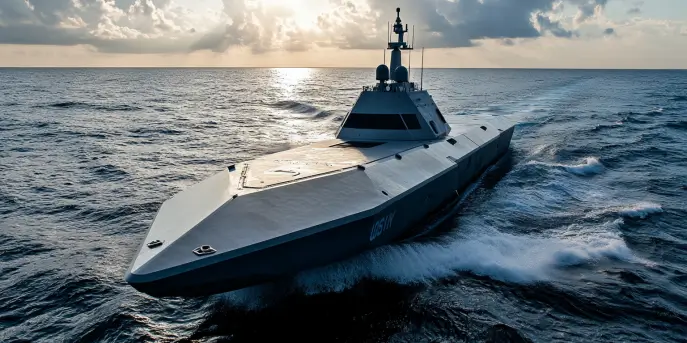


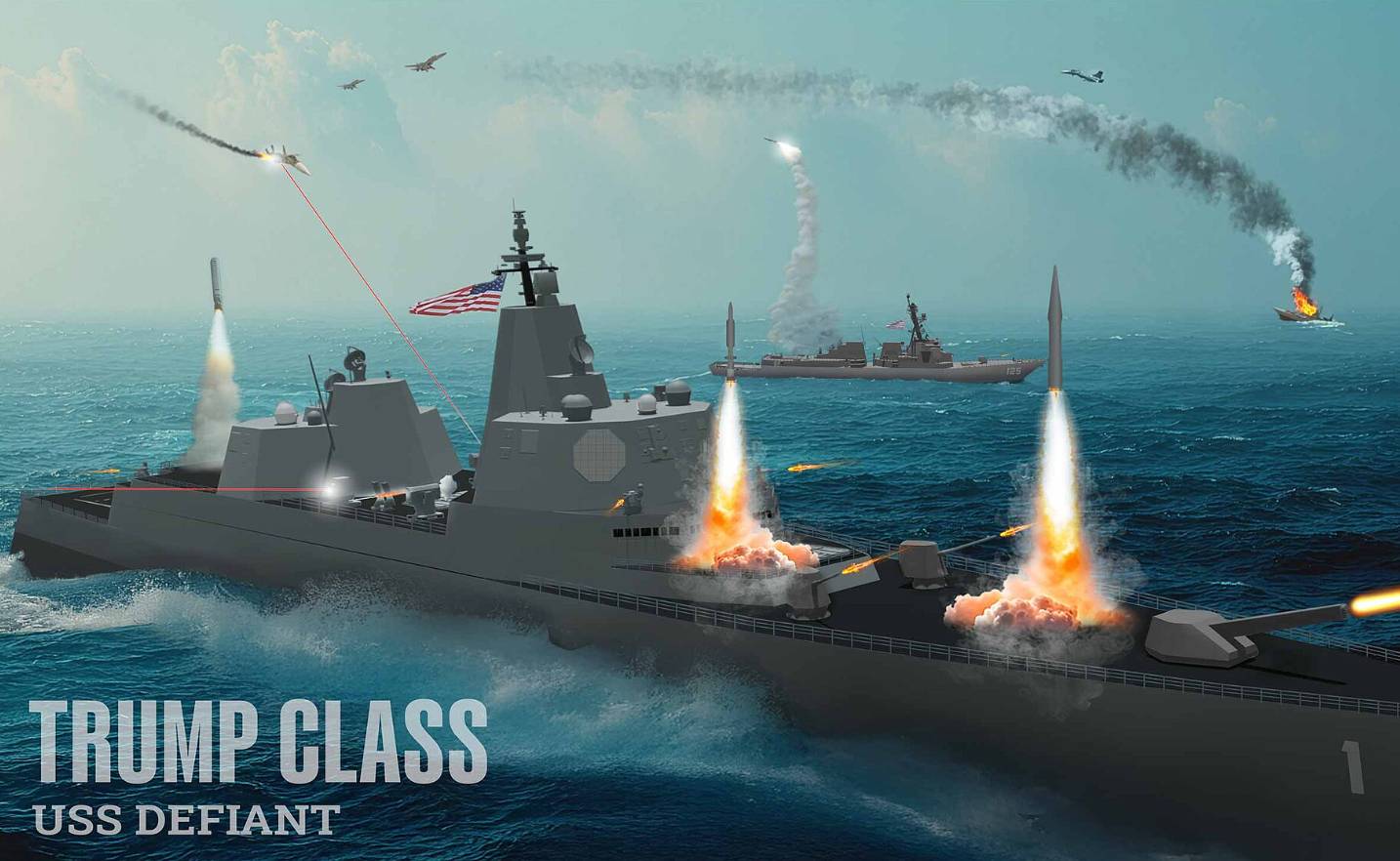
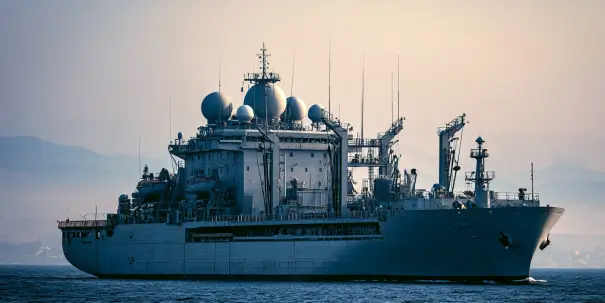
The idea of a Trump-class battleship fundamentally altering the U.S. Navy’s fleet structure is best understood as a thought experiment in naval power projection rather than as a confirmed shipbuilding program. Yet as a concept, it is strategically revealing. A return to battleship-scale surface combatants would represent more than a larger hull with heavier guns; it would signal a deliberate shift in how Washington imagines sea control, deterrence, and coercive presence in an era defined by long-range precision strike, integrated air and missile defense, and distributed maritime operations.
You Might Also Like
Strategic meaning of a battleship revival
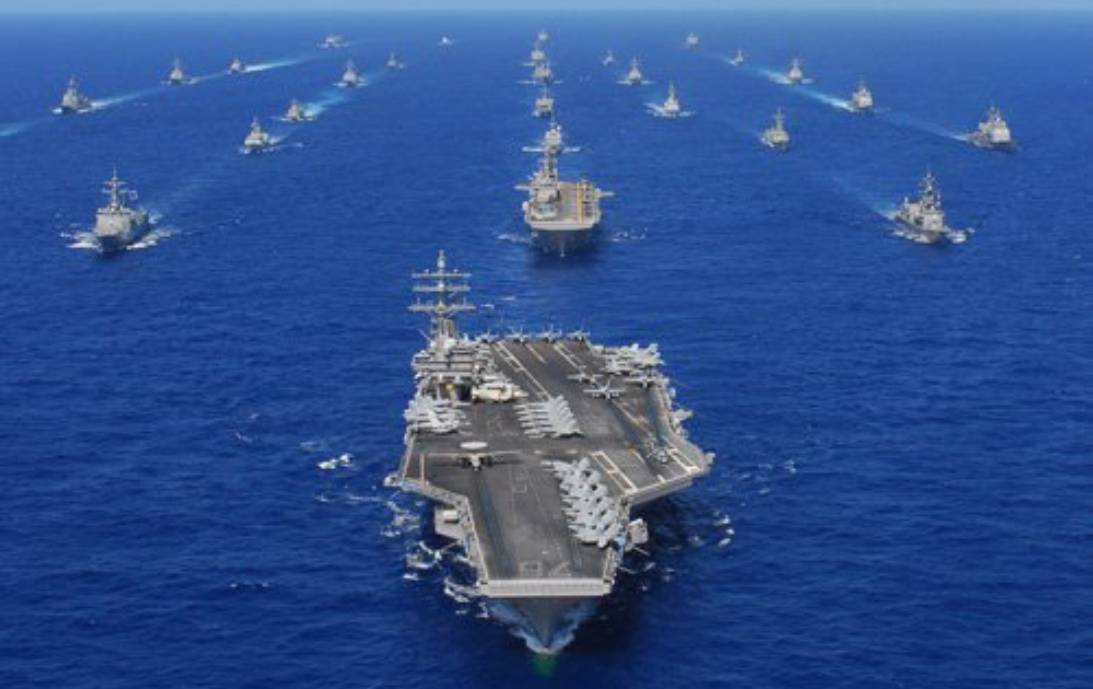
For much of the post-Cold War period, U.S. naval force design has centered on carrier strike groups, Aegis destroyers, attack submarines, and increasingly, unmanned systems. A battleship-class platform would challenge that pattern. It would likely absorb budget, personnel, and industrial capacity that would otherwise go toward more numerous, more survivable, and more networked ships. In strategic terms, the question is not whether a battleship can be made formidable. The question is whether a single extremely capable surface combatant can justify the opportunity cost in a maritime environment that increasingly punishes concentration.
That issue matters because the modern U.S. Navy must prepare for competition against peer adversaries with layered anti-access and area-denial networks. China and, to a different extent, Russia have invested in coastal missile batteries, submarines, maritime patrol aviation, space-enabled targeting, and electronic warfare. A battleship designed for high endurance and heavy firepower would need to operate inside that threat envelope. The result would be a platform that is politically symbolic but operationally dependent on escort, deception, air cover, and robust offboard targeting support.
What a battleship would be expected to do
A modern battleship would not be a museum piece with steel armor and visible turrets simply scaled up for nostalgia. If such a ship were to make sense in contemporary doctrine, it would likely be a multi-mission surface strike node built around a large combat system, extensive vertical launch capacity, layered sensors, and long-range precision fires. The label “battleship” would imply displacement, survivability, and magazine depth rather than a literal return to 20th-century gunnery duels.
Its likely mission set would include:
- Naval surface fires support for amphibious and littoral operations
- Land-attack strike using cruise missiles and potentially hypersonic weapons
- Area air defense for task groups and expeditionary forces
- Command-and-control as a flagship for distributed maritime formations
- Sea denial through large-volume missile salvos
- Deterrent presence in contested regions through sheer survivability and magazine capacity
That list reveals the core doctrinal tension. The more the ship is optimized for firepower and endurance, the more it becomes a high-value unit that adversaries will prioritize for kill-chain development. The more it is optimized for survivability, the more expensive and complex it becomes, potentially crowding out fleet numbers and operational flexibility.
Fleet structure implications
If the U.S. Navy were to field a battleship-class combatant, the ripple effects would be substantial. Fleet structure would likely shift in at least four ways. First, the Navy would face pressure to reorganize around fewer but more heavily armed surface combatants. Second, escort doctrine would intensify, because a ship with such value would require dedicated anti-submarine warfare, electronic warfare, and missile defense coverage. Third, logistics would become more centralized, with the battleship acting as a magazine ship and command node. Fourth, the force would likely demand more unmanned adjuncts, including airborne, surface, and subsurface drones to extend sensing and targeting.
In practical terms, that means a battleship would not replace the carrier. Instead, it would likely sit alongside the carrier as a complementary high-end asset. But unlike the carrier, whose air wing provides operational flexibility, a battleship’s value would depend on its embeddedness in a sensor-shooter network. It would be less an independent instrument and more a heavily armed node in a distributed maritime kill web.
This changes fleet structure because the Navy would need to decide whether to build around a few prestige capital ships or around a larger number of lower-cost platforms that complicate enemy targeting. In an age of saturation attacks, the latter approach has strong logic. A battleship may be powerful, but the fleet as a whole may become less resilient if too much capability is concentrated in a few hulls.
How adversaries would respond
Adversaries would almost certainly interpret a new battleship as evidence of a U.S. intent to restore overt maritime dominance. That would trigger countermeasures across multiple domains. China would likely expand surveillance, targeting, and anti-ship missile salvos designed to overwhelm escorts and force the battleship to maneuver defensively. Russia would emphasize long-range strike, submarines, and electronic warfare. Regional powers could view the platform as a coercive symbol, increasing the political salience of U.S. naval deployments near contested waters.
From a deterrence perspective, a battleship-class vessel can be both stabilizing and destabilizing. It stabilizes by signaling resolve and by providing visible, persistent combat power. It destabilizes if it lowers the threshold for crisis escalation, since an adversary may perceive its presence as preparation for rapid strike operations. In that sense, the ship is not merely a weapon system; it is a political message with hull form.
Industrial and budgetary realities
No serious assessment can ignore the industrial base. Building a battleship-class ship would require a shipyard ecosystem capable of managing very large hull fabrication, advanced propulsion, integrated combat systems, and high-density weapons storage. The U.S. shipbuilding base is already strained by submarine demand, destroyer recapitalization, and maintenance backlogs. Introducing a new capital ship class would likely create schedule pressure and cost growth unless offset by a major industrial expansion.
Budgetarily, a battleship could become a classic example of platform-centric thinking in a network-centric era. If the ship costs as much as several destroyers, the Navy must ask whether the marginal combat power of one giant hull exceeds the aggregate effect of multiple distributed ships, submarines, and unmanned systems. The answer depends on operational context. In a high-end conflict where command nodes, missile defense, and deep magazine capacity are at a premium, the battleship may appear attractive. In persistent competition, presence operations, and convoy protection, a more numerous fleet may be superior.
Notional specifications
If one were to imagine a plausible modern battleship concept, it would likely emphasize electronics, missile capacity, and endurance over armor alone. A notional profile might look like this:
| Specification | Notional Value |
|---|---|
| Displacement | 30,000-60,000 tons |
| Length | 250-300 meters |
| Propulsion | Integrated electric or hybrid nuclear propulsion |
| Speed | 28-32 knots |
| Range | Very long endurance; limited mainly by stores and maintenance |
| Primary armament | Large vertical launch battery, advanced guns, hypersonic strike capability |
| Air defense | Layered missile defense, directed-energy adjuncts, decoys |
| Crew | Reduced manning through automation; likely 400-900 personnel |
Even this notional specification underscores a key point: the ship would be defined less by cannon fire than by magazine depth and network integration. The battleship label would therefore be as much about strategic signaling as about naval architecture.
Doctrine, survivability, and the future fight
The main doctrinal challenge is survivability under modern reconnaissance-strike conditions. A large ship cannot hide easily. It emits heat, radar signatures, communications traffic, and wake patterns that modern sensors can detect. If the enemy can maintain targeting quality, no surface combatant is invulnerable. This is why survivability in the future fight depends on layers: active defense, electronic attack, maneuver, decoys, deception, offboard sensing, and the ability to shoot first at long range.
A battleship would therefore need to be embedded in a doctrine of distributed lethality rather than operating as a lone symbol of sea power. Its offensive punch might be impressive, but it would still depend on a wider force architecture that includes submarines, bombers, carrier air, space-based ISR, and unmanned scouts. The ship would not restore the age when a single hull could dominate a theater through gunfire alone. It would instead function as a heavily armed participant in a much more complex contest of detection and denial.
That doctrinal reality may be the most important reason a battleship could alter fleet structure. If the Navy adopts one, it would likely have to redesign its surface warfare concepts, logistics planning, and task force composition around the protection and employment of a high-end capital ship. The ripple effect would extend from training pipelines to maintenance priorities to munitions procurement.
Political symbolism and maritime messaging
Beyond combat utility, a battleship would carry immense symbolic weight. It would evoke industrial strength, national confidence, and a visible willingness to contest the world’s most dangerous maritime spaces. For allies, that could reinforce extended deterrence. For adversaries, it could signal that the United States intends to remain a decisive sea power rather than a merely regional balancer.
Yet symbolism cuts both ways. A giant warship can also become a target of propaganda, especially if portrayed as an expensive relic of past imperial thinking. The political narrative surrounding such a ship would therefore matter almost as much as its actual combat performance. If the platform is perceived as a vanity project, it will face skepticism. If it is framed as a node in a broader deterrence architecture, it will seem more credible.
What this means for naval planning
The notion of a Trump-class battleship fundamentally altering fleet structure forces a useful strategic question: what kind of navy does the United States need for the next 30 years? If the answer is a navy optimized for presence, crisis response, and distributed maritime combat, then a battleship is a difficult fit. If the answer is a navy that seeks to overmatch adversary missile salvos, provide deep strike, and command the sea through high-end capital ships, then the concept becomes more legible.
In the end, the most important effect of a battleship-class revival would be conceptual. It would challenge the assumption that the future fleet must be made up only of smaller, networked, relatively expendable ships. It would re-open the debate over concentration versus distribution, shock action versus persistence, and prestige platforms versus mass. Whether that debate leads to a real ship or remains a thought experiment, it exposes the strategic fault line at the heart of modern naval design.
In that sense, the Trump-class battleship is less a ship than a question: should the U.S. Navy invest in a new capital ship built to dominate the high end of maritime conflict, or continue refining a more dispersed fleet designed to survive the age of precision kill chains?