

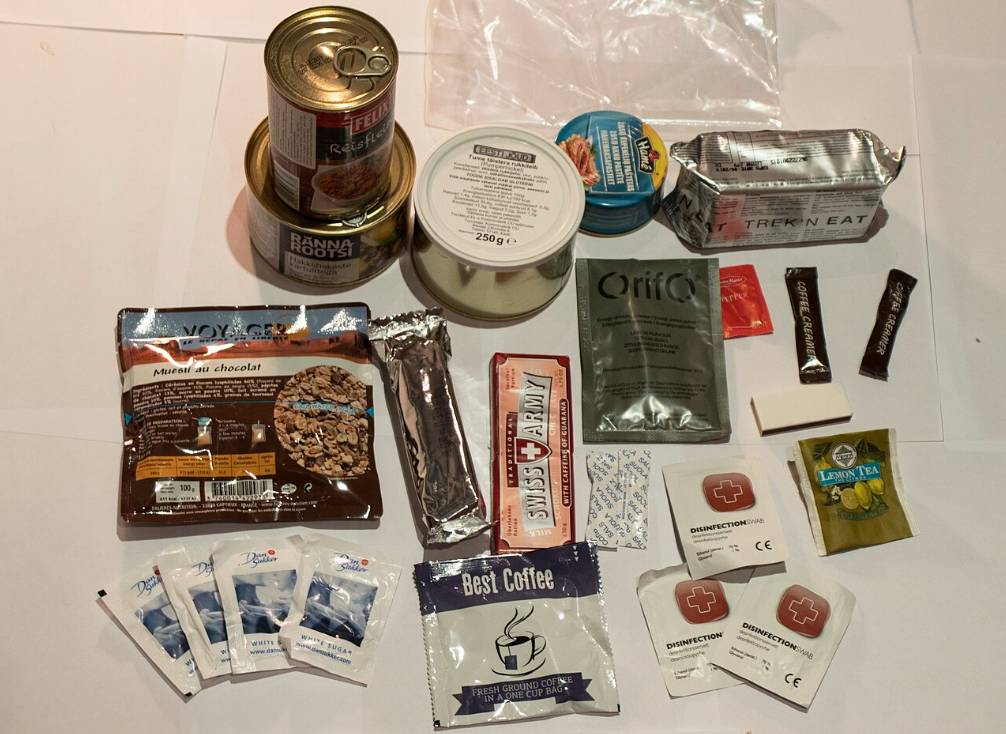
From the iron rations of the First World War to the vacuum-packed Meals, Ready-to-Eat carried into Iraq and Afghanistan, the soldier’s food has always been more than calories. It is morale, endurance, logistics, and sometimes survival in the field. As armies adapt to dispersed operations, longer autonomous patrols, and contested supply lines, the humble combat ration is being reimagined with the same seriousness once reserved for rifles, radios, and body armor. The future battlefield menu is likely to blend advanced nutrition science, shelf-stable engineering, smart packaging, and even biotechnological production methods that would have seemed fanciful to the quartermasters of Normandy or Korea.
From hardtack to heat-and-eat
Military food has evolved in lockstep with the character of war. In the Napoleonic era, biscuit, salt beef, and dried peas dominated because armies marched on roads and depended on magazines. In the trench warfare of 1914 to 1918, the problem was not only supply but mud, artillery fire, and broken transport routes, which drove the need for compact, durable sustenance. The Second World War accelerated the development of canned and packaged rations, while later Cold War forces demanded lighter, more varied meals for mechanized and airborne units. By the time of the MRE, the emphasis had shifted from mere survival to acceptable taste, convenience, and a heating method that worked under nearly any conditions.
What is changing now is the operational assumption. Future formations may fight in small units, over dispersed terrain, with limited access to secure rear areas. A resupply convoy may be delayed by drones, mines, electronic attack, or long-range fires. In that environment, the ration becomes a tactical system rather than a box of food. It must be lighter, longer-lasting, nutritionally smarter, and easier to adapt to individual needs and mission profiles.
What the next ration must do
The next generation of combat food is being shaped by several overlapping demands. First, it must reduce carried weight without reducing useful energy. A soldier’s pack already competes with ammunition, water, batteries, sensors, and cold-weather gear. Second, it must preserve muscle mass, cognitive performance, and hydration under stress. Third, it must be easy to prepare with minimal water, minimal waste, and little or no flame signature. Finally, it must endure extended storage in hot, humid, and variable climates without losing texture or nutritional value.
These pressures are pushing research in several directions:
- Higher-density nutrition to deliver more usable calories per gram.
- Personalized macro profiles for different roles, climates, and activity levels.
- Improved packaging that is lighter, quieter, and more environmentally responsible.
- Instant or low-signature heating methods that avoid open flame or large thermal signatures.
- Fresh-like texture and taste to support morale over extended deployments.
Smart nutrition for the individual fighter
One of the most important changes is the move away from the one-size-fits-all ration. Historically, armies issued standardized meals because standardization simplified procurement and logistics. That logic still matters, but modern data systems make it possible to tailor ration sets more precisely. A reconnaissance team in cold weather, a drone operator on a remote outpost, and a mechanized infantry crew may all need different calorie loads, sodium levels, and caffeine profiles.
Emerging ration concepts incorporate adaptive nutrition: higher fat for endurance, more rapidly available carbohydrates for intense activity, and protein blends that help preserve lean mass during prolonged field operations. Some concepts also account for circadian rhythm, gut tolerance, and hydration. In the future, a soldier’s biometric data from wearable sensors may help determine which ration package is loaded onto a vehicle or drone resupply pallet. In effect, the ration could become a programmable support item rather than a fixed box.
Caffeine is likely to remain a staple, but future formulations may use more precise timing and release mechanisms. Electrolytes, amino acids, and micronutrients such as iron and vitamin D may be tuned to mitigate the fatigue and nutritional deficits that have historically undermined performance in long campaigns. The lesson is ancient: when armies march, they do not merely consume food; they consume endurance.
3D printing and modular meals
Among the most discussed technologies is food 3D printing, though the phrase can be misleading. In military use, it is less about novelty and more about modular assembly. A forward base or ship could stock stable ingredients in concentrated form—protein pastes, carbohydrate gels, seasoning blends, dehydrated vegetables—then print or extrude them into customized meal shapes and textures. This could improve variety without multiplying the number of separate supply items.
The military value lies in flexibility. A modular ration architecture could allow commanders to stock common base components and then configure meals by mission, climate, or dietary requirement. Vegetarian, halal, kosher, allergen-aware, and medical diets could be generated from the same inventory pool. That may sound like a comfort issue, but in practice it can reduce waste, improve compliance, and strengthen unit cohesion. Armies have long discovered that food policy affects morale almost as much as pay.
There is also a practical advantage in distribution. Instead of shipping a large volume of finished meals, forces could ship compact ingredient cartridges. This reduces transport mass and makes it easier to replenish stocks after a disrupted resupply cycle. The limitation, as always, is heat and water. Any technology that promises fresh food at the front must still survive dust, shock, cold, and the brutal arithmetic of combat logistics.
Biotechnology and cultivated ingredients
Another frontier is the use of cultivated or precision-fermented ingredients. Civilian food technology is already producing proteins, fats, and flavor compounds through fermentation and cell culture rather than conventional agriculture. For militaries, the attraction is clear: stable supply chains, reduced dependence on vulnerable imports, and the possibility of manufacturing nutrient components closer to the point of need.
In a prolonged conflict, food security can become as strategically important as fuel. A future expeditionary force might carry compact bioreactors or fermentation units to produce specific ingredients from stored feedstock. This would not replace the ration box overnight, but it could supplement it. Historically, armies have always sought ways to reduce dependence on long supply lines—from foraging and field mills to canned goods and air-dropped pallets. Biotech may be the next step in that long effort to bend logistics in the soldier’s favor.
There is, however, a gulf between laboratory promise and combat readiness. Cultivated or fermented ingredients must pass stringent tests for safety, shelf life, taste, and manufacturability in austere conditions. Still, the direction is unmistakable: future military food may be less tied to farms and more tied to factories, reactors, and on-demand production.
Packaging as a combat system
Packaging is often overlooked, yet it may be the most consequential part of the ration. The history of military food packaging is a history of improving durability while reducing burden. Cans, retort pouches, and laminated films all solved one problem while creating another. Can openers got smaller, then disappeared. Waste got lighter, then more persistent. Heat got easier, then more concealed.
Future packaging will likely focus on several goals at once. It must be lighter and quieter to carry. It should create less trash and ideally be recyclable or biodegradable under field conditions. It may incorporate temperature indicators, integrity seals, and even RFID tags for inventory tracking. Smart packaging could alert logisticians to spoilage, contamination, or temperature excursions before the ration is issued.
There is also growing interest in packaging that can double as a cooking vessel, water purification aid, or waste reducer. In the same way that the best field gear often performs multiple functions, future ration packaging may be designed as part of the soldier’s support kit rather than disposable clutter.
Heating without giving away your position
Any soldier who has ever relied on a meal heater in cold weather knows that the ability to warm food is not a luxury. It is a morale multiplier. Yet heat in combat can be a liability. Flames, smell, steam, and thermal signature can all reveal a position. That makes low-signature heating one of the most active areas of ration research.
Developers are exploring improved flameless heaters, self-heating packaging, chemical reaction systems with more controlled thermal output, and even battery-assisted heating elements. The ideal system would be compact, fast, safe, and nearly invisible to sensors. In a future drone-saturated battlefield, a hot meal that does not broadcast a thermal plume could be as valuable as a silent rifle.
Cold regions present a different challenge. Food that is technically edible may be unpalatable or nearly frozen. Future rations may therefore include phase-change materials, insulated pouches, or heating sleeves integrated into outer packaging. The goal is not simply warmth, but readiness. A ration that can be eaten quickly during a short pause in combat has real tactical value.
Microbiome, recovery, and cognitive performance
As military medicine has learned more about physiology, the ration is being asked to do more than sustain body weight. It must support the gut, immune system, cognition, and recovery after sleep deprivation and physical strain. This is where the language of sports science increasingly enters military procurement.
Future rations may include prebiotics and probiotics to maintain digestive health during stress and environmental change. They may be formulated to reduce gastrointestinal distress, which has historically been a major but under-discussed cause of reduced combat effectiveness. Nutrients that support alertness, memory, and reaction time may become part of the standard ration architecture. The battlefield of the future will still reward endurance, but it will also punish slow thinking.
There is a historical continuity here. Armies have always learned, often painfully, that malnutrition degrades fighting power. The difference now is that science can target specific deficits rather than merely stuffing more calories into the pack. The ration is becoming a tool for resilience, not just sustenance.
Representative future ration features
| Feature | Likely direction | Military value |
|---|---|---|
| Calorie density | Higher per gram through fat and concentrated carbohydrates | Reduces pack weight and resupply volume |
| Customization | Mission- and role-based meal profiles | Better performance and lower waste |
| Packaging | Smart, lighter, quieter, and lower-waste materials | Improved logistics and field handling |
| Heating | Low-signature self-heating or flameless systems | Reduces detection risk |
| Production | Modular ingredients, fermentation, or on-demand assembly | Increases supply resilience |
| Health support | Electrolytes, probiotics, micronutrient tuning | Supports endurance and recovery |
Limits that will not disappear
Even the most advanced ration will still face the oldest constraints in military history: weight, cost, shelf life, and taste. Soldiers reject food that is nutritionally ideal but psychologically awful. Quartermasters reject systems that are too expensive or too complex to scale. Commanders reject anything that slows distribution or adds fragile dependencies. And in war, every supply system must survive the worst day, not the average one.
There is also the matter of trust. Troops will not rely on a new ration until it has proven itself in field trials, extreme climates, and the most unforgiving test of all: repeated consumption over weeks and months. The best ration is not the one that looks futuristic on a brochure, but the one that disappears from the logistics problem set without becoming a burden elsewhere.
That is why the future of frontline food will probably be evolutionary rather than revolutionary. The changes will arrive in layers: better packaging, more flexible meal sets, smarter nutrition, and selective use of advanced production methods. The classic ration box may remain recognizable, but inside it the contents will be more sophisticated than anything a Vietnam-era infantryman or a Desert Storm tanker would have known.
In the end, military food technology follows the same logic as military technology generally: it advances when the battlefield punishes old assumptions. As combat becomes more dispersed, more sensors-driven, and more dependent on endurance, the ration will no longer be a side issue. It will be part of the combat system. The next frontline meal may still be opened by hand in the dark, under fire, beside a vehicle or in a foxhole. But what is inside that package will reflect a century of lessons about war, logistics, physiology, and the enduring truth that an army marches not only on its stomach, but on the science that keeps that stomach in the fight.