

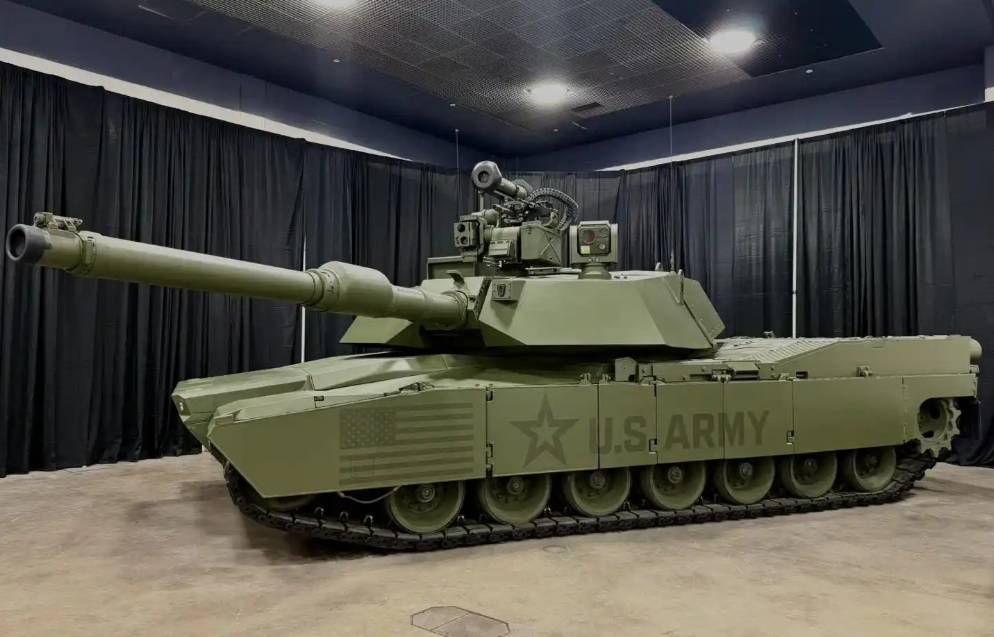
The M1 Abrams is one of the most famous tanks ever built, but the battlefield keeps changing, and the Army is now pushing the platform into a new era. The upcoming M1E3 Abrams is intended to do something deceptively difficult: preserve the brutal combat credibility of the Abrams while shedding the weight, complexity, and logistical burden that have grown around the current M1A2 series. In other words, this is not just an upgrade package. It is a deliberate attempt to redesign the Abrams for a future fight shaped by drones, top-attack threats, electronic warfare, and the hard reality that a tank cannot be effective if it is too heavy to move, support, or sustain.
You Might Also Like

The headline shift is simple and dramatic: the M1E3 is meant to replace the heavier M1A2 family with a more balanced, more mobile, and more maintainable Abrams variant. That matters because modern armored warfare is no longer just about frontal armor and gun power. It is about signature management, energy availability, software growth, sensor fusion, and keeping a 70-ton monster alive in a battlespace saturated with precision weapons. The M1E3 is being shaped with that reality in mind.
Why the Army Wants a New Abrams
The current M1A2 Abrams variants are extraordinarily capable, but they have grown heavier over decades of armor additions, survivability upgrades, electronics, and mission-specific modifications. That weight brings protection, yes, but it also creates a chain reaction of compromises. Bridges, transporters, recovery vehicles, fuel consumption, and tactical mobility all take a hit. In expeditionary or dispersed operations, every extra ton matters.
The Army’s logic with the M1E3 is refreshingly pragmatic: if the tank is too heavy to deploy rapidly, maneuver across more terrain, or be maintained efficiently, then some of its combat power is being wasted before the first shot is fired. The M1E3 is expected to use a more holistic design philosophy, balancing armor, active protection, power generation, and networked systems instead of simply stacking more steel on top of an already massive vehicle.
This is also a response to the changing threat environment. Top-attack munitions, loitering munitions, anti-tank guided missiles, and enemy drones can reach tanks in ways that traditional passive armor alone cannot fully solve. The future Abrams has to be able to see threats sooner, react faster, and defeat them with a mix of kinetic and non-kinetic systems.
What the M1E3 Is Trying to Fix
At a high level, the Army wants the new Abrams to improve five major areas:
- Weight reduction without sacrificing core survivability.
- Better mobility for tactical maneuver and strategic transport.
- Lower sustainment burden so the tank is easier to support in the field.
- Improved power management for sensors, electronics, and future upgrades.
- Integrated protection against drones, missiles, and top-attack threats.
That combination is critical. A tank that can survive but cannot move is a bunker. A tank that can move but cannot detect or defeat modern threats is a target. The M1E3 is being designed to stay deadly while becoming more agile and more adaptable.
Likely Design Philosophy: Less Bulk, More Smart Survivability
One of the most interesting aspects of the M1E3 effort is the emphasis on smart survivability. The old model of simply adding more armor is not enough when threats are arriving from multiple angles and at high speed. That means the Army is expected to lean harder on active protection systems, improved sensors, and software-driven threat response.
Instead of relying only on passive armor to absorb damage, the M1E3 is likely to incorporate a layered defensive approach. That may include:
- Active protection systems to intercept incoming missiles and rockets.
- Advanced sensors for faster threat detection and tracking.
- Reduced signature features to make the tank harder to spot and target.
- Improved cooling and power architecture for future electronics growth.
This is the exciting part of the Abrams evolution. The tank is becoming less like a brute-force steel fortress and more like a connected, survivable combat system. That does not mean the Abrams is losing its punch. Far from it. It means the Army is trying to make every pound of the vehicle work harder.
Expected Specs and Capability Themes
Much of the detailed specification work for the M1E3 is still emerging, so it is best to treat the following as expected capability themes rather than locked-in final numbers. Still, the direction is becoming clear.
| Category | M1A2 Abrams Series | M1E3 Abrams Goal |
|---|---|---|
| Role | Main battle tank | Main battle tank with reduced weight and improved survivability |
| Weight | Heavier, depending on variant and armor package | Lower than the latest M1A2 configurations |
| Main gun | 120mm smoothbore | Likely 120mm smoothbore, with growth potential |
| Protection | Passive armor plus upgrades | Layered protection with active defense emphasis |
| Electronics | Advanced, but increasingly burdened by growth | Modernized digital architecture for easier upgrades |
| Mobility | Excellent, but weight-limited | Improved mobility and deployability |
| Sustainment | Logistically demanding | Reduced maintenance and support burden |
If the Army gets the balance right, the M1E3 could deliver the most important upgrade of all: a tank that is easier to use at scale. That is a very different kind of combat advantage, but in a real war it may be just as decisive as thicker armor or a bigger cannon.
The Power Problem Is a Big Deal
Modern tanks are hungry machines, and the Abrams has long been one of the most power-demanding armored vehicles in service. As sensors, computing, jamming resistance, active protection, and networking grow more complex, the electrical load rises. A future tank cannot be treated like a 1980s armored wedge with a gun on it. It needs robust onboard power to feed its brains and defenses.
The M1E3 is likely to prioritize a more efficient powertrain and smarter energy management. That matters because power is the hidden currency of 21st-century armor. Without enough power, you cannot run advanced optics, high-performance computing, counter-drone systems, or next-generation defensive suites without making painful tradeoffs. Better power architecture means the tank can absorb future upgrades without becoming an electrical and mechanical nightmare.
Mobility: Not Just Faster, But More Useful
There is a subtle but important difference between being fast and being mobile. Tanks need more than top speed; they need cross-country agility, bridge compatibility, transportability, and fuel efficiency. Heavier Abrams variants have sometimes had to pay a mobility tax for their protection and electronics. The M1E3 is meant to claw that back.
That could mean a vehicle that is better suited for rapid reinforcement, contested logistics, and dispersed operations. In practical terms, a lighter and smarter Abrams can be moved more easily by air, rail, and heavy transport, and it can operate on more terrain with fewer route restrictions. That gives commanders more options, and in war, options are gold.
How It Compares to the M1A2
The M1A2 family is a mature, combat-proven system with an enormous reputation. Its armor, firepower, and battlefield durability are legendary. But maturity has a cost. Each upgrade adds capability, yet also complexity and weight. The M1E3 represents a philosophical reset. Instead of just bolting on the next improvement, the Army is trying to re-architect the tank around what modern warfare actually demands.
That means the M1E3 may not look radically different at first glance. It will still be unmistakably an Abrams. But underneath the familiar silhouette, the changes could be profound: cleaner digital integration, better counter-drone defense, lower weight, and a more survivable layout optimized for future upgrades. The goal is not to abandon the Abrams identity. It is to preserve it by making it viable for the next several decades.
Why This Matters Beyond the Tank Community
The M1E3 is a signal that heavy armor is not going away, but it is being forced to evolve. Some observers like to declare that drones have made tanks obsolete. That is far too simplistic. Tanks remain uniquely valuable because they combine direct-fire shock effect, protected mobility, and psychological impact in a way no other land system quite matches. What is changing is the environment around them.
The M1E3 reflects the Army’s recognition that the future tank must be part of a larger kill web, not a standalone armored hammer. It has to communicate, adapt, and survive in a battlespace where enemy sensors and shooters are far more distributed than in previous decades. That is why this program is so interesting: it is not just about the next Abrams, but about the next concept of armored warfare.
What to Watch Next
The most important questions now are the ones that will define whether the M1E3 becomes a true leap forward or just another incremental upgrade:
- How much weight will the Army actually remove?
- Will the tank field a fully integrated active protection system?
- How much margin will the new power architecture provide for future upgrades?
- Will the M1E3 improve strategic deployability enough to change force planning?
- Can the new design deliver survivability without turning into a maintenance headache?
If the answers trend the right way, the M1E3 could become the Abrams that finally reconciles raw armored power with modern battlefield realities. That is a genuinely exciting prospect. The Abrams has always been a tank built for hard fights, and the M1E3 suggests the Army is determined to keep it relevant in the hardest fight of all: staying ahead of technology and threat evolution.
The bottom line? The M1E3 is not simply the next Abrams. It is the Army’s attempt to make the Abrams smarter, lighter, and harder to kill while preserving the firepower and confidence that made the platform famous in the first place. For armor fans, that is a very big deal indeed.