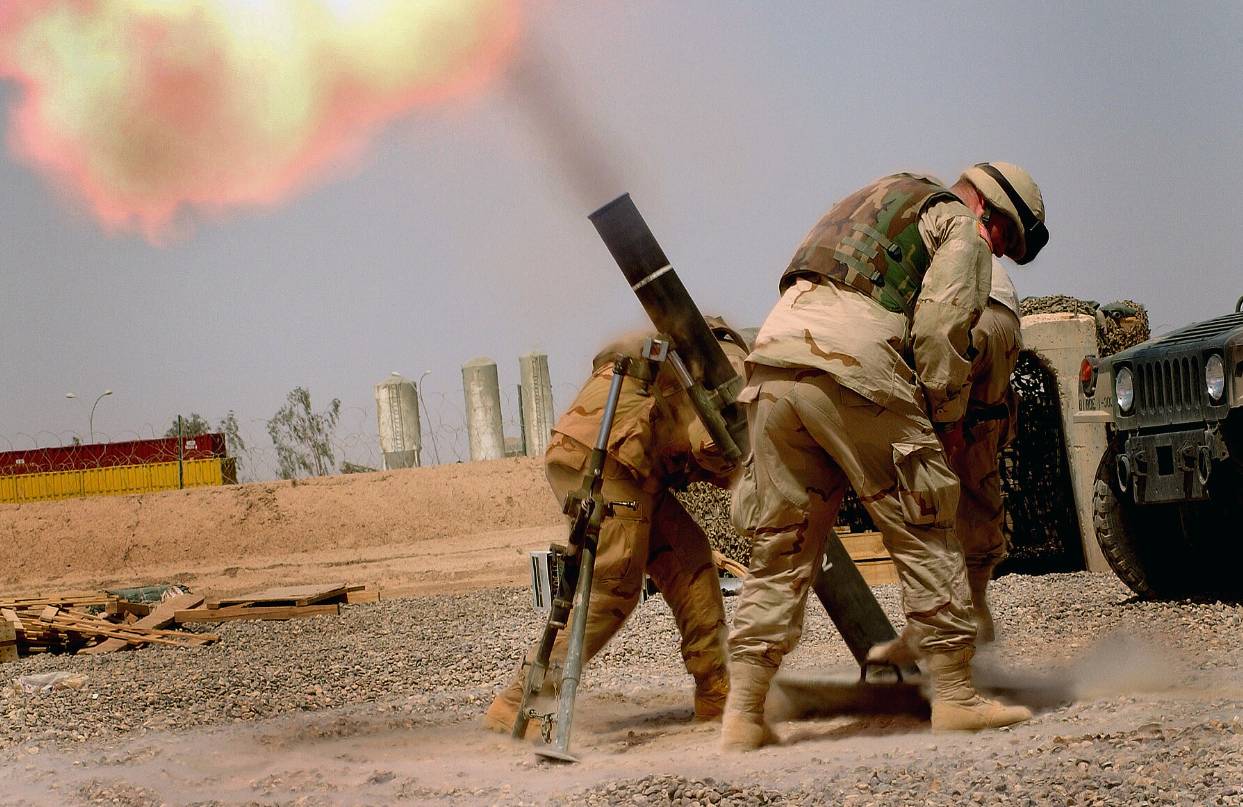
The mortar just got a serious upgrade, and it’s exactly the kind of clever, compact battlefield engineering that makes defense nerds sit up and grin. The new MALET kit — short for Mortar Air-Launched Explosive Tactical — takes the classic idea of a mortar round and gives it a fresh, air-launched twist. In a world where speed, portability, and precision matter more than ever, MALET aims to bring responsive firepower into the hands of operators who need an adaptable strike option without dragging around a full-size artillery system.
You Might Also Like
At a glance, this is the sort of munition concept that makes perfect sense once you hear it. Mortars have always been valued for their simplicity, steep-angle delivery, and ability to land explosive effects behind cover. By adapting that logic for air launch, MALET opens the door to new tactical uses for rotary-wing aircraft, fixed-wing platforms, unmanned systems, and other launch methods where space, weight, and rapid employment are at a premium. The result is a compact weapon with the pedigree of a mortar and the flexibility of modern airborne delivery.
What MALET is trying to do
MALET is built around a straightforward but powerful idea: turn a mortar-style explosive effect into a weapon that can be launched from the air and delivered quickly onto a target. That matters because aerial platforms often need small, efficient munitions that can be released in large numbers or used precisely in confined environments. Instead of relying on a larger bomb or a more expensive guided missile, MALET sits in that sweet spot where economy, responsiveness, and tactical usefulness meet.
This kind of weapon is especially attractive for missions where operators need:
- Rapid response against time-sensitive targets
- Compact stowage for aircraft or unmanned systems
- Steep-angle effects to reach enemies behind walls, terrain, or cover
- Lower cost per shot compared with larger precision munitions
- Flexible integration across multiple launch platforms
That’s the magic here. MALET isn’t trying to replace a missile or a bomb. It’s trying to occupy the useful middle ground where a small, smart, air-delivered explosive can solve a tactical problem without overkill.
Why the mortar form factor still matters
Mortars remain one of the most elegant weapons in the infantry toolkit because they are simple, effective, and highly adaptable. The high-angle trajectory lets them hit targets that would be awkward or impossible for flatter-flying direct-fire weapons. They can drop into trenches, reverse slopes, courtyards, rooftops, and other protected positions. That same appeal carries over into the air-launched world.
With MALET, the mortar concept benefits from airborne employment in a few important ways. First, launch from above can extend reach and reduce the time between detection and impact. Second, an airborne platform can position the munition for a better attack angle. Third, the system may be used in environments where traditional artillery support is unavailable or too slow to arrive. In short, MALET takes a classic battlefield effect and packages it for a modern, more mobile fight.
Likely use cases and tactical niche
The most interesting thing about MALET is not just what it is, but what role it might fill. Air-launched mortar-style munitions are a natural fit for urban combat, counter-insurgency, special operations, and distributed drone warfare. In those environments, a lightweight explosive that can be launched from a small aircraft or unmanned platform has real value.
Potential use cases include:
- Engaging enemy personnel in cover
- Neutralizing observation points or light fortifications
- Supporting troops with fast, low-collateral firepower
- Delivering suppressive effects from a safe standoff distance
- Equipping unmanned aircraft with a small but meaningful strike capability
That last point is especially important. The rise of tactical drones has created demand for munitions that are light enough to carry but effective enough to matter. A MALET-style weapon could fit neatly into that ecosystem, giving small aerial platforms a punch that used to belong only to larger aircraft or ground-based fire support.
Engineering appeal: small weapon, big thinking
From an engineering standpoint, the appeal of a system like MALET lies in how much capability can be packed into a relatively simple package. A mortar-type munition is inherently efficient because it doesn’t need the mass or complexity of a large guided missile to be useful. If the launcher and munition are designed well, the system can be light, easy to integrate, and affordable to produce in meaningful numbers.
That makes for a fascinating design challenge. The weapon has to survive launch, remain stable in flight, and deliver its payload accurately enough to be militarily useful. Depending on the final configuration, the kit could include aerodynamic stabilization, fuzing options, safety interlocks, and perhaps guidance or course-correction features. Each of those additions improves capability, but they also add cost and complexity — the eternal balancing act of military design.
In the defense world, the best systems often win not by being the flashiest, but by being the most adaptable. A successful MALET kit would likely be one that can be integrated into multiple platforms without requiring major redesigns. That kind of modularity is gold in today’s procurement environment.
How it compares to other airborne strike options
MALET enters a crowded but very interesting neighborhood. Air forces and drone operators already have access to bombs, rockets, loitering munitions, and guided missiles. So what makes a mortar-like air-launched kit compelling?
The answer is the blend of cost, size, and effect profile. A guided missile may offer exceptional precision, but it is often expensive and overpowered for the mission. A bomb can be devastating, but it may require a larger platform and more careful release parameters. A rocket can be fast and simple, but may not provide the same steep-angle utility. MALET, by contrast, appears aimed at a niche where a small explosive payload and indirect-fire style trajectory are exactly what the mission needs.
That makes it especially interesting for:
- Light aircraft that can’t carry heavier ordnance
- Small UAVs with limited payload capacity
- Special mission aircraft operating close to the edge of the battlefield
- Units seeking economical precision-like effects without full missile costs
If the system is mature enough to offer reliable delivery and safe handling, MALET could become a very attractive option for forces looking to broaden their airborne fire support toolkit.
Spec sheet snapshot
Publicly available technical details on the MALET kit are limited, so the table below focuses on the general characteristics implied by the concept rather than hard performance numbers. As more data becomes available, this picture will sharpen quickly.
| Specification | MALET kit |
|---|---|
| Full name | Mortar Air-Launched Explosive Tactical |
| Weapon type | Air-launched mortar-style explosive kit |
| Primary role | Light strike / indirect-fire effect from airborne platforms |
| Launch platforms | Likely aircraft, helicopters, and unmanned aerial systems |
| Delivery concept | Air release with mortar-like terminal effect |
| Payload | Explosive munition, exact warhead details not publicly confirmed |
| Guidance | Not publicly confirmed |
| Stabilization | Likely aerodynamic stabilization or similar flight control features |
| Intended niche | Compact, responsive, cost-conscious battlefield strike option |
| Status | Newly introduced concept / limited public detail |
Why militaries care about compact munitions right now
The broader trend behind MALET is bigger than any one product. Modern battlefields are increasingly shaped by dispersion, drone proliferation, urban terrain, and fast-moving target windows. That creates demand for weapons that can be carried in quantity, launched quickly, and used selectively. A compact air-launched mortar kit fits that environment beautifully.
There is also a growing appreciation for magazine depth. It’s not enough to have one exquisite weapon if you can only carry a handful of them. Forces want systems that scale. They want aircraft and drones that can stay on station longer and deliver more shots before returning to base. In that context, a small munition with a useful explosive effect can be more valuable than a larger round that is harder to carry, harder to integrate, and more expensive to fire.
MALET also reflects a very modern defense-industry idea: make existing effects more flexible. Mortars already work. Air launch already works. Combine them thoughtfully, and suddenly you have a new tool for commanders who need options.
The hard part: making it practical
For all the excitement, the real test for MALET will be practical integration. Any air-launched munition must answer a few questions very convincingly:
- Can it be safely handled and loaded?
- Does it remain stable after release?
- Can it be accurately delivered in real-world conditions?
- Is it affordable enough to buy in useful quantities?
- Can it be integrated without burdening the host platform?
Those are not trivial hurdles. The defense market is full of promising concepts that look brilliant on paper but struggle when faced with the brutality of field use, weather, vibration, and logistics. If MALET clears those hurdles, it could earn a strong place in the tactical toolkit. If not, it may remain an interesting idea that points the way toward future designs.
What makes this concept fun to watch
There’s a reason weapons enthusiasts get excited about systems like this: they represent smart evolution rather than brute-force escalation. MALET is not about making a bigger boom for the sake of a bigger boom. It’s about packaging a familiar battlefield effect in a new form that better matches today’s operational environment.
That is the sweet spot of military innovation. Not every breakthrough has to be a hypersonic missile or a next-generation fighter jet. Sometimes the most useful advance is a compact, clever munition that gives commanders another option between a rifle grenade and a precision strike. That’s exactly the kind of tool that can quietly reshape tactics.
MALET’s promise lies in its simplicity, portability, and tactical versatility. If it delivers on those qualities, it could become one of those understated but highly influential systems that soldiers, aircrews, and drone operators appreciate immediately because it just makes sense.
And that, honestly, is where a lot of the best military technology begins: not with spectacle, but with a very sharp answer to a very real battlefield problem.