

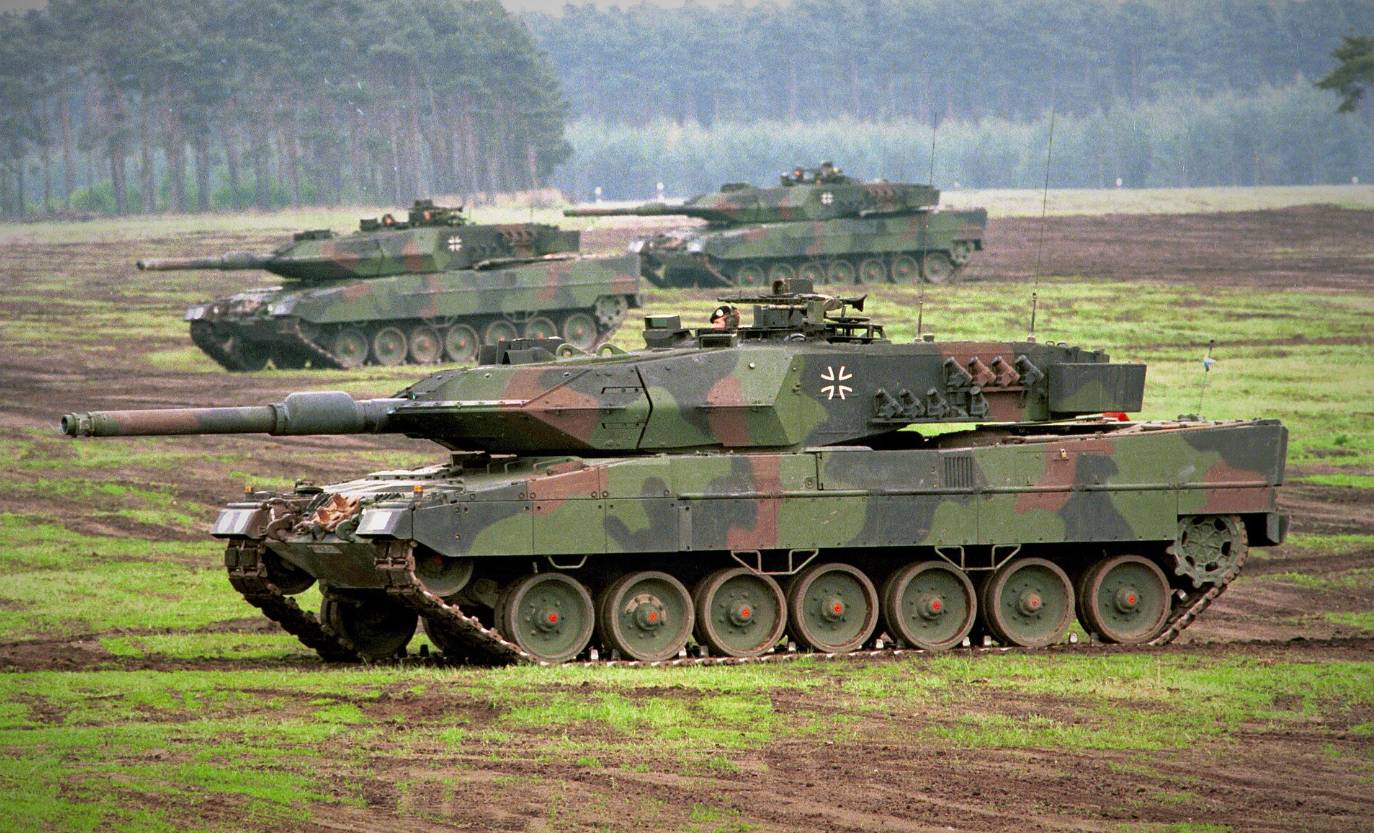
Every few decades, the battle tank is declared finished. After the anti-tank guided missile revolution of the 1960s, after the rise of precision airpower in the 1990s, and again amid the drone and loitering-munition battles of the 2020s, commentators have reached for the same obituary: the tank is obsolete. Yet history keeps complicating that verdict. The tank has survived not because it is invulnerable, but because it solves a battlefield problem that has never gone away: how to combine protection, firepower, and mobility in a single machine that can seize ground under fire.

The modern debate is not really about whether tanks can be destroyed. Of course they can. Tanks have been burning on battlefields since the first armored vehicles rolled through the mud of the First World War. The real question is whether any other system can replace them in the specific role of forcing a breach, suppressing defenders, and exploiting success in close, chaotic combat. A century of war suggests the answer is still no.
A Long Lineage of Adaptation
The tank was born from stalemate. In 1916, the British Mark I emerged from the trenches of the Western Front as a mechanical answer to barbed wire, machine guns, and shell-torn ground. It was slow, unreliable, and terrifyingly novel, but it pointed toward a new era. Interwar theorists from J.F.C. Fuller to Heinz Guderian understood that armor was not merely a shield; it was an instrument of maneuver. In the Second World War, the tank matured into the decisive weapon of combined arms warfare, from the German Panzer divisions in 1940 to the Soviet deep battle campaigns and the American armored thrusts across Europe.
The postwar Main Battle Tank, or MBT, was the logical evolution of earlier specialized classes. Heavy tanks faded, medium tanks absorbed their role, and the MBT became the standard because it could do what battlefield commanders wanted most: move with mechanized forces, survive enemy fire, and destroy fortified positions and enemy armor. The Cold War competition between the Soviet T-54/T-55 family, the American M60, the British Centurion, and later the Leopard 1 and Chieftain, established the basic formula that still defines the category today.
That formula has not stood still. The M1 Abrams, Leopard 2, Challenger 2, Leclerc, Merkava, T-72, T-80, T-90, and China’s Type 96 and Type 99 families all represent different answers to the same question: how do you keep a tank relevant when the battlefield keeps changing? The answer has been constant adaptation, not extinction.
Why the Tank Keeps Returning
The core advantages of the tank remain difficult to replicate. First, there is protected direct fire. A tank’s gun can destroy enemy positions that would otherwise require artillery, air support, or repeated infantry assaults. Second, there is mobility under armor. Tanks move where wheeled vehicles often cannot, especially in mud, rubble, snow, or under fire. Third, there is shock effect. Tanks create psychological and physical pressure that can collapse defensive positions, especially when paired with infantry, engineers, drones, and artillery.
This is why tanks still matter in high-intensity war. In Iraq in 2003, American Abrams tanks were instrumental in the advance toward Baghdad. In urban combat, they served as mobile strongpoints, survivable enough to close with enemy positions that would have shredded lighter vehicles. In other conflicts, including Nagorno-Karabakh and the war in Ukraine, tanks have faced devastating threats from top-attack missiles, mines, loitering munitions, and artillery. But the lesson is not that armor is useless. It is that armor without combined arms is vulnerable, just as infantry without armor was vulnerable in earlier eras.
The New Threat Environment
What has changed is the density and variety of anti-tank threats. During the Second World War, tank killers were mostly other tanks, anti-tank guns, mines, and close assault teams. In the late twentieth century, precision-guided missiles such as the TOW, Kornet, and Hellfire transformed the battlefield. Today, small first-person-view drones can strike hatches, engine decks, and optics with alarming accuracy. Loitering munitions, guided artillery, sensor networks, and battlefield drones have made concealment harder and survivability more dependent on signature management and active defense.
This environment has encouraged some observers to pronounce the tank obsolete. But the same logic was used against cavalry when rifled muskets spread, against battleships when aircraft carriers emerged, and against aircraft when surface-to-air missiles became effective. The platform survives if it continues to fulfill a military function better than available alternatives. For the tank, that function is still the armored assault.
How Modern Tanks Are Evolving
Modern tanks are not simply legacy platforms waiting for retirement. They are evolving in response to the threat landscape. The most important changes fall into several categories:
- Active Protection Systems (APS): Systems such as Trophy and Iron Fist are designed to intercept incoming missiles and projectiles before impact.
- Improved sensors: Thermal sights, panoramic commander’s devices, hunter-killer systems, and networked battlefield awareness allow crews to detect threats faster and engage more effectively.
- Better ammunition: Modern kinetic penetrators and programmable high-explosive rounds improve both anti-armor and anti-personnel performance.
- Composite and modular armor: Advanced armor packages, explosive reactive armor, and add-on protection increase survivability without permanently redesigning the hull.
- Digital networking: Tanks increasingly operate as nodes in a larger combat system, sharing data with drones, infantry, artillery, and command posts.
These upgrades reflect an important historical pattern. Armored vehicles have always been in a race between protection and penetration. The answer has never been to stop building armor; it has been to improve it. The tank’s shape has changed, its sensors have improved, its armament has become more precise, and its survivability has been layered with electronics and active defenses. That is not obsolescence. That is evolution.
What the Battlefield in Ukraine Revealed
The war in Ukraine has become the most important laboratory for armored warfare in a generation. Early footage of burning tanks, often shared widely online, fed the narrative that armor had become a liability. But the broader picture is more nuanced. Tanks operating without adequate reconnaissance, air defense, electronic warfare, infantry support, and engineering preparation suffered heavy losses. So did armored vehicles of every kind.
At the same time, tanks remained essential for breakthrough, fire support, and holding ground. The battlefield exposed the tank’s weaknesses in a sensor-rich environment, but it also reaffirmed its strengths. When properly employed, tanks still provide something no drone swarm can yet duplicate: a heavily protected, mobile gun platform able to survive near the line of contact and exert continuous pressure over time.
History offers a useful comparison. In 1944, Allied and German armor in Normandy faced mines, artillery, anti-tank guns, and ambushes from concealed defenders. Tanks that advanced unsupported often died quickly. But no serious commander concluded that armored warfare was finished. Instead, tactics changed. The same is happening now. The question is not whether tanks should vanish, but how they should be integrated into a more complex battlespace.
Specs Snapshot: Representative Modern Main Battle Tank
| Specification | Representative Value |
|---|---|
| Crew | 3 to 4 |
| Weight | 55 to 75+ tons, depending on variant |
| Main armament | 120 mm or 125 mm smoothbore gun |
| Secondary armament | Coaxial machine gun, roof-mounted machine gun, grenade launchers in some designs |
| Armor | Composite armor, modular applique kits, explosive reactive armor, active protection on some models |
| Top speed | About 60 to 70 km/h on road |
| Operational range | Typically 400 to 700 km with external fuel |
| Primary role | Breakthrough, direct fire support, armored exploitation, and area denial |
The Myth of Sudden Obsolescence
Military history rarely delivers abrupt endings. Technologies fade by being absorbed, adapted, or outcompeted in specific roles. The horse did not disappear the moment the machine gun appeared; it shifted from battlefield cavalry to logistics, reconnaissance, and ceremonial use. Battleships did not instantly vanish when air power rose; they remained relevant in shore bombardment and regional deterrence for decades. Similarly, the tank is unlikely to vanish because drones are powerful. It will, however, continue to change.
Future tanks may be lighter in some roles, unmanned in part or in whole, or accompanied by swarms of robotic scouts and counter-drone systems. They may rely more heavily on electronic warfare, decoys, and signature suppression. Some armies may reduce the size of their tank fleets or specialize them for particular missions. But the underlying need for armored direct-fire capability will remain as long as wars involve taking and holding terrain against an enemy who can shoot back.
What Relevance Looks Like Now
The tank’s relevance in the twenty-first century should not be measured by invulnerability or by the dramatic imagery of destroyed hulks on social media. It should be measured by utility in combined arms war. A modern MBT is not a lone knight on an open field; it is part of a system that includes infantry, engineers, drones, air defense, artillery, reconnaissance, and electronic warfare. Used that way, tanks continue to matter.
The obituary has been written before, and each time the tank has refused to stay buried. From the mud of the Somme to the deserts of the Middle East, from the Fulda Gap to the streets of Fallujah and the fields of eastern Europe, armor has adapted to survive by changing the way it fights. The myth of obsolescence repeats because the battlefield keeps changing. The tank endures because war still demands a weapon that can move, protect, and strike all at once.