

Why the B-1 Lancer is still relevant
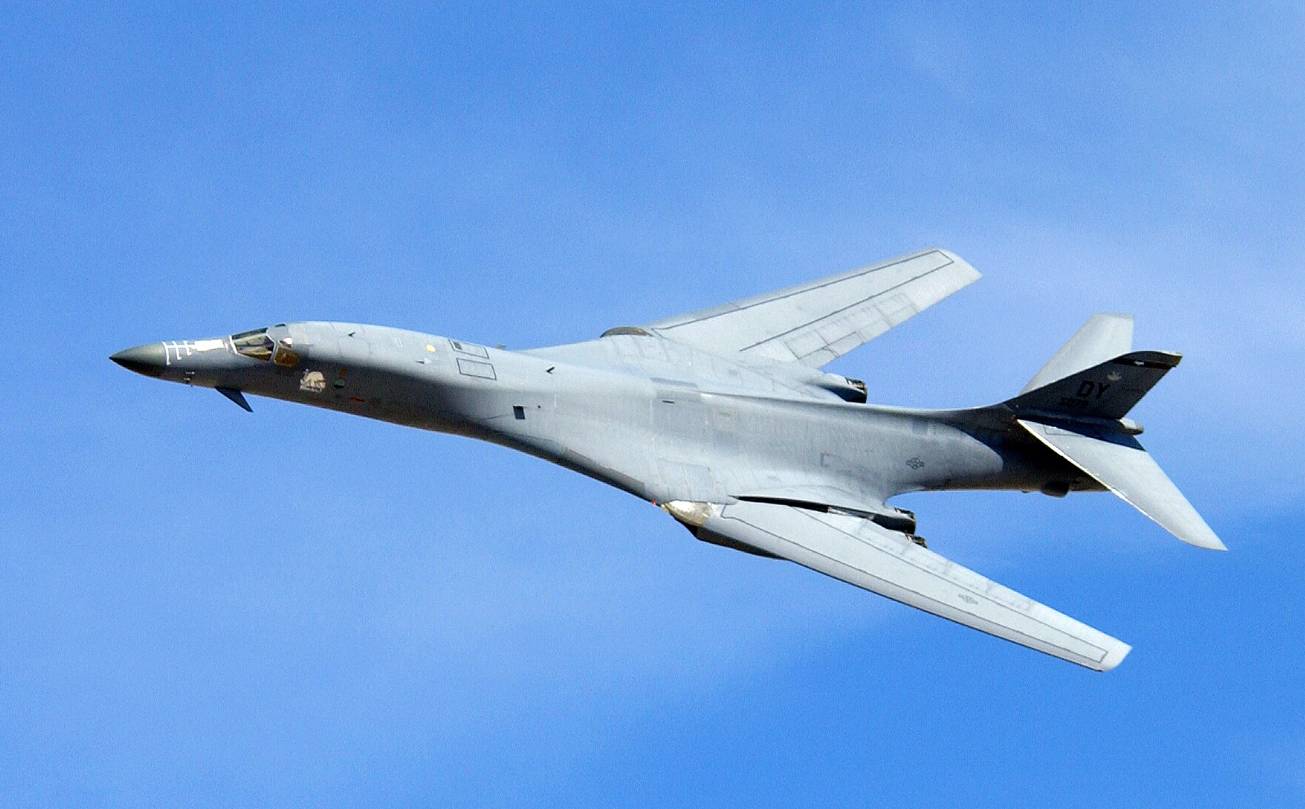
The Rockwell/Boeing B-1B Lancer remains one of the most structurally capable and internally voluminous strike aircraft ever fielded by the United States Air Force. Even though the aircraft entered service in the 1980s, its combination of high subsonic to supersonic dash capability, large internal payload volume, and four-engine thrust margin gives it a unique niche: a long-range conventional strike platform that can carry a very large number of precision weapons over intercontinental distances.

The current upgrade discussion centers on a familiar question: can the B-1 evolve from a bomber optimized for gravity weapons and early cruise missile carriage into a true arsenal aircraft or missile truck? The answer is technically yes, but with important caveats. The airframe has room, power, and endurance, but it is also an aging, highly stressed platform with significant maintenance burden. Any new role has to account for fatigue life, avionics integration complexity, and the fact that the B-1B was originally designed under different strategic assumptions than today’s distributed maritime strike environment.
Baseline aircraft characteristics
The B-1B is a variable-geometry, four-engine, long-range strategic bomber powered by four General Electric F101-GE-102 afterburning turbofans. The aircraft was designed to combine low-altitude penetration with high-speed dash performance, though after the end of the Cold War, its mission focus shifted heavily toward conventional strike. The airframe’s internal bays and external load accommodations make it one of the most flexible weapons carriers in the U.S. inventory.
| Specification | B-1B Lancer |
|---|---|
| Length | 146 ft 0 in (44.5 m) |
| Wingspan | 137 ft 0 in (41.8 m) unswept; 79 ft 0 in (24.1 m) swept |
| Height | 34 ft 1 in (10.4 m) |
| Maximum speed | Mach 1.2 at high altitude; lower at loaded profiles |
| Range | Intercontinental with aerial refueling |
| Payload | Up to 75,000 lb (34,000 kg) |
| Engines | 4 x GE F101-GE-102 afterburning turbofans |
| Crew | 4 |
What the upgrade is really about
The phrase “missile-carrying super bomber” is not marketing fluff so much as shorthand for a shift in mission optimization. A modernized B-1 can be used to launch large salvos of stand-off weapons, particularly cruise missiles or other long-range precision munitions, from outside dense integrated air-defense zones. This is attractive because the B-1 offers three highly valuable attributes:
- Large payload capacity for massed missile employment.
- Long unrefueled endurance relative to tactical aircraft.
- Existing fleet size and basing infrastructure, which reduce time-to-field compared with a clean-sheet bomber.
In practical terms, the upgrade path likely involves avionics refreshes, mission computer modernization, secure data links, electronic warfare improvements, and weapon integration work that expands compatibility with future stand-off missiles. The aircraft’s structural volume and weapon bay geometry matter here: the B-1 can already carry a large number of JDAM-class weapons and air-launched cruise missiles, and it has enough internal real estate to justify further investment if the weapons interface and release envelope can be certified.
Missile carriage: strengths and limitations
As a missile carrier, the B-1’s greatest strength is not stealth. It is volume. A bomber that can carry dozens of weapons is inherently useful in both maritime strike and land-attack roles, especially when paired with long-range weapons that allow the aircraft to remain outside the most dangerous air-defense zones. This is precisely why the term arsenal aircraft keeps resurfacing in discussions around the B-1.
However, the airframe is not a magic solution. The B-1B has a large radar cross-section compared with low-observable bombers, and it relies on stand-off range and electronic support rather than stealth penetration for survivability. That means the bomber’s value rises as missile range increases and enemy air defenses become more layered. If the missile can be launched hundreds or even thousands of kilometers away from the target, the aircraft’s lack of stealth becomes less decisive.
Operational trade-offs
- Pros: massive payload, mature logistics, rapid mission generation, ability to mass fires.
- Cons: aging airframes, high sustainment cost, limited survivability in contested airspace, integration burden for new weapons.
The engineering trade-off is clear: every dollar spent extending the B-1’s relevance is a dollar not spent on stealthy next-generation systems. Yet the bomber’s sheer carrying capacity can make it cost-effective for certain missions where quantity of weapons matters more than platform survivability.
How the upgrade compares with other bombers
When compared with the B-52H and the B-2A, the B-1 occupies a middle ground. The B-52H is the classic long-range missile truck with enormous endurance and a proven ability to carry large numbers of stand-off weapons, but it is slower and less tactically flexible. The B-2A, by contrast, is optimized for stealth penetration and precision strike, but its payload and fleet size are limited.
| Aircraft | Role | Strength | Limitation |
|---|---|---|---|
| B-52H | Stand-off bomber | Very large payload, extreme endurance | Slow, large radar signature |
| B-1B | High-capacity strike bomber | High payload, higher speed than B-52H | Aging airframe, high sustainment |
| B-2A | Stealth penetrator | Low observability, strategic survivability | Small fleet, limited payload |
That comparison explains why upgrading the B-1 remains appealing. It can fill the gap between the B-52’s brute-force missile carriage and the B-2’s penetration focus. In a large-scale conventional conflict, having a bomber that can surge a broad mix of weapons quickly may matter more than having the most elegant stealth platform.
Why the term “super bomber” sticks
The phrase resonates because it captures the B-1’s unusual blend of speed, payload, and adaptability. In an era when airpower is increasingly defined by networked sensors and long-range precision fires, a platform that can carry a large magazine of missiles behaves less like a traditional bomber and more like a flying launcher node. That does not make it invincible. It does, however, make it highly relevant to modern concepts of distributed strike and maritime denial.
If upgraded with modern mission systems and integrated with next-generation long-range weapons, the B-1 could continue serving as a practical mass-strike platform for years. It would not become a stealth bomber, and it would not replace the next generation of penetrating aircraft. But as a missile-carrying heavy bomber, it could absolutely justify the label super bomber in the narrow operational sense: a big, fast, flexible weapons truck designed to put a lot of ordnance on target from far away.
That is the real story behind the upgrade. The B-1 Lancer is not being transformed into something it was never designed to be. It is being sharpened into what it already does best: carrying a very large amount of destructive power to the edge of the fight and releasing it with speed, reach, and volume.