

Program Background and Strategic Context
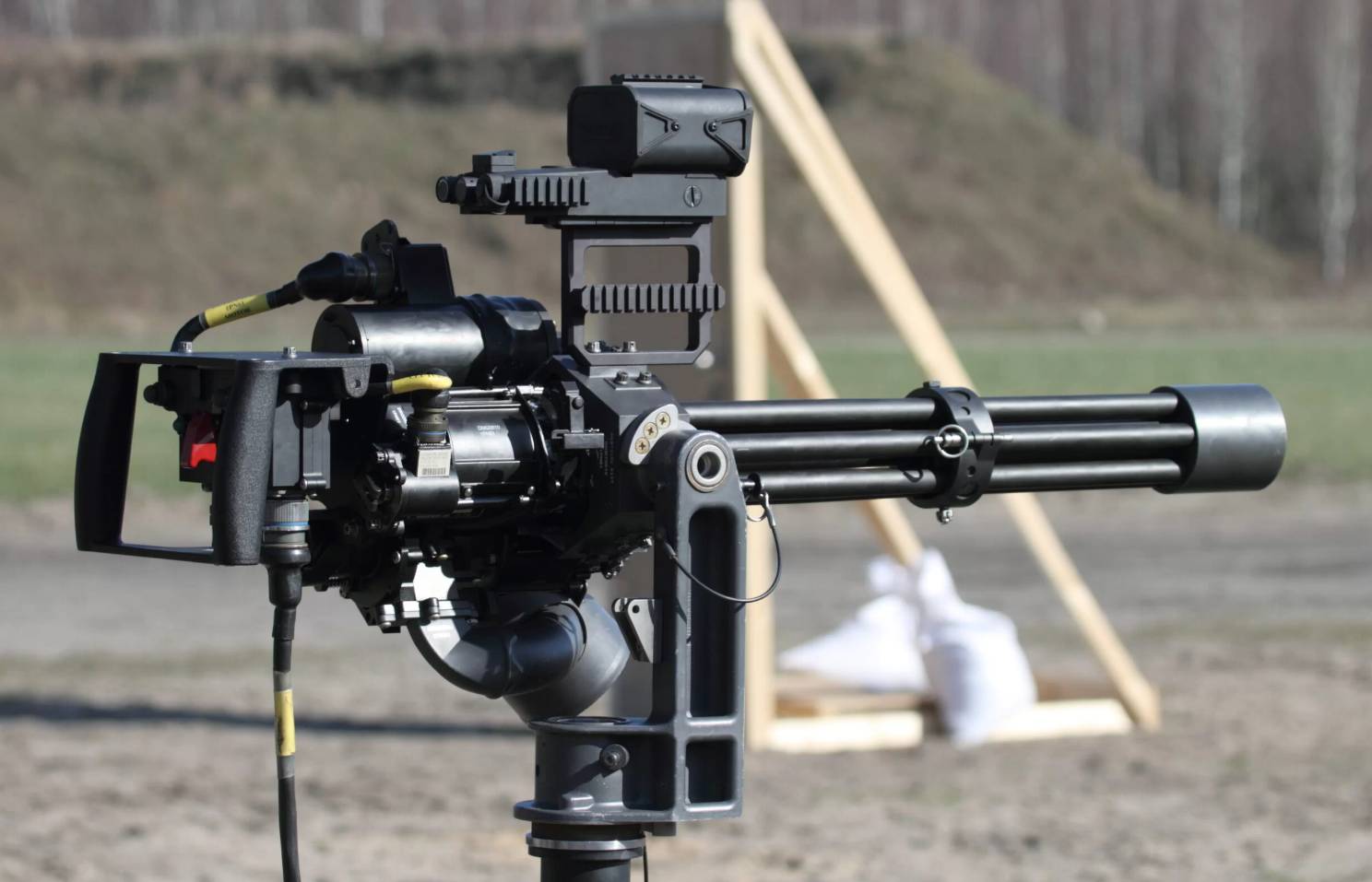
The reported move toward an initial program for a new Common Minigun Variant GAU-24/A in 2027 signals more than a routine armament refresh. It reflects a continuing U.S. effort to standardize crew-served and airborne suppressive fire systems across multiple platforms while preserving the distinctive advantages that have kept Gatling-style weapons relevant in modern combat. In an era defined by distributed operations, rapid insertion forces, and persistent close-air support demands, a compact, electrically driven multi-barrel weapon still fills a tactical niche that guided munitions and lighter caliber systems cannot fully replace.

The GAU-24/A designation immediately suggests a weapon family intended to serve as a common baseline across roles, likely prioritizing modularity, reliability, and platform integration. The strategic logic is straightforward: the U.S. military continues to value high-volume suppressive fire for helicopter door guns, special operations escort, maritime security, and certain fixed-wing defensive applications. A common minigun variant would reduce logistical complexity while improving cross-platform interchangeability in training, spares, and maintenance pipelines.
Why a Common Variant Matters
In defense procurement, the word common is often a clue to broader force design goals. A common minigun variant can reduce lifecycle costs by consolidating parts, simplifying depot-level maintenance, and easing qualification across multiple airframes and mounts. This is especially important for forces that operate in expeditionary environments where sustainment is often more difficult than the tactical employment of the weapon itself.
From a doctrine perspective, commonality improves readiness. A single baseline system allows crews, armorers, and maintainers to train on one configuration rather than a collection of near-variants. That matters for special operations aviation, naval security detachments, and airborne combat support units that often rotate personnel between platforms. It also enables faster integration into future aircraft or unmanned escorts without having to reinvent the weapon interface each time.
In practical terms, a standardized GAU-24/A could be optimized around several recurring requirements:
- Higher reliability under sustained fire and adverse environmental conditions
- Reduced weight compared with legacy installations where possible
- Improved power and feed integration across rotary- and fixed-wing platforms
- Greater modularity for mounts, ammunition containers, and sighting systems
- Streamlined sustainment through common parts and tooling
Technical Role of the Minigun in Modern Operations
Although precision-guided munitions dominate the public imagination, the minigun remains tactically relevant because it delivers immediate, controllable, and dense suppressive fire. This is particularly valuable in close quarters, urban approaches, ship boarding scenarios, and landing zone security. The weapon’s high cyclic rate and multi-barrel design make it exceptionally useful for suppression, threat fixation, and time-sensitive response against fleeting targets.
The minigun also retains value in asymmetric warfare. Insurgent forces often rely on ambush, concealment, and rapid displacement. Against such opponents, the ability to flood an engagement area with accurate suppressive fire can break contact, protect aircraft during ingress and egress, and cover maneuver elements as they reposition. The weapon is not a substitute for precision strike, but rather a complementary tool that gives commanders a responsive kinetic option when the situation demands volume over discrimination.
For rotary-wing aviation, this matters even more. Helicopters operating in contested environments face threats from small arms, machine guns, and improvised firing positions. A GAU-24/A-type system can improve the crew’s ability to suppress those threats during low-altitude maneuver, especially in fast-moving extractions or maritime interdiction missions. The same logic applies to escort and overwatch roles, where the weapon can serve as a deterrent and a reactionary fires system.
Possible Characteristics and Program Priorities
While final specifications have not been formally detailed in the prompt, a common minigun program would likely prioritize enhancements in ergonomics, mounting flexibility, and reliability rather than a radical change in the core Gatling principle. The GAU-24/A lineage suggests a focus on operational integration rather than novelty for its own sake.
| Category | Likely Program Focus |
|---|---|
| Weapon type | Externally powered multi-barrel Gatling-style machine gun |
| Primary role | Suppression, escort, close-in defense, maritime security |
| Integration priority | Common mounts and aircraft interfaces |
| Logistics | Shared spares and maintenance commonality |
| Training | Unified operator and armorer curriculum |
| Likely users | Rotary-wing aviation, special operations, naval security elements |
Several technical improvements would be expected in a modernized variant. These may include enhanced corrosion resistance for maritime use, improved feed reliability, refined recoil management through mount integration, and compatibility with modern electro-optical targeting systems. In helicopter applications, integration with stabilized mounts and sensor packages is increasingly important because precision suppressive fire is often tied to the quality of the crew’s situational awareness rather than raw volume alone.
Operational Advantages Across Services
The U.S. military often prefers systems that can be used across multiple communities because commonality helps sustain expeditionary forces. A common GAU-24/A variant could support Army aviation, Air Force special mission aircraft, Marine Corps expeditionary aviation, Naval helicopter detachments, and certain special operations platforms, depending on final certification and procurement decisions. Each user community has different mission sets, but they share the need for immediate, close-in, suppressive fire.
For special operations forces, the minigun remains a force multiplier during helicopter infiltration and exfiltration. Its sustained fire capability is especially valuable when operators need to dominate a landing zone quickly and move before enemy forces can mass. In maritime environments, the same weapon family supports anti-piracy missions, boarding operations, and harbor security. Fixed-wing special mission aircraft benefit from the weapon’s ability to engage fast, short-duration threats during low-and-slow operations, where reaction time is critical.
Another major advantage is psychological. The minigun has a strong deterrent effect, and that deterrence can reduce enemy willingness to expose themselves or maintain contact. In force protection missions, the visible presence of a high-volume weapon often matters almost as much as its actual ballistic effect. This is a classic example of tactical overmatch influencing adversary behavior before shots are even fired.
Industrial and Procurement Implications
A 2027 initial program would likely place industry under pressure to balance modernization with cost discipline. Defense acquisition history is full of programs that promised commonality but produced complexity through excessive customization. If the GAU-24/A is to succeed, the requirement set will need to stay disciplined: enough modernization to improve reliability and interoperability, but not so much that the weapon becomes an expensive bespoke solution.
From an industrial base standpoint, a common minigun variant supports both prime contractors and sustainment depots by creating a steady demand signal for parts, test equipment, and integration services. The broader market effect may include upgrades to mounting systems, ammunition handling assemblies, and digital fire control interfaces. For smaller suppliers, this can create opportunities in precision machining, composites, wiring harnesses, and corrosion-resistant coatings.
Procurement officials will also have to consider how the weapon fits into the larger competition between crew-served kinetic systems and precision effects. The trend in many defense circles is toward smaller ammunition loads, smarter sensors, and selective engagement. Yet the demand for a high-rate suppressive weapon has not disappeared. Instead, it has become more specialized. A common minigun variant is therefore less a legacy holdover than a recognition that modern warfare still requires scalable firepower at the edge of the battlespace.
Doctrinal Relevance in Contested Environments
The doctrinal value of a minigun becomes clearer when viewed through the lens of peer and near-peer competition. In high-threat environments, platforms may face short windows to engage threats during ingress, egress, and recovery. That means weapons must be reliable, immediately responsive, and capable of suppressing enemy positions long enough for maneuver to succeed. A common GAU-24/A variant would support this doctrine by reducing the likelihood of weapon failure during critical moments.
There is also a broader tactical lesson here: modern combat is increasingly about combined effects. Sensors, electronic warfare, precision strike, and suppressive fire are not competing concepts; they are mutually reinforcing. A minigun is most effective when it is part of a system-of-systems approach that includes targeting data, aircraft maneuver, and mission planning. In that sense, the new program is best understood as an enabler of integrated fires rather than a standalone upgrade.
For land and maritime forces, the same logic applies to convoy security, base defense, and littoral operations. Enemy teams that rely on mobility and concealment can be fixed and disrupted by dense fire, buying time for other systems to identify and neutralize them. The minigun may not be the centerpiece of a precision strike architecture, but it remains a highly effective tool for shaping the battlefield in the first seconds of contact.
What to Watch as the Program Develops
If the initial program begins in 2027, the next several years will reveal whether the GAU-24/A is intended as a true common platform or simply a narrower modernization package. Key indicators will include the extent of cross-service coordination, the degree of modularity in the mount architecture, and whether the program emphasizes new production or retrofit of existing inventories.
- Requirements language: whether the weapon is defined for multiple aircraft and mission sets
- Mount compatibility: whether one system can adapt across platforms without major redesign
- Maintenance concept: whether depot-level sustainment is simplified
- Digital integration: whether fire control and targeting upgrades are part of the package
- Export and partner use: whether allies or security partners are considered in the standardization effort
Ultimately, the value of a common minigun variant will be measured not by its symbolism but by its performance in the field. If it improves reliability, cuts support burden, and preserves the tactical advantages of the Gatling concept, then the program will have answered a real operational need. If not, it risks becoming another incremental procurement effort in a crowded modernization landscape.
What makes the GAU-24/A noteworthy is that it reflects a broader defense trend: even in an age of autonomous systems and precision strike, military planners continue to invest in weapons that offer immediate, overwhelming, and controllable firepower. That remains a practical necessity for forces that must fight, maneuver, and survive in close proximity to the enemy.