Few defense headlines can jolt the strategic community quite like the phrase “Russian satellite carrying a nuclear warhead”. It sounds like something lifted straight from the coldest corners of Cold War fiction, yet it sits at the intersection of real-world orbital mechanics, strategic deterrence, and the growing militarization of space. The concept is as alarming as it is technically fascinating: a space-based nuclear payload would not merely be a weapon, but a geopolitical earthquake in hardware form.
You Might Also Like
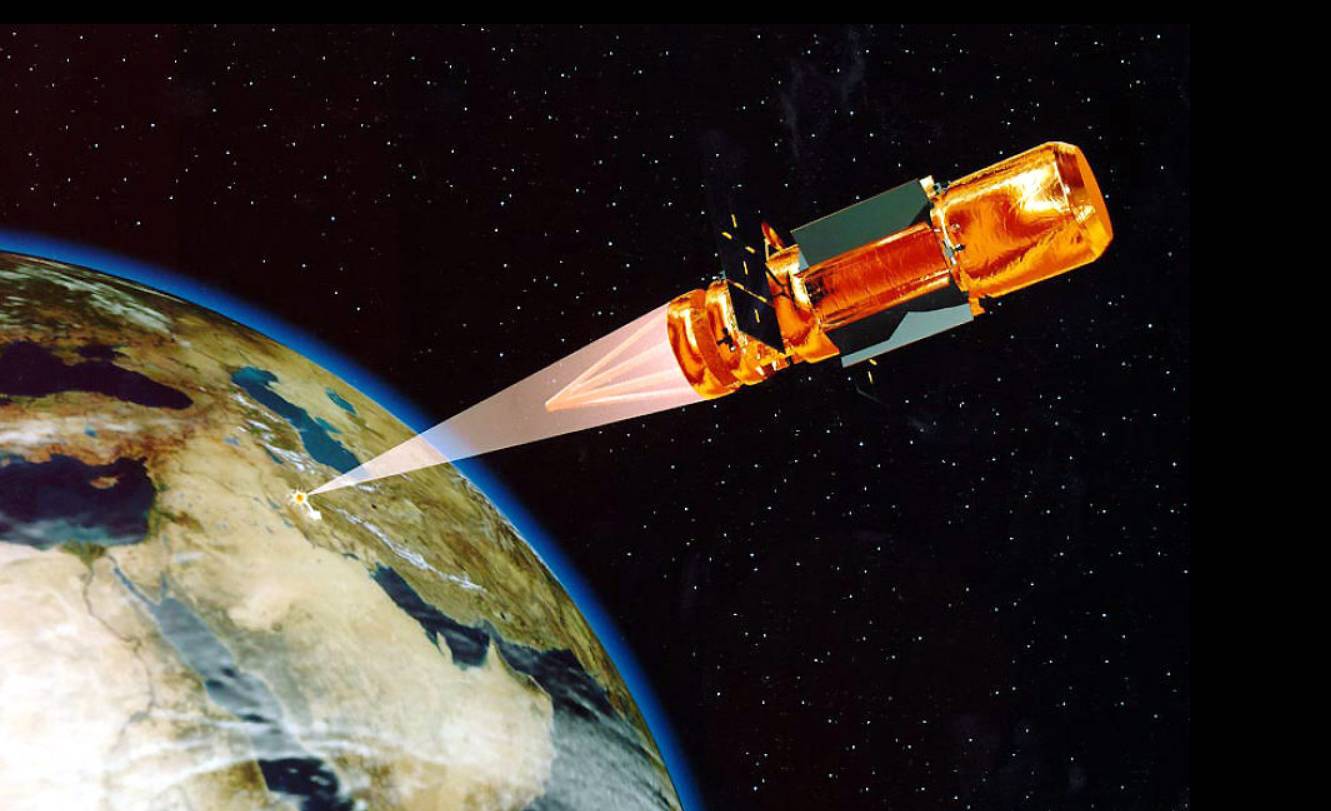
To be clear, claims about such a system should always be treated carefully. The difference between a warning, a prototype concept, and an actually fielded capability matters enormously. But even the discussion itself is worth unpacking, because it reveals how space has become the next major domain of military competition. Satellites no longer just guide phones and weather forecasts; they are central to communications, targeting, missile warning, navigation, and command-and-control. Put a nuclear weapon in orbit, and you are no longer talking about a satellite in the classic sense. You are talking about a strategic system with the potential to reshape deterrence theory.
Why the idea is so dangerous
A satellite carrying a nuclear warhead would be a nightmare for stability for several reasons. First, the mere existence of such a platform would compress decision time. If a weapon is in orbit, it can be positioned over target regions with little warning, and the line between surveillance, coercion, and strike capability becomes terrifyingly thin. Second, the payload itself changes the political calculus. Nuclear weapons are already the ultimate escalation tool; placing one in space adds a layer of unpredictability and creates enormous risk of miscalculation.
There is also the issue of orbital persistence. A conventional missile is launched, flies a predictable path, and either hits or misses. An orbital weapon, by contrast, can remain aloft for long periods, circling the Earth, waiting. That creates the kind of strategic ambiguity that makes arms control experts break into a cold sweat. Even if the warhead is not intended for immediate use, its presence alone would be destabilizing.
Then there is the simple engineering horror show. A nuclear device in space must survive launch vibration, thermal cycling, radiation exposure, and long-duration power and guidance requirements. It would need to remain safe, reliable, and controllable in an environment that punishes every component. Space is not a gentle place to store a warhead. It is a vacuum-baked, radiation-soaked, thermally brutal arena where every system must earn its keep.
What a real system would have to do
If one imagines a hypothetical orbital nuclear weapon system, the design requirements are savage. The platform would need precision attitude control, a robust power system, hardened electronics, secure command links, and a fail-safe mechanism to prevent accidental detonation. It would also need to survive the launch phase, where acceleration loads and vibration can shred weak engineering. And because any nuclear weapon system demands absolute reliability, the satellite bus itself would have to be built to military standards far beyond a typical commercial spacecraft.
The payload integration challenge is especially brutal. A nuclear warhead is not just a bomb in a box. It is a highly engineered device requiring environmental controls, safety interlocks, arming logic, and shielding. In orbit, engineers would need to manage thermal extremes from sunlight to shadow, while preventing degradation of critical components. Radiation hardening would be essential, because a failing guidance computer in space is not a minor inconvenience; it is a catastrophic failure mode.
There is also the question of delivery. Would the satellite simply be a de-orbiting strike platform? Would it be a fractional orbital bombardment concept, where the payload enters partial orbit before reentry? Or would the warhead be deployed via a maneuvering vehicle? Each option changes the threat profile, the detectability, and the political implications. The engineering choices shape the strategic message, and the message is blunt: this is about deterrence through terror of the unknown.
How this compares with other strategic systems
To understand the significance, it helps to compare this concept with existing nuclear delivery systems. Ballistic missiles already offer speed, range, and difficulty of interception. Submarine-launched ballistic missiles add survivability and second-strike credibility. Hypersonic glide vehicles compress reaction time and complicate defenses. A nuclear satellite would add persistence and orbital ambiguity to the menu. That makes it not necessarily more destructive in a pure physics sense, but potentially more destabilizing from a strategic warning perspective.
Unlike an ICBM, which takes a known trajectory, an orbital platform can create uncertainty about the timing and direction of a strike. Unlike a submarine, which is hidden in the ocean but still constrained by geography and patrol patterns, a satellite traverses global paths overhead. In short, it would be a weapon that lives above the normal logic of missile defense.
That said, space-based nuclear weapons are not magic. They still face detection, tracking, vulnerability to anti-satellite systems, and the immense challenge of maintaining command authority. The idea sounds omnipotent, but in practice it would be a fragile and politically explosive asset. Its existence could invite counterspace measures, rapid escalation, and treaties or retaliatory doctrines designed to nullify its advantage.
Technical specifications table
| Attribute | Hypothetical requirement | Notes |
|---|---|---|
| Orbital regime | Low Earth orbit or fractional orbital path | Determines coverage, dwell time, and reentry profile |
| Payload | Nuclear warhead | Would require safety, arming, and environmental protection systems |
| Guidance | Precision attitude control and de-orbit targeting | Critical for any meaningful strike accuracy |
| Power | High-reliability spacecraft power system | Solar arrays and batteries would need radiation resilience |
| Communications | Encrypted command-and-control link | Must resist jamming, spoofing, and interception |
| Thermal protection | Space-qualified thermal management | Needed to survive temperature swings in orbit |
| Launch survivability | Hardened bus and payload integration | Must withstand vibration and acceleration loads |
| Operational concept | Persistent strategic deterrent | Raises major arms control and escalation concerns |
The political shockwave
Even the rumor of such a capability would trigger immediate global reaction. Allies would demand clarification. Adversaries would accelerate counterspace programs. Arms control experts would warn of a new era of orbital weaponization. The United Nations would almost certainly become a stage for urgent debate, while intelligence agencies would scramble to determine whether the system is real, experimental, or simply a bluff designed to shape perception.
That last possibility matters. In strategic affairs, perception can be as powerful as hardware. A state may not need to deploy a fully functional system to gain leverage from the belief that it could. This is where signaling becomes the real payload. If an adversary thinks a nation has the ability to place nuclear weapons in orbit, that belief alone may force changes in force posture, missile defense investments, and crisis planning.
But bluffing with nuclear space systems is a dangerous game. Strategic ambiguity can deter, but it can also invite overreaction. The more exotic the weapon, the harder it is for opponents to distinguish theater from operational reality. And when you are dealing with nuclear risk, uncertainty is not a feature; it is a flaw with civilization-level consequences.
The engineering reality behind the headlines
One of the reasons these stories capture attention is that they live at the edge of what is technically conceivable. Building a satellite is already a feat of high-reliability aerospace engineering. Building one that carries a nuclear payload crosses into a realm where every subsystem must be treated as mission-critical and failure-intolerant. That means hardened computers, redundant systems, secure telemetry, precise orbital modeling, and extraordinary safety controls.
It also means dealing with launch and orbital debris risks. A failed launch could scatter hazardous material. A collision in orbit could create a debris field with long-term consequences. Even a non-nuclear failure could become an international incident. Space is already crowded, and every additional military payload increases the risk of cascading conflict in a domain that underpins both civilian life and military operations.
And then there is treaty law. The weaponization of space has long been constrained by international norms and agreements, though enforcement is difficult and the definitions can be maddeningly nuanced. A nuclear weapon in orbit would be a direct challenge to the postwar legal architecture that has tried, with varying success, to keep weapons of mass destruction out of space. Crossing that line would not just be a technical achievement; it would be a strategic and diplomatic rupture.
Why military analysts care so much
Defense analysts obsess over systems like this because they force a rethink of deterrence. What happens when warning time drops? What happens when attribution becomes murkier? What happens when a weapon can be positioned overhead rather than launched from a fixed base or a submarine? These questions go to the heart of strategic stability.
The military value of orbital weapons is often overstated in pop culture, but their psychological value can be enormous. A platform that suggests global reach, difficult interception, and persistent presence can alter planning at the highest levels. That is why even speculative reports draw such intense scrutiny. They are not merely about one satellite; they are about the precedent it sets for the next generation of conflict.
The real takeaway is that space is no longer a sanctuary. Every object launched for military purposes is part of a larger competition for access, denial, and escalation dominance. A satellite carrying a nuclear warhead would be the most extreme expression of that trend imaginable, blending aerospace engineering, nuclear strategy, and geopolitical brinkmanship into one deeply unsettling package.
For now, the key question is not just whether such a system exists, but what its rumor says about the era we are entering. The answer is sobering: the boundary between Earth and space has become a new front in strategic competition, and the technologies being discussed there are getting more dangerous by the year.