

Why the unit is sent first
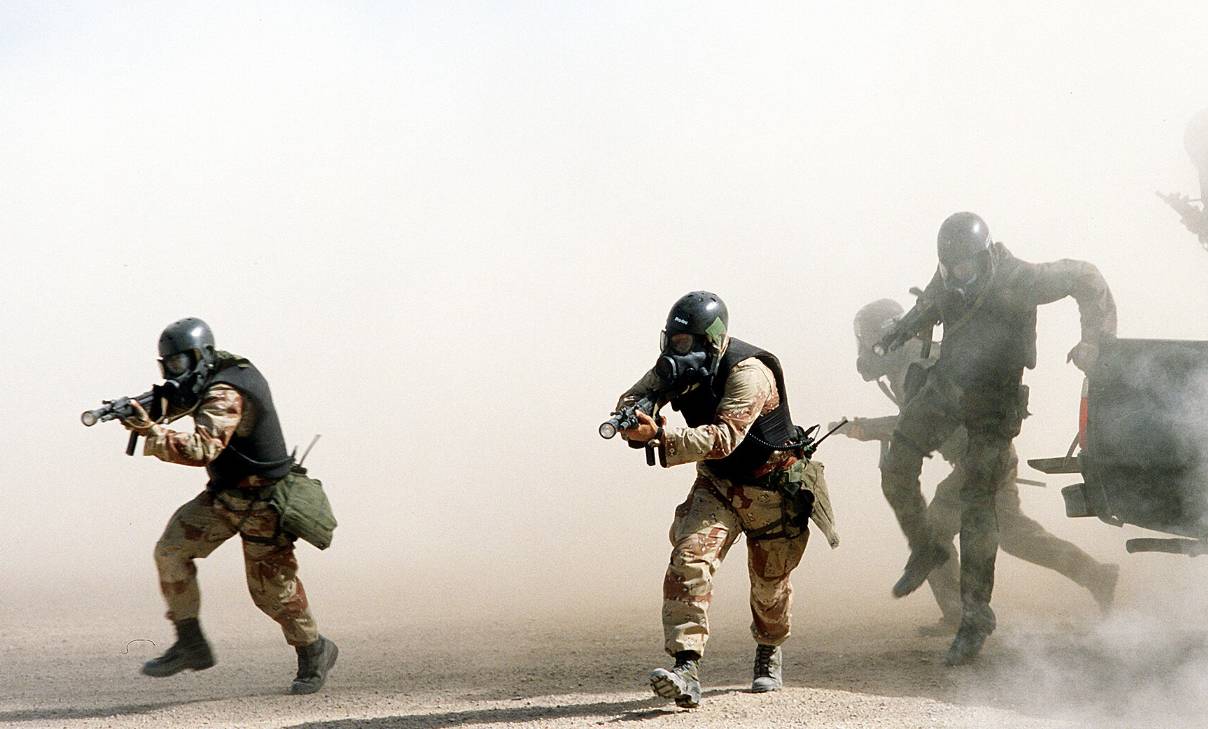
Naval Special Warfare Development Group, better known as SEAL Team 6, occupies a unique place in U.S. military planning. It is not simply a commando unit with a higher training standard; it is a strategically tasked force built for time-sensitive, politically sensitive, and exceptionally dangerous missions where failure can alter an operation, a campaign, or even a regional crisis. When decision-makers need a team that can act with precision under extreme uncertainty, this is often the formation placed at the front of the queue.
The reason is not mystique. It is a product of selection, specialization, integration, and mission design. SEAL Team 6 is structured to operate in the narrow space where intelligence is incomplete, targets are fleeting, and the margin for error is minimal. That combination makes it the logical first choice for hostage rescue, counterterrorism raids, sensitive capture or kill missions, and clandestine reconnaissance in environments where conventional forces would be too slow, too visible, or too exposed.
What makes the unit different
SEAL Team 6 is designed around direct action at the highest end of the spectrum. The unit’s operators are drawn from the broader Naval Special Warfare community, but the standard of selection, training tempo, and operational expectation is markedly higher. Its mission profile demands not only physical endurance and weapons proficiency, but also the ability to absorb intelligence quickly, adapt in real time, and execute within a framework of joint and interagency command.
In practical terms, the unit is first because it can be trusted to do several difficult things at once:
- Penetrate denied or hostile areas with low signature.
- Exploit fleeting intelligence before it disappears.
- Coordinate with air, cyber, intelligence, and aviation assets.
- Take action under diplomatic and media scrutiny.
- Recover from mission friction without collapsing the plan.
That blend of qualities is rare. A high-risk mission often fails not because the assault force lacks courage, but because the force cannot combine speed, discretion, and precision under pressure. SEAL Team 6 is purpose-built to reduce that risk.
Operational logic in hostage rescue and counterterrorism
For hostage rescue, the clock is the enemy. Captors may move, kill, or disperse hostages with little warning. The target environment can be urban, subterranean, maritime, or improvised. Intelligence may consist of intercepted communications, surveillance imagery, fragmentary human reporting, and hours-old pattern-of-life analysis. In this setting, the first unit sent must be capable of rapid target isolation, entry, and synchronized violence while minimizing harm to noncombatants.
Counterterrorism operations present a different but equally demanding problem. High-value targets often hide within civilian infrastructure, use human shields, or operate inside states that are unwilling or unable to act. In such cases, SEAL Team 6 is chosen because it can execute a mission that is militarily decisive yet politically calibrated. The point is not simply to kill or capture a target; it is to do so without escalating the broader conflict, compromising intelligence sources, or damaging alliances.
That political dimension is critical. A high-risk mission may have strategic consequences beyond the immediate objective. The unit sent first must therefore be able to operate in a way that preserves plausible deniability when required, supports a host nation when appropriate, and provides the U.S. government with options short of conventional war.
The role of intelligence and precision
SEAL Team 6 does not operate in isolation. It sits at the end of an intelligence-to-action chain that includes surveillance platforms, signals intelligence, human intelligence, mission planners, aviation crews, and often interagency partners. The reason it is sent first on the most dangerous missions is that it can translate intelligence into action with exceptional precision.
Modern special operations are less about brute force than about finding the exact moment and method that makes force effective. A target may be visible for only minutes. A maritime intercept may require boarding a vessel in rough seas. A raid may depend on simultaneous breach, suppressive fire, detainee handling, explosive entry, and medical response. The unit’s value lies in its ability to integrate these layers without losing tempo.
Precision also reduces strategic risk. A smaller, highly capable assault force can often accomplish what a larger formation cannot: maintain secrecy, avoid unnecessary destruction, and preserve evidence. In the era of persistent surveillance and instant media dissemination, the ability to limit collateral damage is not merely ethical; it is operationally essential.
Table: general characteristics of the unit
| Category | Details |
|---|---|
| Official designation | Naval Special Warfare Development Group |
| Common name | SEAL Team 6 |
| Parent service | U.S. Navy |
| Primary mission set | Counterterrorism, hostage rescue, direct action, special reconnaissance |
| Operational focus | High-risk, high-value, time-sensitive targets |
| Typical operating environment | Maritime, urban, desert, mountainous, denied territory |
| Integration | Joint and interagency operations with air, intelligence, and aviation support |
| Public visibility | Low; missions are often classified or sensitive |
Doctrine: first in, not always first in line
The phrase “first to send” should not be interpreted to mean SEAL Team 6 is always the first force to move. In many crises, the first response comes from intelligence collection, remote sensing, cyber teams, diplomatic channels, or conventional units establishing a cordon. What makes the unit first in the operational sense is that it is often the first force authorized to conduct the highest-risk direct-action phase once the intelligence picture is mature enough.
This is where doctrine matters. Special operations doctrine emphasizes economy of force, surprise, speed, and mission-specific tailoring. A highly classified assault element is not deployed simply because it is elite; it is deployed because the mission requires a force that can be inserted discreetly, supported selectively, and withdrawn quickly. The unit becomes the option of choice when commanders need a small footprint with outsized effect.
There is also a deterrent function. Adversaries know that the United States can reach into denied spaces and strike surgically. The existence of a force like SEAL Team 6 signals that sanctuary is not guaranteed. That matters in counterterrorism, hostage rescue, and nuclear or chemical threat response, where the ability to remove a key actor rapidly can prevent escalation.
Why not use conventional forces
Conventional units bring mass, persistence, and logistical depth, but they are not ideal for every mission. A brigade or battalion is easier to detect, more difficult to conceal, and slower to assemble. When a target is mobile or a political window is short, time becomes more valuable than firepower. SEAL Team 6 is chosen because it can act with a smaller signature and greater tactical flexibility.
Conventional forces also face different rules of engagement, command structures, and media implications. If the mission requires deniability, rapid exfiltration, or granular target discrimination, a specialized unit offers a better fit. That does not mean conventional forces are secondary; rather, they are often part of the larger architecture that enables the special mission to succeed.
Risk, selection, and institutional trust
Sending the unit first is also a statement of institutional trust. The missions assigned to SEAL Team 6 are often those in which the stakes are high enough that commanders cannot afford ambiguity. This trust is built through years of selection, rehearsal, and mission after mission in which the unit has demonstrated it can deliver under pressure.
But the trust is not blind. High-risk missions demand extensive rehearsal, intelligence validation, and contingency planning. Air support, communications redundancy, medical evacuation, and extraction routes are all part of the package. The unit may be first into the objective, but it is never first in the planning process. In many cases, months of collection and preparation are compressed into minutes of action.
The risk calculus is also shaped by the fact that special operations forces are finite. A unit with this level of expertise is expensive to train and difficult to replace. That is why it is reserved for missions where the expected payoff justifies the risk, not only to the operators, but to the broader strategic environment.
Geopolitical value beyond the raid
The global utility of SEAL Team 6 extends beyond any single operation. In a world of proxy wars, transnational terrorism, maritime chokepoints, and rapidly moving crises, the United States needs forces that can create options below the threshold of large-scale conflict. The ability to conduct a raid, collect intelligence, capture a target, or disrupt a network can change an adversary’s calculations without launching a broader campaign.
That is why the unit is first on missions that carry geopolitical weight. A successful operation can reassure allies, deter enemies, and demonstrate reach. A failed operation, by contrast, can strain relationships, expose intelligence capabilities, and embolden opponents. The decision to send SEAL Team 6 therefore reflects not only tactical confidence but strategic judgment.
In the end, the unit is chosen first because it sits at the intersection of capability and consequence. It is designed for the missions where the target matters, the environment is hostile, the timeline is short, and the political cost of failure is high. In that narrow but critical domain, elite training is not a luxury. It is the difference between a contained crisis and a strategic setback.
Why the label endures
SEAL Team 6 remains one of the most recognized special operations brands in the world because it represents an idea as much as a unit: the idea that a small, highly trained force can solve problems that larger formations cannot. The label endures because the missions endure. As long as there are objectives that demand secrecy, speed, precision, and controlled violence, there will be a need for a force that is prepared to go first when the risk is highest.