

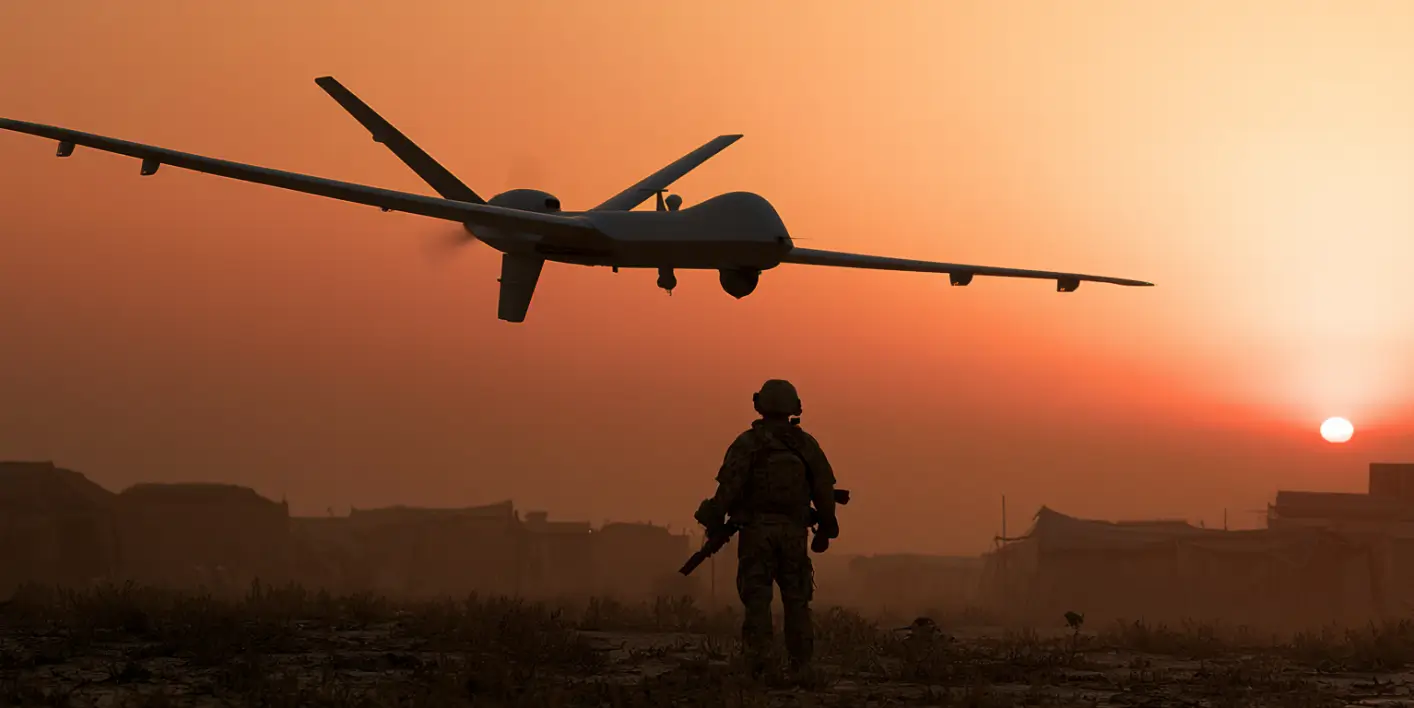
Military unmanned aerial vehicles, or UAVs, have moved from niche reconnaissance tools to front-line assets that now shape how air forces plan, strike, and survive in contested airspace. In the field, the change is obvious: commanders no longer think of drones as simply “eyes in the sky.” They are now persistence platforms, strike systems, communications relays, decoys, electronic warfare nodes, and in some cases, attritable weapons designed to be lost.
From Observation Posts to Combat Multipliers
Early military UAVs were built around a simple requirement: see without risking a pilot. That mission has not disappeared, but the role has widened dramatically. Small tactical drones can provide a squad-level feed within minutes, while larger systems can stay aloft for more than a day, scanning borders, tracking maritime traffic, or supporting strike packages deep behind enemy lines.
What changed was not just the airframe. It was the entire concept of employment. Air forces learned that a UAV is most valuable when it is tied into a broader kill chain. A drone that spots a target but cannot pass coordinates quickly, survive jamming, or cue another shooter is only half a weapon. Modern systems are built to reduce that gap between detection and effect.
The Technology That Changed the Game
Several advances pushed UAVs from experimental platforms into mainstream force structure:
- Miniaturized sensors that deliver better imagery, infrared detection, and moving target tracking.
- Satellite communications that extend control beyond line of sight.
- Autonomy software that helps with navigation, formation flying, route planning, and return-to-base functions.
- Low-cost manufacturing that makes it possible to field large numbers of expendable systems.
- Electro-optical and synthetic aperture radar payloads that allow all-weather intelligence collection.
In real operations, these improvements matter because they reduce friction. Crews can launch faster, cover more ground, and keep aircraft on station longer. A persistent aircraft overhead is a different kind of power than a fighter that arrives, strikes, and leaves. It shapes the fight before the first weapon is dropped.
How Air Forces Use UAVs Now
Air forces have folded UAVs into a range of missions that used to belong exclusively to manned aircraft. The most common roles include:
- Intelligence, surveillance, and reconnaissance (ISR) for border security, convoy overwatch, and target development.
- Strike operations using precision-guided munitions or loitering munitions.
- Battle damage assessment after air or artillery strikes.
- Electronic warfare and signals collection to locate emitters and map enemy networks.
- Decoy and saturation roles to force an adversary to waste missiles and reveal radar positions.
- Communications relay in terrain or environments where ground networks are weak or destroyed.
From a practical standpoint, this means UAVs are no longer supporting actors. In some theaters, they are the lead element. They find the target, mark the route, and sometimes deliver the weapon themselves. That is especially true where air defenses are dense and manned aircraft are too valuable to risk on every mission.
The Rise of the Attritable Aircraft
One of the biggest shifts in airpower thinking is the move toward attritable UAVs. These are not necessarily disposable in the cheap-and-rugged sense, but they are designed with the expectation that some percentage will be lost in combat. That is a hard truth, but it reflects the math of modern air defense. If a platform costs too much, commanders hesitate to employ it aggressively. If it costs less, they can accept greater risk and distribute the force more widely.
This concept is changing acquisition strategy. Air forces are increasingly balancing a small number of exquisite, high-end aircraft with larger numbers of cheaper unmanned systems. The result is a more resilient force package. Losing one aircraft does not collapse the mission, and the adversary has to spend real resources trying to stop every sortie.
What Happens When the Enemy Jams the Sky
The battlefield is not a laboratory. UAVs operate in environments where jamming, spoofing, weather, terrain masking, and air defense threats are constant. In my experience, the hardest part is not getting the drone airborne. It is keeping control, maintaining a clean data link, and making sure the platform can still complete the mission when the enemy starts interfering.
Modern UAV crews rely on layered navigation systems, hardened communications, and contingency planning. If GPS is denied, the aircraft needs another way to navigate. If the primary datalink is jammed, it needs fallback modes. If the target moves, the sensor operator must be able to hand off quickly to another node in the network. The best UAVs are built for degraded conditions, not perfect ones.
Airpower Doctrine Is Changing With the Aircraft
UAVs have forced air forces to rethink more than hardware. They have changed command relationships, training pipelines, maintenance concepts, and airspace management. Pilots, operators, intelligence analysts, and cyber specialists increasingly work as a single team. The cockpit has become a distributed system, with decision-making spread across multiple stations and sometimes multiple continents.
This shift also affects sortie generation. A manned aircraft requires pilot rest cycles, life-support systems, and a larger safety burden. A UAV still requires people, but the risk profile is different. That allows for longer missions, quicker turnarounds, and more persistent presence over key terrain. In a real campaign, persistence can matter as much as speed.
The Limits No One Should Ignore
Despite all the hype, UAVs are not magic. They can be shot down. They can be jammed. They can be blinded by weather or terrain. They can also create an overreliance problem if planners assume a drone will always be overhead when needed. That is a dangerous assumption. Smart air forces back UAVs with redundancy: satellites, manned aircraft, ground observers, artillery observers, and resilient communications.
There is also the issue of survivability against advanced air defenses. The more capable the enemy, the more the UAV must either become stealthier, more autonomous, lower-cost, or all three. The age of assuming a large drone can loiter unchallenged in hostile skies is over in any serious fight.
What Comes Next
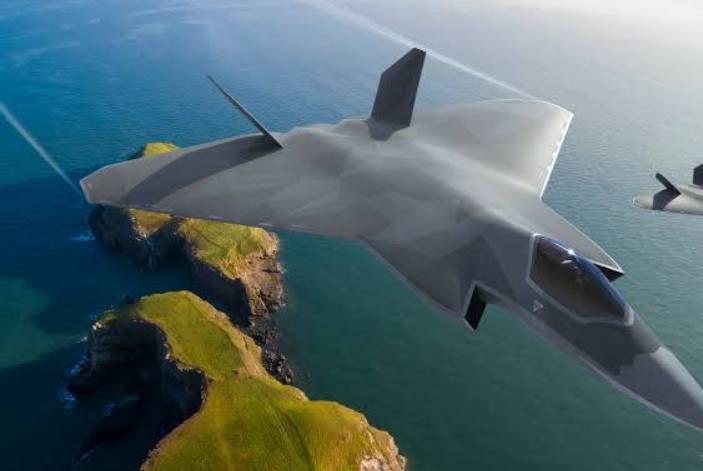
The next phase of UAV evolution is already visible. Air forces are investing in collaborative combat aircraft, swarming concepts, autonomous target recognition, and systems that can work as part of a manned-unmanned team. The goal is not to replace pilots wholesale. It is to give them more reach, more sensors, and more weapons while reducing risk.
In practical terms, that means future air operations will look more distributed and more networked. A fighter may direct a pair of unmanned wingmen. A surveillance drone may cue artillery or maritime strike assets. A low-cost decoy may force an enemy radar to light up, exposing itself to suppression. The winning force will be the one that can connect these pieces faster than the enemy can break the chain.
Military UAVs have already changed warfare by making the sky more persistent, more connected, and more contested. The next generation will not just watch the battlefield. It will actively shape it, one sensor, one link, and one strike at a time.