

Program Overview
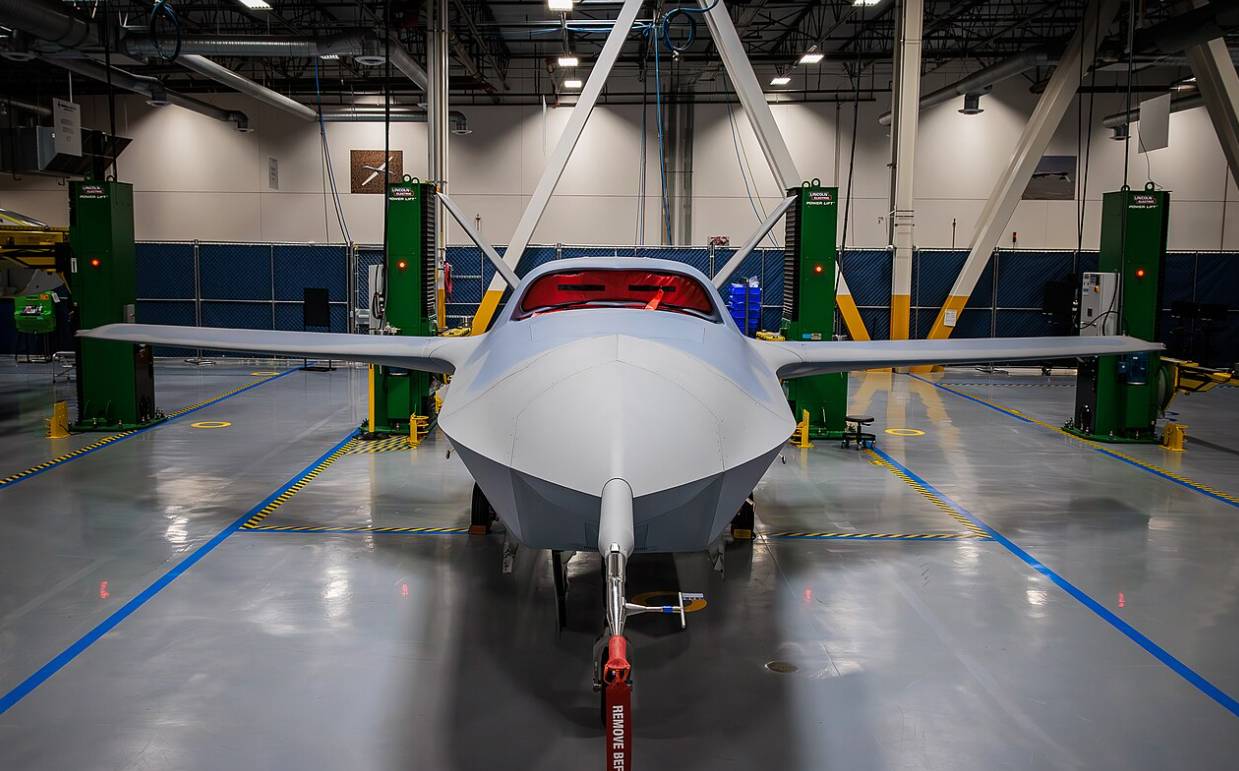
The YFQ-42A is the U.S. Air Force’s emerging uncrewed combat aircraft in the service’s Collaborative Combat Aircraft (CCA) family, a program often described as the next-generation “loyal wingman” concept. In practical terms, the YFQ-42A is intended to operate alongside manned fighters such as the F-22, F-35, and future sixth-generation platforms, extending sensor reach, weapons capacity, and survivability through distributed teaming. The aircraft designation itself is revealing: Y for prototype, F for fighter, and Q for unmanned aircraft. The broader Air Force objective is to field attritable, mission-flexible, jet-powered drones that can be produced at scale and accepted as consumable combat power rather than exquisite, scarce assets.
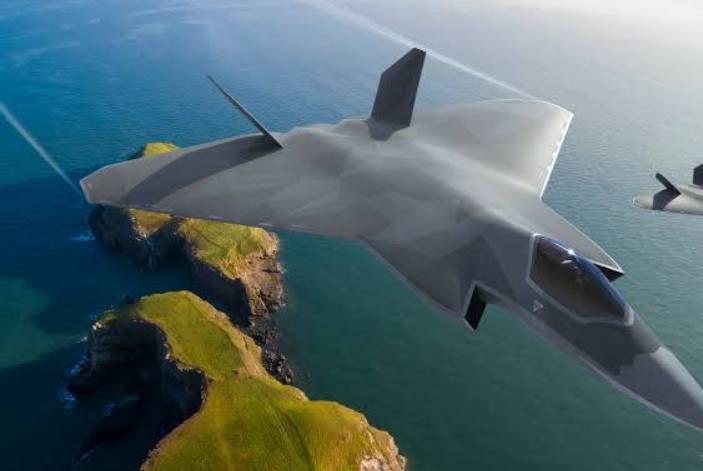
While many technical details remain classified or undisclosed, the YFQ-42A sits at the intersection of air combat doctrine, digital engineering, and industrial-scale autonomy. The program is not merely about building a drone that can fly; it is about creating a combat system that can sense, decide, and act in conjunction with crewed aircraft under contested electromagnetic conditions. That means survivable datalinks, low-observable shaping, modular payload integration, open mission systems architecture, and autonomy robust enough to function when the link to the human controller is degraded or denied.
Why the Air Force Needs a Loyal Wingman
The Air Force has increasingly emphasized mass, resilience, and affordability in high-end air warfare. In a Pacific contingency or any conflict against a peer adversary, manned fighters alone are too few, too expensive, and too vulnerable if every aircraft must be piloted and every mission profile requires exquisite survivability. A loyal wingman architecture addresses this by pairing a crewed aircraft with one or more uncrewed teammates that can absorb risk, carry sensors, jam enemy emitters, launch weapons, or act as decoys.
The tactical logic is straightforward. If a fifth-generation fighter is forced to carry every sensor and missile internally while maintaining stealth, it becomes a platform constrained by internal volume. A collaborative uncrewed aircraft can relieve that constraint by carrying additional missiles, electronic warfare payloads, decoy emitters, or distributed sensors. In effect, the crewed fighter becomes a combat quarterback, orchestrating a team rather than personally carrying the entire load.
- Extended sensor coverage: forward or off-axis sensing to widen the tactical picture.
- Weapons magazine depth: extra air-to-air missiles or standoff effects without compromising the manned jet’s stealth configuration.
- Risk distribution: use of uncrewed aircraft in the highest-threat sectors.
- Electronic warfare support: jamming, deception, and emitter saturation.
- Decoy and scouting roles: forcing adversary radars and missiles to reveal themselves.
What Is Known About the YFQ-42A
The YFQ-42A is one of the Air Force’s first publicly identified CCA prototypes. It is widely understood to be a jet-powered uncrewed aircraft developed under a rapid acquisition model intended to compress timelines compared with traditional fighter programs. The platform is expected to emphasize modularity, manufacturability, and software-defined mission capability rather than the kind of bespoke optimization associated with manned tactical aircraft.
At this stage, exact dimensions, engine type, maximum speed, service ceiling, and combat radius have not been officially released in a detailed unclassified form. However, the design intent is clear: the aircraft must be fast enough to maneuver tactically with front-line fighters, efficient enough to remain relevant over meaningful distances, and affordable enough that the loss of a vehicle does not constitute a major strategic setback. In that sense, the YFQ-42A is likely to be engineered around a careful compromise between performance, signature management, cost, and production speed.
Likely Design Priorities
Even without a full specification sheet, the engineering priorities can be inferred from the CCA mission set and the Air Force’s public statements. The aircraft must be compatible with a distributed combat architecture, which means low-probability-of-intercept communications, autonomous contingency behaviors, and mission systems designed around rapid updates rather than long, slow block upgrades.
Key design priorities likely include:
- Low observable shaping: not necessarily ultra-stealth to the level of a manned fifth-generation fighter, but enough to reduce detection range and complicate enemy engagement.
- Internal payload carriage: preserving external cleanliness for signature control when carrying weapons or special mission packages.
- Open systems architecture: allowing mission computers, sensors, and autonomy software to be swapped or upgraded quickly.
- High sortie generation: the ability to be produced, launched, recovered, and refurbished at a rate compatible with wartime attrition.
- Autonomous flight and task management: including route planning, formation keeping, threat reaction, and fallback modes when communications are lost.
Estimated Capability Envelope
Because the program remains in development, a disciplined approach is to separate confirmed facts from reasonable engineering expectations. The table below summarizes the most plausible capability envelope for a YFQ-42A-type system based on publicly understood CCA objectives rather than officially released performance data.
| Attribute | YFQ-42A Publicly Confirmed | Engineering Expectation |
|---|---|---|
| Role | Collaborative combat aircraft / loyal wingman | Escort, sensing, strike support, EW, decoy missions |
| Configuration | Uncrewed, jet-powered prototype | Likely low-observable planform with internal payload volume |
| Designation | YFQ-42A | Prototype fighter-class unmanned aircraft |
| Autonomy | Unspecified | Mission autonomy with supervised control and fail-safe behaviors |
| Weapons integration | Unspecified | Likely air-to-air and mission payload modularity |
| Production philosophy | Rapid acquisition, scalable manufacturing | Affordability and attritability over platform perfection |
Comparative Analysis: YFQ-42A Versus Traditional Fighters
The YFQ-42A should not be evaluated as a direct replacement for a fighter like the F-35 or F-22. Instead, it is a force multiplier designed to operate within a mixed fleet. Its value lies in the fact that it can be risked more freely, deployed in larger numbers, and tailored to the mission in ways that would be fiscally or operationally inefficient for a piloted aircraft.
| Factor | Fifth-Generation Manned Fighter | YFQ-42A CCA Concept |
|---|---|---|
| Human risk | High | None onboard |
| Unit cost | Very high | Targeted lower than manned fighter class |
| Sortie flexibility | High but crew-limited | High, especially for high-risk missions |
| Payload trade-off | Constrained by stealth and life support | More mission-flexible within size and cost constraints |
| Autonomy requirement | Assistive only | Core operational requirement |
| Attrition tolerance | Low | Higher by design |
Technical Trade-Offs
Every loyal wingman design is shaped by hard trade-offs. If the aircraft is made too stealthy, it becomes too expensive and slow to build. If it is made too cheap, it may lose the speed, altitude, or survivability needed to remain useful with front-line fighters. The YFQ-42A thus represents a balancing act between performance and replaceability.
One major trade-off is between autonomy and controllability. A highly autonomous vehicle can continue the mission under jamming or latency, but autonomy requires extensive validation to avoid unsafe behavior. Conversely, a heavily supervised drone may be more predictable but less resilient in a contested battlespace. The ideal CCA likely uses a layered approach: preplanned mission behaviors, supervised tactical commands, and limited human override for high-consequence decisions.
Another key trade-off is signature versus payload. Internal carriage supports stealth but limits size and volume, forcing compromises in missile count or sensor aperture. External carriage increases payload options but undermines the low-observable profile. For a CCA, the most likely answer is a modular internal bay with the possibility of mission-specific external stores in lower-threat environments.
Industrial and Acquisition Implications
The YFQ-42A program reflects a broader shift in Air Force procurement philosophy. Instead of pursuing a singular, expensive platform with decades-long development cycles, the service appears to be embracing a digital-first, iterative acquisition model. That means rapid prototyping, software-defined capability growth, and an emphasis on production throughput rather than perfect initial performance.
This has significant industrial implications. The winning contractor must do more than design an aircraft; it must establish a production ecosystem capable of delivering large numbers of airframes at acceptable cost. Supply-chain resilience, composite fabrication, autonomy software pipelines, and maintainability all become as important as raw aerodynamic performance. In wartime, the decisive metric may be how quickly the force can replace losses and adapt the software to new threats.
Operational Use Cases
In practical employment, the YFQ-42A could appear in several mission patterns. In an air superiority scenario, it might fly ahead or alongside manned fighters as a sensor node and missile truck. In a suppression of enemy air defenses mission, it could serve as a decoy or emitter to provoke radar activation. In strike operations, it could escort bombers or fighter-bombers, carrying extra standoff munitions or providing escort jamming.
- Escort and screening: extending the protective envelope around high-value aircraft.
- Decoy and deception: presenting false targets and drawing fire.
- Sensor relay: forwarding targeting data from forward positions.
- Electronic attack: supporting penetration against integrated air defenses.
- Weapons truck: carrying additional air-to-air missiles for cooperative engagements.
How YFQ-42A Fits the Future Air Combat Ecosystem
The most important aspect of the YFQ-42A is not the airframe alone but the networked kill web it is meant to inhabit. In a mature CCA force, one crewed fighter could command multiple uncrewed aircraft, each optimized for a different role: one for sensing, one for jamming, one for weapons carriage, and another for decoy duties. The result is a distributed force that is harder to detect, harder to target, and more adaptable under electronic attack.
This architecture also aligns with the service’s push toward joint all-domain command and control concepts, in which data moves across aircraft, ships, satellites, and ground nodes. The CCA is therefore not an isolated procurement program but a building block for future air warfare. If successful, it may become the template for how the Air Force buys combat mass in the 2030s and beyond.
What to Watch Next
The most important indicators of YFQ-42A’s progress will not be glossy renderings but measurable milestones: first flight, autonomous mission demonstrations, weapons integration tests, production-line maturity, and the ability to operate in contested electromagnetic conditions. Equally important will be the cost per unit and the speed with which software can be updated to reflect new threat environments.
If the program delivers on its promises, the YFQ-42A could mark a decisive shift in airpower: from a small number of exquisite manned platforms to a mixed ecosystem of manned and uncrewed systems that fight together. That is the essence of the loyal wingman concept, and it is why the YFQ-42A matters far beyond the aircraft itself.