

From manned platforms to optionally crewed robotic assets
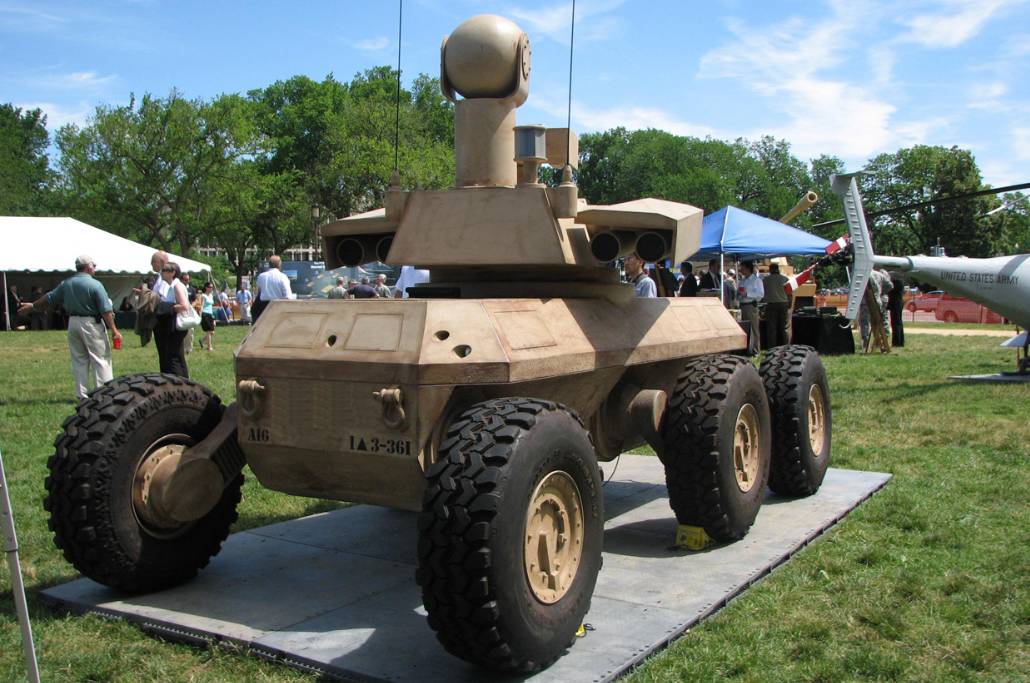
The UxS Autonomy Initiative is part of a broader military shift toward optionally crewed and uncrewed ground mobility, where standard tactical vehicles are retrofitted with drive-by-wire controls, onboard perception suites, mission computers, and secure vehicle-to-vehicle networking. The core engineering objective is deceptively simple: preserve the mobility, payload, and maintainability of an existing tactical truck or armored utility vehicle while adding the software and hardware needed to navigate, convoy, halt, reroute, and execute mission profiles with minimal human intervention.
Unlike purpose-built unmanned ground vehicles, the UxS approach typically starts with a production vehicle already in the logistics chain. That choice matters. It lowers procurement risk, leverages existing sustainment pipelines, and allows forces to convert fleet inventories incrementally instead of waiting for a clean-sheet robotic chassis. The trade-off is equally clear: retrofits must work around legacy steering linkages, braking architecture, powertrain electronics, and payload constraints that were never designed for autonomy.
What is actually added to a tactical vehicle
Converting a standard tactical vehicle into a self-driving unit generally requires five functional layers: actuation, perception, compute, communications, and safety supervision. Each layer must be hardened for dust, vibration, temperature extremes, and electromagnetic interference typical of military operations.
- Actuation: electric or electro-hydraulic interfaces for steering, throttle, brake, transmission selection, and parking brake.
- Perception: lidar, radar, optical cameras, GNSS/INS, wheel odometry, and often thermal imaging for degraded visibility.
- Compute: rugged mission computers with GPU acceleration for sensor fusion, obstacle detection, and path planning.
- Communications: encrypted line-of-sight radios, cellular or mesh links where available, and mission data buses for convoy control.
- Safety supervision: watchdog controllers, remote kill functions, geofencing, fault detection, and graceful degradation modes.
In practice, the most difficult subsystem is not perception, but deterministic control under fault conditions. A self-driving tactical vehicle must not only identify a convoy lead, a road edge, or an obstacle; it must do so while absorbing shock loads, crossing degraded terrain, and surviving intermittent sensor dropout without producing unsafe steering or braking commands.
Engineering architecture and retrofit pathways
Most autonomy retrofit kits fall into one of three architectures. The first is a parallel-drive conversion, where independent actuators overlay the factory controls. The second is a by-wire replacement, which substitutes electronic control for mechanical linkages. The third is a hybrid autonomy package, where the vehicle can operate conventionally with a human driver or switch to autonomous mode through a selectable control layer.
Parallel-drive systems are often the fastest to deploy because they minimize invasive modification. They can be removed for depot maintenance and reinstalled on another platform of similar layout. However, they usually add mechanical complexity and can be slower in response than a native by-wire architecture. By-wire replacement offers cleaner control loops, lower latency, and better integration with autonomous software stacks, but it demands deeper integration with the vehicle’s electrical architecture and greater validation effort.
Hybrid systems are especially attractive for tactical fleets because they preserve operator flexibility. A vehicle can move autonomously inside a logistics yard, follow a convoy route, or perform remote resupply, then revert to human control for difficult terrain, uncertain rules of engagement, or urban maneuvering. This dual-mode requirement drives much of the software complexity, since the autonomy stack must continuously arbitrate between human inputs, supervisory commands, and machine decisions.
Representative technical characteristics
Although performance varies by vehicle class and kit vendor, a modern tactical autonomy retrofit tends to target the following design envelope.
| Parameter | Typical retrofit target |
|---|---|
| Vehicle class | Light tactical truck to medium 6×6 logistics platform |
| Payload impact | Reduced by approximately 150 to 500 kg depending on sensors and compute |
| Autonomy mode | Convoy follow, waypoint navigation, remote teleoperation, geofenced self-drive |
| Perception range | Up to several hundred meters for radar/lidar fusion, weather dependent |
| Navigation accuracy | Sub-meter with GNSS/INS in open terrain; degraded in urban canyons or canopy |
| Compute load | High enough to require ruggedized GPU-class processing and active thermal management |
| Operating environment | Dust, rain, mud, vibration, shock, temperature extremes, EMI stress |
| Human intervention | Fallback required for complex off-road maneuvering and ambiguous terrain |
Performance benefits in military logistics
The operational argument for autonomy is strongest in logistics, route clearance support, and exposed resupply. Self-driving tactical vehicles can move ammunition, fuel, water, spare parts, and medical stores with fewer personnel exposed to ambush or indirect fire. In convoy operations, autonomy also helps standardize spacing, speed control, and braking behavior, which can reduce driver fatigue and improve formation discipline over long distances.
Autonomous vehicles can additionally support persistent presence missions where crews are not required inside the vehicle for every movement cycle. This is particularly relevant for repetitive base-to-base shuttle tasks, perimeter patrols in controlled areas, and contested resupply lanes where the mission risk is high but route geometry is known. In these cases, the key advantage is not dramatic speed increase, but risk redistribution: fewer soldiers are physically exposed, and the platform can be replaced more easily than trained personnel.
There is also a maintenance and readiness effect. If autonomy kits are modular, fleet managers can standardize a common sensor and compute package across multiple vehicle types. That simplifies spare parts inventories, software updates, and diagnostics. Telemetry can report tire health, brake temperature, battery voltage, engine fault codes, and sensor status in real time, enabling predictive maintenance and faster mission reassignment.
Limitations and engineering trade-offs
The major limitation remains operational uncertainty. Tactical terrain is far less structured than civilian roads. Sand, ruts, smoke, obscurants, damaged infrastructure, and unmodeled obstacles can defeat even well-trained autonomy software. A vehicle that performs well on paved roads or training ranges may struggle when the environment becomes dynamic, cluttered, or partially denied.
Sensor fusion itself is also vulnerable. Lidar performance can degrade in dust, heavy precipitation, or aerosolized obscurants. Cameras are sensitive to glare, darkness, and low contrast. Radar penetrates some obscurants better, but with reduced angular resolution and more challenging object classification. GNSS can be jammed or spoofed, forcing the system onto inertial dead reckoning and local scene understanding. Every sensor added to improve robustness increases cost, integration complexity, power draw, and thermal burden.
Another trade-off is signature management. Added compute generates heat, and heat must be rejected somehow. Active cooling may create infrared signature penalties, while externally mounted sensors increase visual and radar detectability. The vehicle also becomes more software-defined, which introduces cyber hardening requirements, secure boot chains, authenticated command channels, and patch management across the fleet.
Comparative analysis: retrofit autonomy versus purpose-built UGVs
| Criteria | Retrofit tactical vehicle | Purpose-built UGV |
|---|---|---|
| Acquisition speed | Fast, leverages existing fleet | Slower, requires new vehicle procurement |
| Unit cost | Lower initial platform cost, added autonomy kit cost | Higher platform cost, integrated design |
| Payload capacity | Generally higher | Often lower due to compact design |
| Sustainment | Uses existing parts and depot support | New supply chain and training burden |
| Integration risk | Higher due to legacy architecture | Lower at system level, but more programmatic risk |
| Mobility in rough terrain | Good if base vehicle is capable | Optimized for mission-specific terrain |
| Software complexity | High, due to vehicle variance | Moderate, due to known hardware baseline |
How the autonomy stack is usually organized
At the software level, the stack is usually divided into perception, localization, planning, and control. Perception classifies drivable space and detects hazards. Localization estimates the vehicle’s pose relative to a map or terrain model. Planning generates a route and tactical movement profile. Control converts that plan into steering, throttle, and braking commands while compensating for vehicle dynamics, load variation, and terrain traction.
Military systems often add a supervisory mission layer that handles convoy membership, follower spacing, teleoperation handoff, and mission abort logic. This layer is essential because the vehicle is rarely operating as a purely autonomous object; it is part of a larger tactical network with humans, radios, command rules, and time-sensitive tasking. In other words, autonomy is not just a navigation problem. It is a command-and-control problem implemented through a vehicle.
Why the UxS concept matters now
The strategic appeal of the UxS Autonomy Initiative is scale. If a military already owns thousands of serviceable tactical vehicles, even modest autonomy upgrades can create a large robotic fleet without waiting for a generational replacement cycle. That matters for contested logistics, where moving supplies safely and repeatedly may be as decisive as maneuvering combat platforms. It also matters for force protection, because a self-driving truck can absorb a mission that would otherwise require a driver, a convoy escort, or both.
Still, the technology should be judged by mission fit rather than novelty. Autonomy retrofits are most compelling where routes are bounded, traffic rules are known or enforceable, and remote supervision is feasible. They are less mature in rapidly changing off-road combat environments where the vehicle must interpret ambiguous terrain under electronic attack. The near-term future, therefore, is likely to be mixed autonomy: human-led missions augmented by self-driving trucks, teleoperated support vehicles, and sensor-rich logistics convoys that can accept both autonomous and manual control as conditions demand.
That balance between flexibility and control is the real promise of the UxS model. It does not replace the tactical vehicle; it rewires it into a software-defined logistics node, capable of moving from conventional fleet asset to robotic system without discarding the industrial base that built it in the first place.